|
|
|
|
|
|
|
|
|
|
|
||||||||
|
||||||||||||||||||
|
Email us at: |
||||||||||||||||||
 |
||||||||||||||||||
 |
 |
|||||||||||||||||
|
Click the sun to see the |
||||||||||||||||||



 |
||||||||||||
|
|
|
|
|
|
|
||||||
|
||||||||||||
|
||||||||||||
|
||||||||||||
|
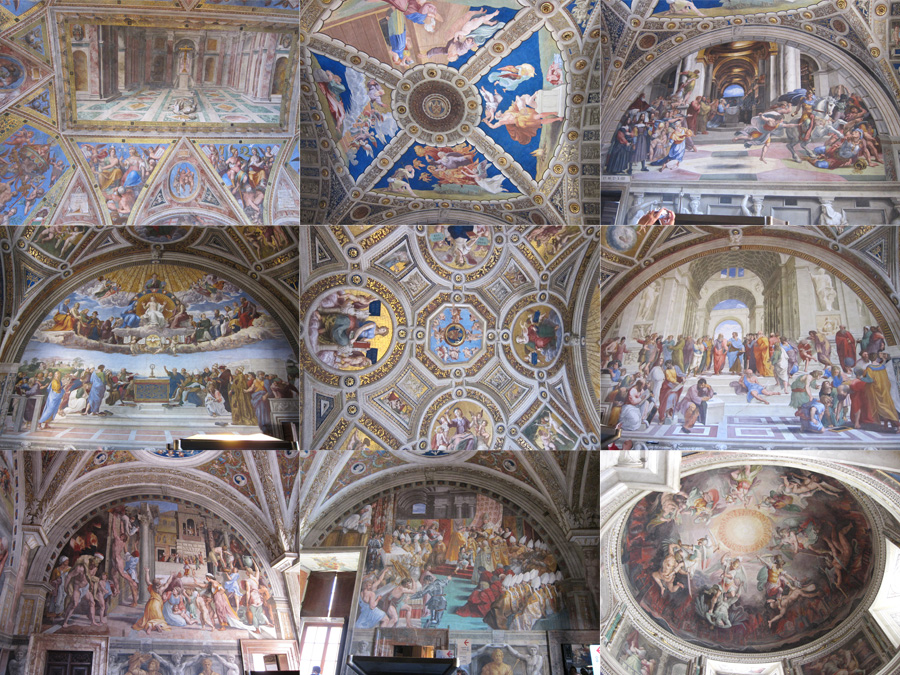
As we were leaving the Vatican Museum, heading for the Sistine Chapel, there was a lot of art on the ceilings and walls, so much so in fact that you can easily get a painful crick in your neck from looking up.
This combination of frescoes and paintings were all very beautiful, and since I've reduced their size here, it is not The real climax was climbing to the top of the dome of Saint Peter's, which we had also done on our last visit to Rome some 14 years earlier. This was one thing that we simply had to do again. Especially considering that my camera now was much better than the one I had then. I was sure the pictures I'd get of Rome form the dome would be much better. I was amazed that I was still able to make it to the top without being totally winded. However, we did somewhat modify our ascent this time. We took the stairs the whole way last time, and we paid for our tickets in Lira since the Euro did not exist in Italy back then. Today the stairs climb is €5. But there is an option of missing the first 231 steps by paying €7 and taking the elevator to the roof. I jumped at that like you wouldn't believe. We still had 323 stairs to climb before we reached the top, so the challenge lay ahead of us.
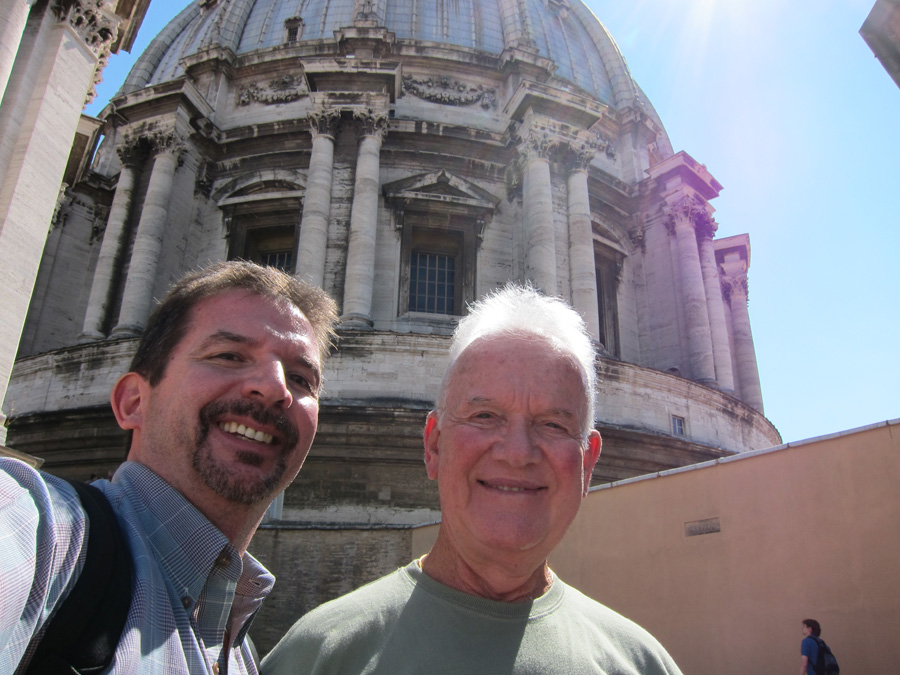
So, here we are, on the roof of Saint Peter's, ready to start our climb to the top of the dome. See, we don't look at all crazy.
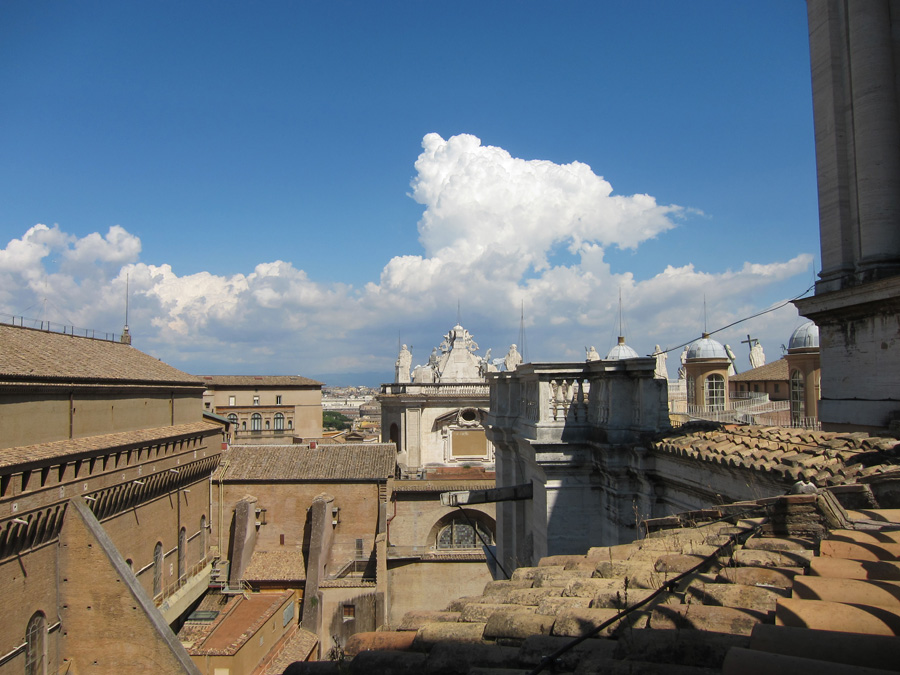
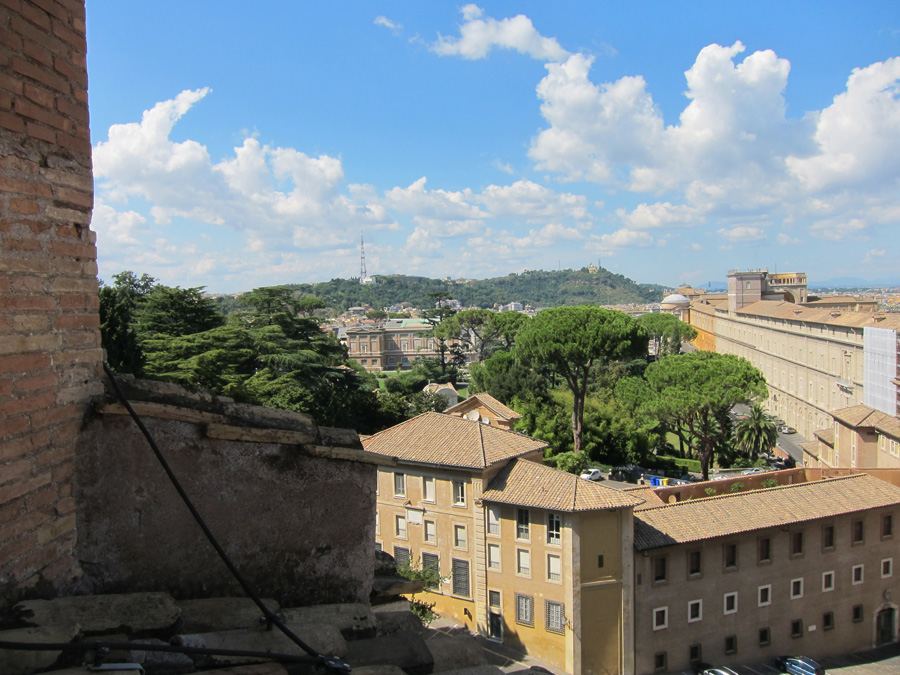
You actually get some pretty good views even from the roof level. The long building on the right is the Vatican Museum. Saint Peter's is the greatest church in Christendom. Nearly 2000 years ago, this area was the site of Nero's Circus?a huge cigar-shaped Roman chariot racecourse.
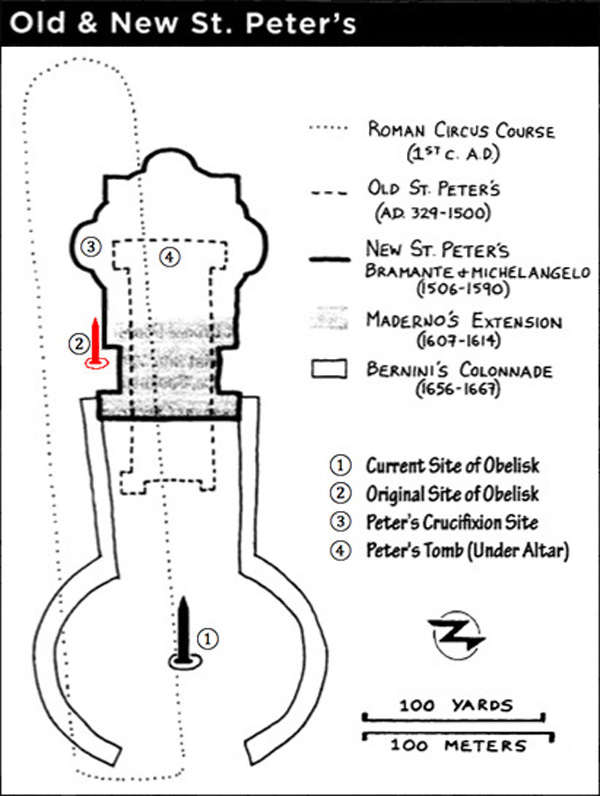
Moving the obelisk to it's new location as the center piece of St. Peter's Square was not an easy task. It is 90 feet of solid granite weighing more than 300 tons. This obelisk has quite a history. Originally erected in Egypt more than 2000 years ago, it witnessed the fall of the pharaohs to the Greeks and then to the Romans. Then the emperor Caligula moved it to imperial Rome, where it stood impassively watching the slaughter of Christians at the racecourse and the torture of Protestants by the Inquisition. As you can see from diagram above, the old St. Peter's lasted 1200 years, and by 1500 it was falling apart, and was considered unfit to be the center of the Western Church. The new larger church we see today was begun in 1506 by the architect Bramante. He was succeeded by Michelangelo and a number of other architects. As the construction proceeded they actually built the new church around the old one (see the diagram above). The project was finally finished 120 years later, and Old St. Peter's was dismantled and carried out of the new church stone by stone. (A few relics survive from the first church: the central door, some columns in the atrium, eight spiral columns around the tomb from the Jerusalem Temple, the venerated statue of Peter, and Michelangelo's Pietà.) I thought it was an interesting fact, that the Holy Door, which is the far right door, is opened only during Holy Years. On Christmas Eve every 25 years, the pope knocks three times with a silver hammer and the door opens, welcoming pilgrims to pass through. After Pope John Paul II opened the door on Christmas eve, 1999, he bricked it up again with a ceremonial trowel a year later to wait another 24 years.
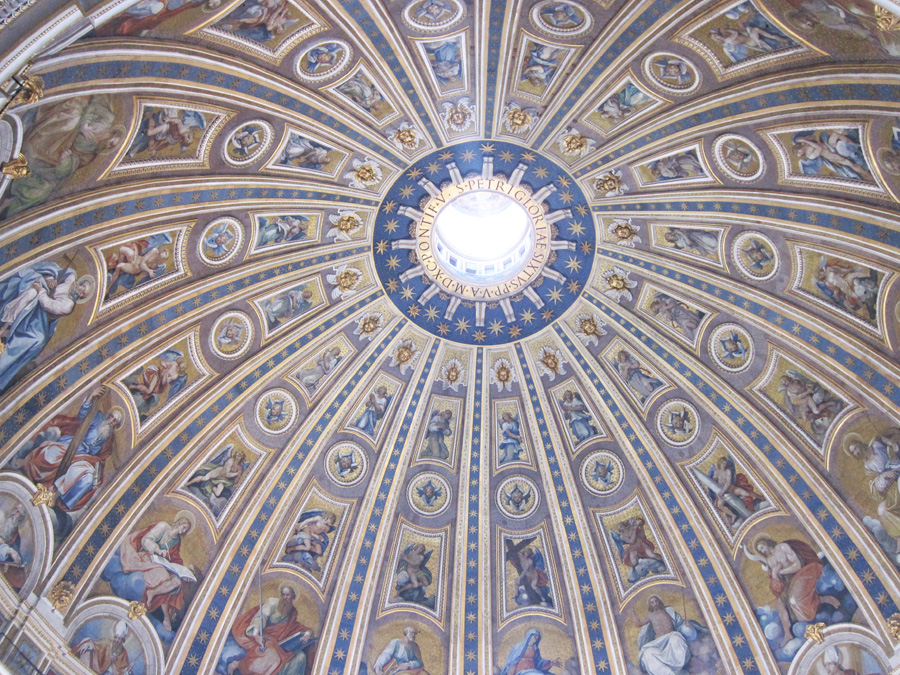
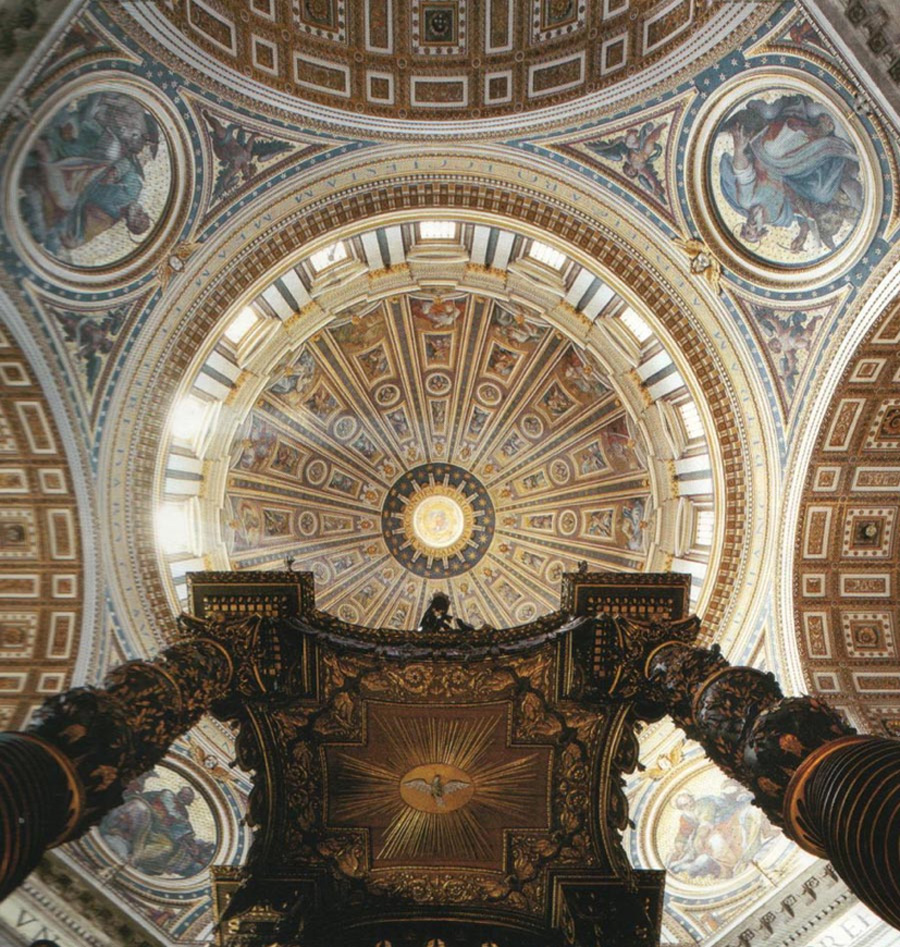
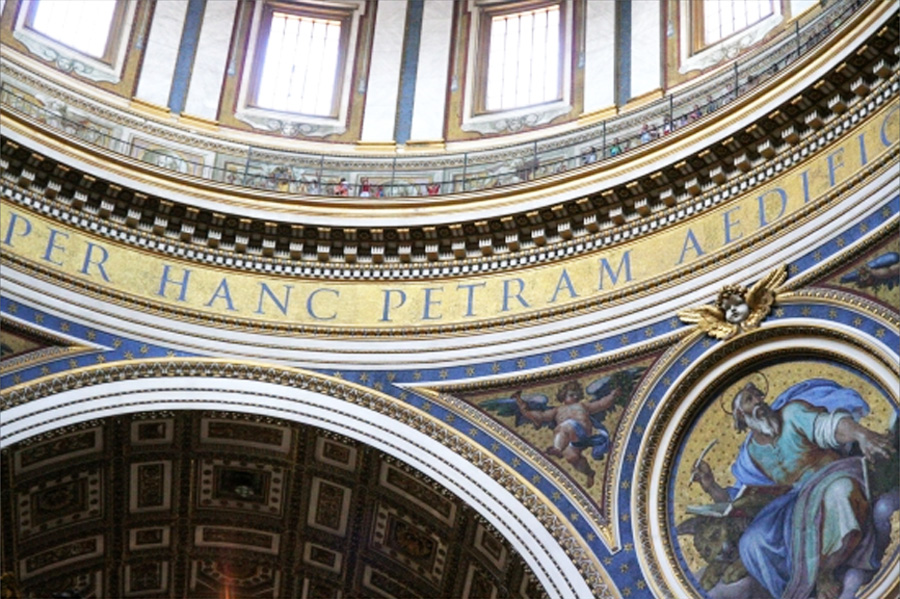
Inside the dome, and being this close to it, we are immediately struck by its size and magnificence.
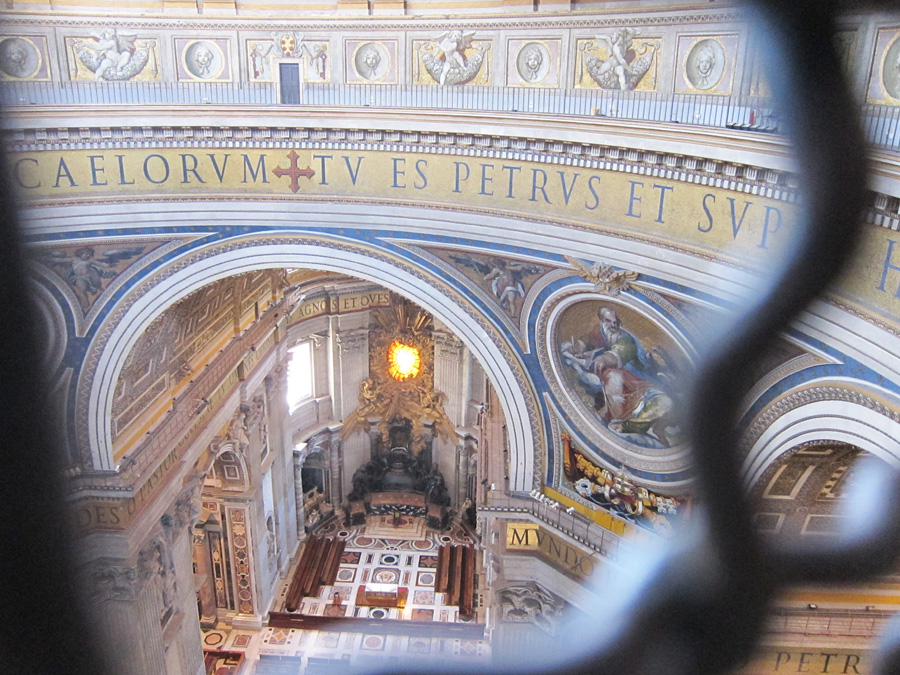
From this catwalk you can see Saint Peter's throne far below. This perspective reinforces the immensity of the church.
The dome soars higher than a football field on end, 448 feet from the floor of the cathedral to the top of the lantern.
When Michelangelo died (1564), he'd completed only the drum of the dome?the circular base up as far as the
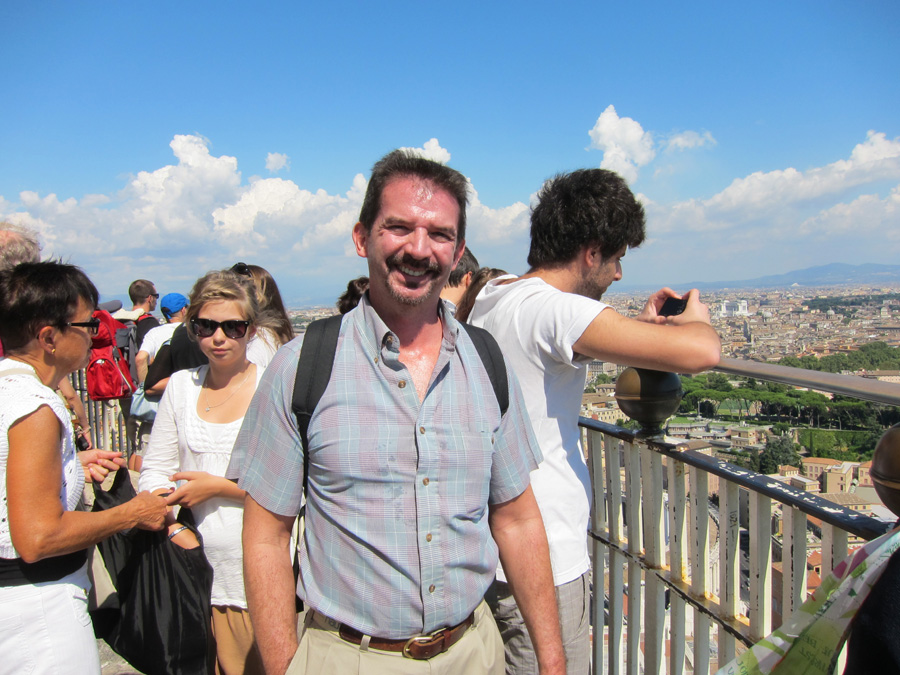
We make it to the top, and it is a beautiful day for taking photographs. It is a little crowded, but not as bad as it could be.
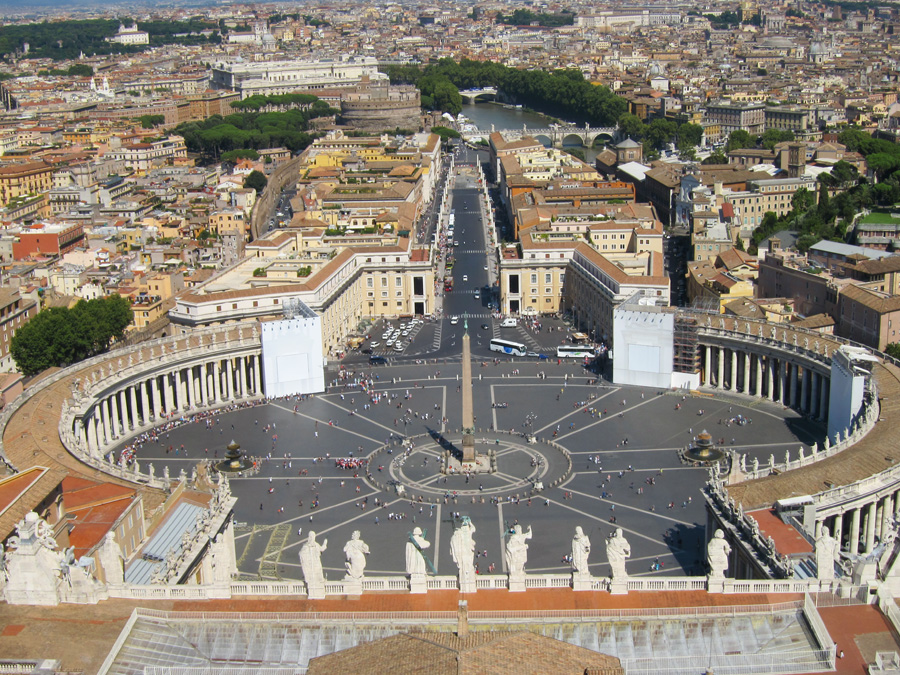
I love symmetry, and St. Peter's Square certainly has that going for it. You can see most of Bernini's 140 favorite saints,
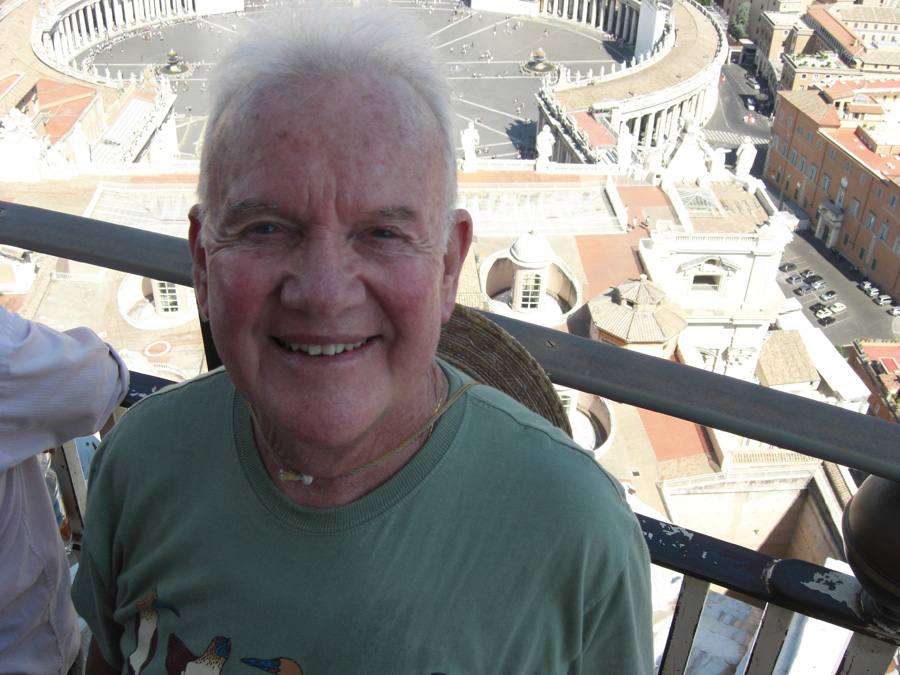
Yes, it's not all smoke and mirrors. I actually did make it to the top as well. And who knows, I may do it again someday. After climbing back down we then went inside the Basilica of St. Peter and took photos of the amazing architecture. It has the largest interior of any Christian church in the world, and as a work of architecture it is regarded as the greatest building of its age. Those photos, and more from on top of the dome, will have to wait until the next chapter. |
||||||||||||
|
||||||||||||
|
||||||||||||
|
||||||||||||