|
|
|
|
|
|
|
|
|
|
|
||||||||
|
||||||||||||||||||
|
Email us at: |
||||||||||||||||||
 |
||||||||||||||||||
 |
 |
|||||||||||||||||
|
Click the sun to see the |
||||||||||||||||||



 |
||||||||||||
|
|
|
|
|
|
|
||||||
|
||||||||||||
|
||||||||||||
|
||||||||||||
|
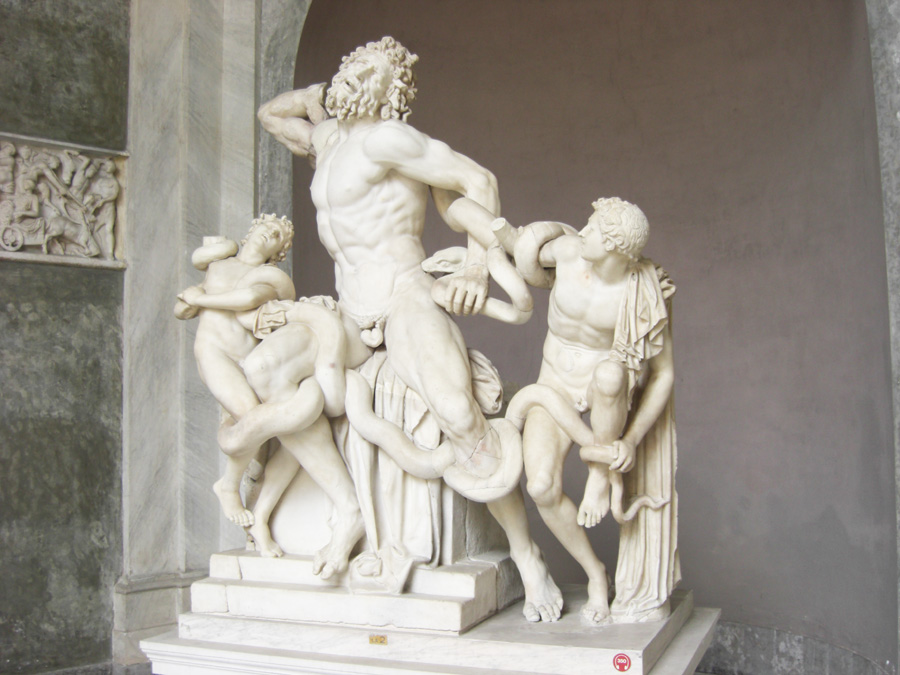
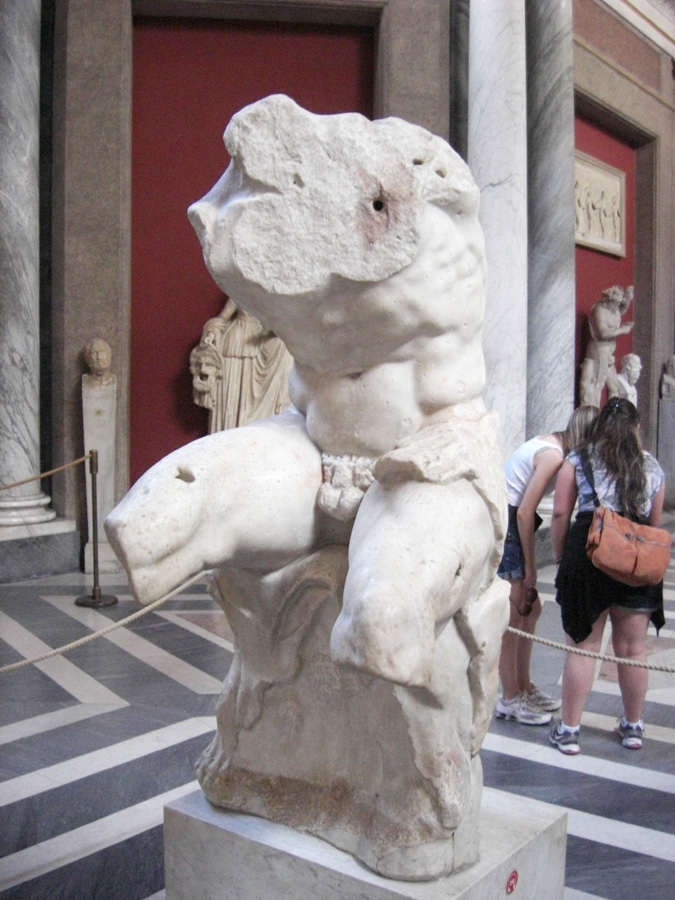
Before I return us to the Round Room, let me say a little more about Laocoön (pronounced lay-AWK-oh-wahn). He was the high priest of Troy, and he warned his fellow Trojans: "Beware of Greeks bearing gifts." The attacking Greeks had brought the Trojan horse to the gates as a ploy to get inside the city walls, and Laocoön tried to warn his people not to bring it inside. But the gods wanted the Greeks to win, so they sent huge snakes to crush Laocoön and his two sons to death. We see them at the height of their terror, when they realize that, no matter how hard they struggle, they—and their entire race—are doomed. The figures were carved from four blocks of marble pieced together seamlessly, and are powerful, not light and graceful. The poses are as twisted as possible, accentuating every rippling muscle and bulging vein. Laocoön—the most famous Greek statue in ancient Rome and considered "superior to all other sculpture or painting"—was lost for more than a thousand years. Then, in 1506, it was unexpectedly unearthed in the ruins of Nero's Golden House near the Colosseum, on Palatine Hill. The discovery caused a sensation. They cleaned it off and paraded it through the streets before an awestruck populace. No one had ever seen anything like its motion and emotion, having been raised on a diet of pretty-boy Apollos. One of those who saw it was Michelangelo, and it was a revelation to him. Two years later, he started work on the Sistine Chapel, and the Renaissance was about to take another turn. Next we come to the Belvedere Torso. Standing face to face with this hunk of shaped rock makes you appreciate the sheer physical labor involved in chipping a figure out of solid stone. It takes great strength, but at the same time, great delicacy.
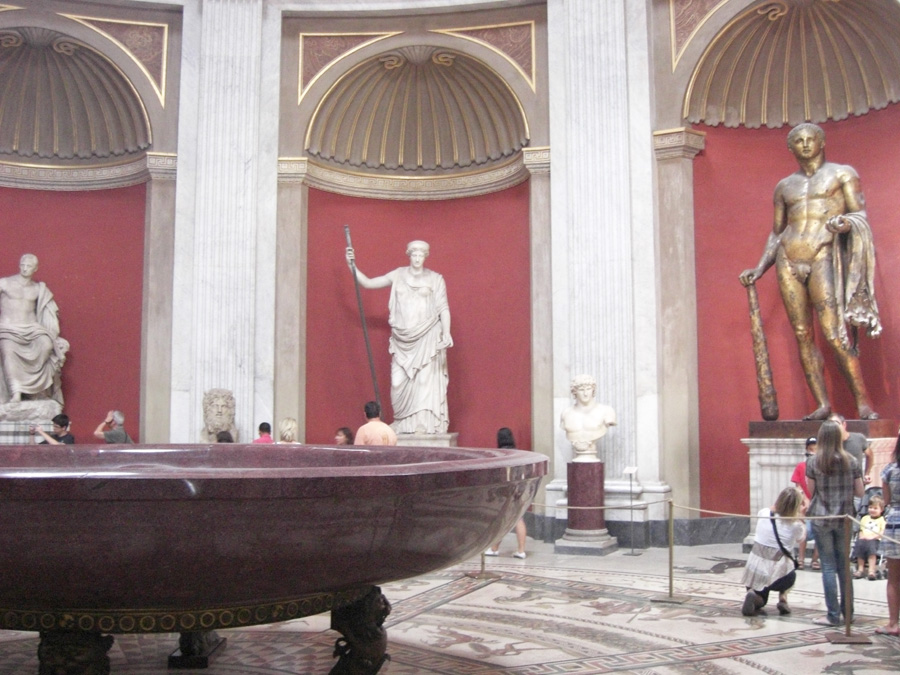
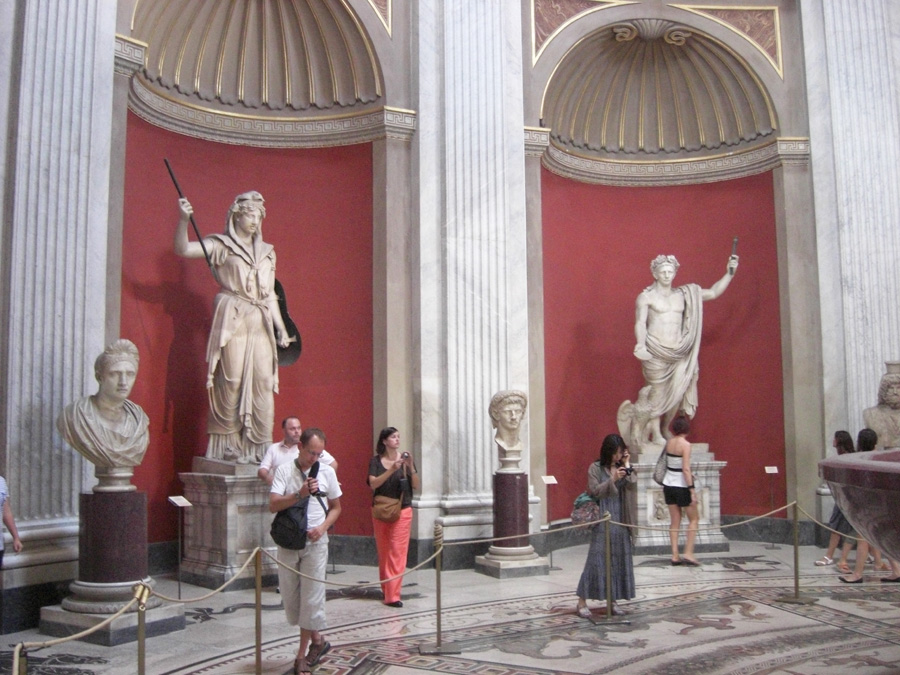
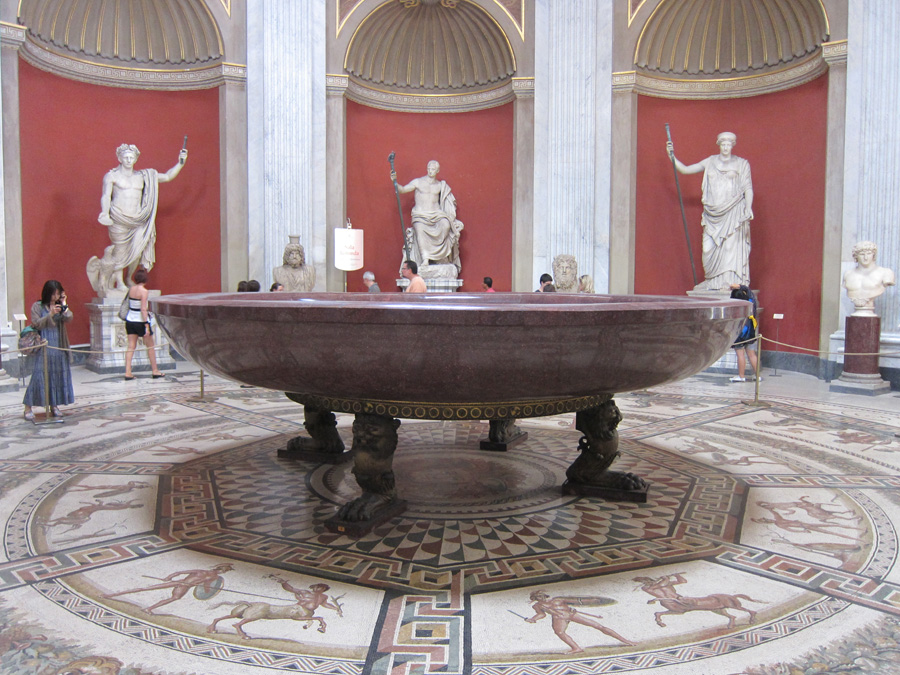
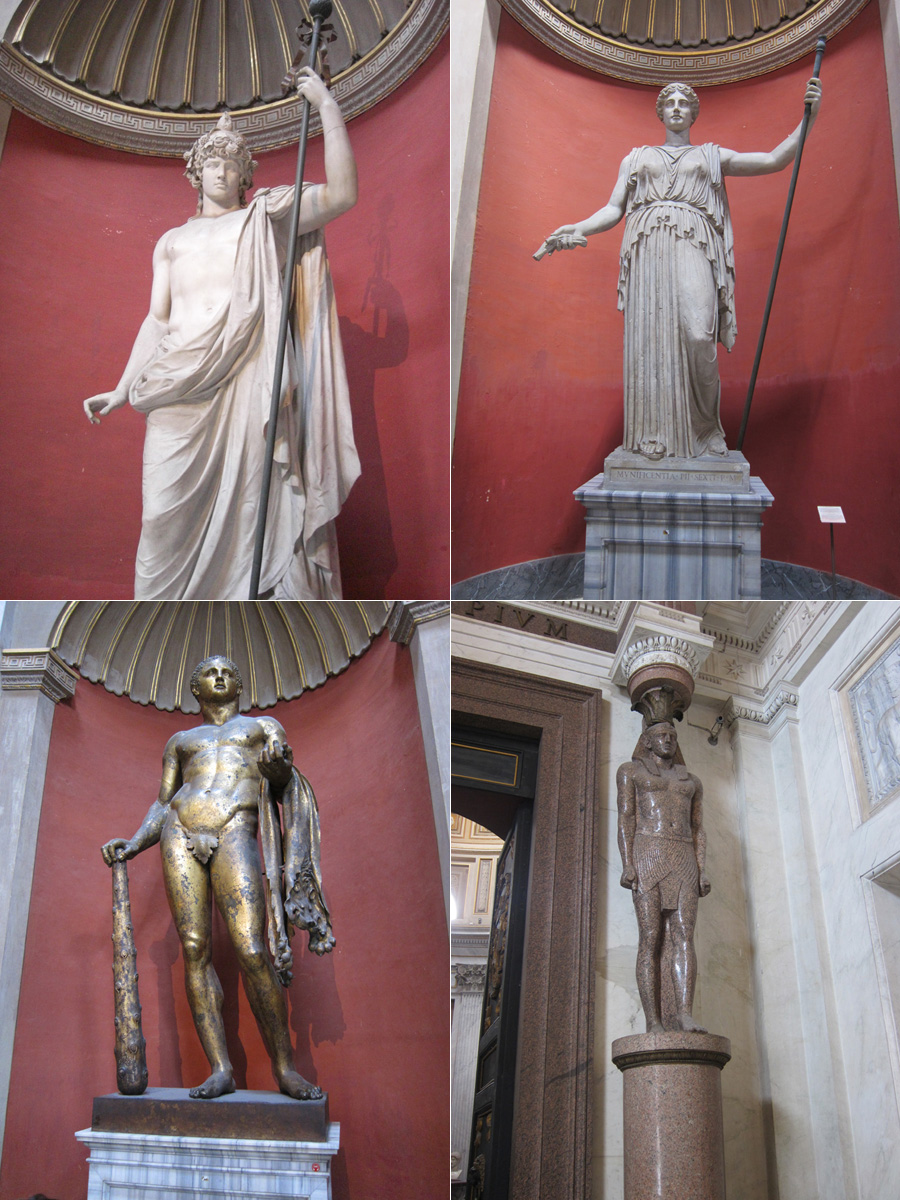
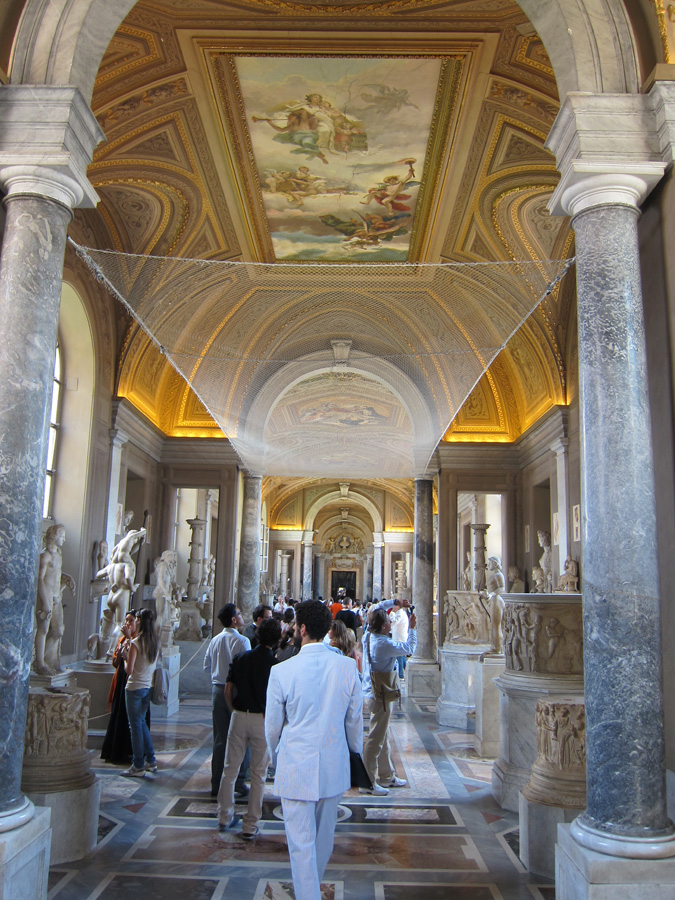
The Belvedere Torso — compared to This is all that remains of an ancient statue of Hercules seated on a lion skin. Michelangelo loved this old rock. He knew that he was the best sculptor of his day. The ancients were his only peers—and his rivals. He'd caress this statue lovingly and tell people, "I am the pupil of the Torso." To him, it contained all the beauty of classical sculpture. But it's not beautiful. Compared with the pure grace of the Apollo, it's downright ugly. But Michelangelo, an ugly man himself, was looking for a new kind of beauty—not the beauty of idealized gods, but the innate beauty of every person, even so-called ugly ones. With its knotty lumps of muscle, the Torso has a brute power and distinct personality despite—or because of—its rough edges. Next we enter the Round Room, modeled on the Pantheon interior. It gives some idea of Roman grandeur.
Romans took Greek ideas and made them bigger, like the big bronze statue of Hercules with his club, found near the
It is amazing these days to see people using only their iPhones to photograph such beautiful art treasures.
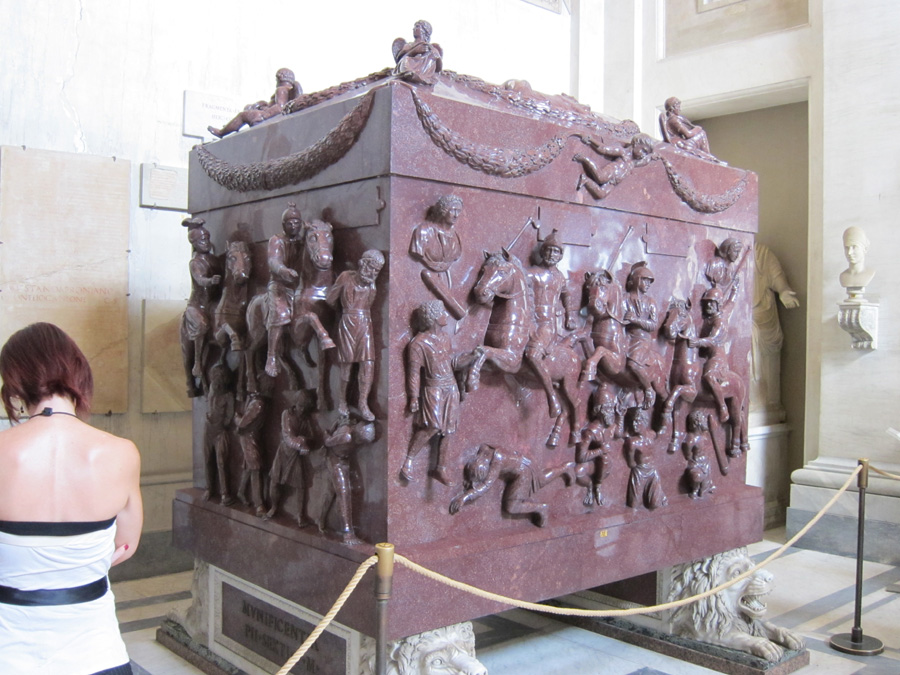
The mosaic floor once decorated the bottom of a pool in an ancient Roman bath. The enormous Roman basin decorated Nero's place. It was made from a single block of pure porphyry marble stone imported from the desert of Egypt. Purple was a rare, royal, expensive, and prestigious color in many cultures. This was the stone of emperors ... and then of popes. Now it's all been quarried out, and the only porphyry available to anyone has been recycled.
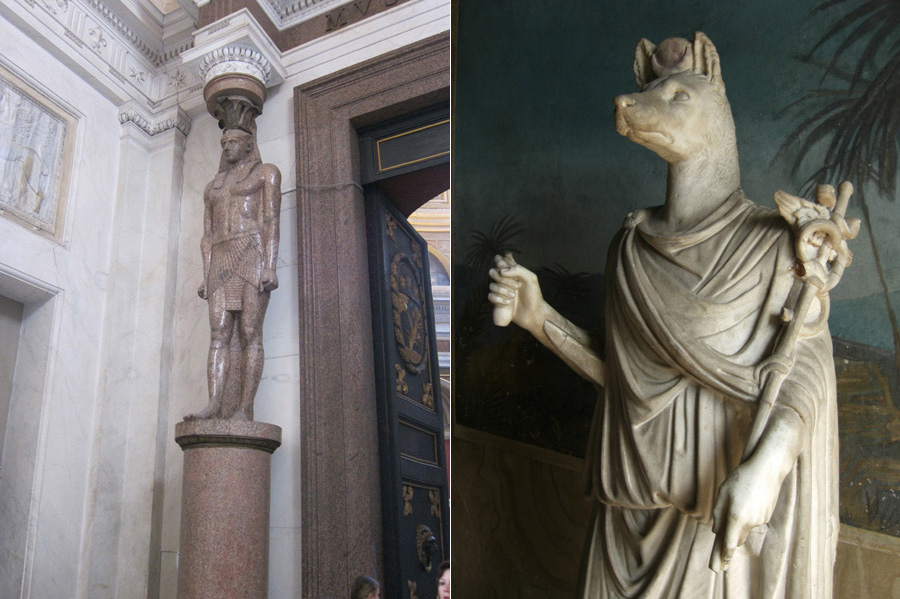
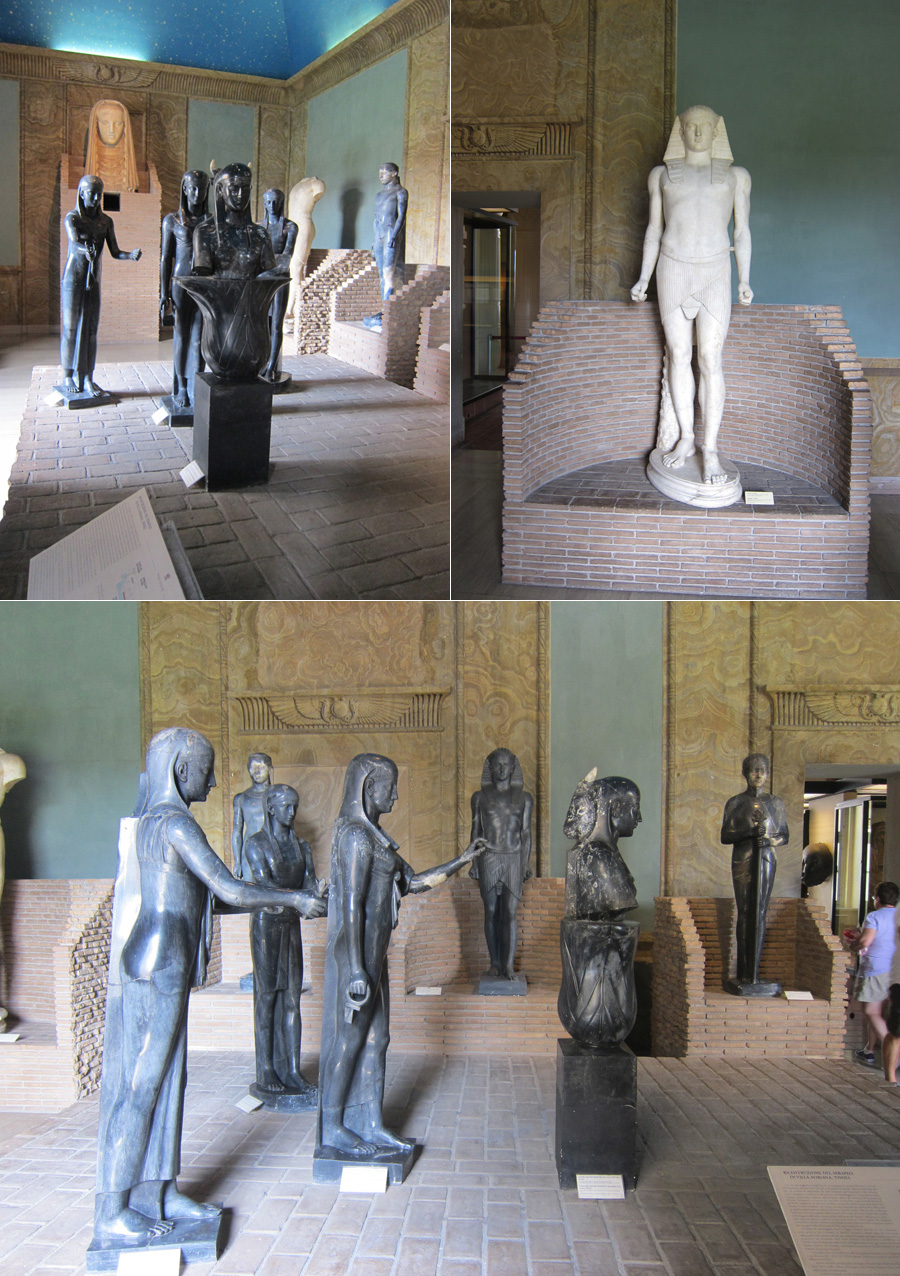
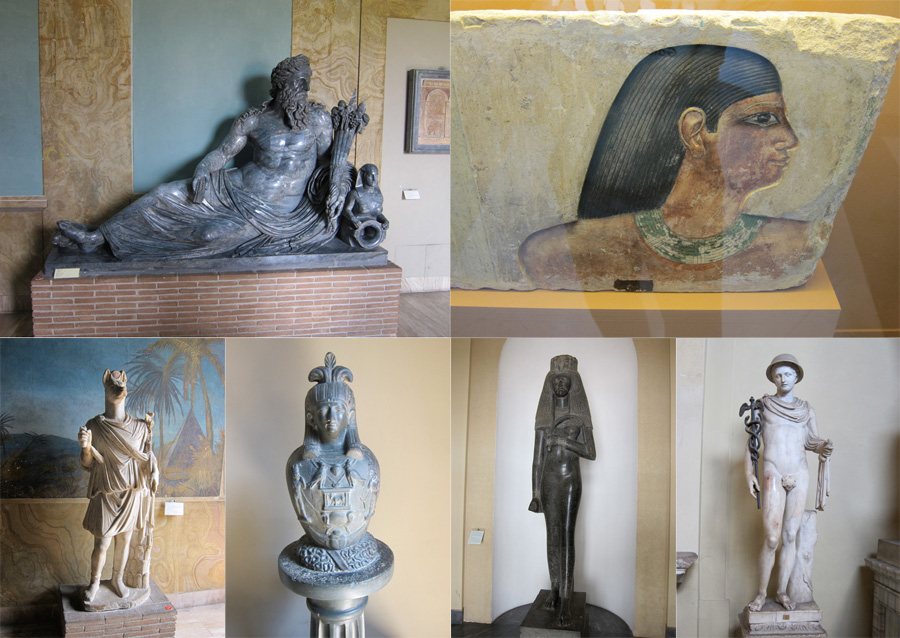
The statues were all pretty amazing. And the Egyptian columns leading to the next room were absolutely majestic. There is so much to see in the Vatican Museum. There is just a little more to go before we leave the museum and enter St. Peter's Basilica, and take you on a climb to the top of the dome for some fantastic views of Rome from this amazing vantage point. But this will come in the next chapter. |
||||||||||||
|
||||||||||||
|
||||||||||||
|
||||||||||||