|
|
|
|
|
|
|
|
|
|
|
||||||||
|
||||||||||||||||||
|
Email us at: |
||||||||||||||||||
 |
||||||||||||||||||
 |
 |
|||||||||||||||||
|
Click the sun to see the |
||||||||||||||||||



 |
||||||||||
|
|
|
|
|
||||||
|
||||||||||
|
||||||||||
|
||||||||||
|
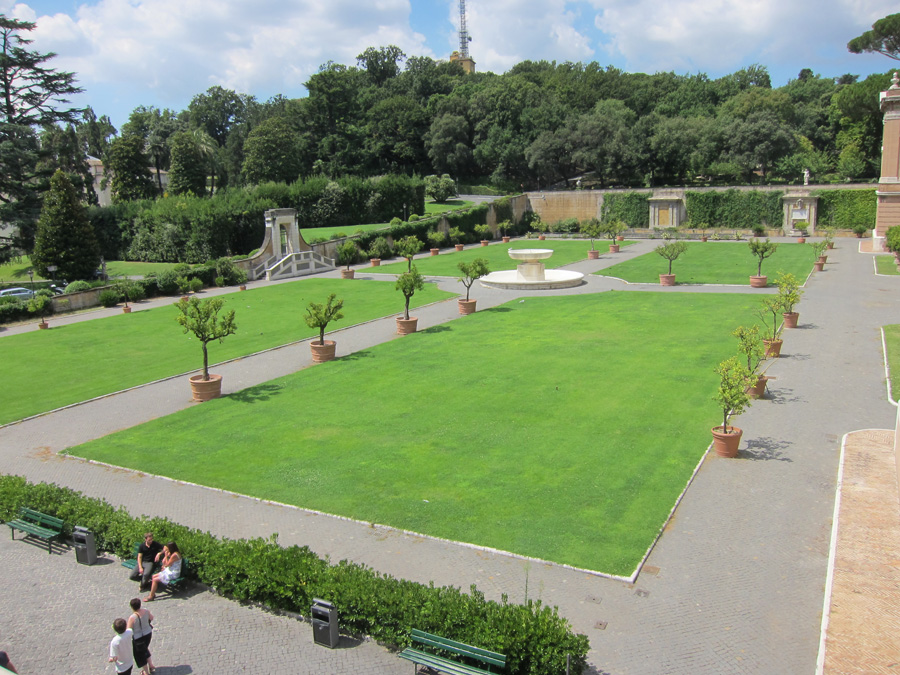
Continuing our Vatican Museum visit, we walk out onto a large patio, or terrace, to view the Vatican gardens.
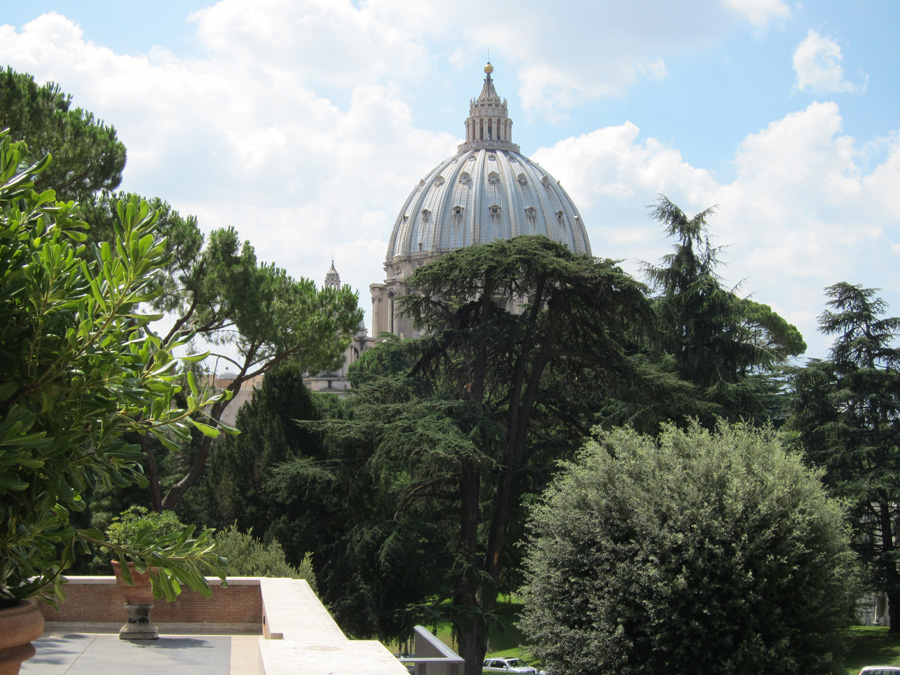
From this same terrace there is a good view beyond more of the gardens, of the dome of Saint Peters Basilica
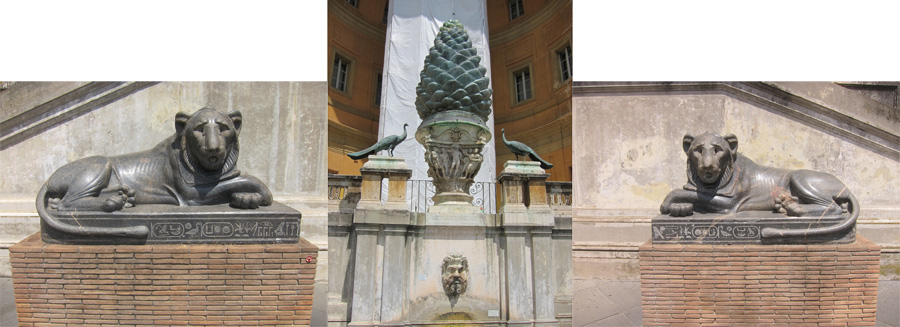
In an inner courtyard resides the colossal bronze pine cone. It was cast in the 1st or 2nd century by Publius Cincius Salvius who left his name on the base. In its previous location it functioned as a fountain, water gushing from holes in the scales of the cone. Possibly towards the end of the 8th century it was moved to the entrance hall of the medieval St. Peter's, in the center of the fountain. Finally, in 1608, during the construction of the present basilica, the giant pine cone fountain was dismantled and placed here, where it is today. The photo is flanked by two Egyptian lions.
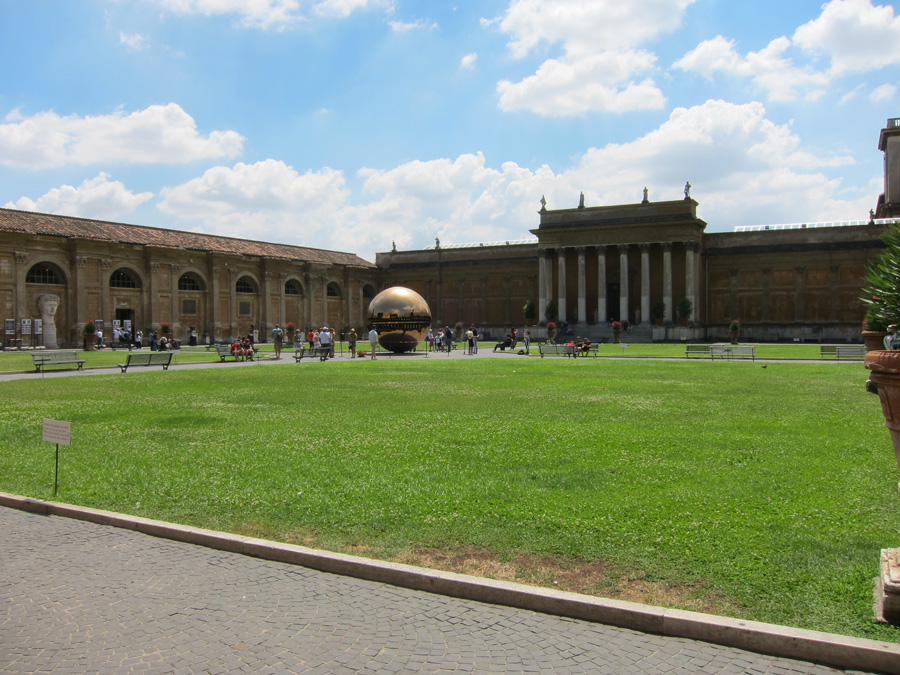
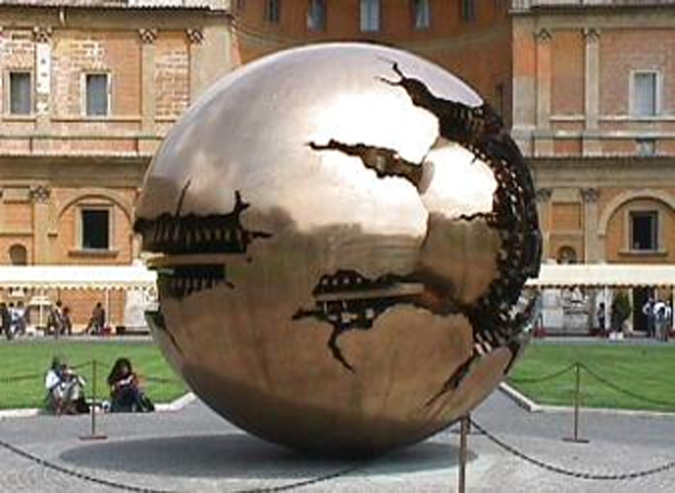
In the middle of the courtyard is a giant golden globe. I have no idea of the significance of this globe.
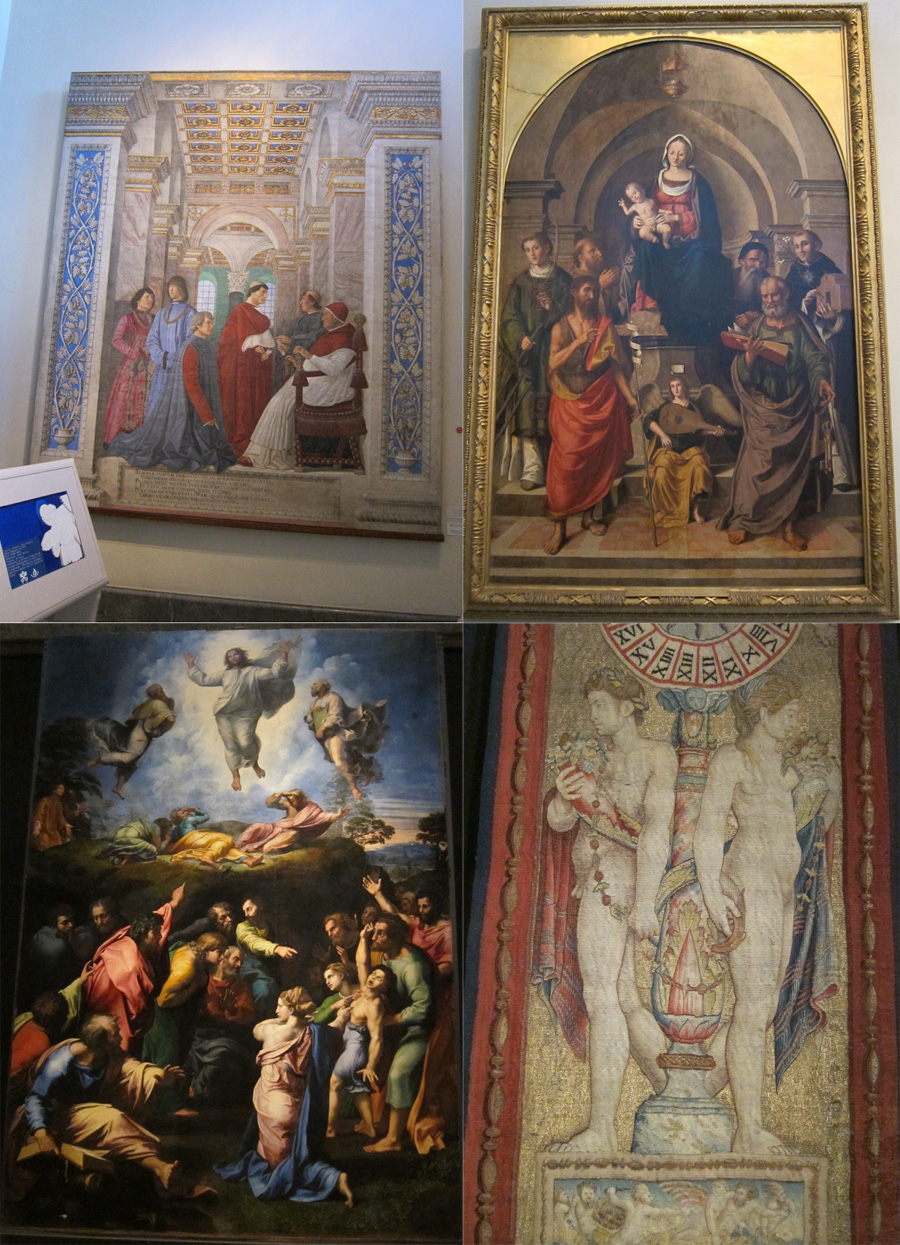
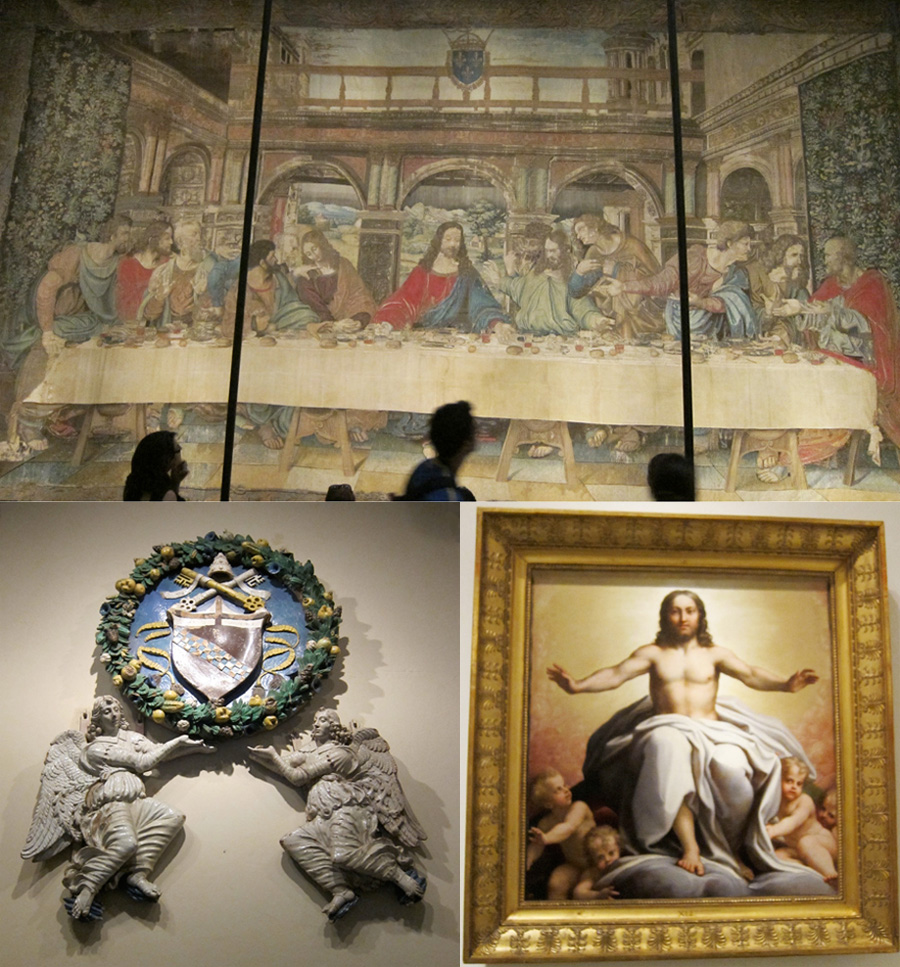
Continuing through the galleries, we discover more art on display, and continue to be awed by the splendor.
There are certainly art treasures in abundance in this museum. However, I fail to see the relevance of the requirement for men to wear long pants, especially in the heat of summer, when you find a tapestry like the one above on display. The nudes bare it all. The mind boggles at the incongruity.
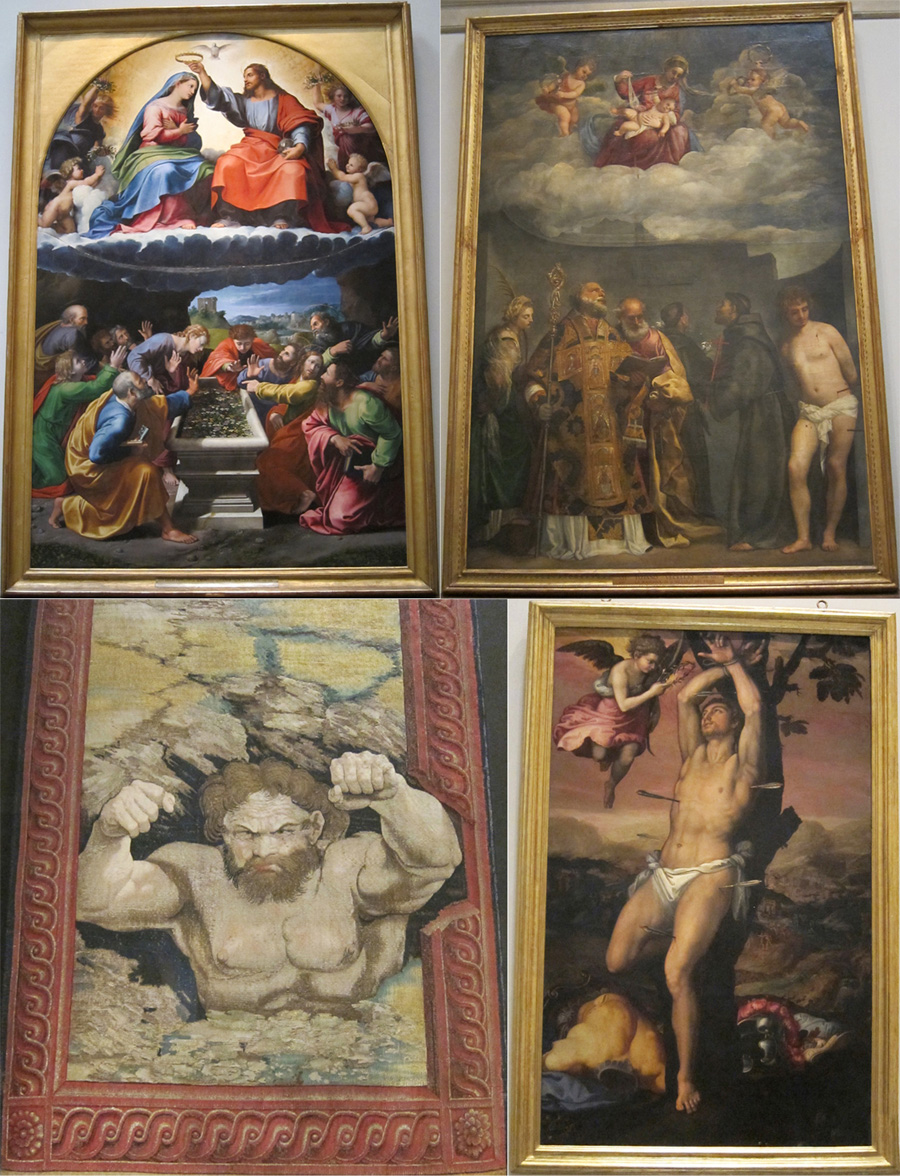
The last photo in this frame is Saint Sebastian receiving the crown of martyrdom. Saint Sebastian's story is an interesting one. He was a man of Gallia Narbonensis who was taught in Milan and appointed as a captain of the Praetorian Guard under Diocletian and Maximian, who were unaware that the was a Christian. Sebastian was known for having encouraged in their faith two Christian prisoners due for martyrdom, Mark and Marcellian, who were bewailed and entreated by their family to forswear Christ and offer token sacrifice to the Roman gods. His presence was said to have cured a woman of her muteness, and that the miracle instantly converted 78 persons. Diocletian reproached Sebastian for his supposed betrayal, and he commanded him to be led to the field and there to be bound to a stake to be shot at. "And the archers shot at him till he was as full of arrows as and urchin," leaving him there for dead. Miraculously, the arrows did not kill him. The widow of Castulus, Irene of Rome, went to retrieve his body to bury it, and found he was still alive. She brought him back to her house and nursed him back to health. The other residents of the house doubted he was a Christian. One of those was a girl who was blind. Sebastian asked her "Do you wish to be with God?", and made the sign of the Cross on her head. "Yes", she replied, and immediately regained her sight. Sebastian then stood on a step and harangued Diocletian as he passed by; the emperor had him beaten to death and his body thrown in a privy. Although Saint Sebastian is always depicted as in the painting above, shot full of arrows, that was not how he died.
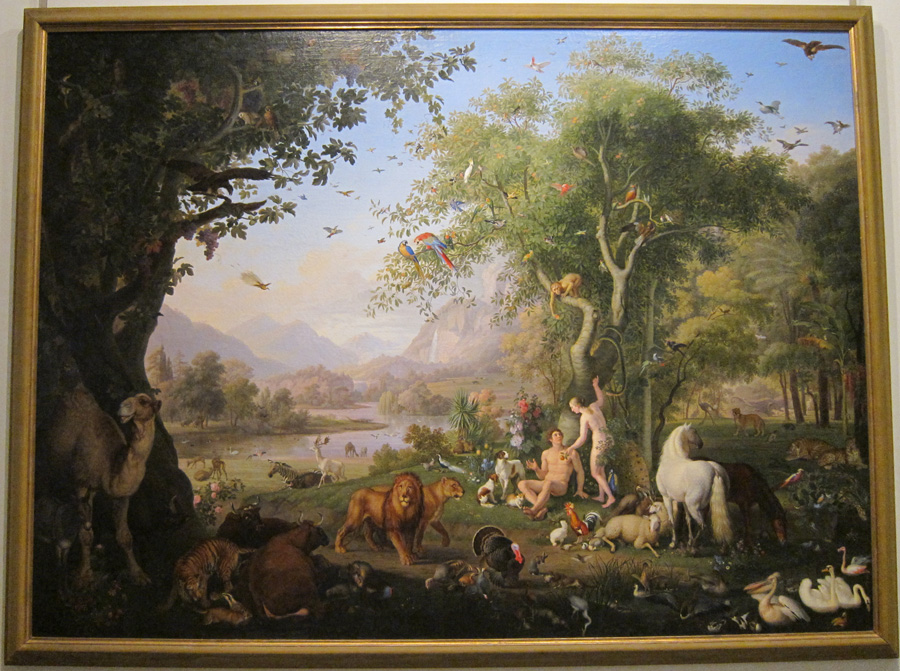
This looks like either after the flood, and the Arc had made landfall, or possibly getting ready to board the Arc.
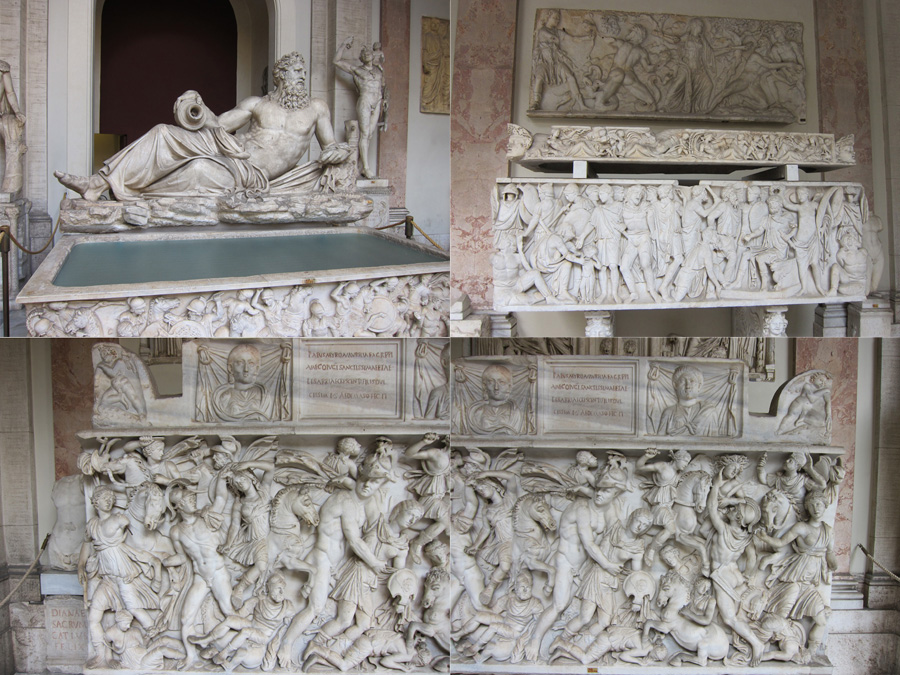
Can you imagine the patience and skill it must have taken to carve all these intricate figures in marble?
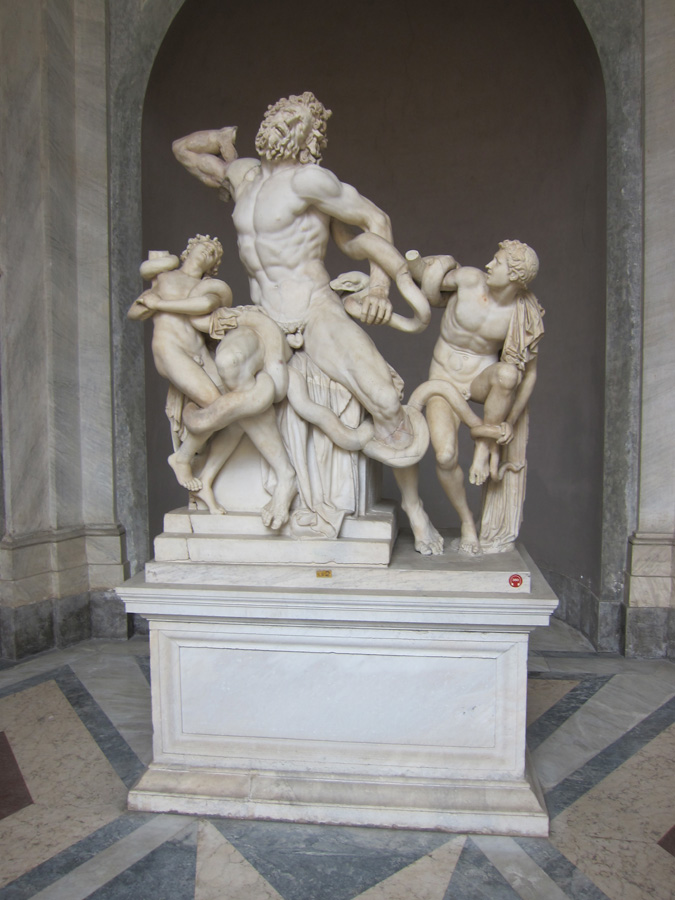
The group depicts a famous scene from the mythical TrojanWar. Laocoön, a priest of the god Apollo, was opposed to the wooden horse being drawn into Troy, but Athena and Poseidon, who favored the Greeks, sent two monstrous serpents up from the sea to strangle Laocoön and his two sons to death in their coils. In the Roman interpretation of the story, the death of these innocents was essential since the escape of Aeneas was crucial to the founding of Rome itself. Clearly such an important sculpture did not escape the notice of Julius II (1503-1513), who immediately bought the work and made it the pivotal work in the ideological concept of the Belvedere Courtyard. When the sculpture was found, some pieces were missing, including the right arm of the ancient priest. Artists such as Baccio Bandinelli and Giovanni Montorsoli were involved in the restoration work which resulted in Laocoön extending his arm out as though attempting to free himself from the serpent's coils. Luckily, the original arm was found in an antiques shop in Rome in 1905 by the scholar Ludwig Pollak. This fragment, with the right arm bent as though attempting to ward off the serpent's fatal bite, was not reattached until 1958. The chronology of this marble masterpiece is still subject to debate, although there is a degree of consensus on the date of around 40-30 BC.
It was certainly a unique civilization, this Roman period. I wonder what legacy we will
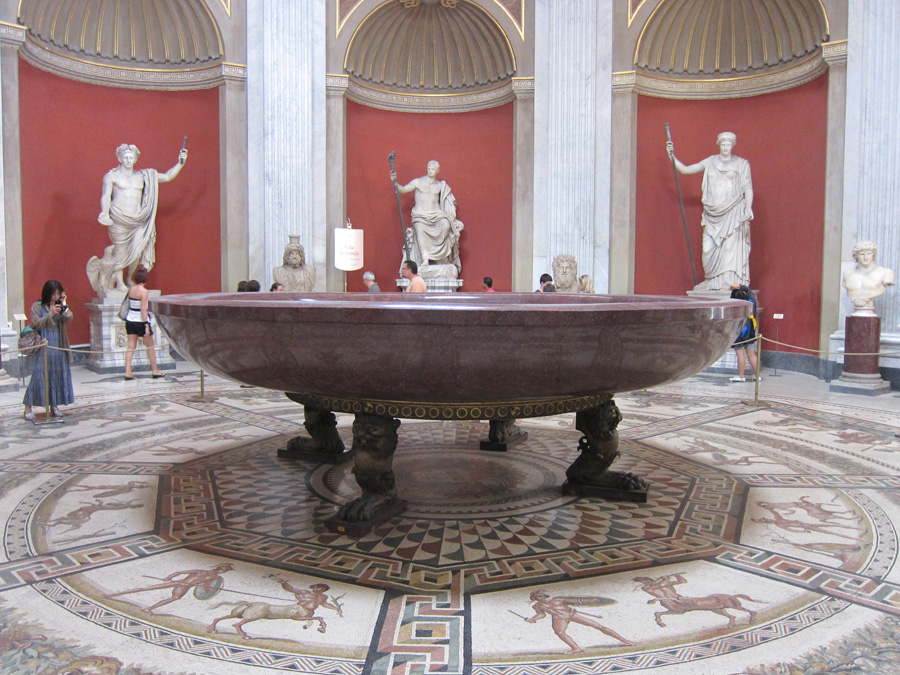
Or maybe a gigantic bird bath like this. Can you believe that is a single piece of stone? Such amazing craftsmanship. But more about those grand statues in the background in the next chapter. |
||||||||||
|
||||||||||
|
||||||||||
|
||||||||||