|
|
|
|
|
|
|
|
|
|
|
||||||||
|
||||||||||||||||||
|
Email us at: |
||||||||||||||||||
 |
||||||||||||||||||
 |
 |
|||||||||||||||||
|
Click the sun to see the |
||||||||||||||||||



 |
|||||||||||||
|
|
|
|
|
|
|
|
||||||
|
|||||||||||||
|
|||||||||||||
|
|||||||||||||
|
A sad follow-up on the "planking" scene, my friend Russell in Bariloche sent a link to an Australian news story of a young man
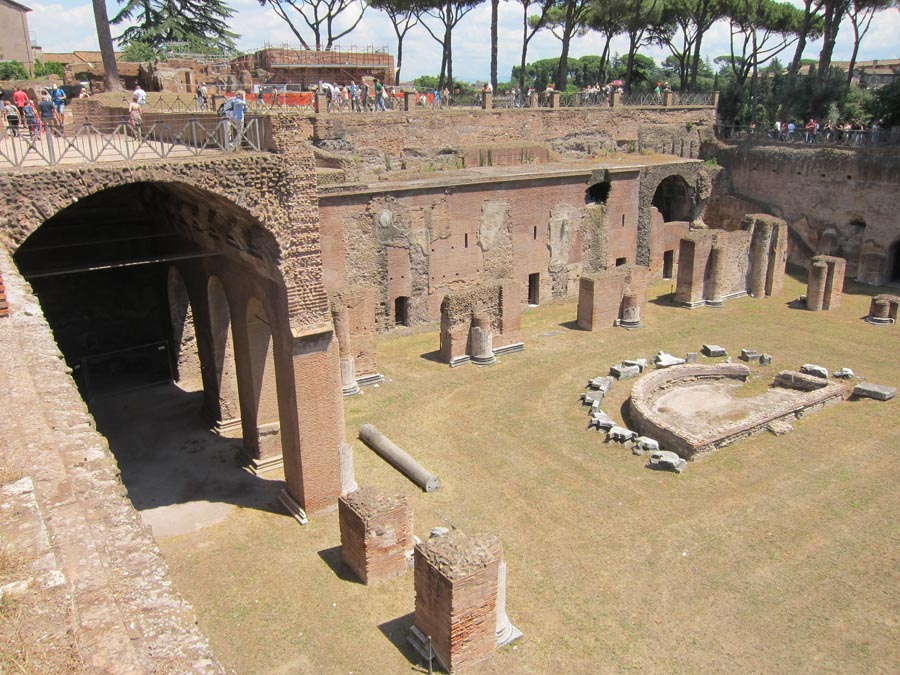
who died in a planking stunt in Brisbane. If you wish to view the Brisbane TV news story, follow the link below. http://news.ninemsn.com.au/national/8249285/man-dies-after-falling-from-brisbane-unit If you decide you want to join in on this fad, please be safe. In this next photo, where the person in the sky blue shirt is standing, this is the spot where Pete and I were standing when we took the photos of the girl doing her own planking stunt. I cringed inside as I watched her climb up onto the wall, knowing how far it was to the arena below, should she lose her balance and fall. We are now on our way to visit the museum on Palatine Hill.
I cannot imagine what this arena must have looked like when it was in use so many centuries ago.
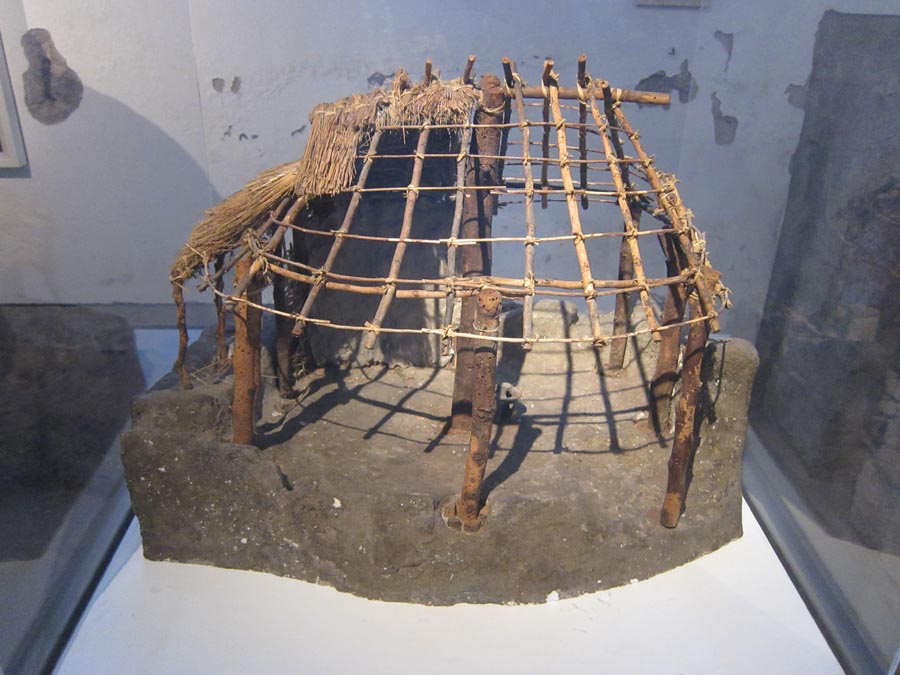
Inside the museum was this display showing the construction of early dwellings on Palatine
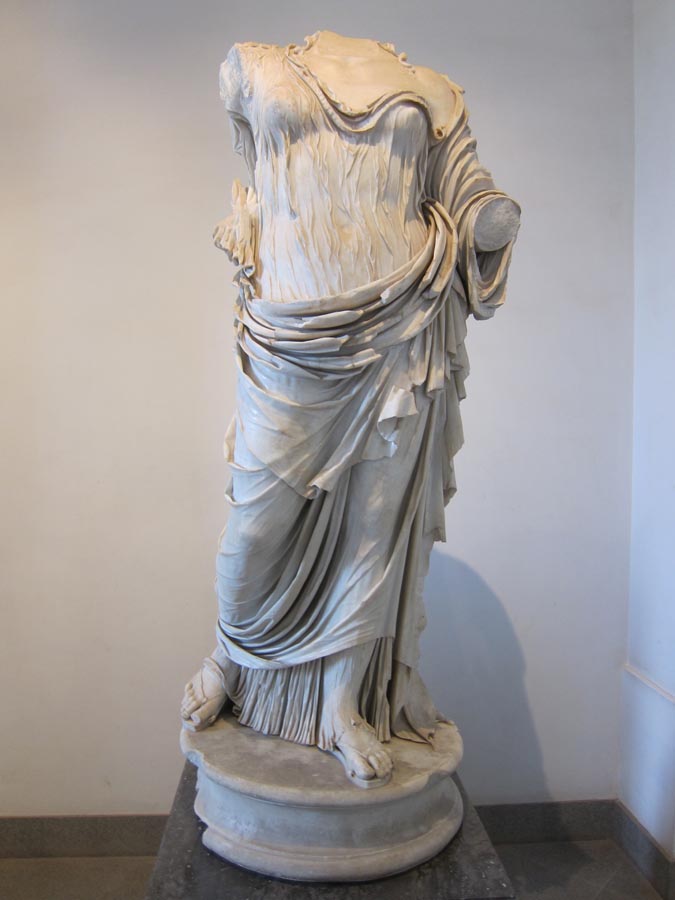
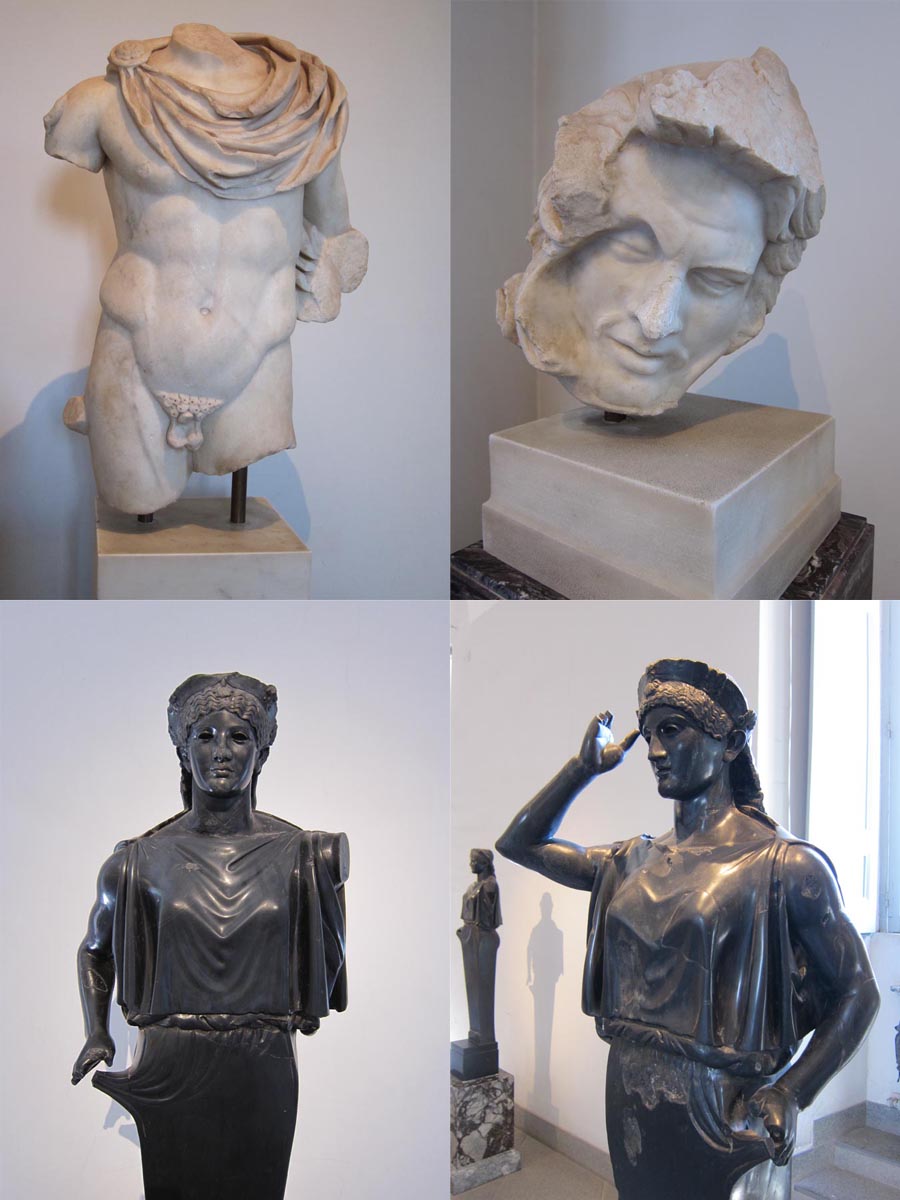
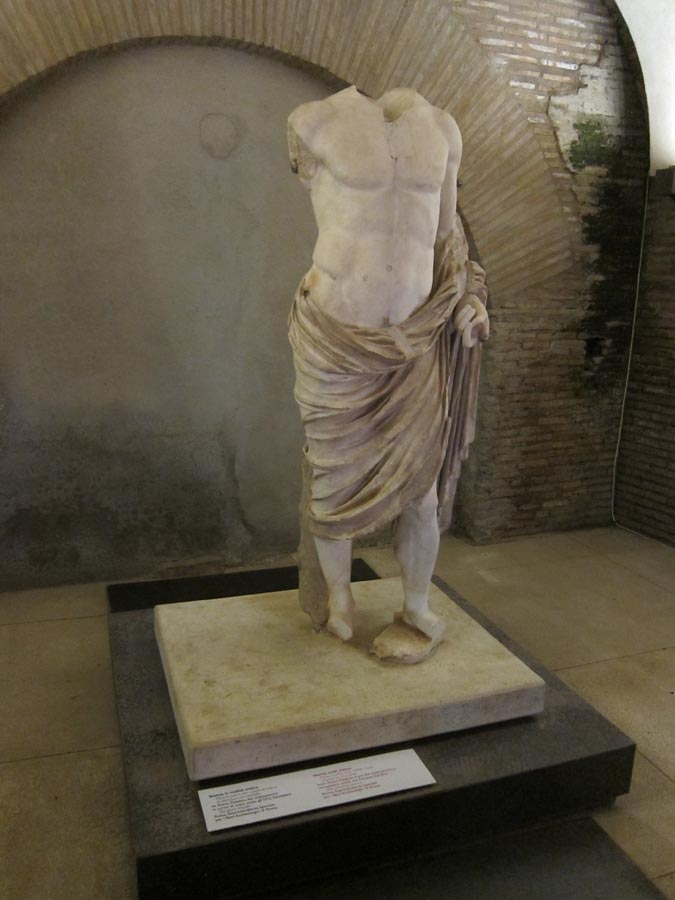
The intricacy and patience to carve marble and convey the natural flow of cloth simply amazes me. For the human mind to conceive of such an image, and then bring it into glorious reality in stone suggests an intellect that has somehow become lost in antiquity.
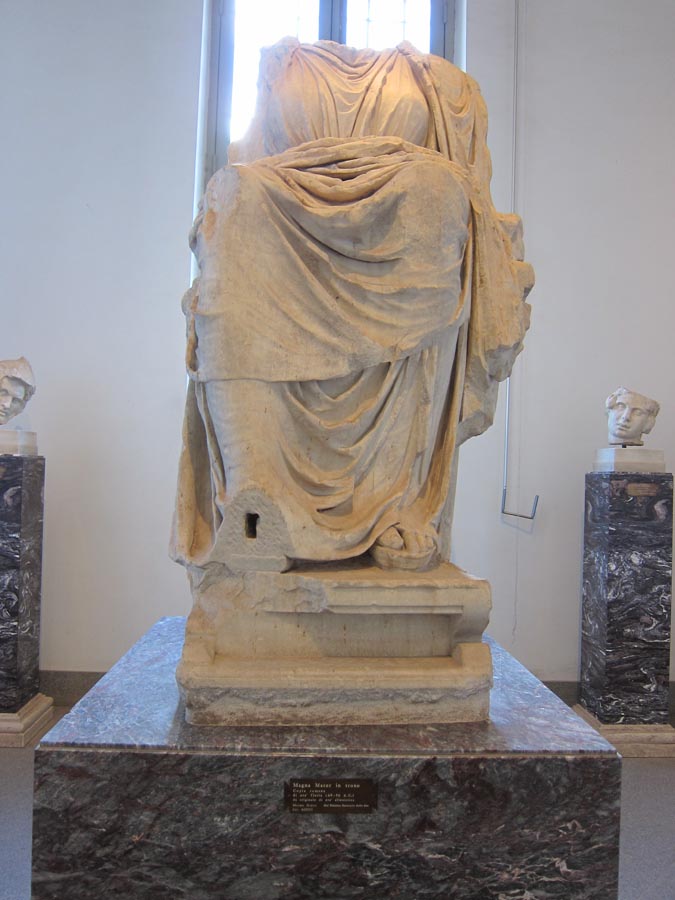
Many of the works are broken and incomplete, yet still beautiful beyond words.
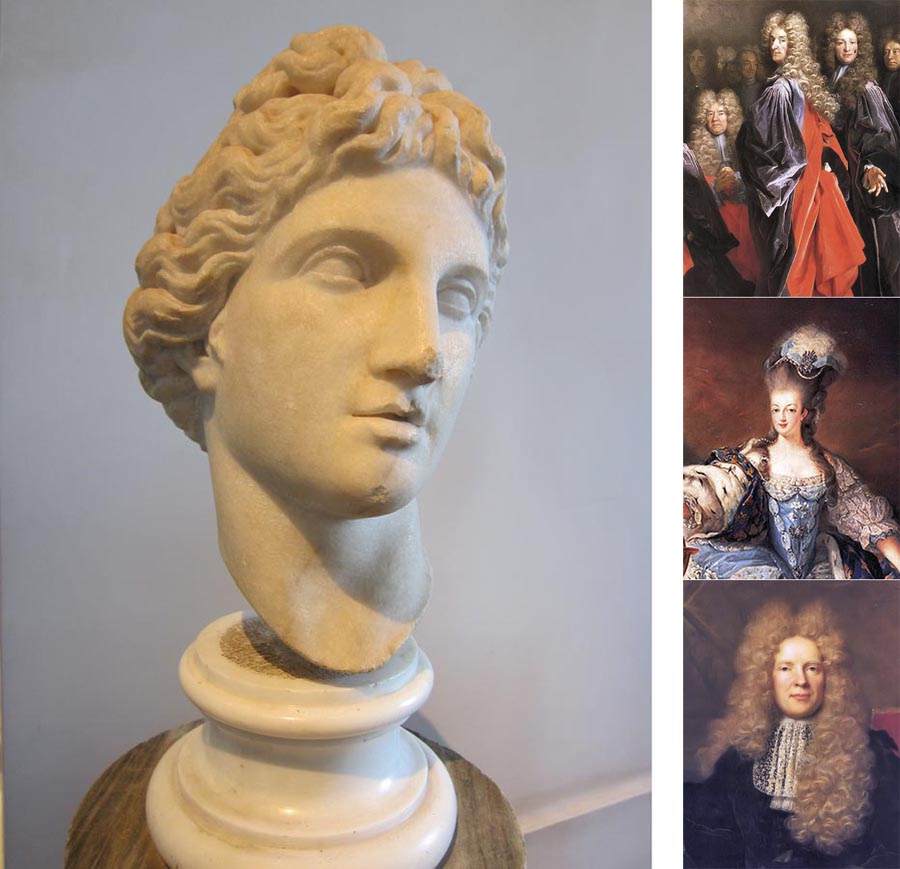
This was the typical hair style of the day. I think of the French and their outrageous Aren't they gorgeous,
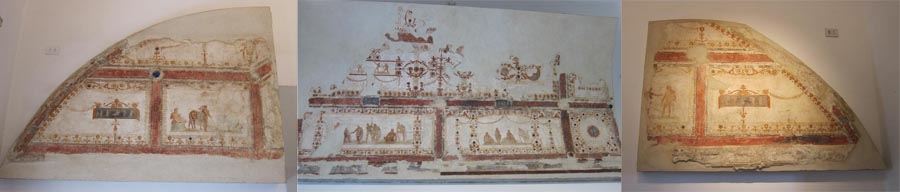
Frescos were very popular in Roman times. Today we cover our walls with "wall paper".
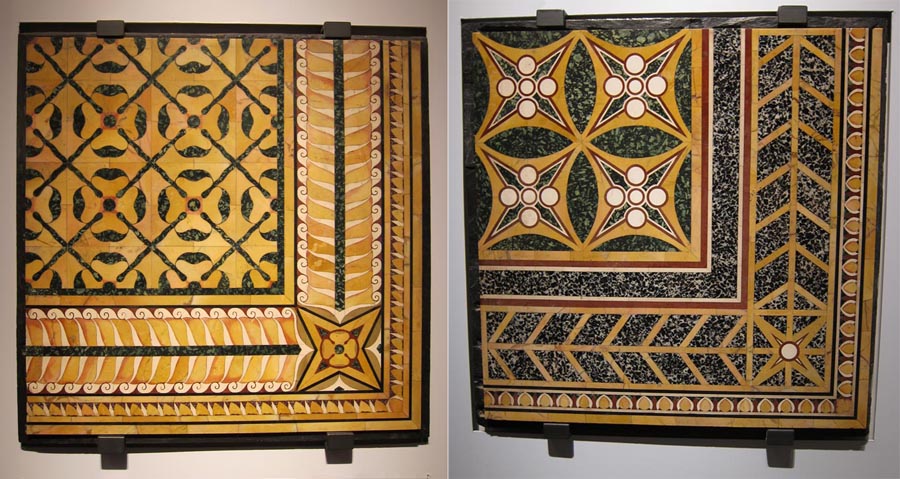
This is opus sectile, a technique using various colored materials inlayed into intricate designs to create beautiful walls and floors in Roman palaces. I don't think we could duplicate this today. These were from Domus Tiberiana, in the time of Nero.
The Romans were as comfortable with their art objects fully clothed, as well as totally naked. It took Christianity, and
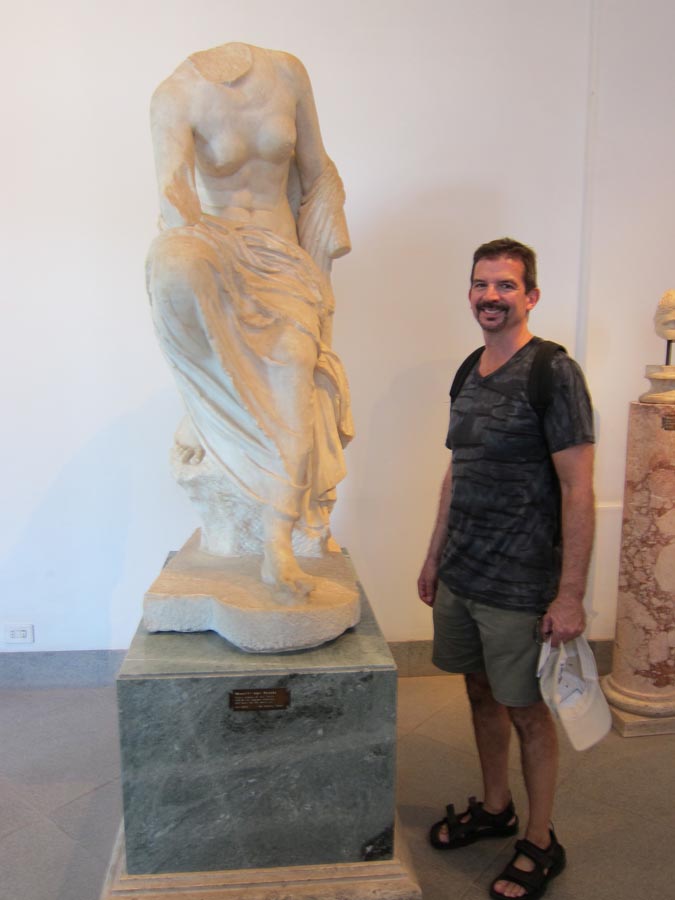
If the statue had a head, I'm sure she would be looking down at Pete with a twinkle in her eye.
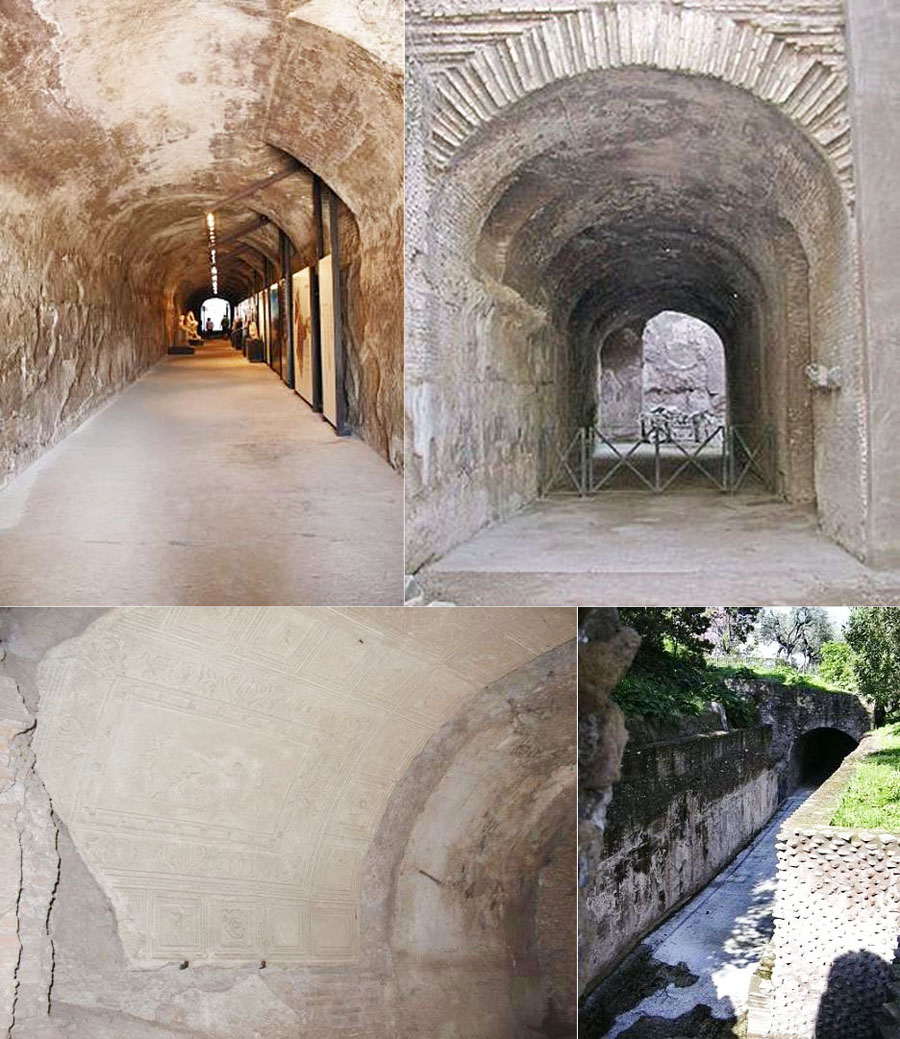
The cryptoporticus, a covered corridor or passage way, was built by Emperor Nero
Various views of the Neronian Cryptoporticus. Note that the roof has collapsed in the last photo It is 130 meters in length, illuminated by basement windows. It connects the south side of the Domus Tiberiana to the so-called House of Livia. Livia was the wife of Emperor Augustus.
Today the corridor is lined with many statues and other art objects found elsewhere on site and brought here for display.
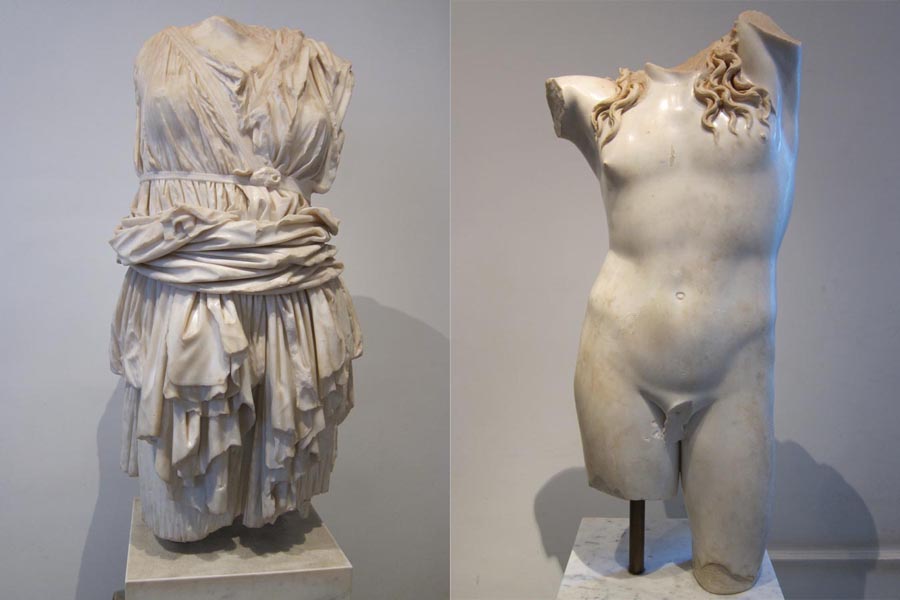
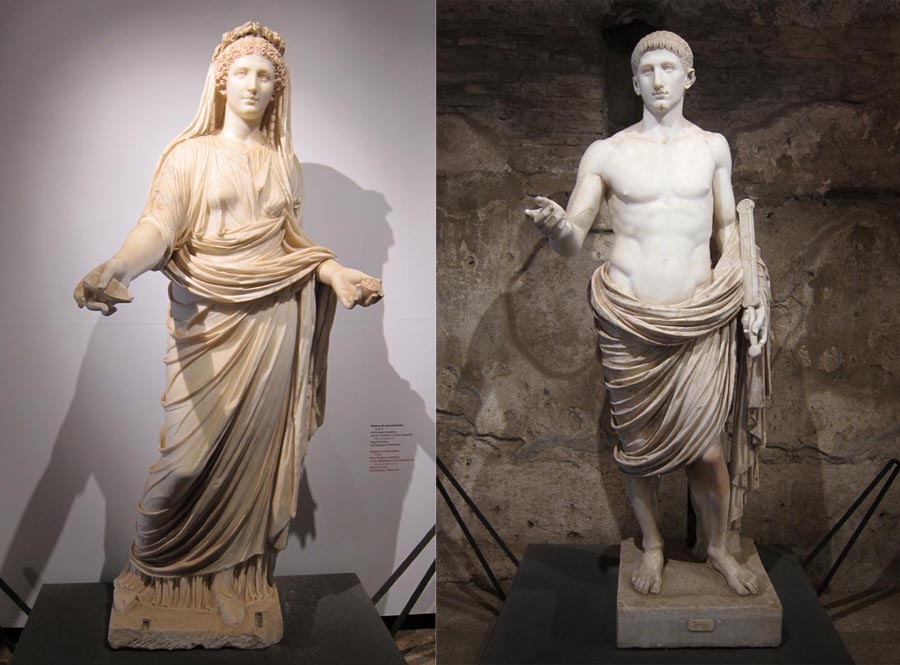
These two statues, depicting a semi-nude man in a heroic pose, and a priestess, were found in a building elsewhere on Palatine Hill, both of which can be identified with notable local citizens active in the imperial cult. Only the globe, symbol of Nero's universal domination, has been found from the statue of the emperor that must have accompanied these two statues.
Pete caught a close-up of the infinite detail with which the artist nearly brought his work to life
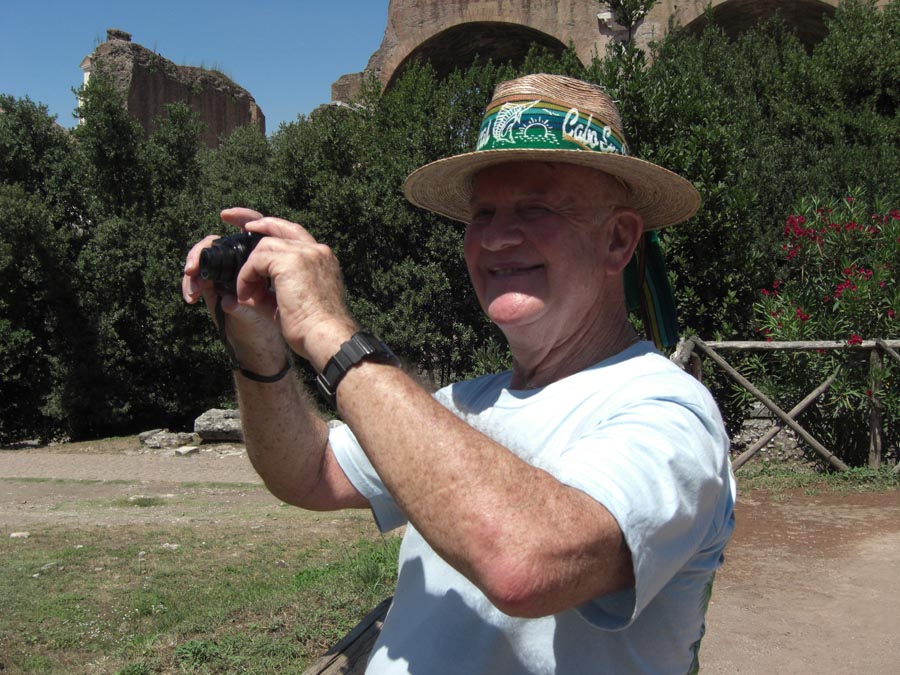
The thing I love about digital cameras is that you can take as many shots as you want, and the chances of getting a decent photo of your subject is greatly enhanced, and it doesn't cost you a dime. No processing fees, or film costs The House of Livia dates from the 1st century BC and is where Emperor Augustus and his wife Livia lived. It is also one of the best preserved houses on the Palatine Hill. Certain parts of it are still closed to the public, as excavations continue.
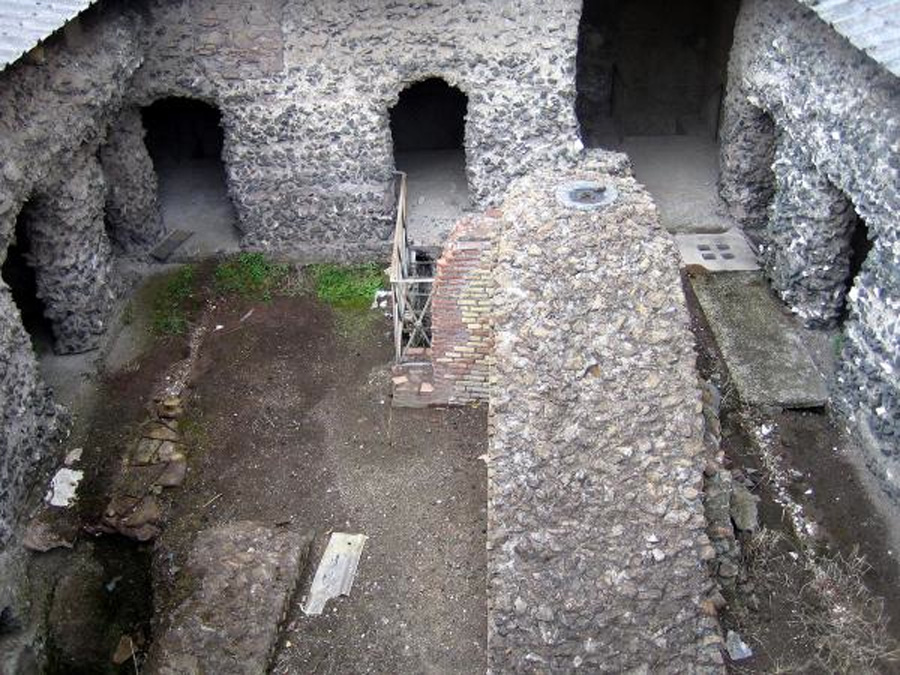
The House of Livia, with all the splendid marble and finished surfaces long gone. Yet, hidden below are rooms that
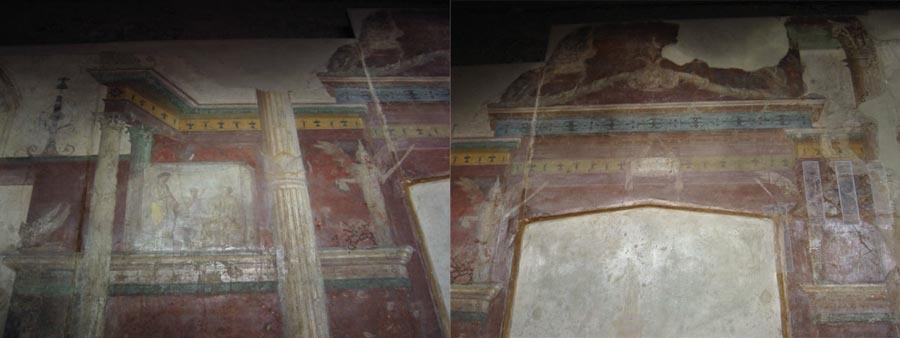
The walls and ceilings were ornately decorated with frescos, most of which have been relocated to a museum
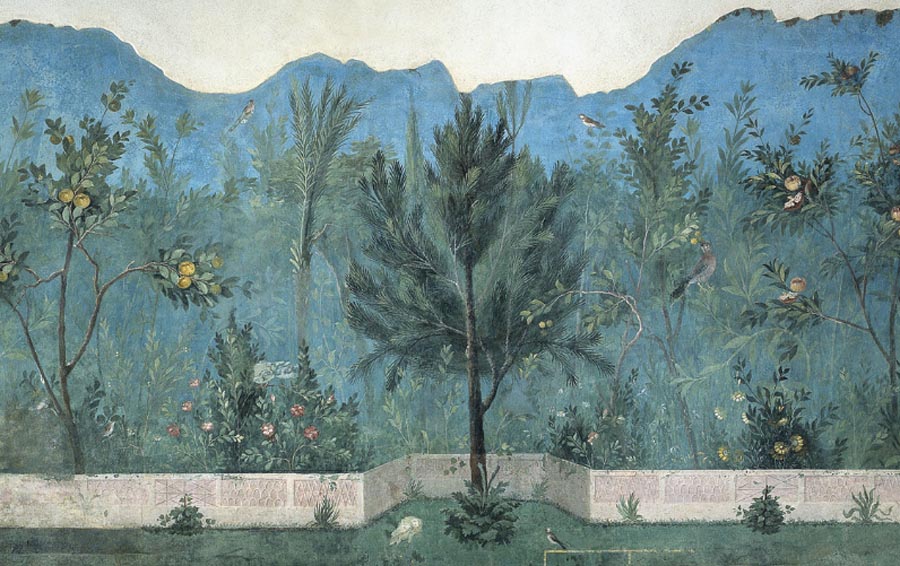
This beautiful fresco now resides in a museum which we will visit in a couple of days. I'm not sure if everyone is aware that archeological sites are discovered quite frequently by developers excavating for a new building in Rome. It can be a nightmare, as sometimes the construction work is stopped until the archaeologists can glean all the information they can from the new find. Well, it was not much different in the time of Emperor Augustus. During his reign, an area of the Palatine Hill was roped off for a sort of archaeological expedition, which found fragments of Bronze Age pots and tools. He declared this site the "original town of Rome." Modern archaeology has identified evidence of a Bronze Age settlement in the area which predates Rome's founding. An 1863 excavation of the house of Livia Drusilla (58 BCE-29 CE) had uncovered a series of four magnificent frescoes (one is shown above) decorating the walls of the underground dining room. The flora was depicted in such great detail that scholars have been able to identify many of the species represented. One of the most abundantly represented plants in the so-called Garden Room is the bay laurel, a type that held special significance for Livia. In the ancient world, Livia's house was known as the Villa ad Gallinas Albas (House of the White Hen). When Livia was newly betrothed, a white hen holding a laurel branch in its beak dropped into her lap. The event was interpreted as an omen of good fortune, laurel being not only a symbol of peace and victory, but also, as an evergreen, associated with virtue and immortality. Livia supposedly planted the branch, which eventually yielded an entire laurel grove on the Prima Porta estate. Augustus was also closely linked with the laurel tree, using it frequently as a symbol of his reign, which brought unprecedented peace and prosperity to Rome. In January 2007 Italian archaeologist Irene Iacopi announced that she had probably found the legendary Lupercal cave beneath the remains of Augustus' residence, the Domus Livia (House of Livia) on the Palatine. Archaeologists came across the 16-meter-deep cavity while working to restore the decaying palace.
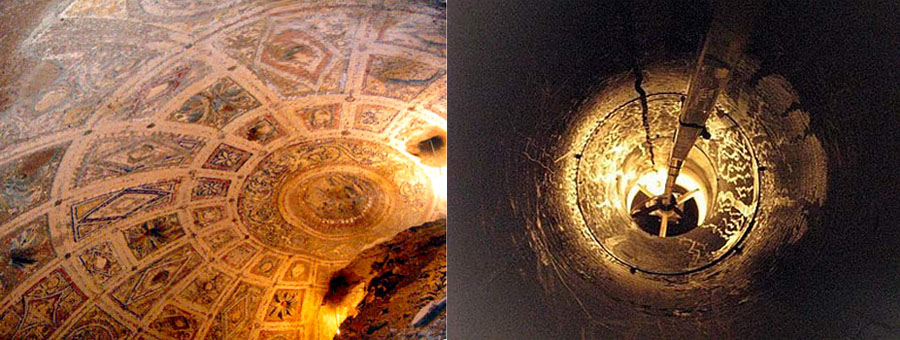
The Lupercal, a dome in the cave where Romulus and Remus were believed to have been suckled by a she wolf, has been discovered during recent restoration work done on the House of Augustus. A small shaft (shown above) led the researchers to a domed hall, much of which was filled with debris. The bottom of the shaft can be seen in the ceiling of the dome (right edge of left photo above) with cables dropping down with camera equipment attached. The dome is covered with painting, stucco and seashells, in vary vivid colors. The location is appropriate, as Augustus restored the cave and re-instituted the Lupercalia as part of his program of religious revival. The Lupercalia, according to literary sources, was celebrated on February 15. Priests, known as Luperci, would sacrifice two male goats and a dog, and two young patrician youths would be smeared with the blood, after which it would be wiped off with wool dipped in milk. Leather thongs would be cut from the skins of the sacrifices, and the priests would run around the Palatine, striking everyone they came upon. Girls who were struck were thought to become extra fertile. The ceremony lasted until the end of the 5th century, when it was outlawed by Pope Gelasius. GEE, I WONDER WHY! The Lupercal is partially collapsed, and is buried 16 meters inside the Palatine Hill. It amazes me that still today new discoveries are being unearthed, and the continuing story of Rome is steadily coming more into focus and more fascinating. Everywhere we went we saw signs of archaeological digs in progress. It will probably be a thousand or more years before all that is hidden becomes known. I am still anxiously awaiting word that the Chinese have opened the mausoleum of Emperor Qin Shi Huang, the First Emperor of China. The mausoleum is guarded by tombs containing an army of life-sized Terra-cotta soldiers with horses, chariots and weapons, which we have visited in Xi'an. The contents of the mausoleum has been described by Sima Qian in his most famous work, Shiji completed a century after the mausoleum completion. He wrote that the First Emperor was buried with palaces, towers, officials, valuable artifacts and wonderful objects. According to his account there were 100 rivers simulated with flowing mercury, and above them the ceiling was decorated with heavenly bodies below which were the features of the land. According to Sima Qian, work on this mausoleum began in 246 BC, soon after Emperor Qin ascended the thrown (then aged 13), and the full construction later involved 700,000 workers. The mausoleum will not be unsealed until the science is developed that will allow the preservation of its contents against exposure to the atmosphere. It has been hermetically sealed for 2,221 years, as were the Terra-cotta army he created to protect him in the after life. We know what happened to the painted figures when that site was opened. It all flaked off and turned to dust. This is what the Chinese wish to avoid with the First Emperor's mausoleum. So, now you can know why I am anxious for that technology to be developed. I hope it happens in my lifetime. And to think that it was about this very time, but on the other side of the world, that the Roman Empire was just coming into existence. Back then the world was still very big indeed.
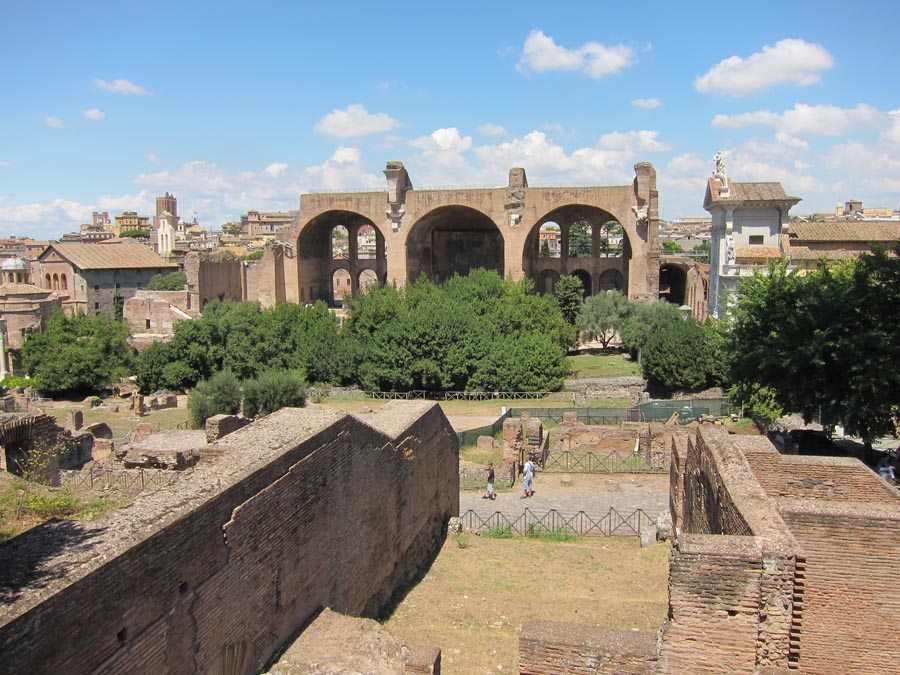
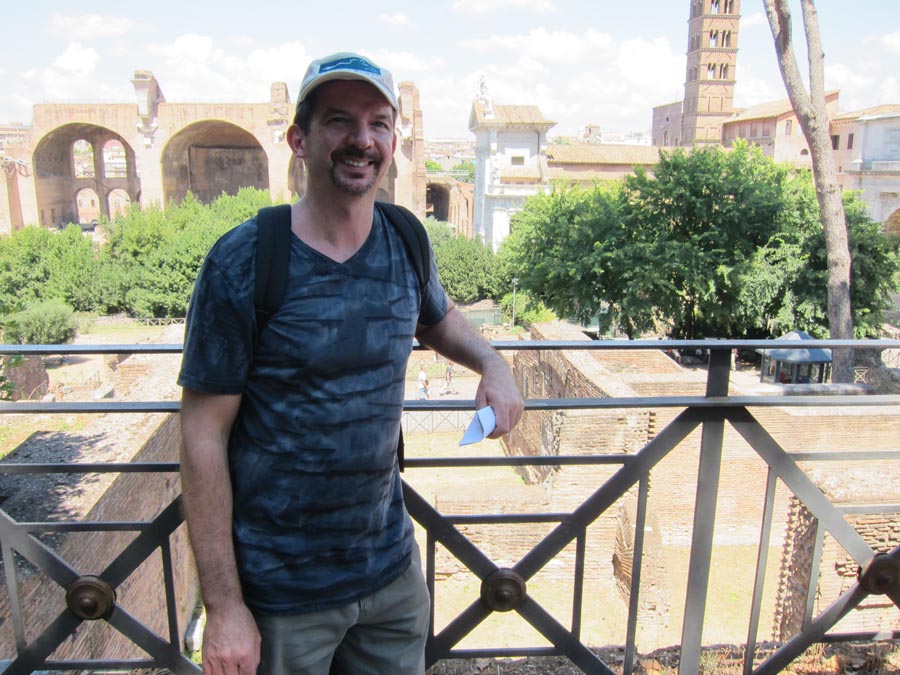
As we leave Palatine Hill, we have a splendid view of the Roman Forum with the Basilica of Maxentius at center.
We've been doing a lot of walking, and we were both in need of a little rest before descending the steps to the Forum
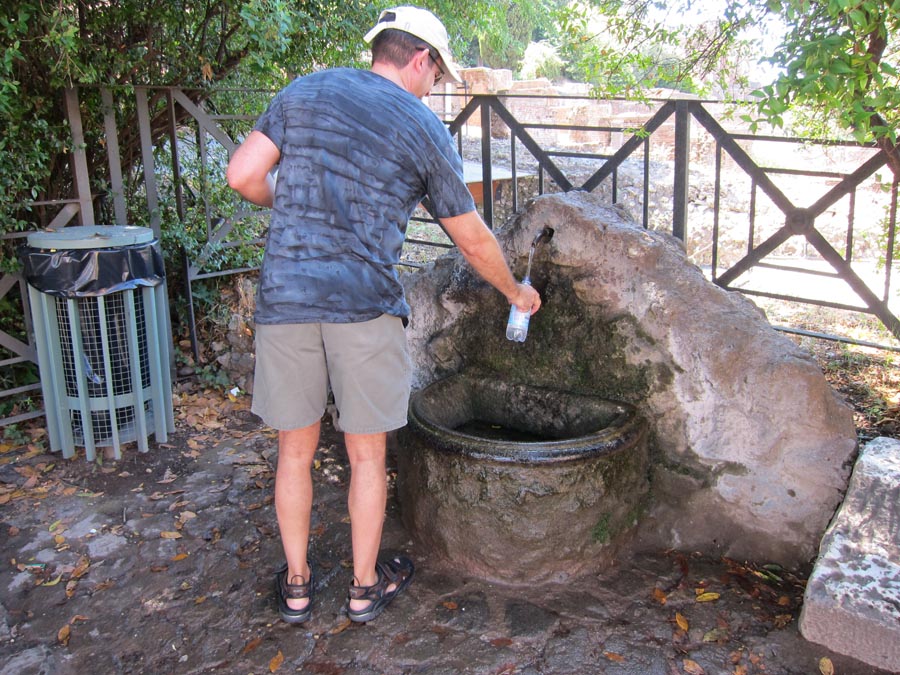
Fortunately there were places where we could refill our water bottle. It was a hot day, and not much of a breeze.
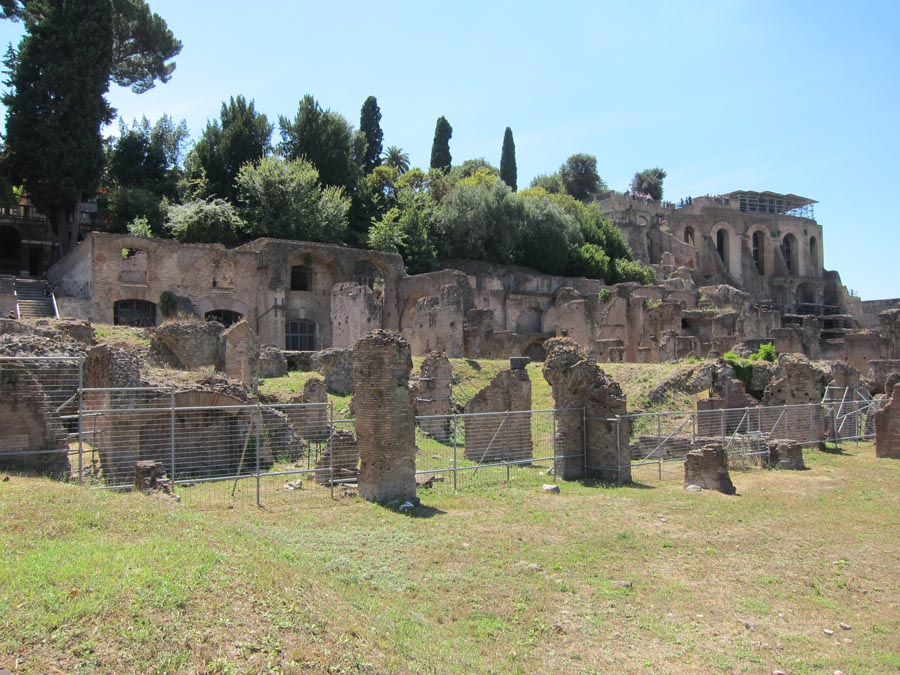
I believe this is looking up at Palatine Hill. You can see that the folks who lived there had a great view of the Forum. Much of the Forum has crumbled away, and few structures remain intact. The Arch of Septimius Severus and the Arch of Titus being two examples of surviving structures.
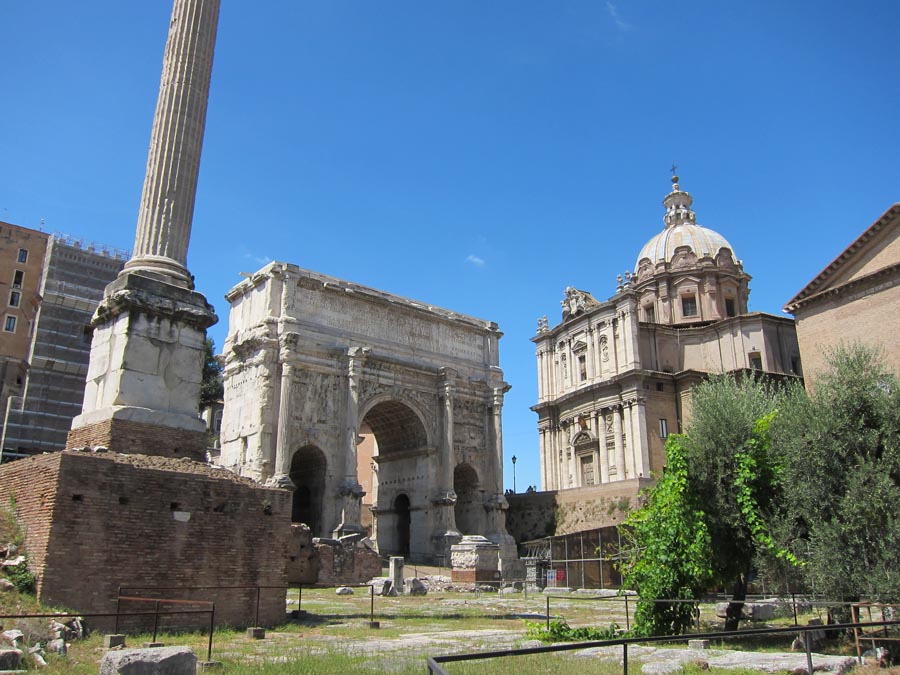
The Arch of Septimius Severus, dedicated in AD 203, commemorates the Parthian victories of Emperor Septimius
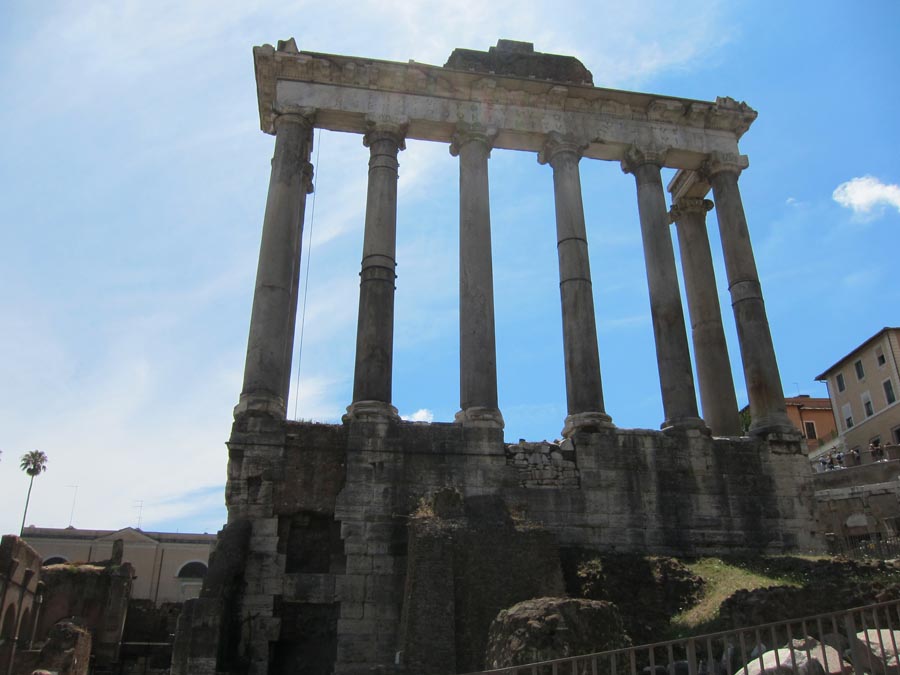
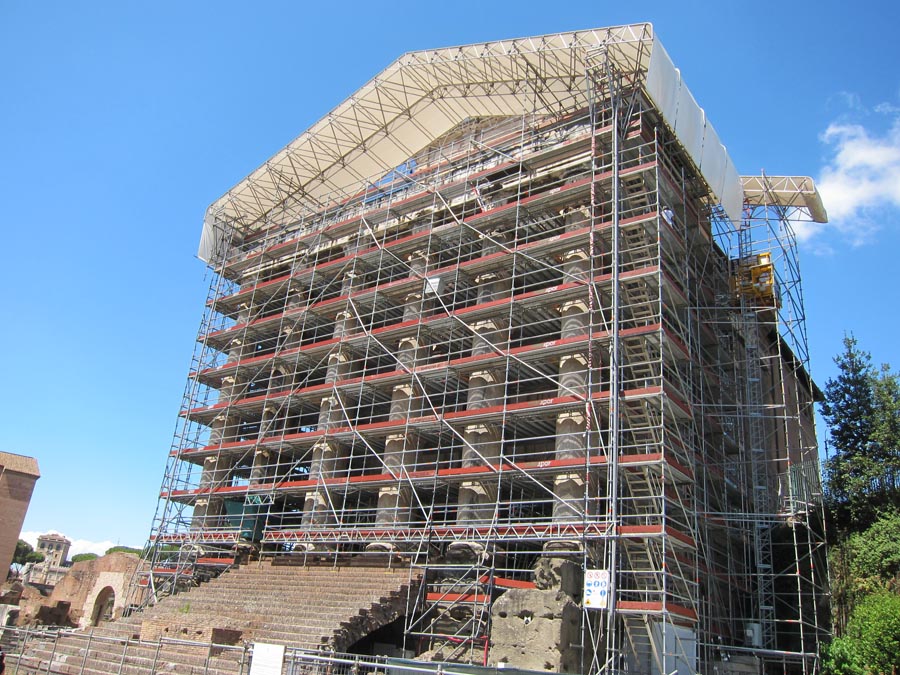
The Temple of Saturn. Gradual collapse has left nothing but the remains of the front portico standing. The partially intact pediment displays the inscription "Senatus Populusque Romanus incendio consumtum reltituit" meaning "The Senate and People of Rome restored what fire had consumed". The present ruins represents the third incarnation of the Temple of Saturn, replacing the second incarnation destroyed by the fire of Carinus in 283 AD. The Roman Forum does not appear to have changed much since our last visit. In fact I think the same scaffolding was on this huge building then, as it is now. I suppose it just takes a very long time to restore ancient structures, or perhaps they finished the work back then, and are not doing it again. It is the same side of the building. If it is the same scaffolding, then I wish I was the one providing the scaffolding for this project, and was charging by the month for its use. With Italy in the EU I'd make a bundle in Euros.
In the next chapter I will get us out of the Forum, and on our way back to the B&B, with a stop for a beer on the way. |
|||||||||||||
|
|||||||||||||
|
|||||||||||||
|
|||||||||||||