 |
|
|
|
|
|
|
|
|
|
|
||||||||
|
||||||||||||||||||
|
Email us at: |
||||||||||||||||||
 |
||||||||||||||||||
 |
 |
|||||||||||||||||
|
Click the sun to see the |
||||||||||||||||||



|
 |
|
|



|
|
|
This part has been delayed by our trip to California in February, and two weeks in Cabo San Lucas. I thought I’d be able to work on it when we were in Cabo, but there was simply too much vacationing going on to allow for any serious thinking about my travelogue. If you remember, in Part 11 I finished the tour of the church in the Melk Abbey and I left you with some photos of the elaborate gardens as we left the abbey. In this part we’ll pass through the town of Dürnstein on our way back to the boat. DAY ELEVEN ~ MELK & DÜRNSTEIN (continued) The town of Dürnstein was established in 1019 AD on a rocky promontory on the bank of the Danube River, on a gentle curve of the river, in the midst of the Wachau Valley, known then as Tirnstein.
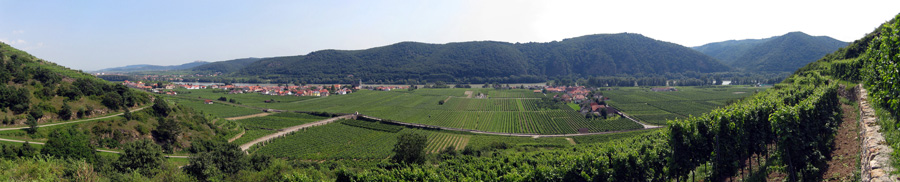
The Wachau Valley is a major wine region. Vineyards gracefully cover the valley and the surrounding hills.
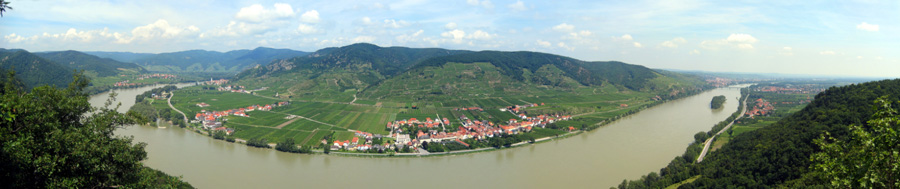
Another view of the Wachau Valley, showing the gentle curve in the Danube River. Dürnstein can be seen on the far The town of Dürnstein now has a population of 936. It is just 73 km upstream of Vienna. The town is well known for its picture-perfect scenic beauty. Chronologically, here are a few of the historical legacies associated with the town. The imprisonment from December 1192 to March 1193 of the English King Richard I Lionheart in the Dürnstein Castle.
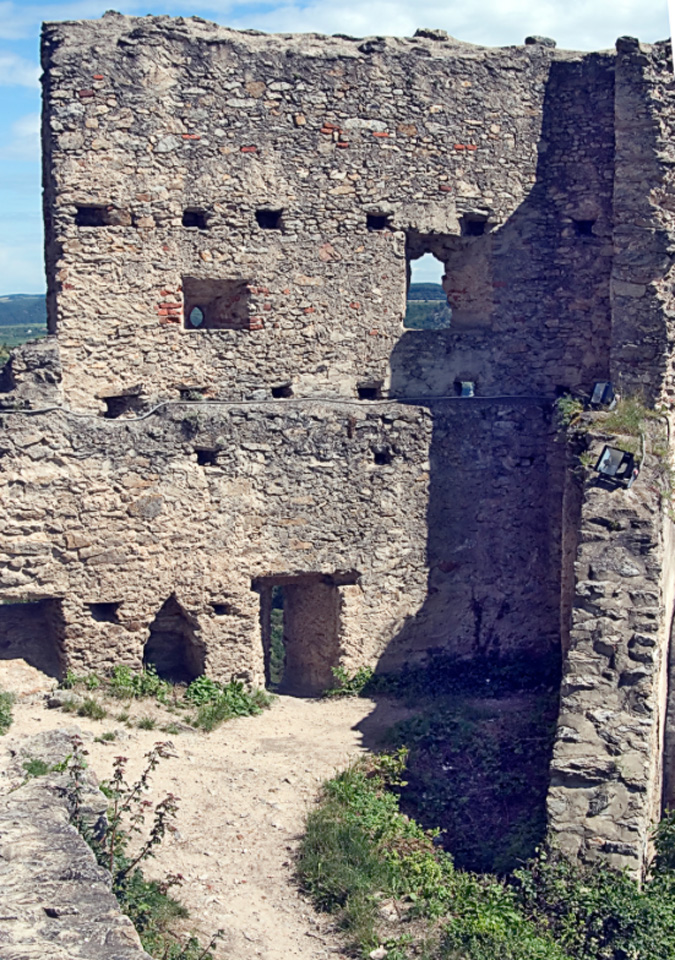
The ghostly remains of Dürnstein castle, in which the English King Richard I Lionheart was held Next was the conquest by the Babenberg Duke Frederic II over the rebels of the Kuenring in 1231. First mention of the St. Kunigunde church 1289. Recognition as a town in 1347. The end of the dynastic rule of Dürnstein by the Kuenrings in 1355. The Habsburgs acquisition of Dürnstein as sovereigns under the rule of Duke Albrecht III of Austria in 1356. The Battle of Dürnstein, during the Napoleonic Wars, was fought against the French invasion on 11 November 1805. The battle took place on the planes of the Wachau Valley, where the grape vineyards now stand, in the first photo (above).
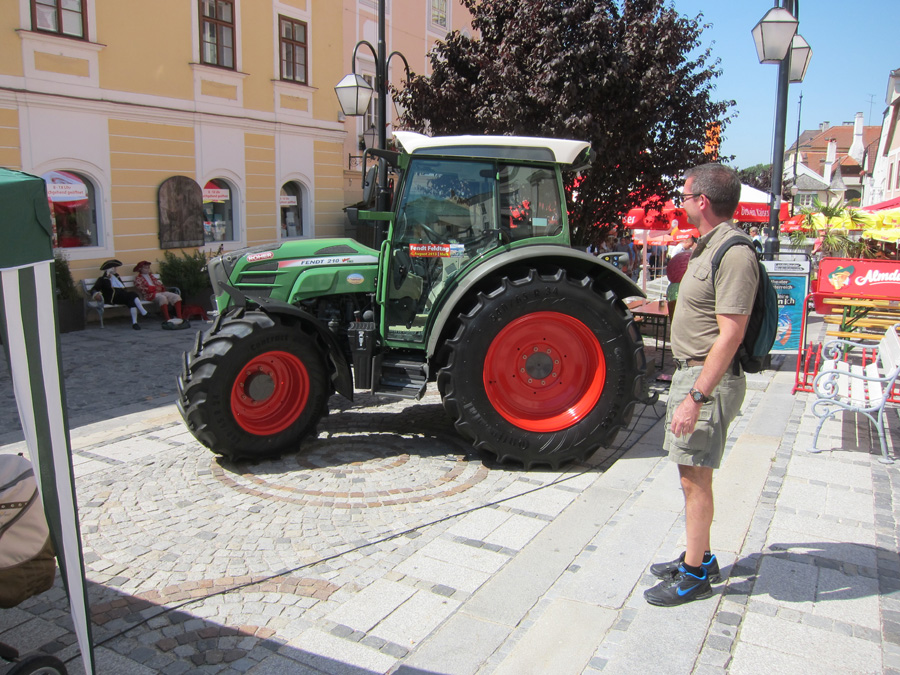
Pete, eyeing this tractor, thinking how much his brother Joey would love to have it for the real muscle work on his property.
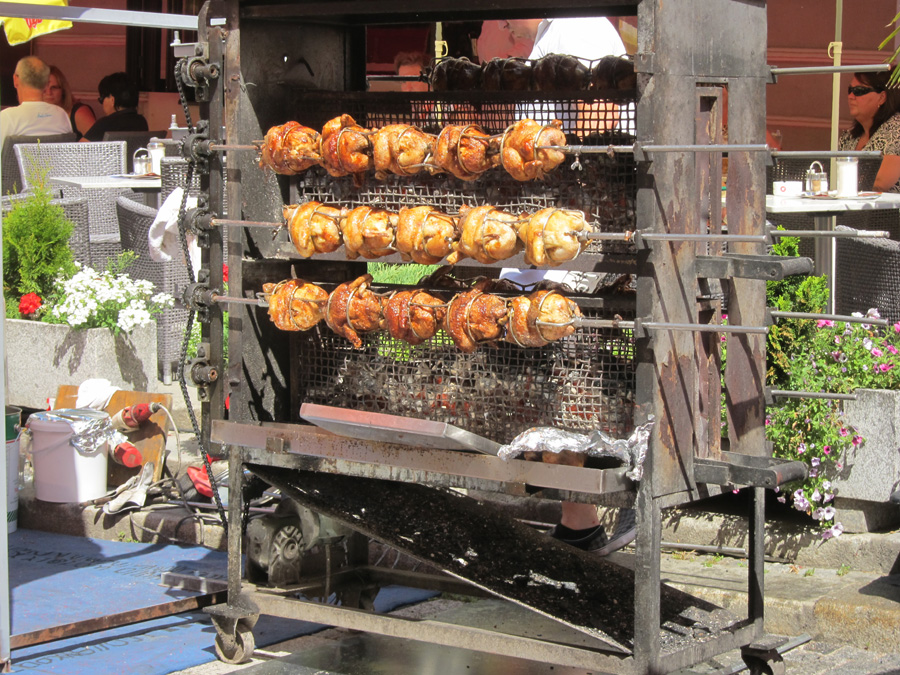
This rotisserie is quite a complicated contraption, but those chickens look really delicious.
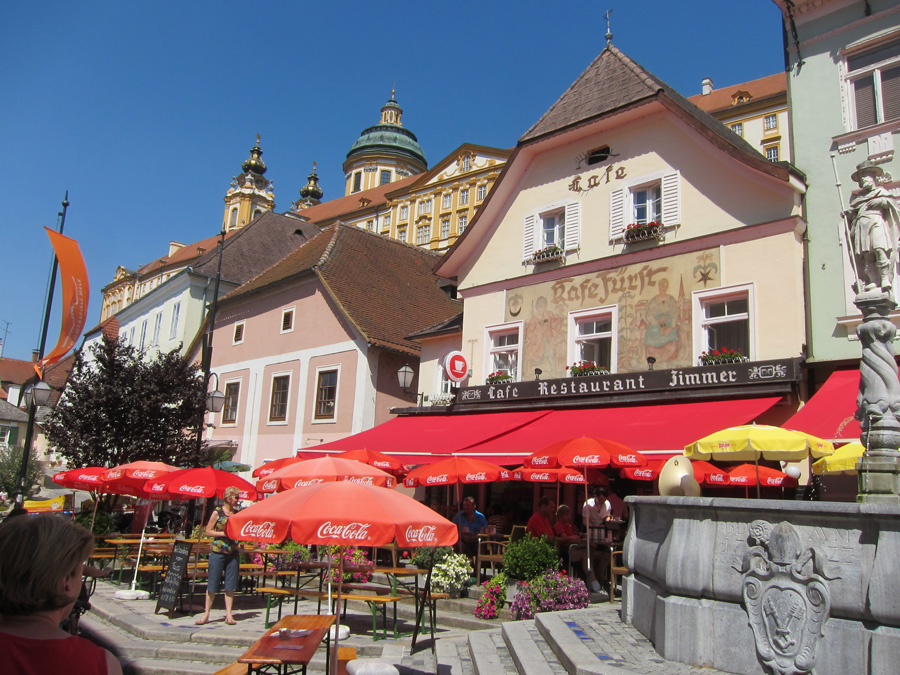
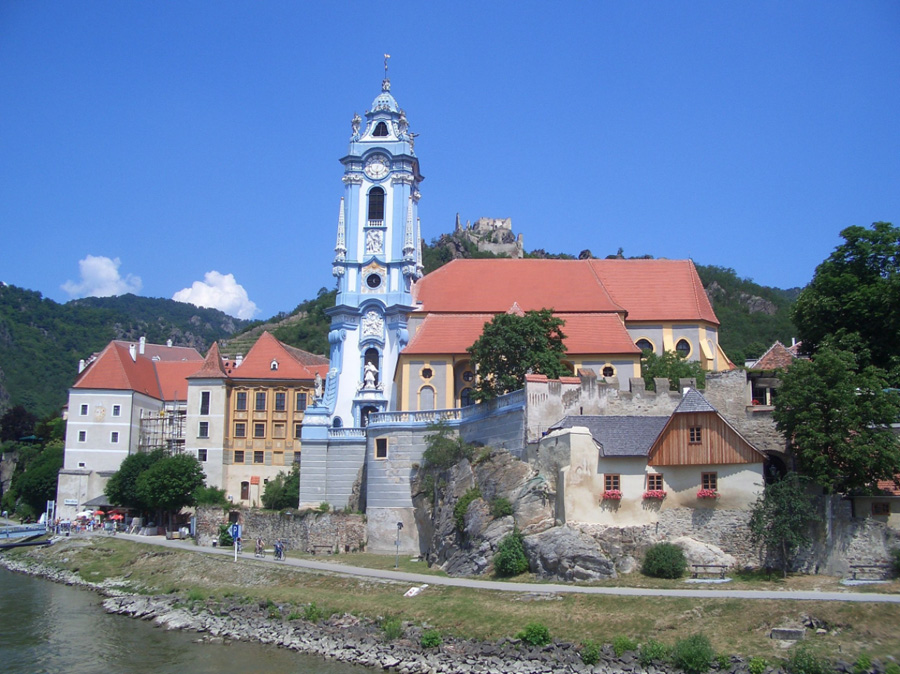
I have a kind of thing going with CocaCola. I believe they must buy shelf space in the supermarkets where I shop, There is a beautiful blue church in Dürnstein. It is the former Augustine abbey church, and is Dürnstein's landmark.
The old Augustine abbey church. On the hill in the background is Dürnstein Castle.
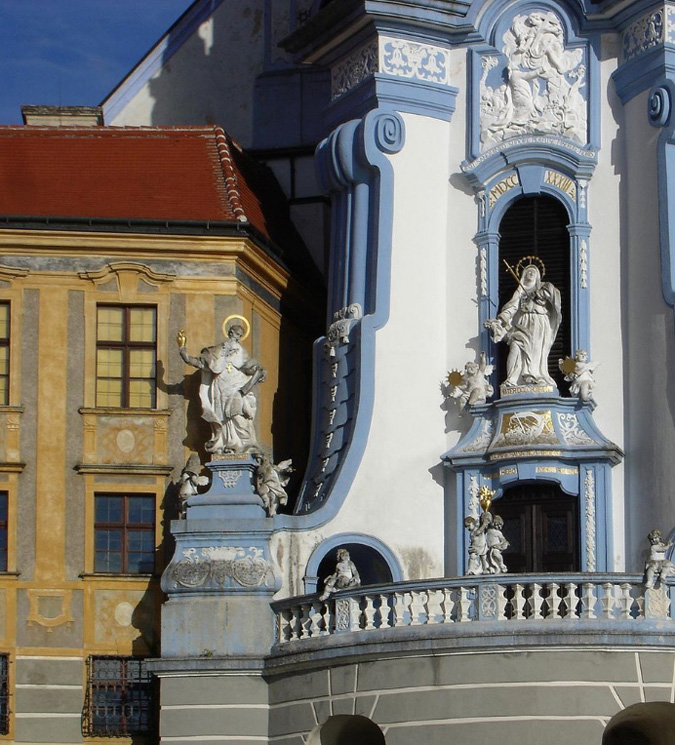
The entrance to the Abbey is certainly beautiful, and beckoning to the wayfarer.
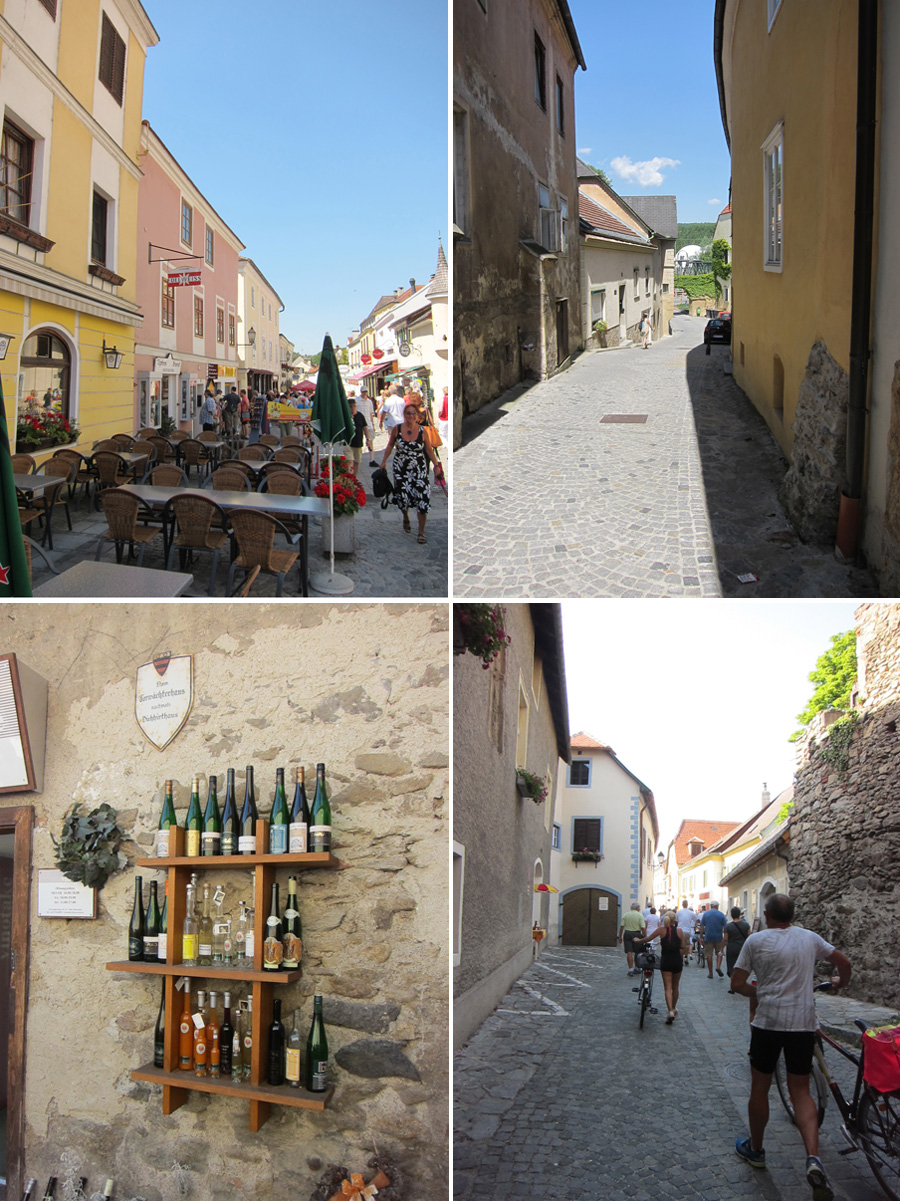
The streets are narrow, and cobble stoned. There are lots of outdoor cafes for your enjoyment. What a lovely city to visit.
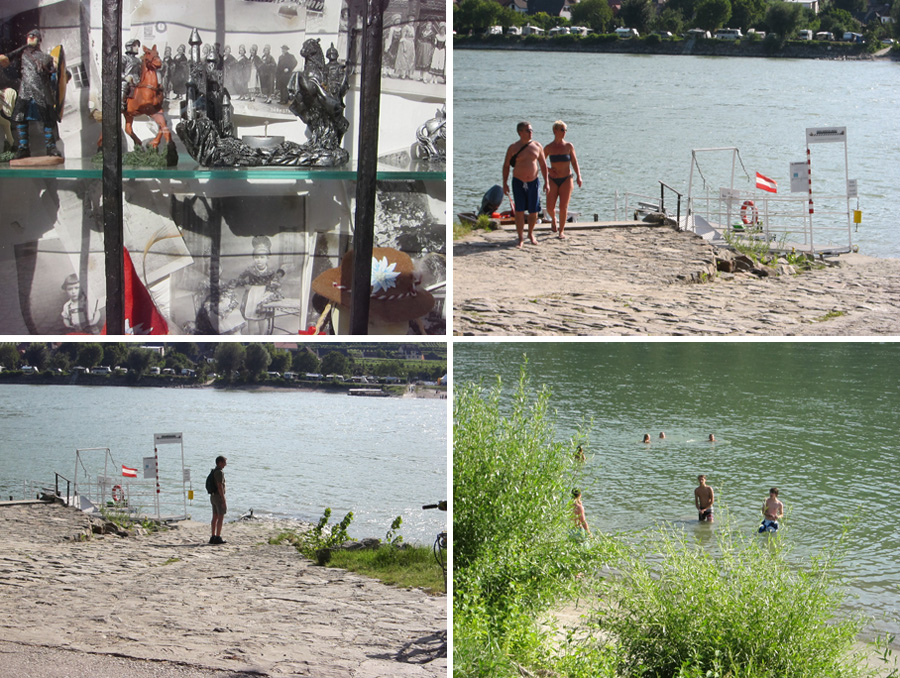
One of the shop windows had some beautiful pewter ware. Germans love the Danube, especially in summer.
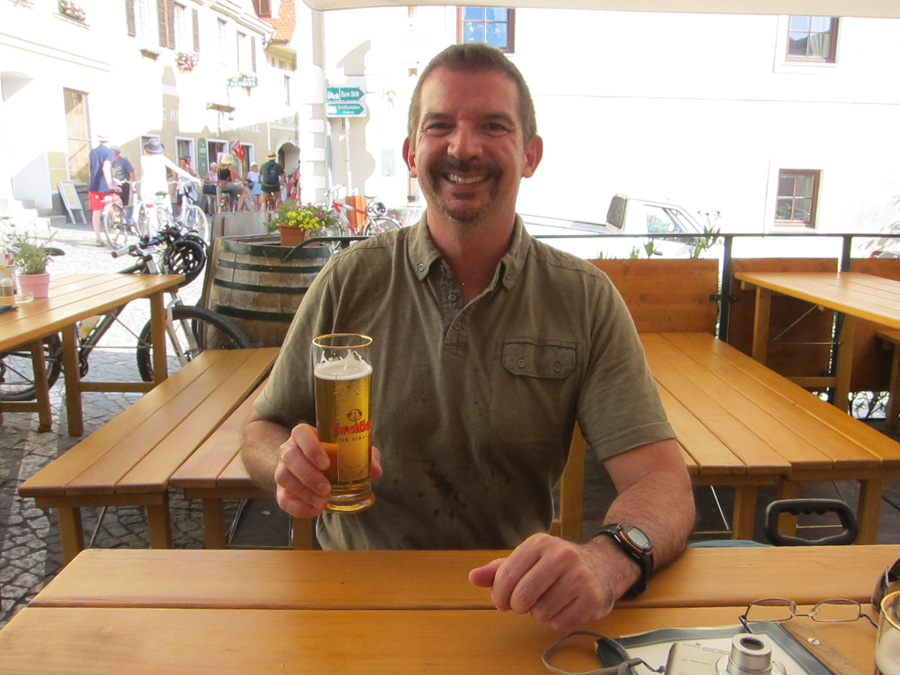
And back in town, what's not to like about a place that has such a quaint little cafe where one can enjoy a local brew?
This is the smile of a happy traveler. We are really enjoying this European vacation with Viking. This wonderful day could not last forever, and what more pleasant way to end it than with a wonderful lunch waiting for us back on board the Freya.
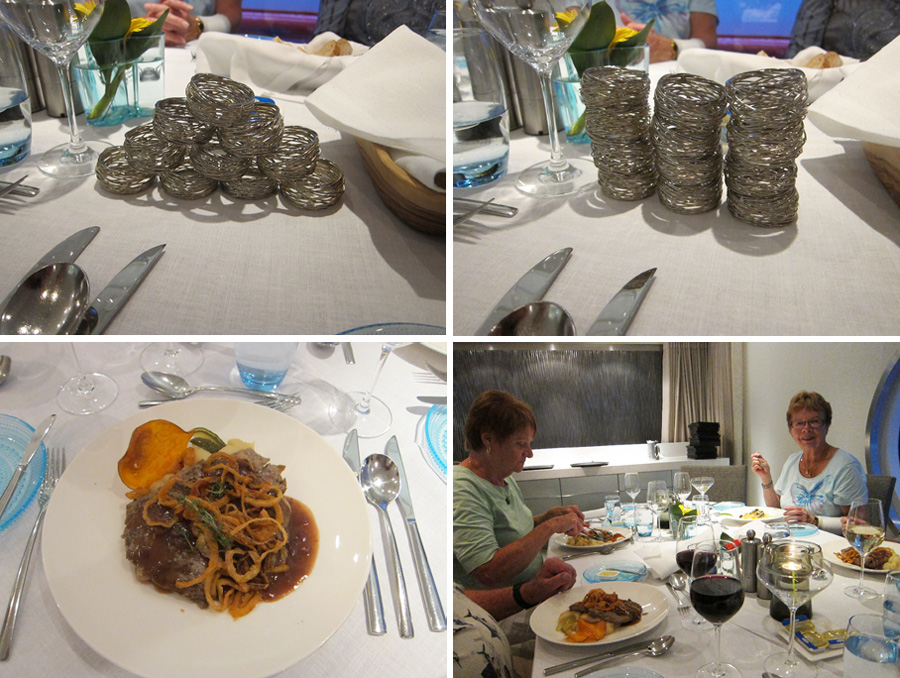
Cindy entertained us by gathering up all the napkin rings and stacking them in various ways. The meal was superb.
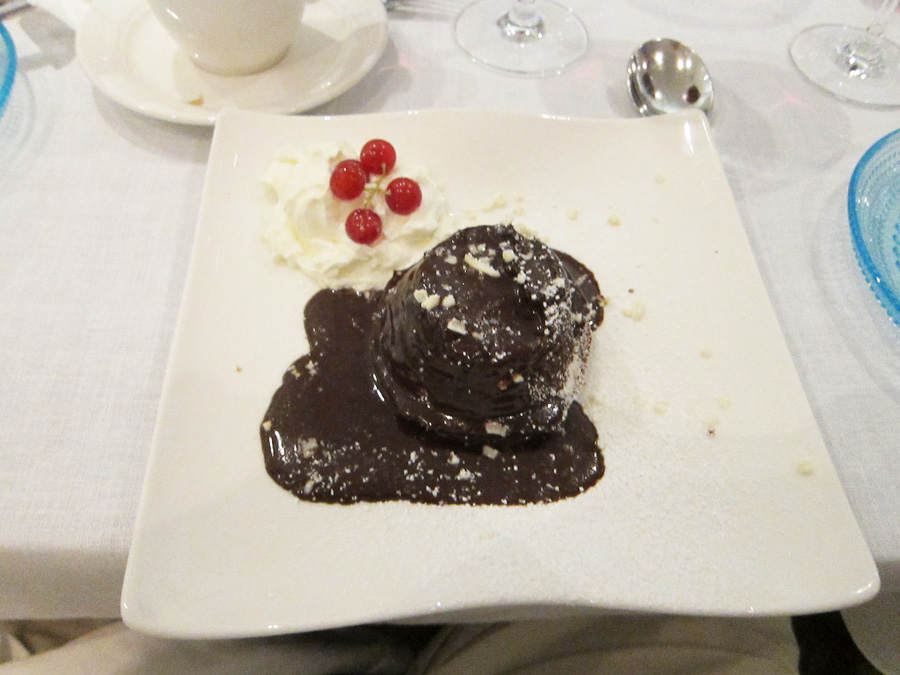
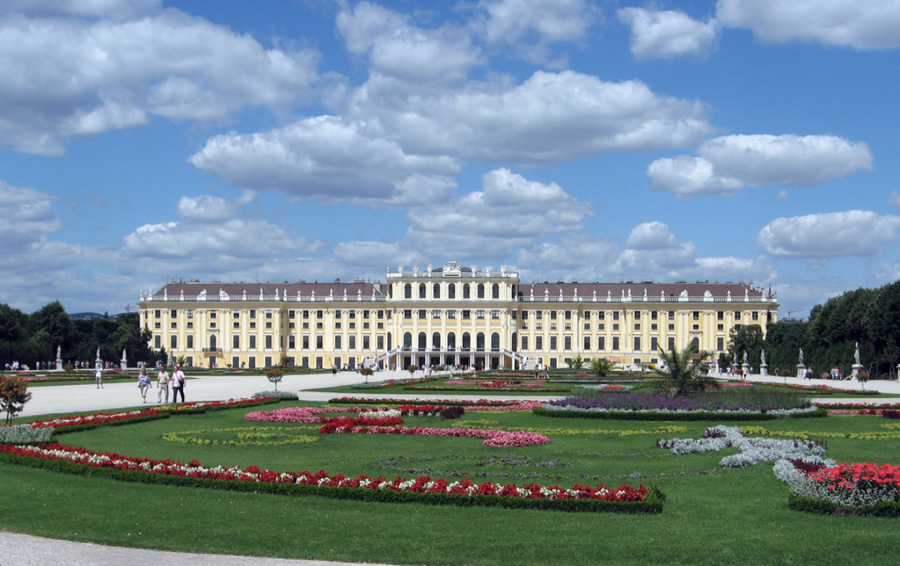
And, as always, the dessert was to die for. It is impossible to lose weight on a Viking cruise. ;o) Here might be an appropriate time to mention that Viking River Cruise is the only river cruise line with its own winemaker. They create vintages that are truly memorable. The wines offered at lunch and dinner are complementary (and I suppose you could even have wine with breakfast if you were to ask for it). They strive for the right combination to properly accent the cuisine, with well balanced wines rich in character. If this sounds like a commercial, well, so be it. I can't say enough good things about Viking. We cast off from Melk at 1:45 PM and headed for Krems. At Krems there was an optional tour offered of a motor coach ride to the wine-growing village of Feuersbrunn followed by a visit to the winery Sandgrube, and wine tasting. It was a 2½ hour affair, and that seemed like it would be a little rushed, so we opted to stay on board. We could have taken a shuttle back to Dürnstein and stroll around town for two hours, but we had already seen enough of Dürnstein. It was nice to just relax on board for a few hours. Besides, cocktail hour, with live music in the lounge began at 5:30 PM. We wouldn't want to miss any of that. ;o) The entertainment in the Viking lounge this evening was a lecture about Vienna Coffeehouses, and the famous composer Wolfgang Amadeus Mozart. We would be casting off at midnight from Krems and head for Vienna. We arrive in Vienna at 6:30 AM, and our shore excursion begins at 8:45. Vienna is the elegant capital city of Austria, and was once the seat of the Habsburgs, the center of the Holy Roman Empire. Today it is one of the world's greatest centers of art, music and architecture. Reading the history of the Habsburg dynasty is an amazing story. It began with Count Rudolf von Habsburg, who was the first Habsburg to the ascend to the thrown of the Holy Roman Empire, 1250 - 1275. The Habsburg dynasty ruled the Holy Roman Empire for nearly six centuries. Napoleon had proclaimed a French Empire, and Franz founded the hereditary Empire of Austria in 1804 and he became the first emperor of Austria as Franz I (1804-1835). On 6 August 1806 Franz I abdicated as Emperor of the Holy Roman Empire, the existence of which came to an end after 844 years. To give you an idea of the scale of the Habsburg's thinking, check this out. If I were to suggest that you think about a hunting lodge, what comes to mind? Is it a quaint and rugged log cabin nestled on some far off mountain side, near the game that is to be hunted? There may be several bedrooms, quite small, but adequate. A huge meeting area with a large fireplace to warm the interior, which would be the primary meeting place for the various guests. There would be stuffed heads of various game animals hung on the walls as trophies from hunts of years gone by. But I'm fairly certain that this next picture would not enter anyones mind, at least not anyone I know.
This is what the Habsburg monarchs had in mind when they contemplated a hunting lodge. At the end of the 17th century Emperor Leopold I commissioned the gifted Baroque architect Bernhard Fischer von Erlich to build this palatial hunting lodge for the heir to the throne. Schönbrunn Palace remains today one of the most important cultural monuments in the country. This was the place where John F. Kennedy and Nikita Khrushchev met in 1961.
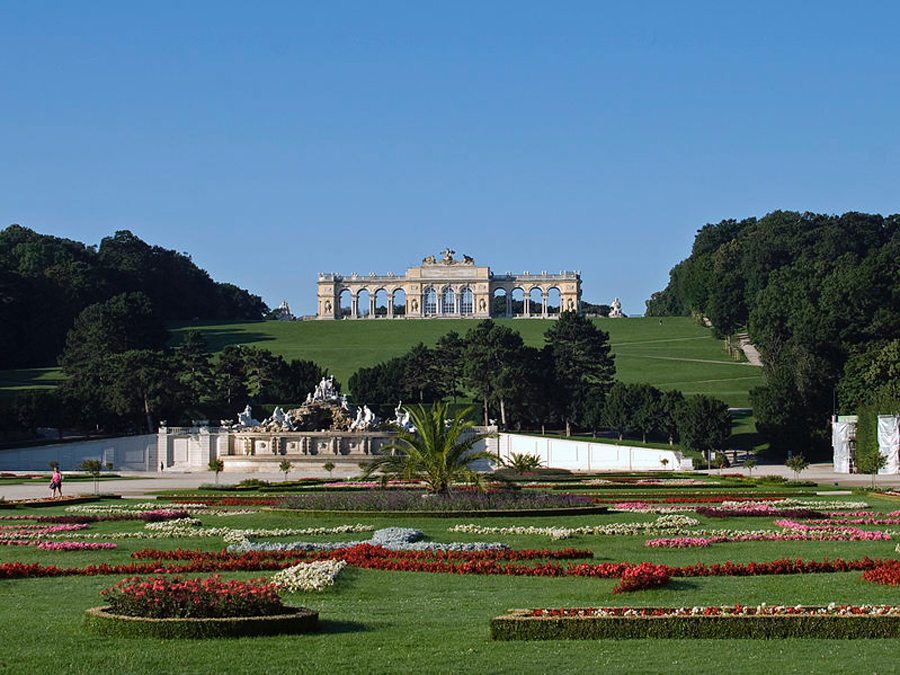
Pete walked up the hill to view up close the magnificent structure at the far end of the garden. I was content to stay put. This concludes another wonderful day on this Grand European Tour with Viking. In Part 13 we’ll begin our city tour of Vienna. |
|
||||
|