 |
|
|
|
|
|
|
|
|
|
|
||||||||
|
||||||||||||||||||
|
Email us at: |
||||||||||||||||||
 |
||||||||||||||||||
 |
 |
|||||||||||||||||
|
Click the sun to see the |
||||||||||||||||||



|
 |
|
|


|
|
||
|
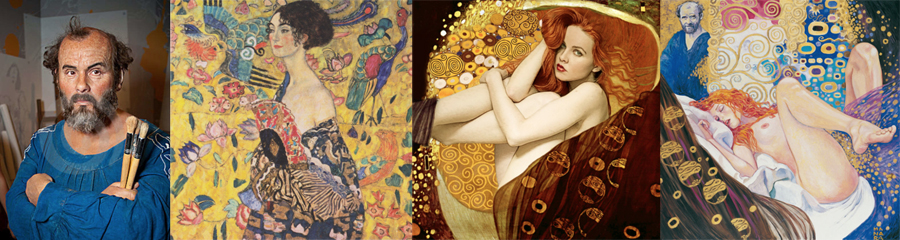
DAY TWELVE ~ VIENNA Vienna, the capital of Austria, has a history both famous and infamous. Going back to its early beginnings, the land known today as Austria, was dominated by the ancient Celts. In the 700’s it came under the rule of Charlemagne, King of the Franks. It changed hands in the 900’s when it was overrun by the Magyars from Hungary, and came under the rulership of German Otto I. In 1242, the last Badenberg died without an heir, and King Ottokar of Bohemia gained control of Austrian territory. Then in 1278 came The Holy Roman Emperor Rudolf I, beginning six centuries of Habsburg rule of Austria. Austria is renowned for the arts, whether on canvas, in the realm of music, or architecture. Gustav Klimt (1862 - 1918) whose primary subject was the female body, was one of the most prominent members of the Vienna Secession movement, the goal of the group being to provide exhibitions for unconventional young artists, to bring the works of the best foreign artists to Vienna, and to publish its own magazine to showcase the work of members.
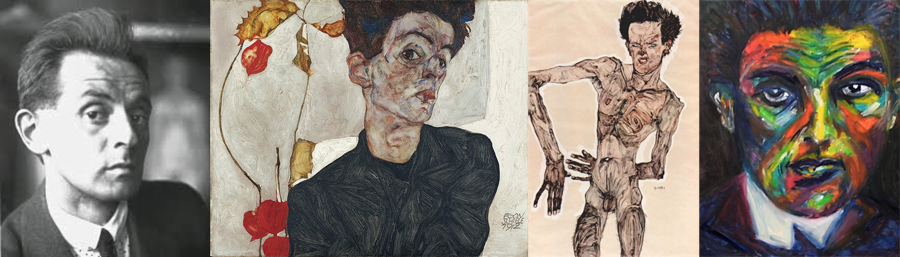
Egon Schiele (1890 - 1918) was an early exponent of Expressionism. He was noted for the many self-portraits he produced. Egon Schiele was a protégé of Gustav Klimt. Like many artists, Egon Shiele was quite a controversial character.
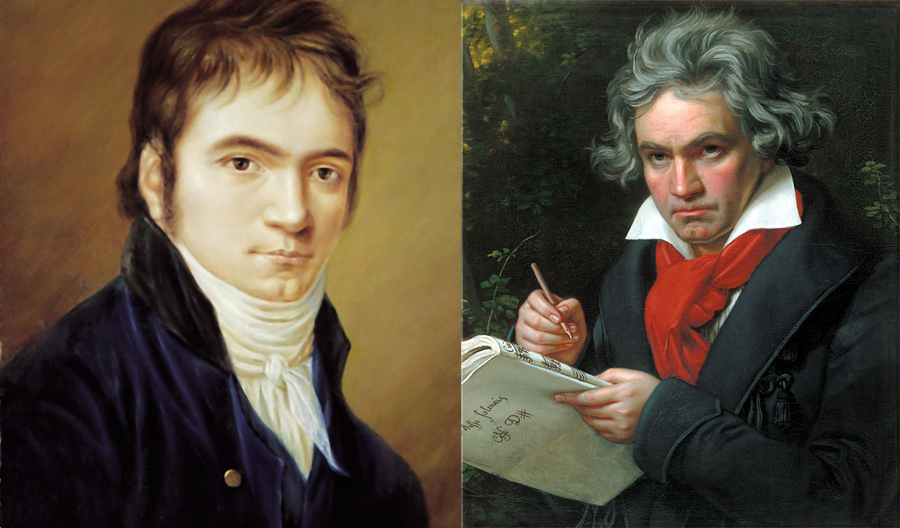
Ludwig van Beethoven (1770 - 1827) one of the most important composers in the history of music, was an innovator who widened the scope of sonata, symphony, concerto and quartets, and combined vocals with instruments in a new way. His personal life was marked by a struggle against deafness, and some of his most important works were composed during the last 10 years of his life, when he was quite unable to hear.
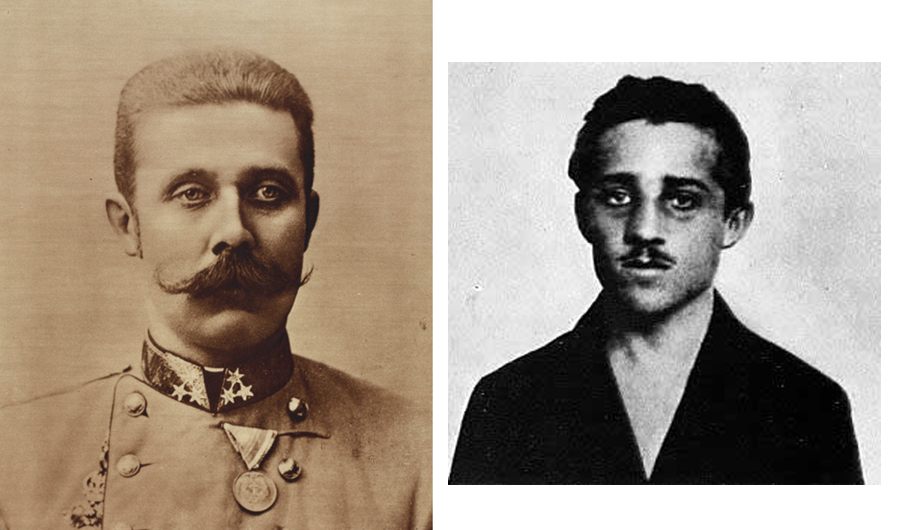
These are just a few of the famous figures who were an integral part of Viennese life. There are also names like Mozart, Haydn, Schubert, Mahler and Strauss, all of whom practiced their arts here in Vienna. There were also some infamous figures. In 1914, Archduke Franz Ferdinand, the heir to the Austrian throne (and a nice guy), was assassinated by Gavrilo Princip (the not so nice guy), and this event triggered World War I.
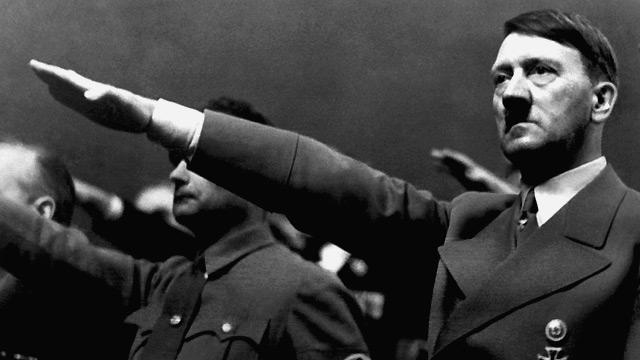
Archduke Franz Ferdinand Gavrilo Princip Following World War I, in 1919, Lloyd George of England, Orlando of Italy, Clementeau of France and Woodrow Wilson from the US met to discuss how Germany was to be made to pay for the damage World War One had caused. From this meeting came the Treaty of Versailles. The German people were very unhappy with the terms of the treaty but had no choice but to sign it. Germany was to accept the blame for starting WorldWar One; Germany was to pay a huge sum (millions) for the damages caused by the war; Germany was only allowed to have a small army of six naval ships; no tanks, no air force and no submarines were allowed, and the Rhineland area was to be demilitarized; and finally, land was taken away from Germany and given to other countries. Union with Austria was forbidden. During the 1920s the people of Germany were very poor. There were not many jobs and the price of food and basic goods was high. People were dissatisfied with the government and voted to power a man who promised to rip up the Treaty of Versailles. His name was Adolf Hitler (another one of the bad guys).
Hitler was born in Braunau am Inn, Austria, just 153 miles from Vienna. After forming pacts with Italy and Japan, in March 1938, German troops marched into Austria. The Austrian leader was forced to hold a vote asking the people whether they wanted to be part of Germany. The results of the vote were fixed and showed that 99% of Austrian people wanted Austria to unite with Germany. One year later Hitler invaded Czechoslovakia, and on the 1st of September, 1939 German troops invaded Poland, and thus began World War II. I present these historical events merely to show that Vienna, and by extension, Austria, played major rolls in events that changed the world, for the better, culturally, musically and artistically, and for the worse, socially and politically. Vienna was once the seat of the Habsburgs, and the center of the Holy Roman Empire. Today, the city is a grand and glorious mix of great and small. The population of Austria is 8 million, and of Vienna it is 1.7 million. Our City Tour was by motor coach, and this is definitely not an ideal way to see Vienna, as many of my photos attest. Vienna is a place one should visit with plans to stay at least a week, and preferably much longer. Our short encounter just barely grazed the surface.
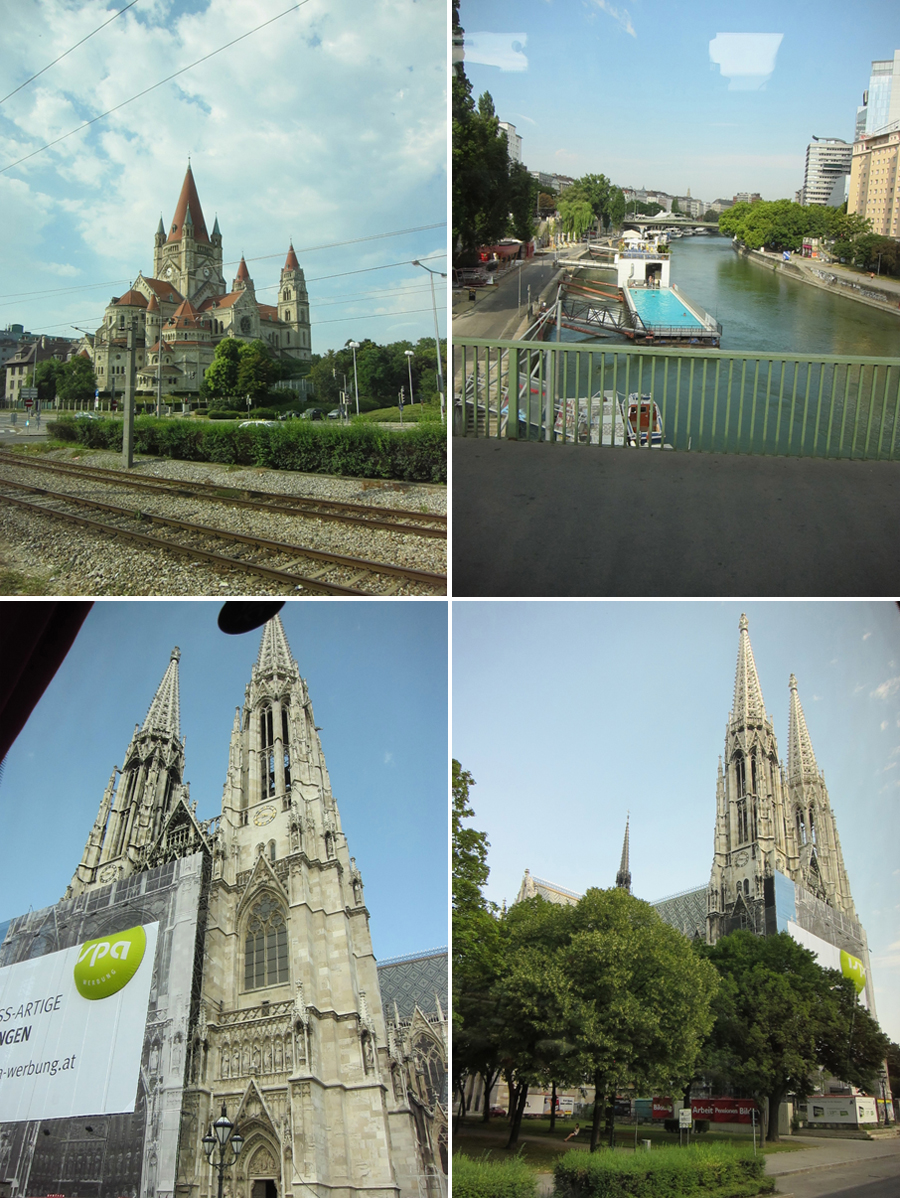
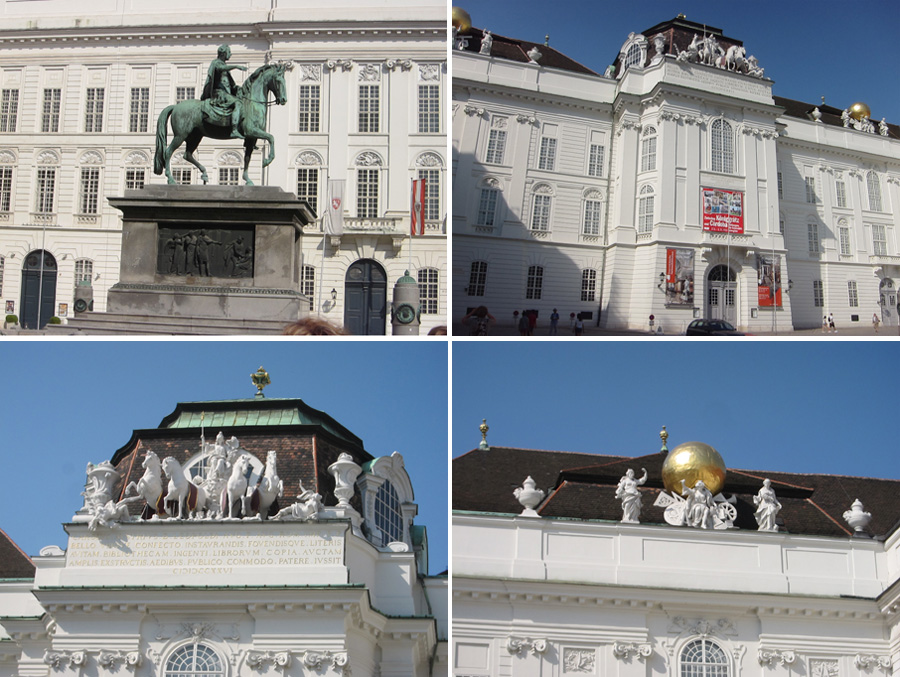
Top-Left: Saint Francis of Assisi church A barge swimming pool Bottom: Votivkirche (Votive Church) Following the attempted assassination of Emperor Franz Joseph in 1853, the Emperor’s brother Archduke Ferdinand Maximilian inaugurated a campaign to create a church thanking God for saving the Emperor’s life. The Votive Church was dedicated in 1879 on the silver anniversary of Emperor Franz Joseph and his wife Empress Elisabeth.
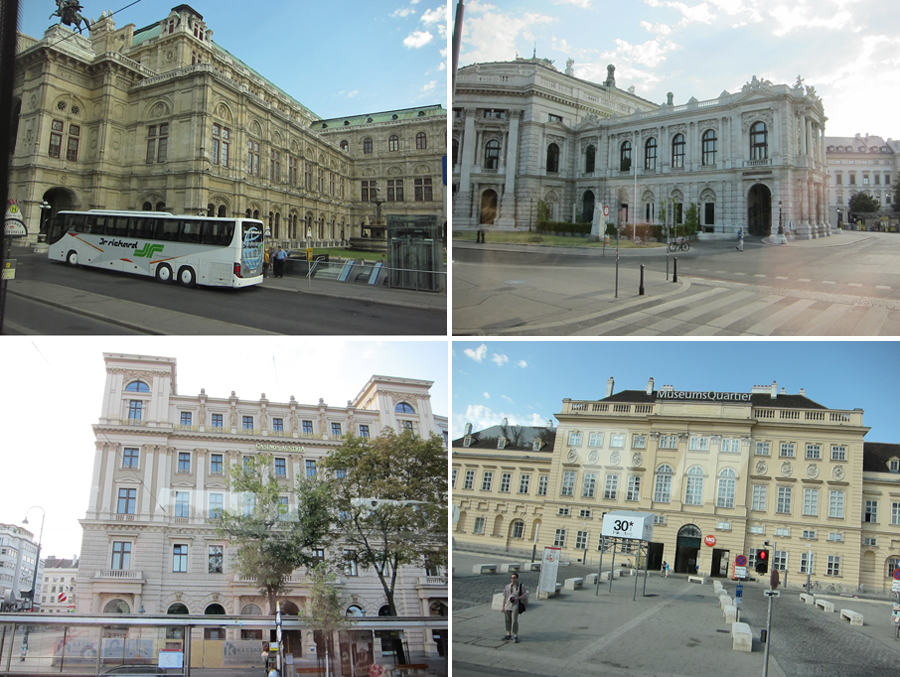
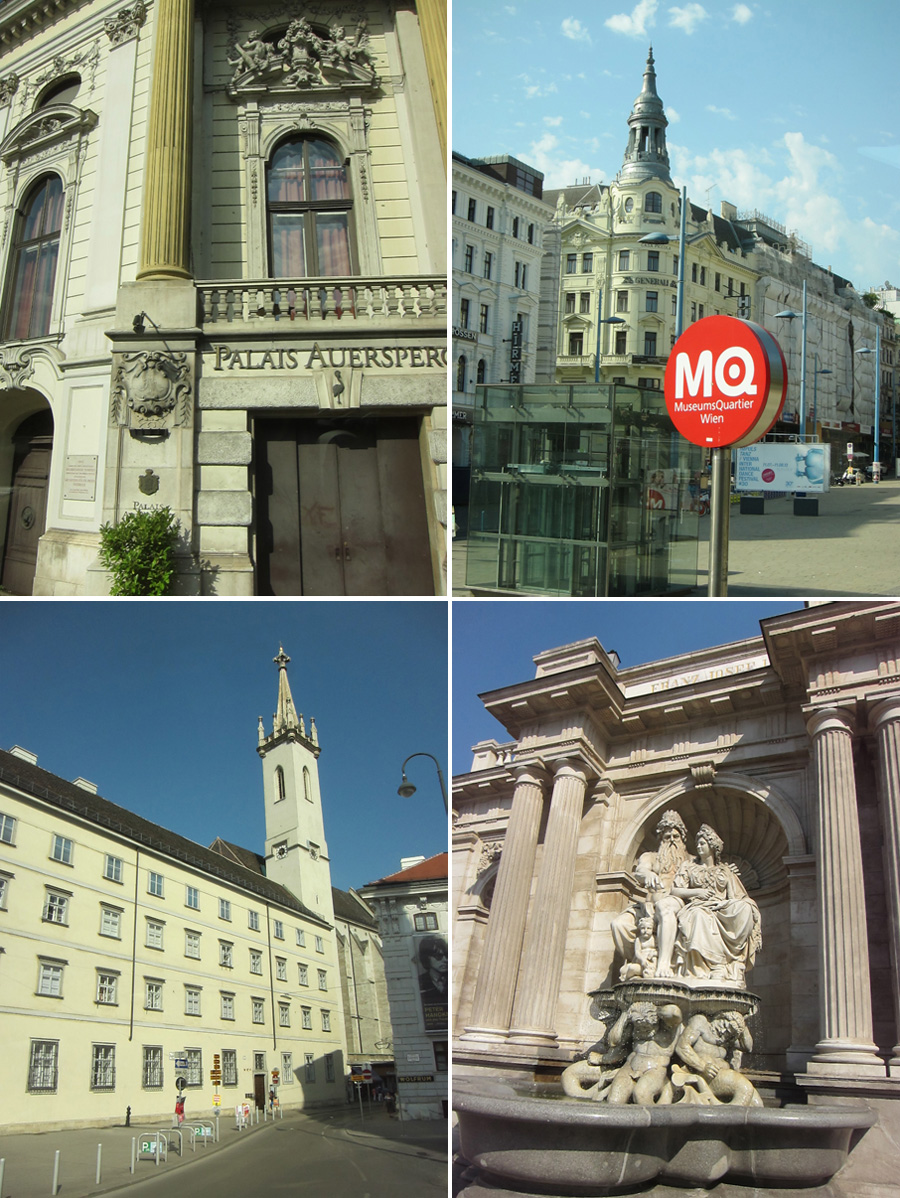
Photos taken from the bus as we drove through the streets of Vienna, with our tour guide in the front of the bus giving
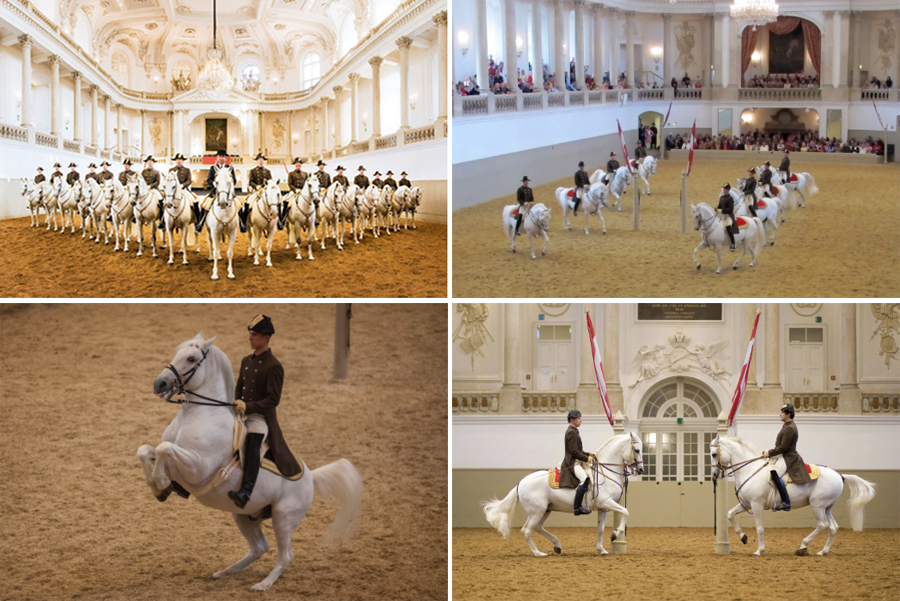
Vienna is world famous for its Spanish Riding School, and its Lipizzan horses. Our timing was not good, since in July and August the Lipizzan horses are stabled in their summer stables in Heldenberg, about 50 km north-west of Vienna, and they do not give performances in summer. The riding school was first named during the Habsburg Monarchy in 1572, long before the French manège of Antoine de Pluvinel, and is the oldest of its kind in the world. Although the wooden riding arena was first commissioned in 1565, it wasn’t until 1729 that Emperor Charles VI commissioned the architect Joseph Emanuel Fischer von Erlach to build the white riding hall used today.
The Spanish Riding School, Vienna, Austria. One of the most heroic and amazing stories you will ever read is the story of “How General Patton and Some Unlikely Allies Saved the Prized Lipizzaner Stallions”. If you are interested, and you should be, click on the link below. You will not be disappointed. http://www.historynet.com/patton-rescues-the-lipizzaner-stallions.htm
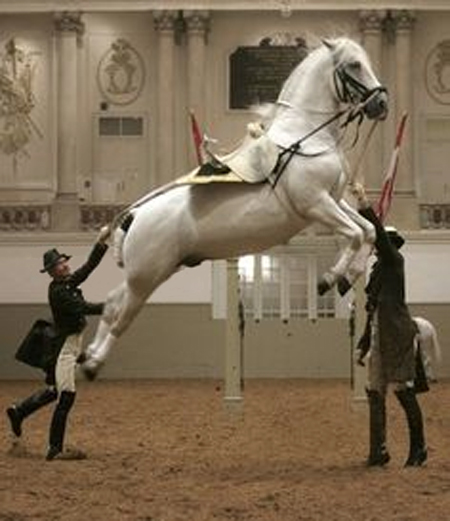
Although we didn’t actually see the Lipizzon’s perform, I thought some images from the Internet were worth sharing.
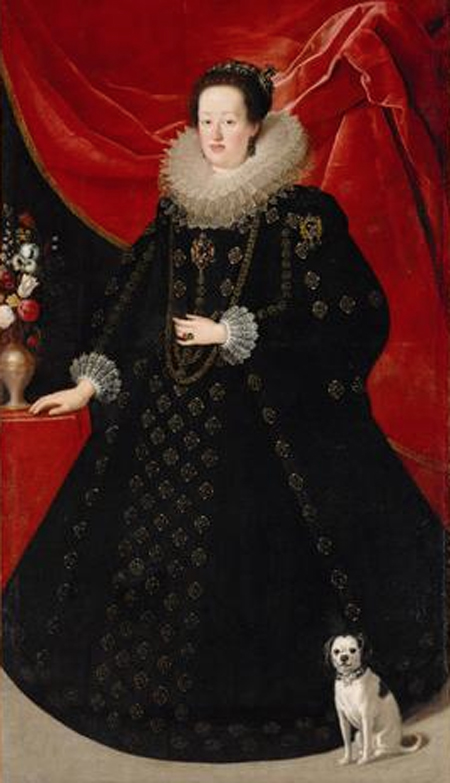
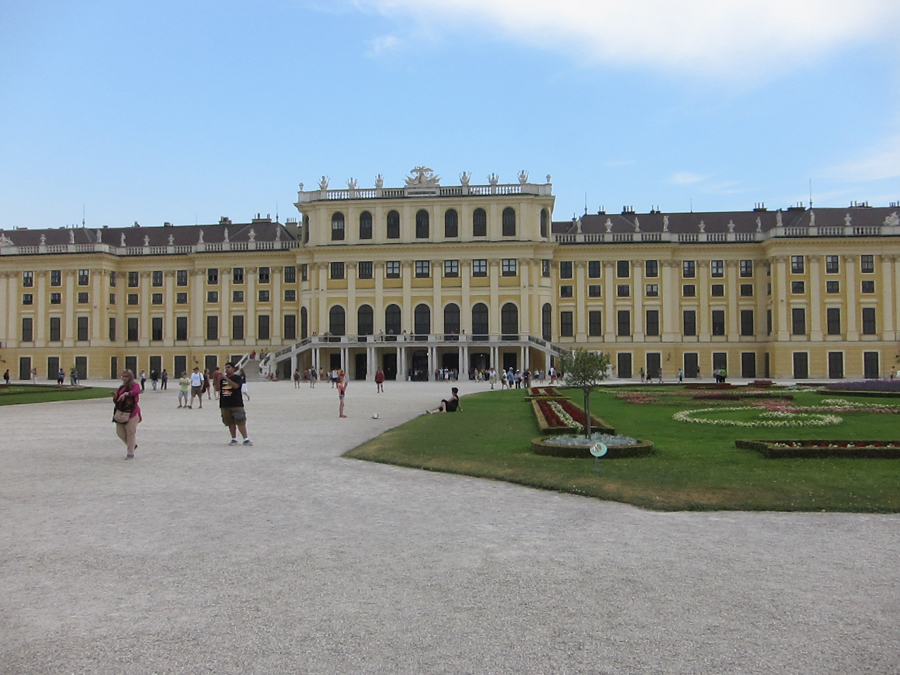
The Lipizzoners were trained to perform many amazing feats. In the previous chapter I mentioned about a “hunting lodge”. Well, in fact that hunting lodge grew into the imperial summer residence. As the story goes, in the year 1569, Holy Roman Emperor Maximilian II purchased a large floodplain of the Wien river beneath a hill, situated between Meidling and Hietzing, where the former owner, in 1548, had erected a mansion called Katterburg. The emperor ordered the area to be fenced and put game there such as pheasants, ducks, dear and boar, in order to serve as the court’s recreational hunting ground. In a small separate part of the area, “exotic” birds such as turkeys and peafowl were kept. Fishponds were built, too. The name Schönbrunn (meaning “beautiful spring”), has its roots in an artesian well from which water was consumed by the court. During the next century, the area was used as a hunting and recreation ground. Especially Eleonora Gonzaga, who loved hunting, spent much time there and was bequeathed the area as her widow’s residence after the death of her husband, Ferdinand II.
Eleonora Gonzaga, second wife of Emperor Ferdinand II.
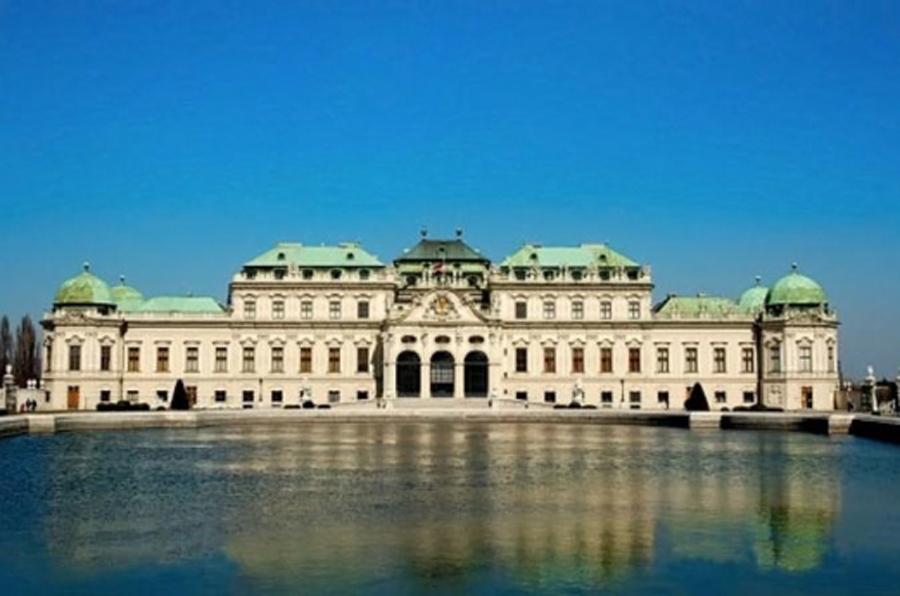
Schöenbrunn Palace, Vienna, Austria. We toured the inside of the palace, but photographs were not allowed. So, I will But this will have to wait until Part 14. |
|
|||
|