 |
|
|
|
|
|
|
|
|
|
|
||||||||
|
||||||||||||||||||
|
Email us at: |
||||||||||||||||||
 |
||||||||||||||||||
 |
 |
|||||||||||||||||
|
Click the sun to see the |
||||||||||||||||||



|
 |
|
|



|
|
|
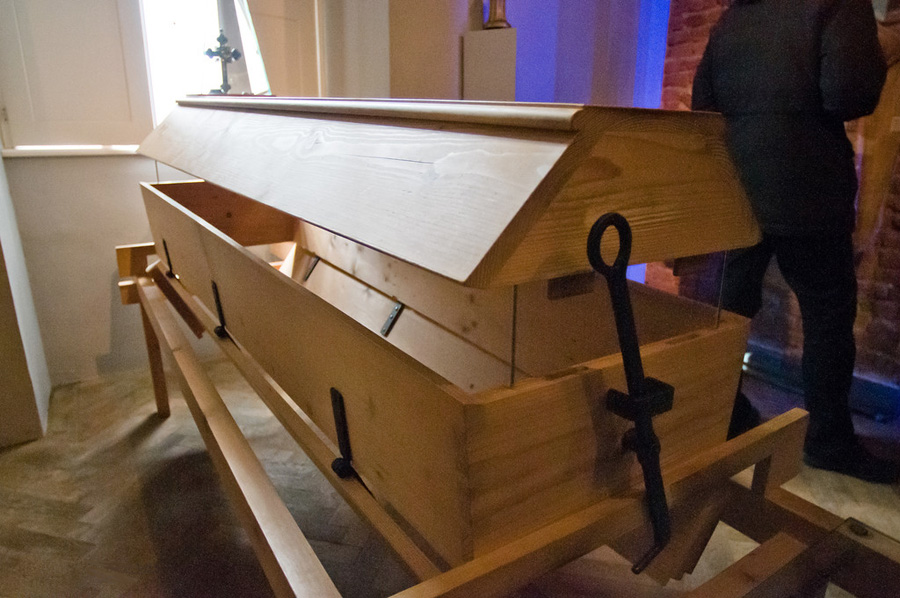
DAY ELEVEN ~ MELK & DÜRNSTEIN (continued) Back from a huge hiatus for the holidays, you will remember that we were in Melk, visiting the Melk Abbey, and I mentioned a reusable coffin. It was apparently one of the first attempts at green burials. If you were too broke to afford your own casket, you had the option of using this recyclable one. The dead were lowered into the ground and then dropped out of the bottom as the coffin was retrieved for another use. From what history tells us, it was not a very popular option.
Recyclable coffin. The lever on the end opens up the bottom for the corps to drop through to the bottom of the grave.
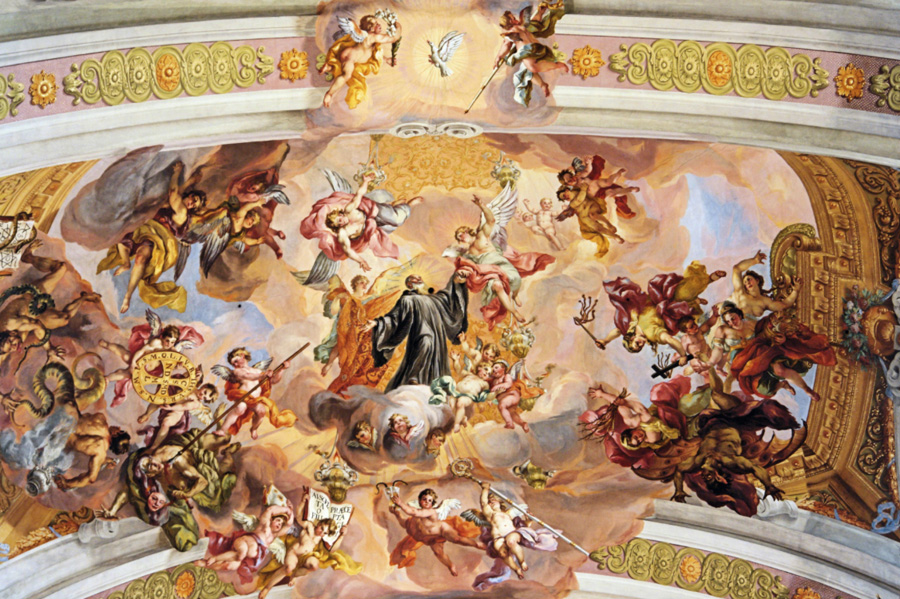
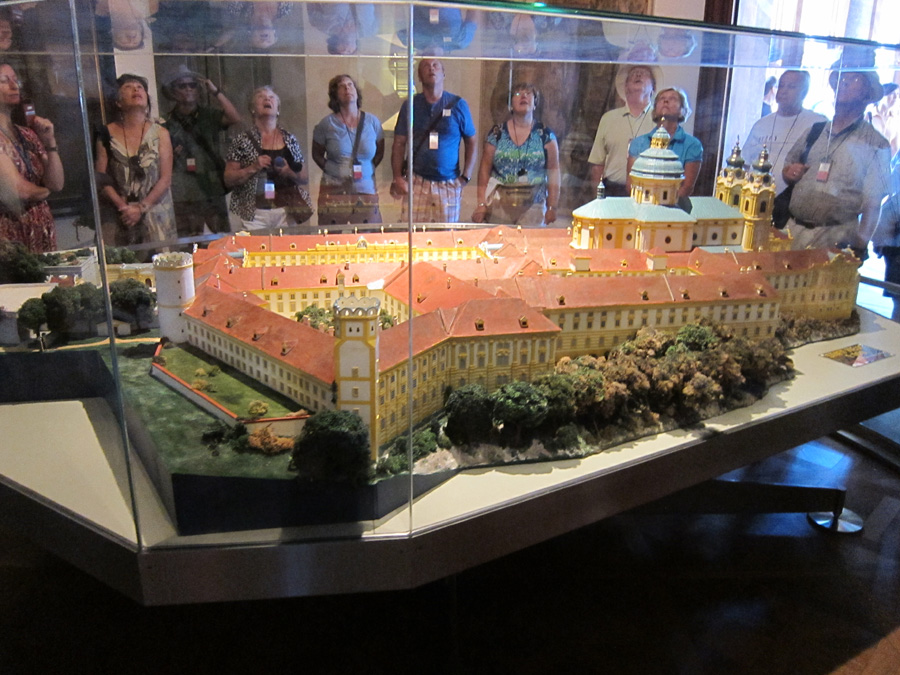
A preferable option might be to simply ascend directly into heaven as St. Benedict apparently did. There was a very elaborate model of the Abbey in one of the rooms. It always amazes me when modeling artists can achieve such realism in a scaled down version of something so beautiful as this Abbey.
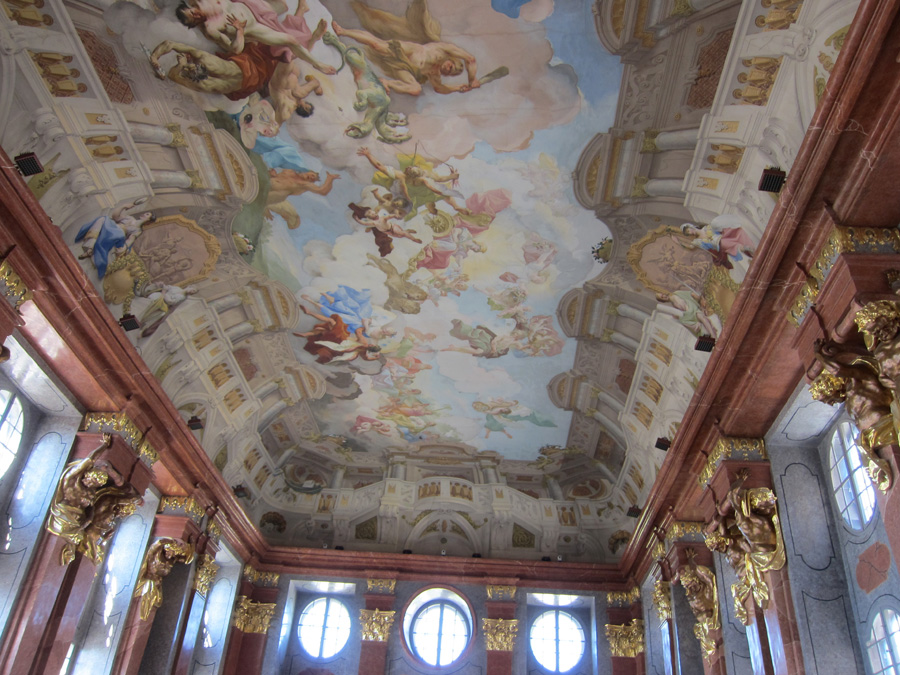
Notice how all heads are looking up at the ceiling. It contains a mirror which provides a very unique perspective.
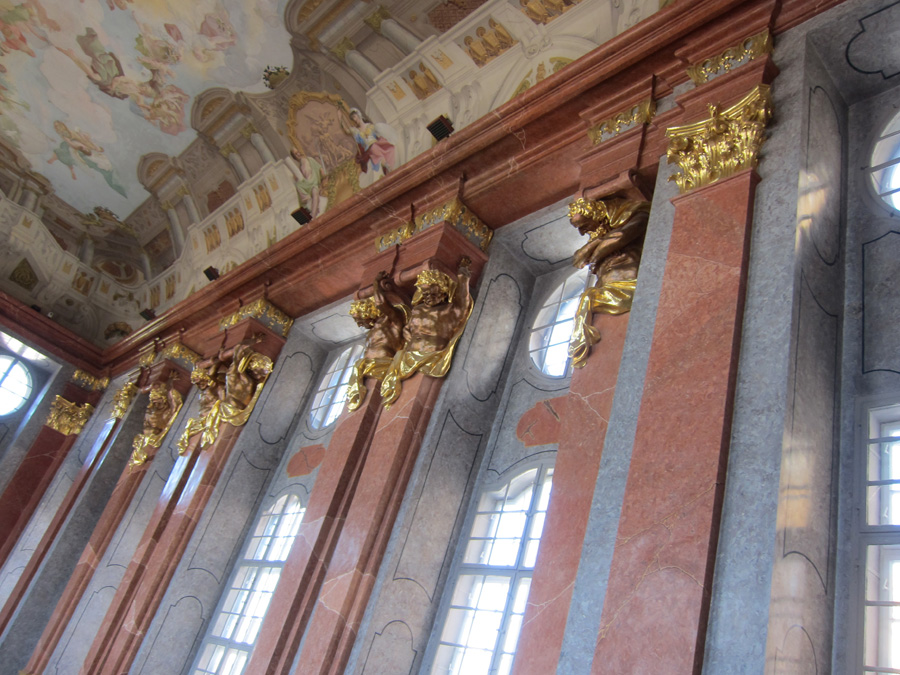
The Marble Hall with its magnificent marble pillars, crowned with gold leaf figures, was breath taking.
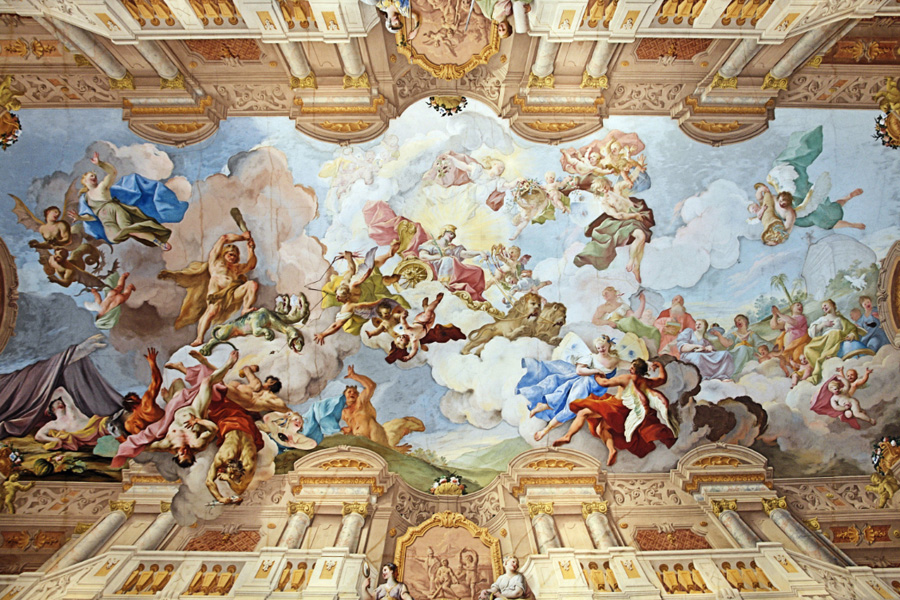
This is when I wish I had a selection of lenses, and could find one to capture all that the eye sees.
This is obviously not my photo, but one I got off the Internet. This photographer had the right lens, and the right light. This 1731 fresco (above) by Paul Troger has an optical illusion framing it. The architectural painting, done by Gaetano Fanti, gives the impression that the ceiling rises up and curves higher than it does. It is, in fact, flat.
This is one of the Abbey church's "catacomb saints." Relics were important and brought prestige to churches and
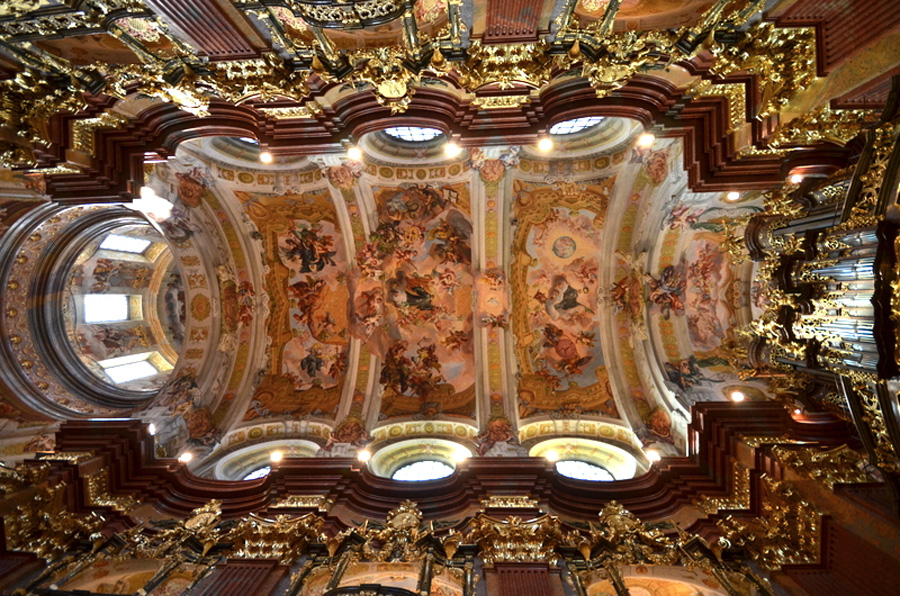
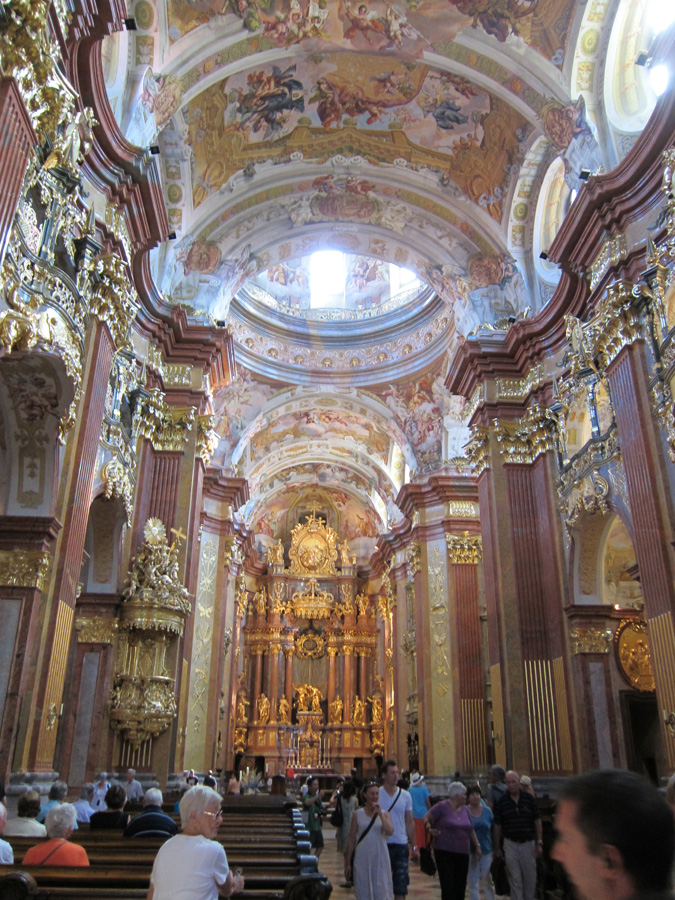
The ceiling in the Abbey Church is unbelievably beautiful. I'd say Leopold II had a bit of wealth going for
No matter in which direction you look, there is astonishing beauty to behold.
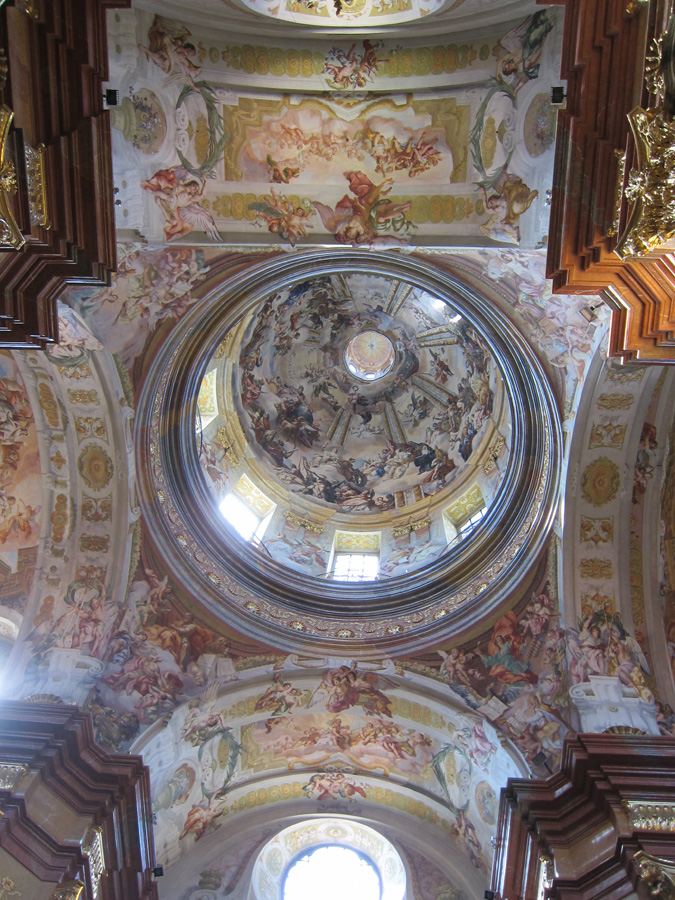
This is one of the two domes. Who could have imagined that such beauty resides inside?
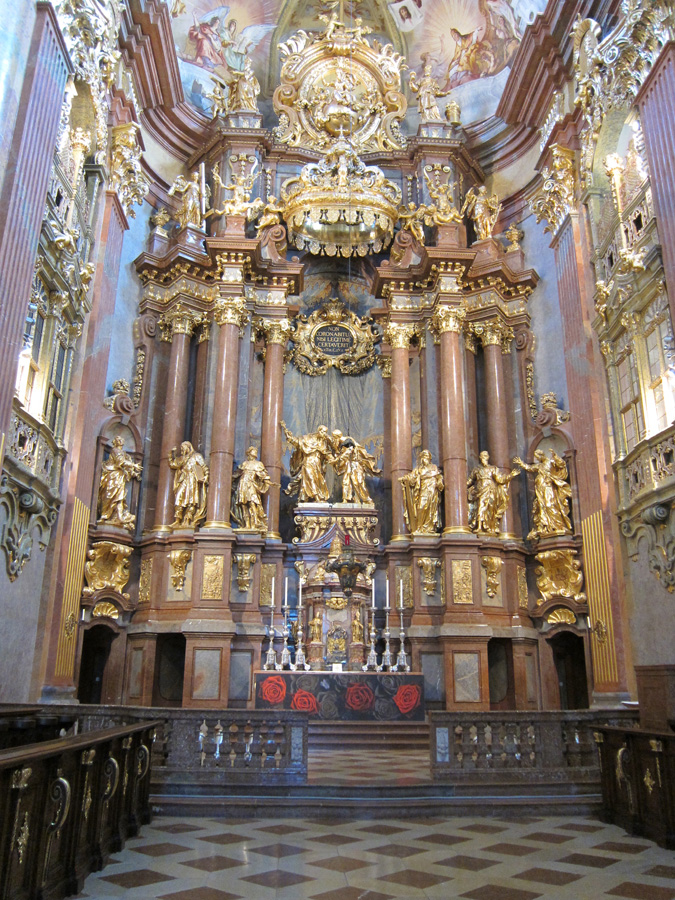
And they spared no expense on the back of the church either.
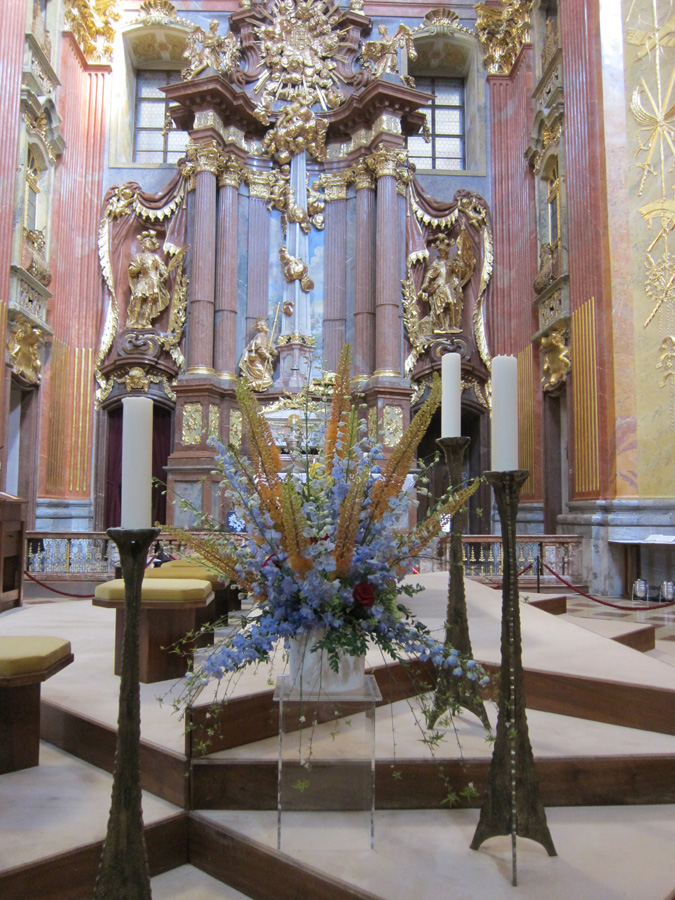
At every step, my breath was taken away. I only wish my photos could do it all justice.
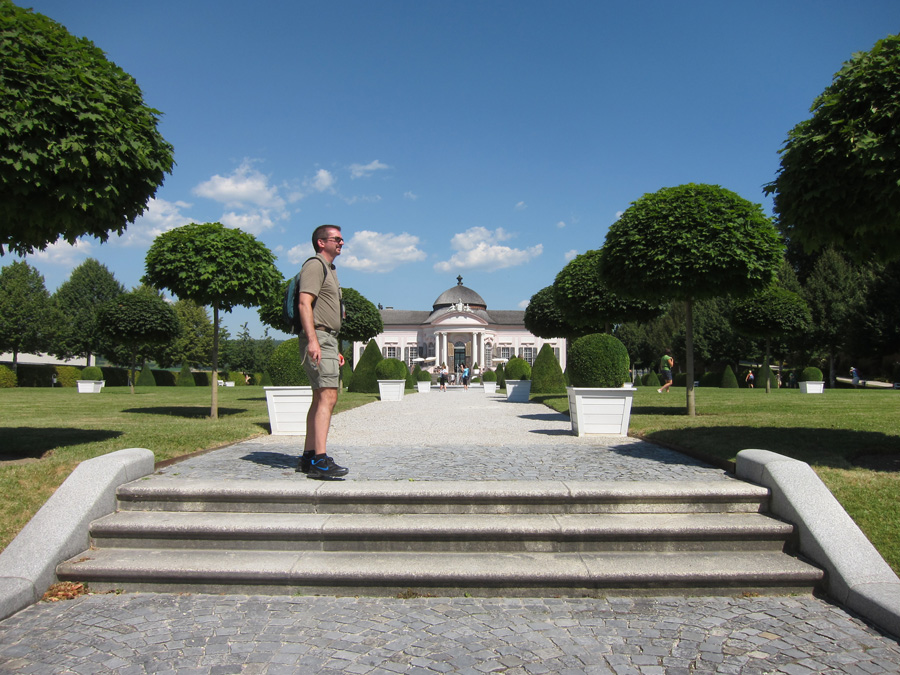
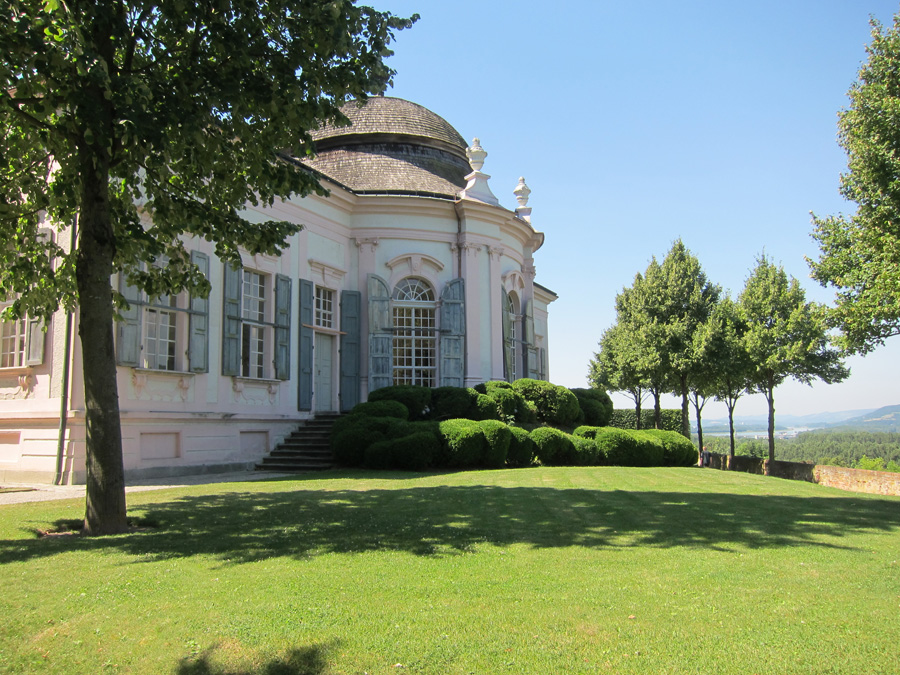
The grounds were beautifully kept up. It seemed to exude peace and quiet. The building in the background
This is the back side of the concert hall. The surrounding countryside was beautiful. The Danube is off in the distance.
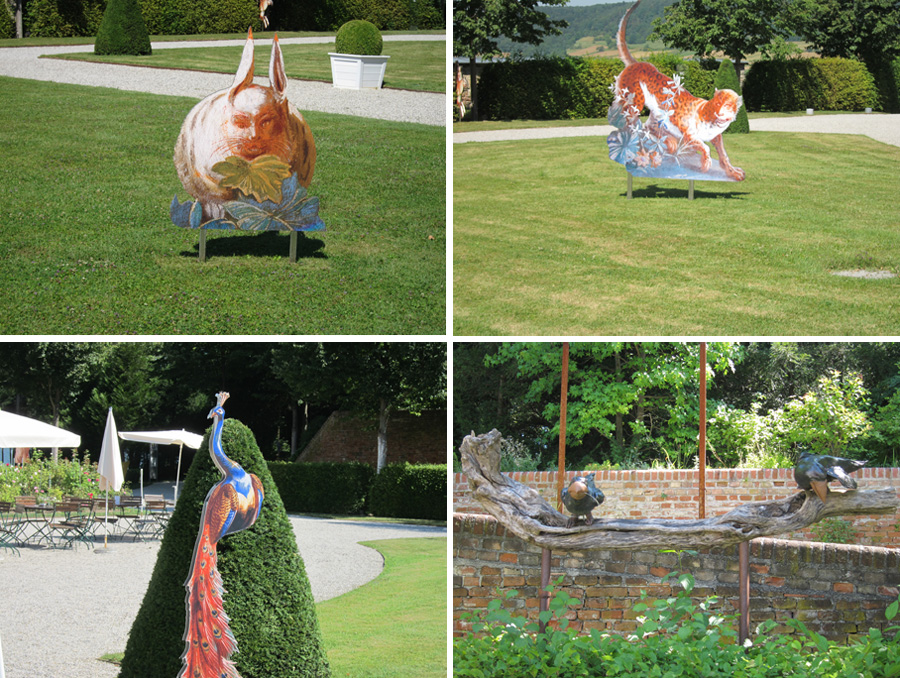
These interesting lawn decorations made one think that you had just fallen through Alice's looking glass. And there
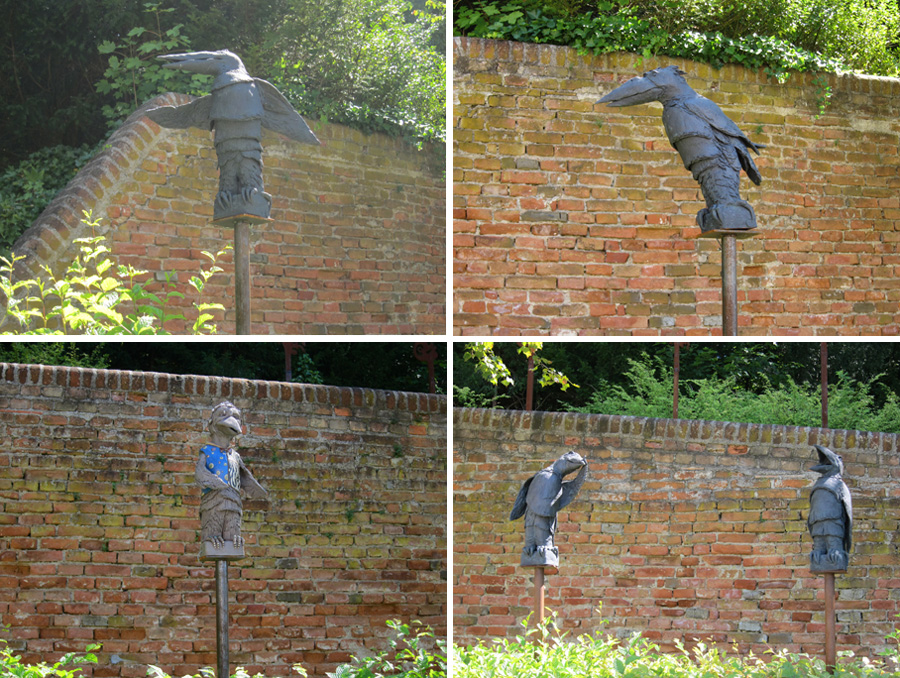
The crow statues were hilarious in their comic poses. One imagined an entire story while walking along this path. Well, I hope I have not saturated you with photos of the Melk Abbey. It truly was one of the highlights of our trip. In Part 12 I will try to finish off Day Eleven with some photos of Dürnstein. With no more holidays on the horizon, I should be able to get Part 12 written with less of a delay than I had with this one. |

|
||||
|