|
Florence is the sixth largest city in Italy, with a population of 500,000, and is found on the River Arno some 92 miles from La Spezia. It dates from 800 B.C. when a settlement was first established at a fording point on the river.
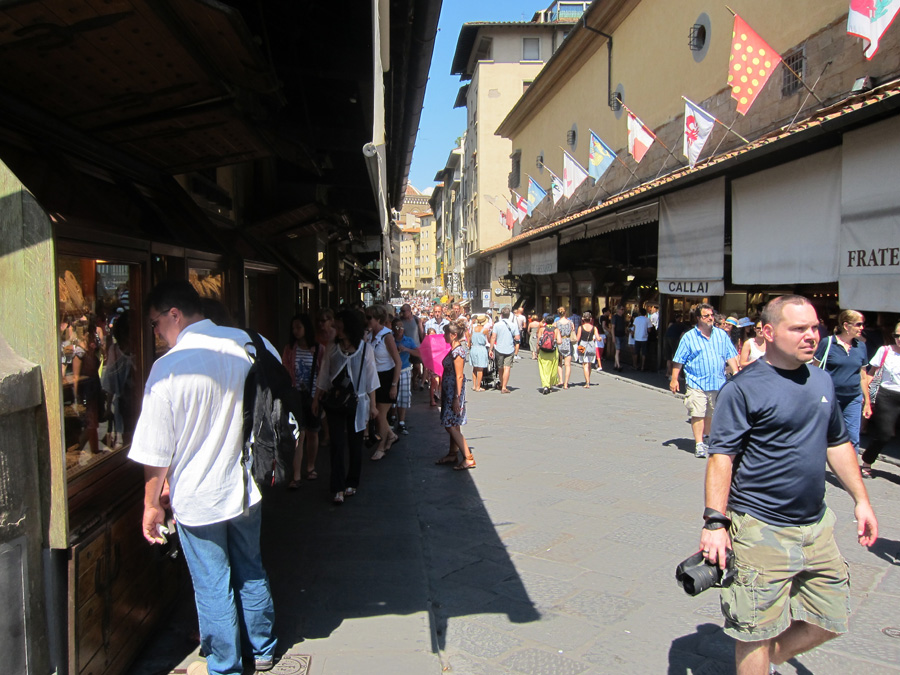
This is Ponte Vecchio, and is the oldest bridge remaining in Florence, and today is lined with goldsmiths' shops.
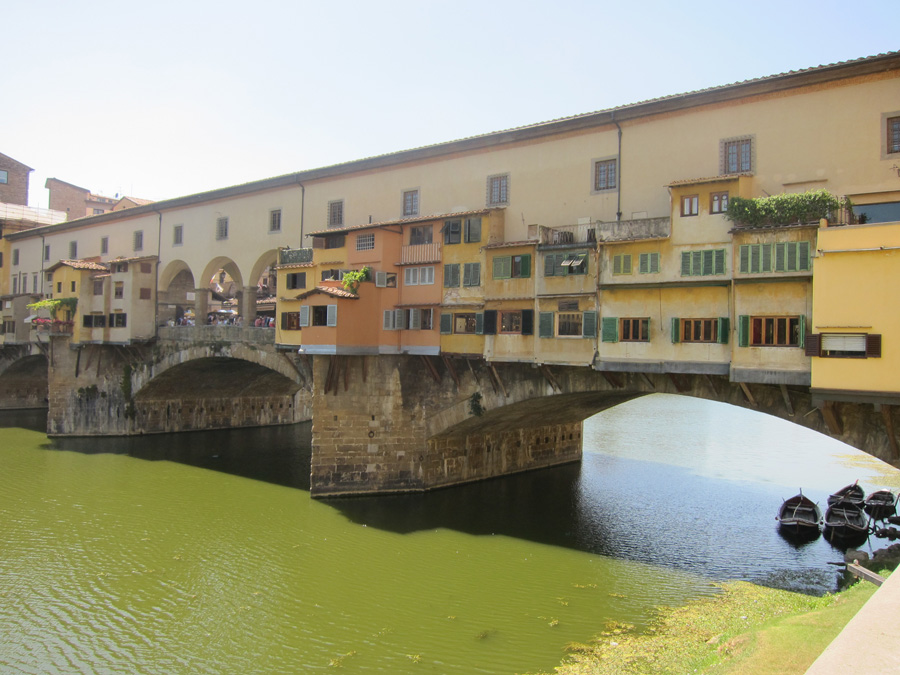
Ponte Vecchio as viewed from a little ways down stream. The ancient shops seem to hang from the edge of the bridge.
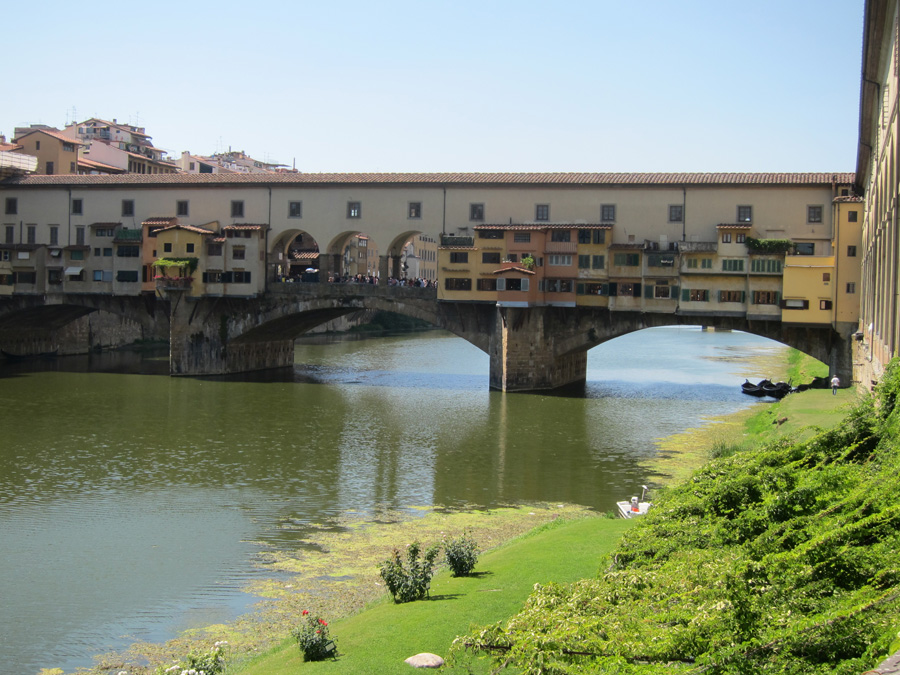
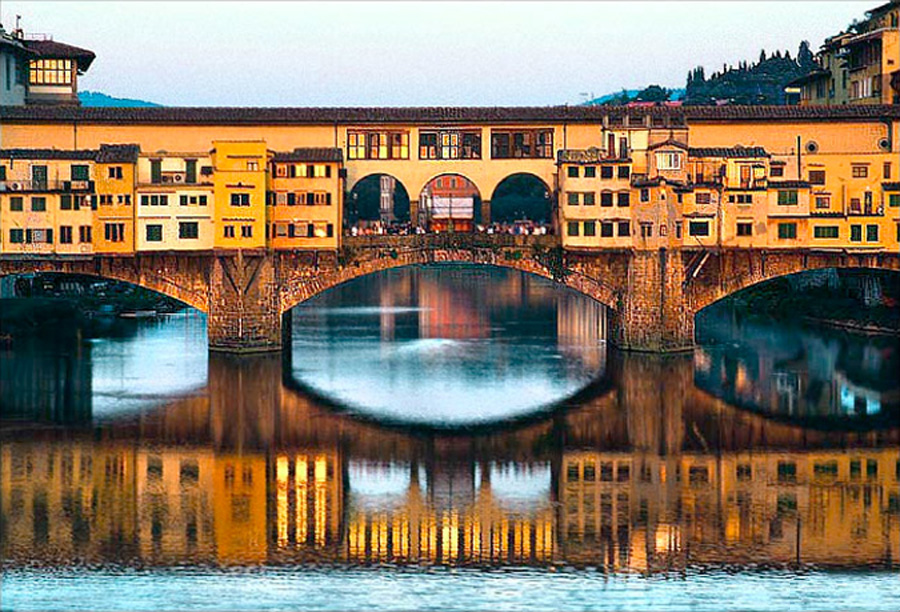
Ponte Vecchio, which means "Old Bridge", is a Medieval stone closed-spandrel segmental arch bridge over the Arno River, noted for still having shops built along it, as was once common. Butchers initially occupied the shops; the present tenants are jewelers, art dealers, souvenir sellers.
During World War II, the Ponte Vecchio was not destroyed by Germans during their retreat of August 4, 1944, unlike all other bridges in Florence. This was allegedly because of an express order by Hitler. Access to Ponte Vecchio was, however, obstructed by the destruction of the buildings at both ends.
In more modern times, along the Ponte Vecchio, there are many padlocks locked to various places, especially to the railing around the statue of Benvenuto Cellini. This is a recent tradition for the Ponte Vecchio, although it has been practiced in Russia and in Asia before. It was perhaps introduced by the padlock shop owner at the end of the bridge. It is popularly connected to the idea of love and lovers: by locking the padlock and throwing the key into the river, the lovers become eternally bonded. This is an example of the negative impact of mass tourism: thousands of padlocks needed to be removed frequently, spoiling or damaging the structure of the centuries-old bridge; it seems to have decreased after the city administration put a sign on the bridge mentioning a 50€ penalty for those caught locking something to the fence.
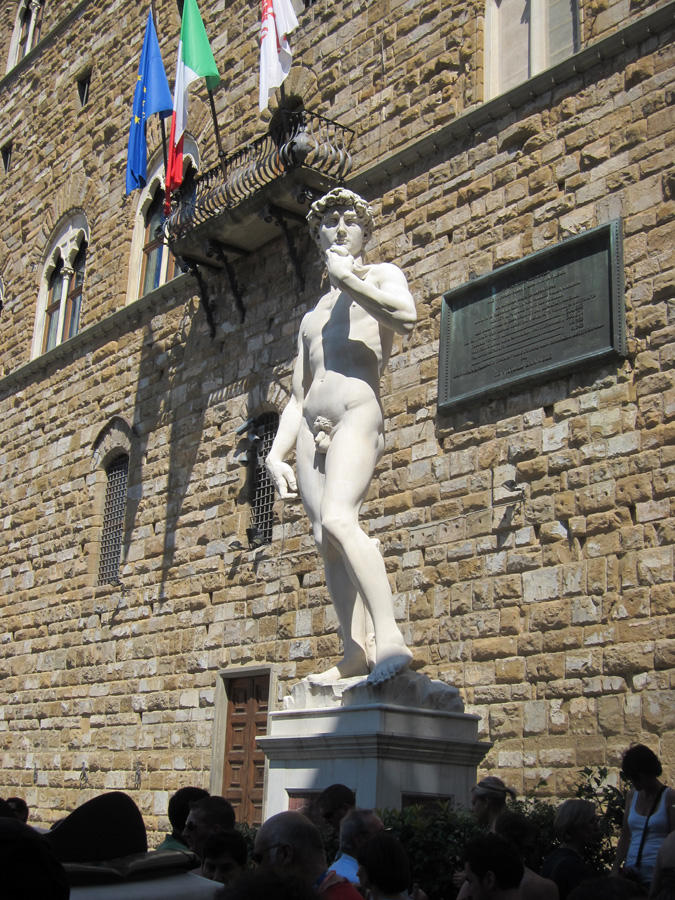 |
A copy of Michelangelo's David which adorns the stairway of the Palazzo Della Signoria
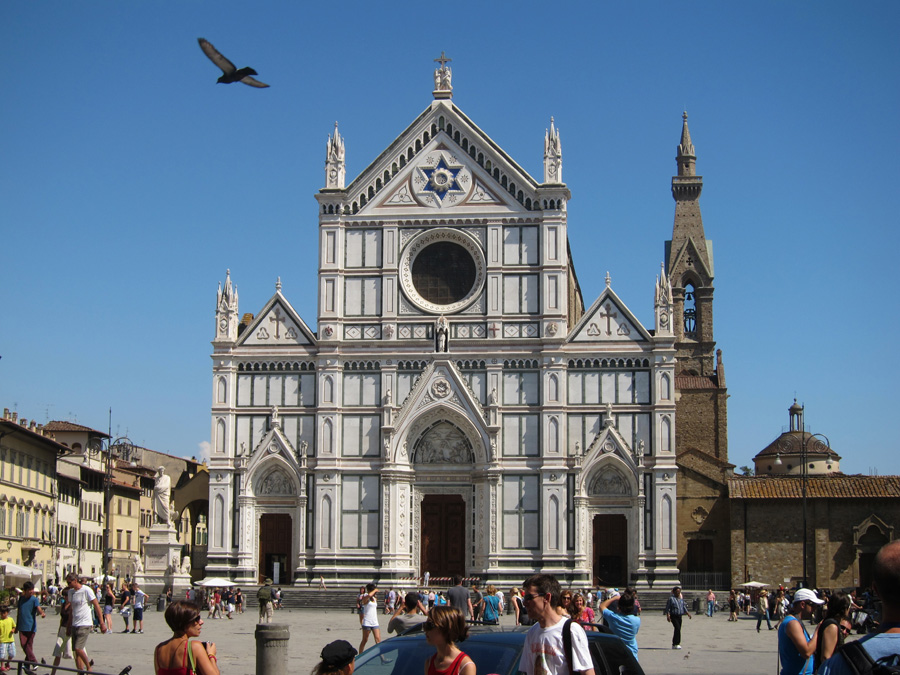
Santa Croce was begun in 1294 and buit in gothic style. It now contains the tombs of some of Italy's greatest citizens
including: Michelangelo, Galileo, Ghiberti and Machiavelli.
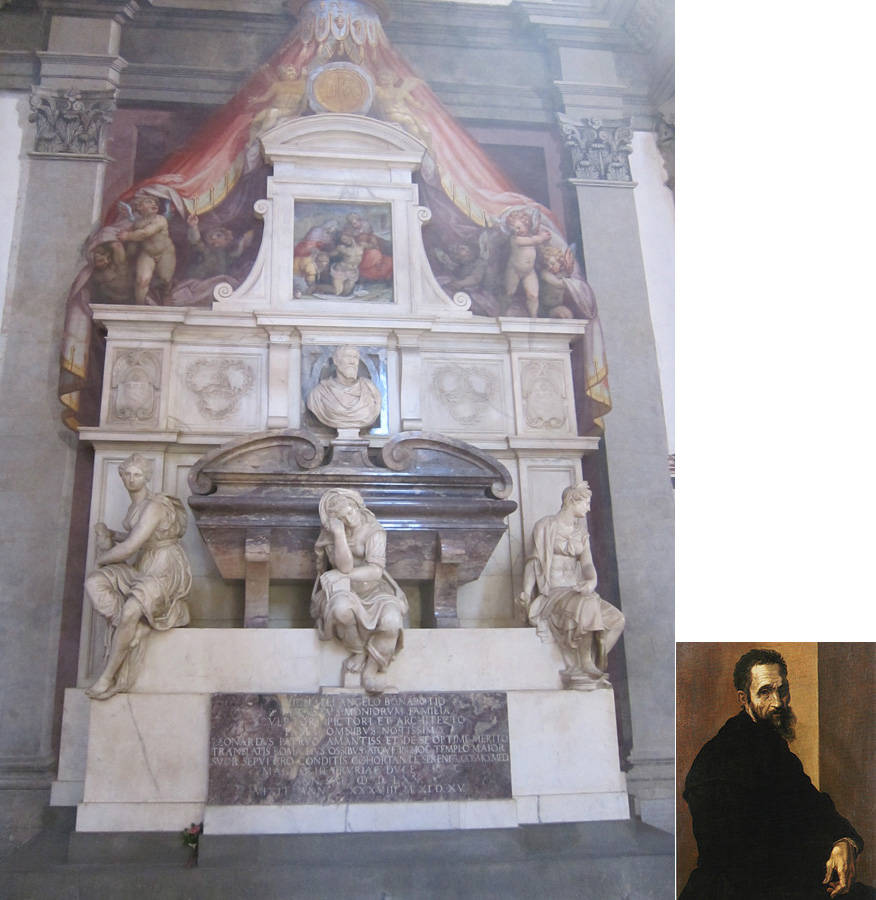
This is the tomb of Michelangelo di Lodovico Buonarroti Simoni, one of the greatest artists of all time.
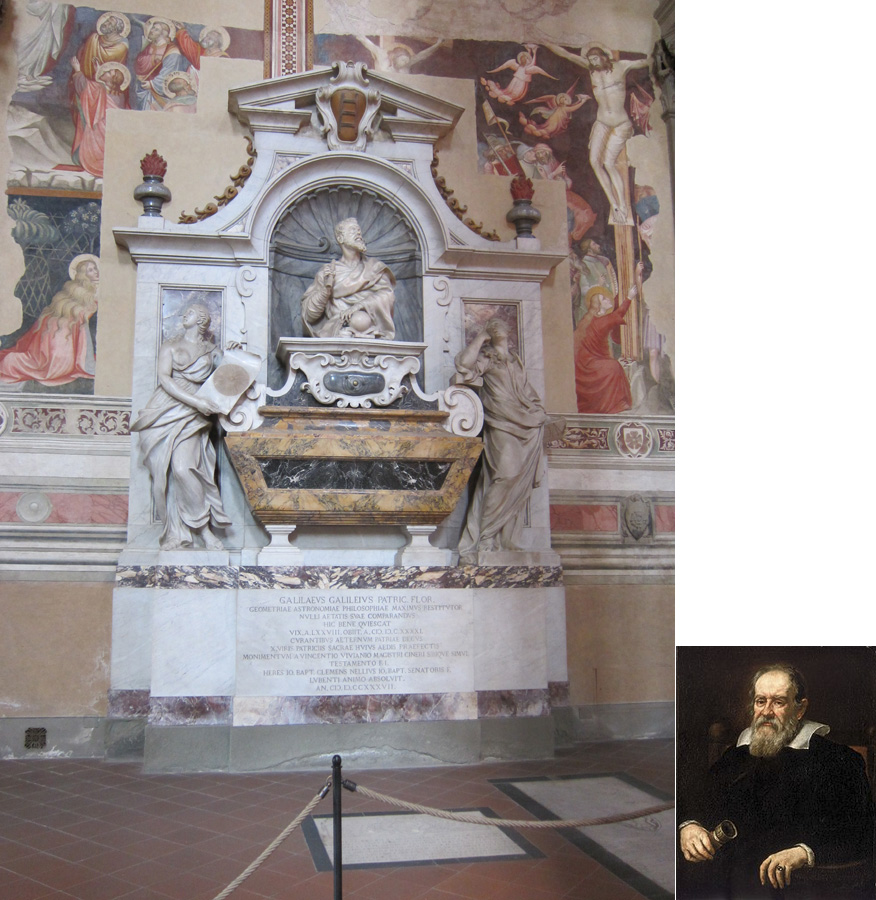
The tomb of Galileo Galilei, "father of modern observational astronomy", "father of modern physics", "father of science"
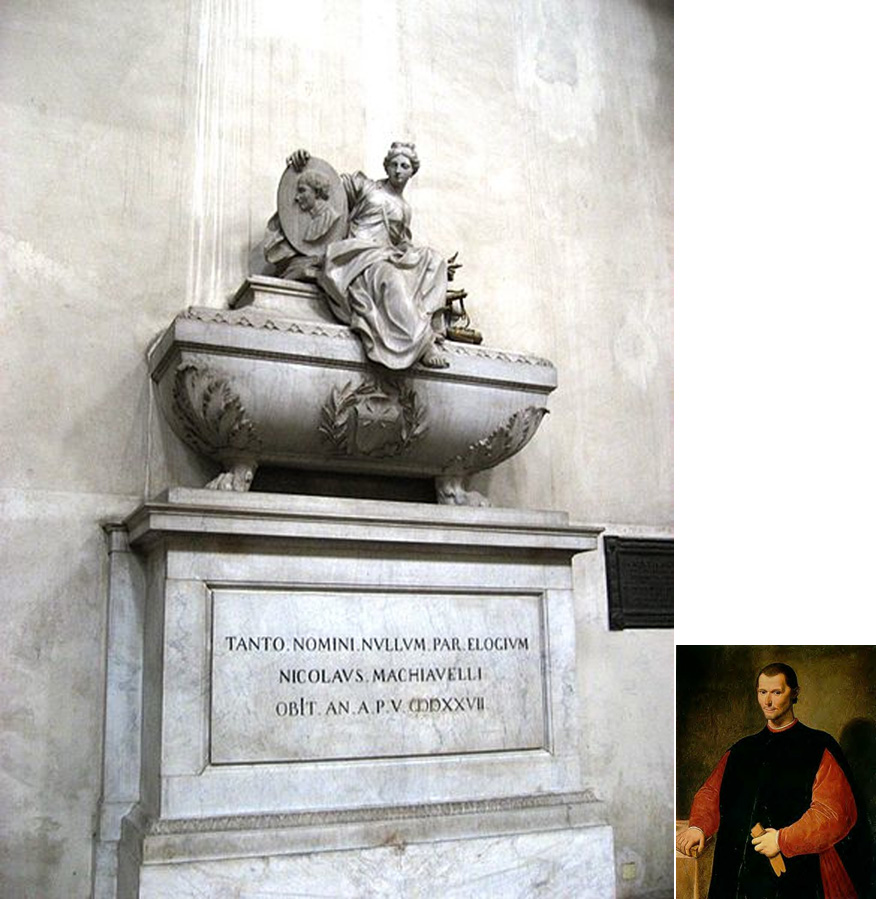
Niccolò di Bernardo dei Machiavelli's tomb. Italian historian, philosopher, humanist, and writer
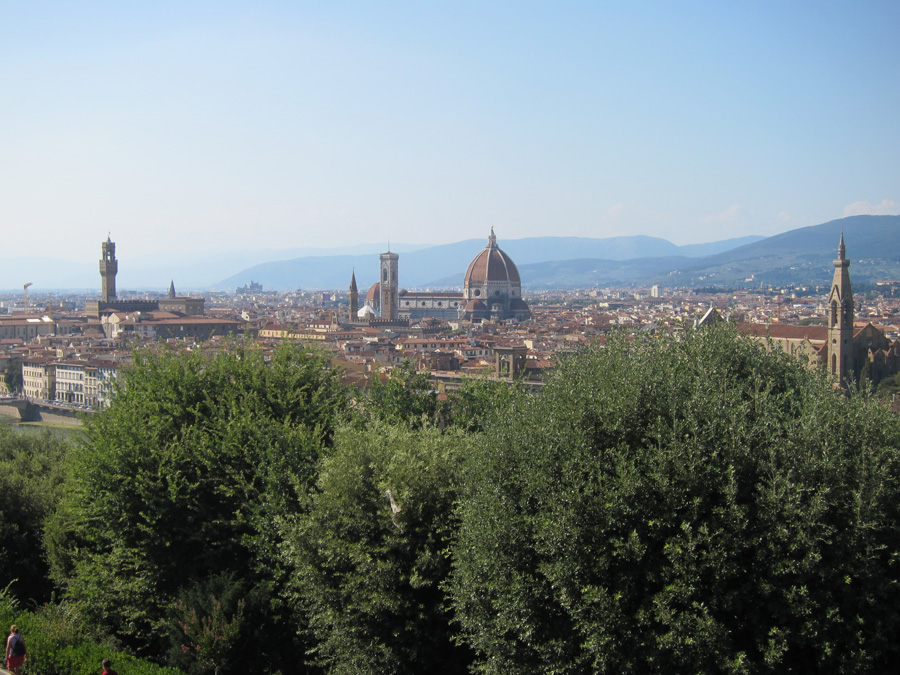
We board our motor coach for the return to La Spezia, and we stop by Michelangelo Square, famous for it's overlook
and fantastic views of Florence. We get off the bus for 10 minutes or so for a photo opportunity.
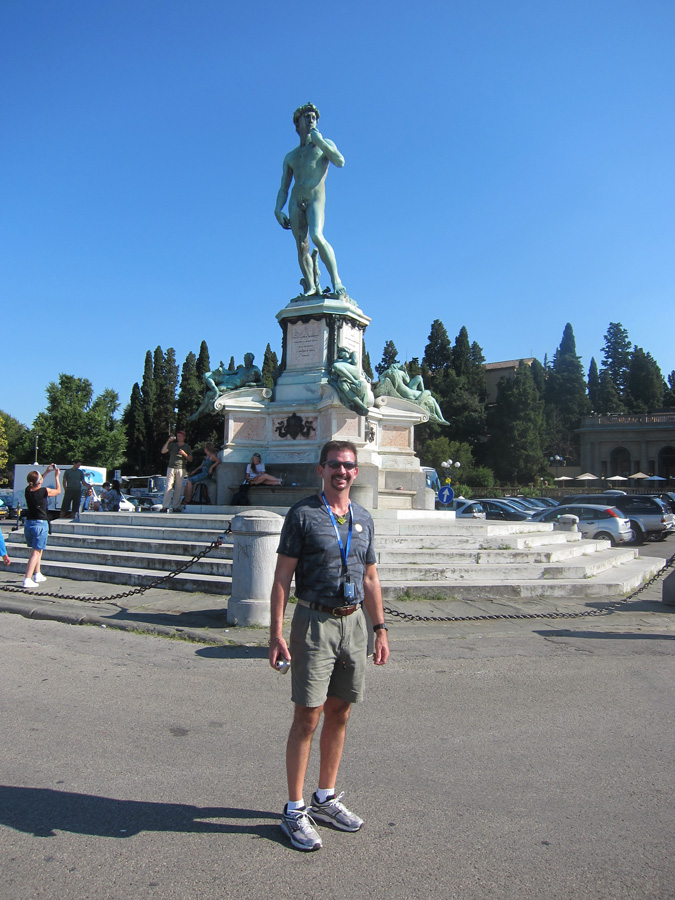
There is a bronze copy of Michelangelo's David in the middle of the square
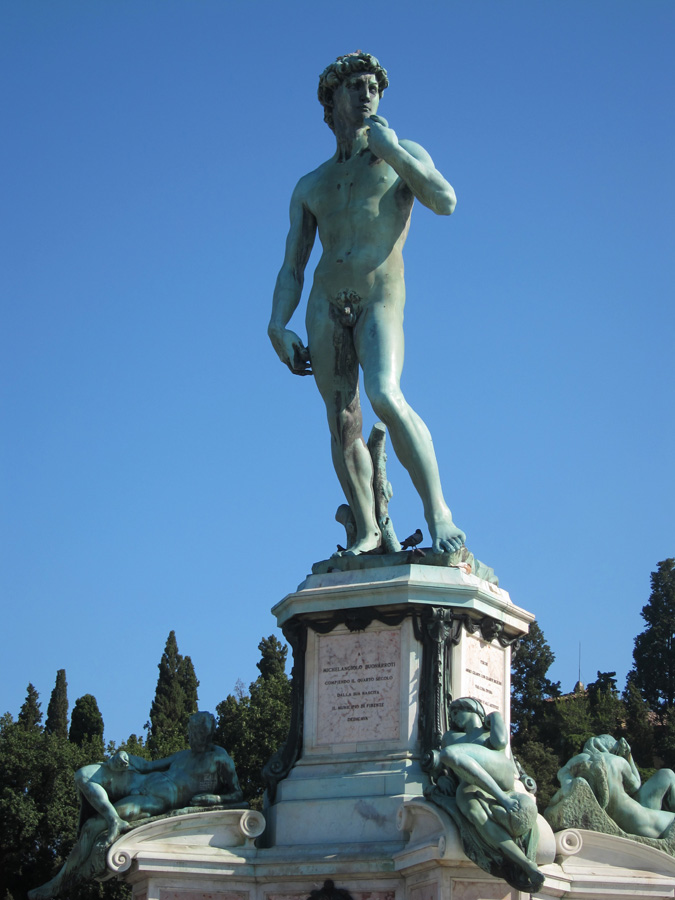
It doesn't hold a candle to the original in marble. But it is a nice monument
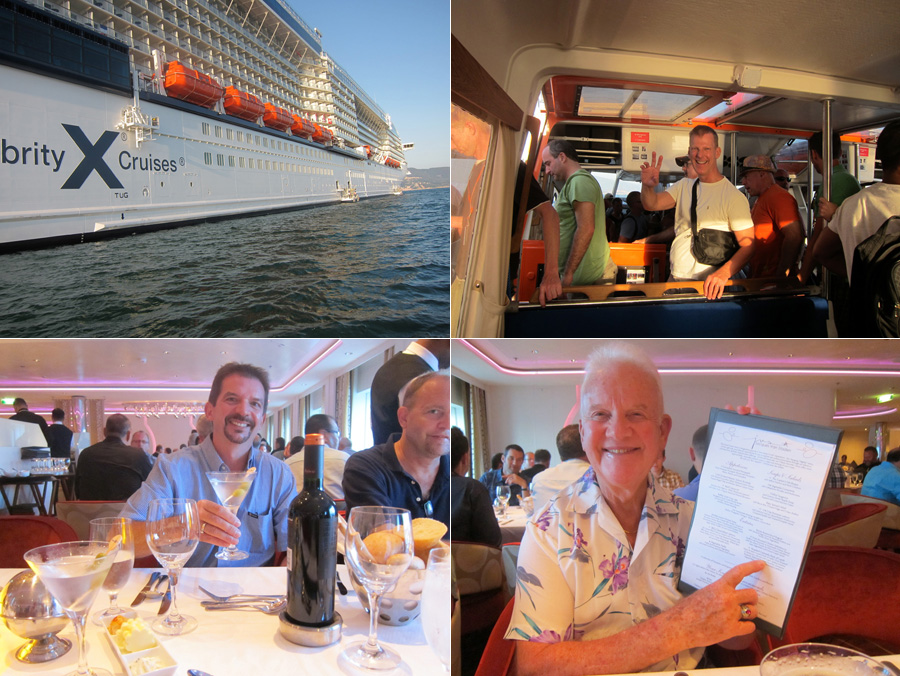
We return to the ship on the tenders. As we leave the tender I am so surprised to see my friend of many years,
John Renner, whom I have not seen since retiring from Adobe eleven years ago. At dinner that night we have
our ritualistic pre-dinner cocktail, a very dry Martini. I am pointing to the Rack of Lamb on the menu, and
yes, that is exactly what I ordered. It was, as expected, fantastic. What a great climax to a wonderful day.
We will be sailing next to Villefranche (Nice), France, and we have signed up for the tour to Monserrat. What an unexpected delight for the next chapter.
|