|
|
|
|
|
|
|
|
|
|
|
||||||||
|
||||||||||||||||||
|
Email us at: |
||||||||||||||||||
 |
||||||||||||||||||
 |
 |
|||||||||||||||||
|
Click the sun to see the |
||||||||||||||||||



 |
||||||||||||
|
|
|
|
|
|
|
||||||
|
||||||||||||
|
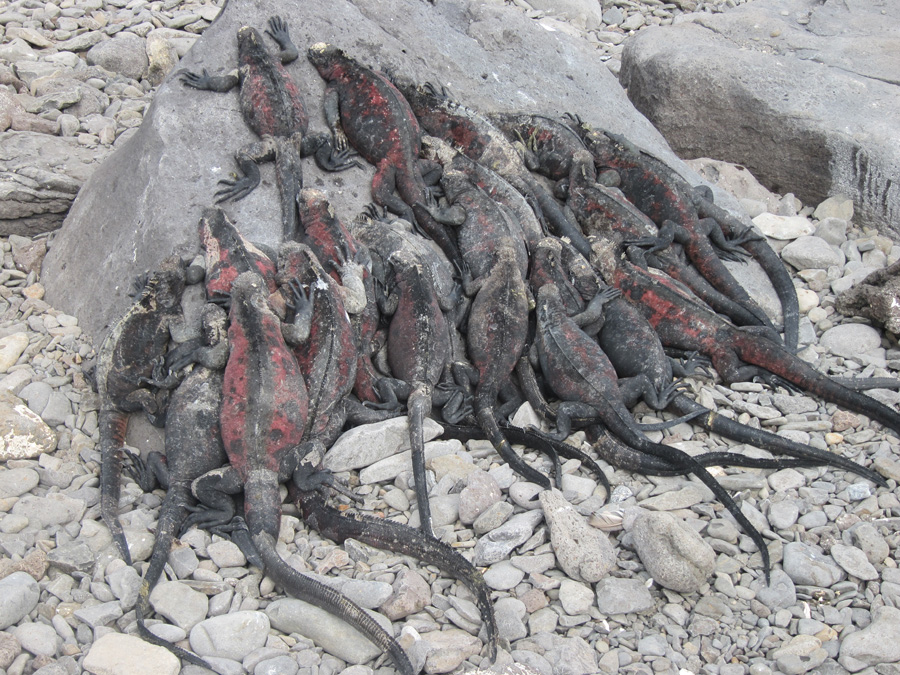
And speaking of togetherness, these sea iguanas really seem to enjoy just hanging out together.
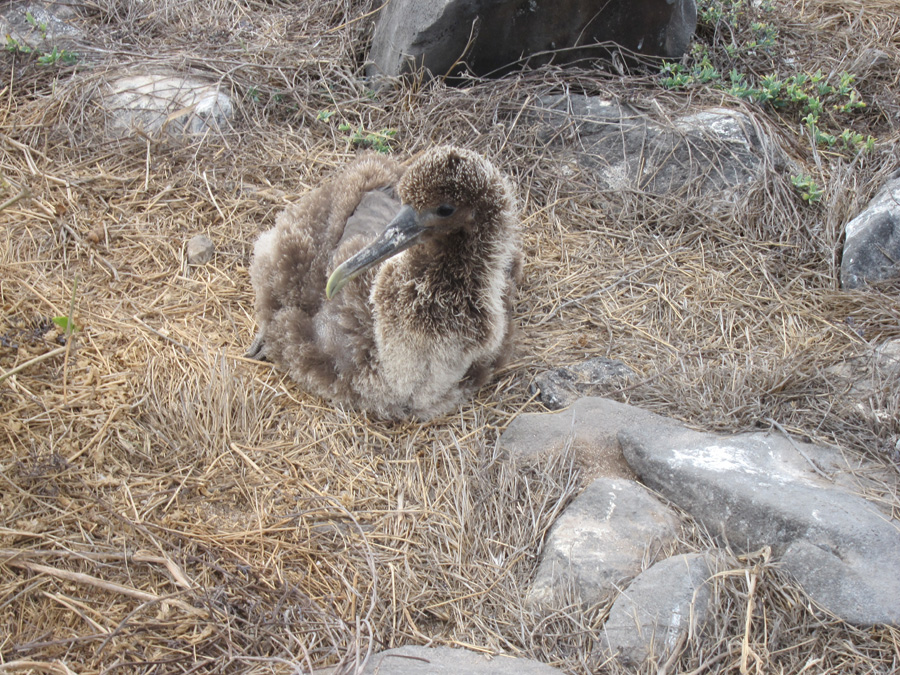
A young albatross stretches his wings, exercising those critical muscles that he will soon have to depend upon.
His downy coat of infancy will soon be replaced with beautiful white plumes. Right now he looks really cuddly.
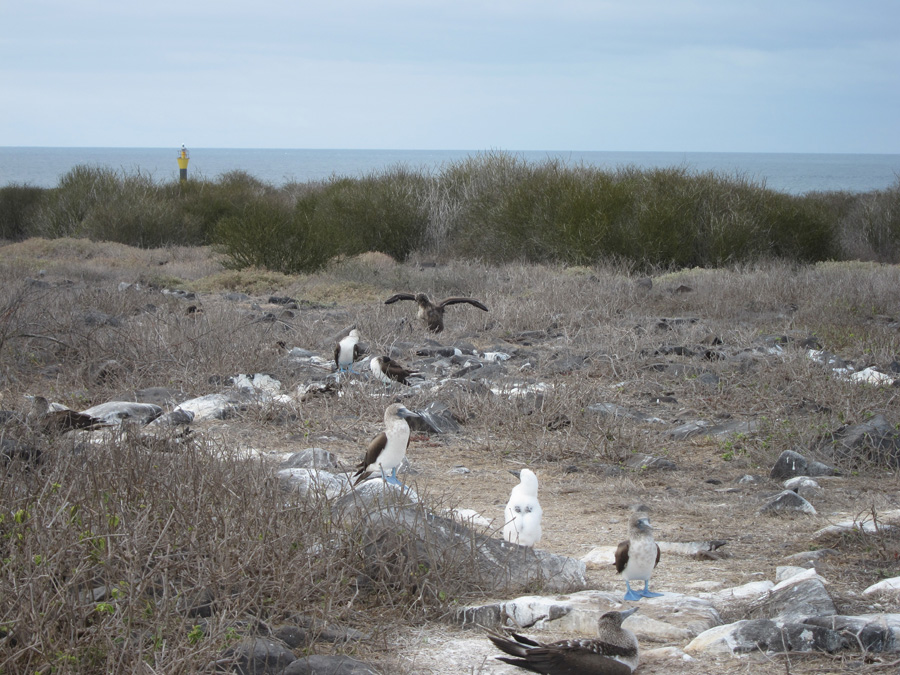
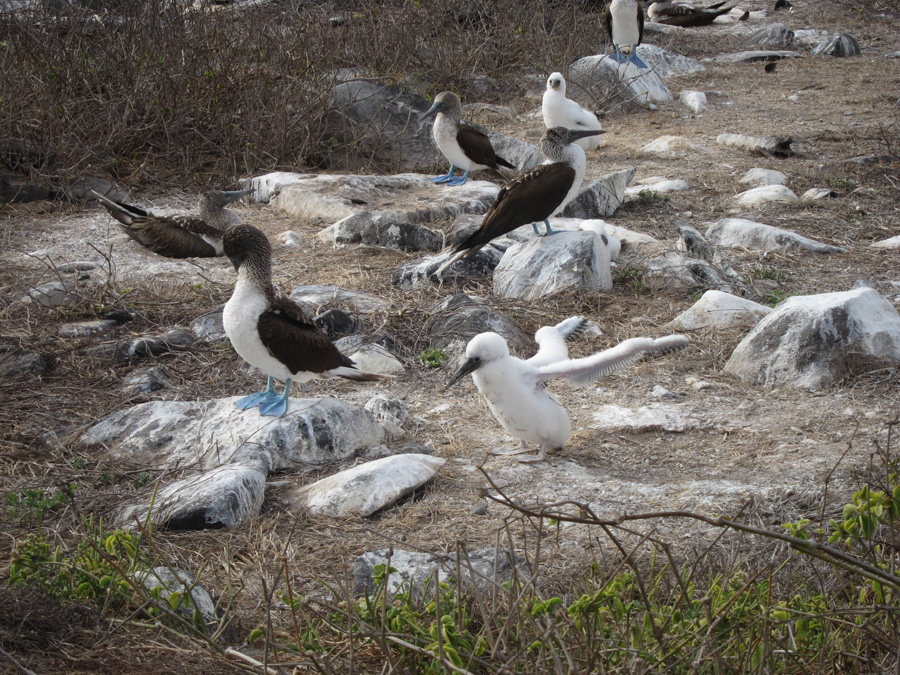
A baby booby likewise is exercising his wings for that critical day not too far away.
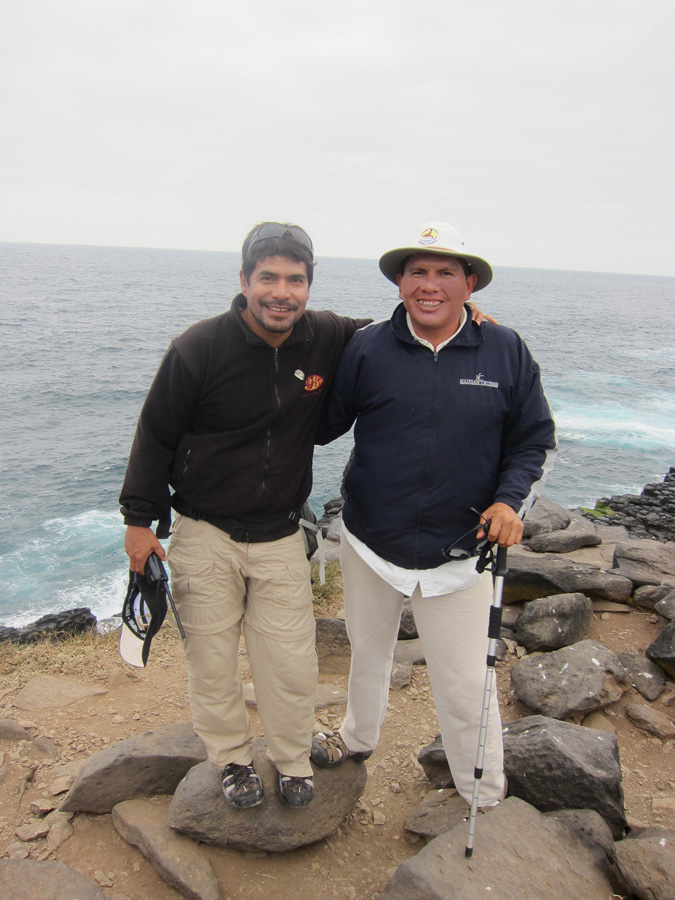
While on the hike we happened upon another group, and the guide for that group turned out to be a good friend of Jorge.
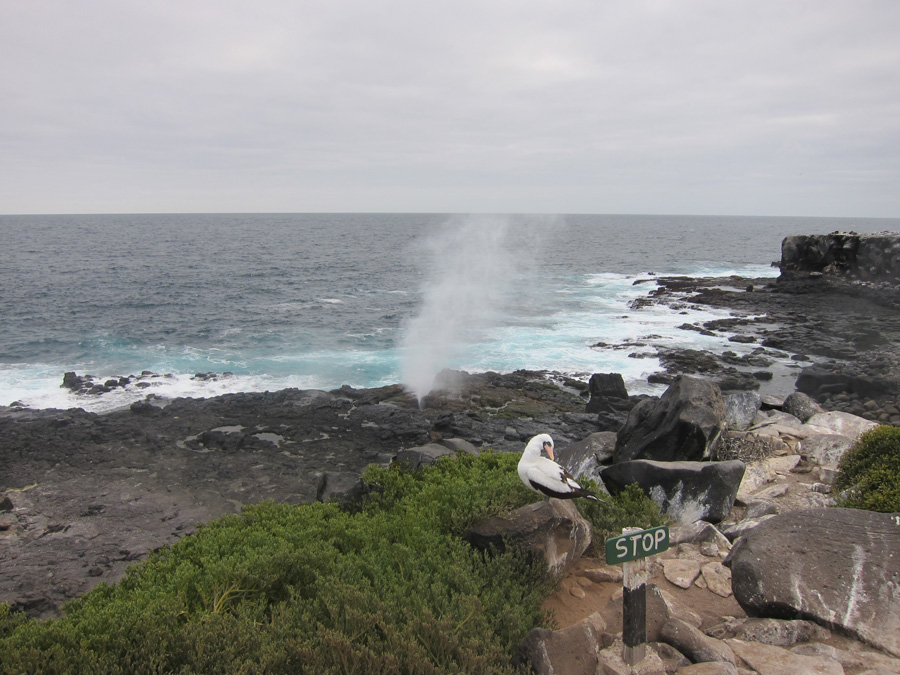
There was a blow hole at this point in our hike. The waves crashing at the base of the cliff found release
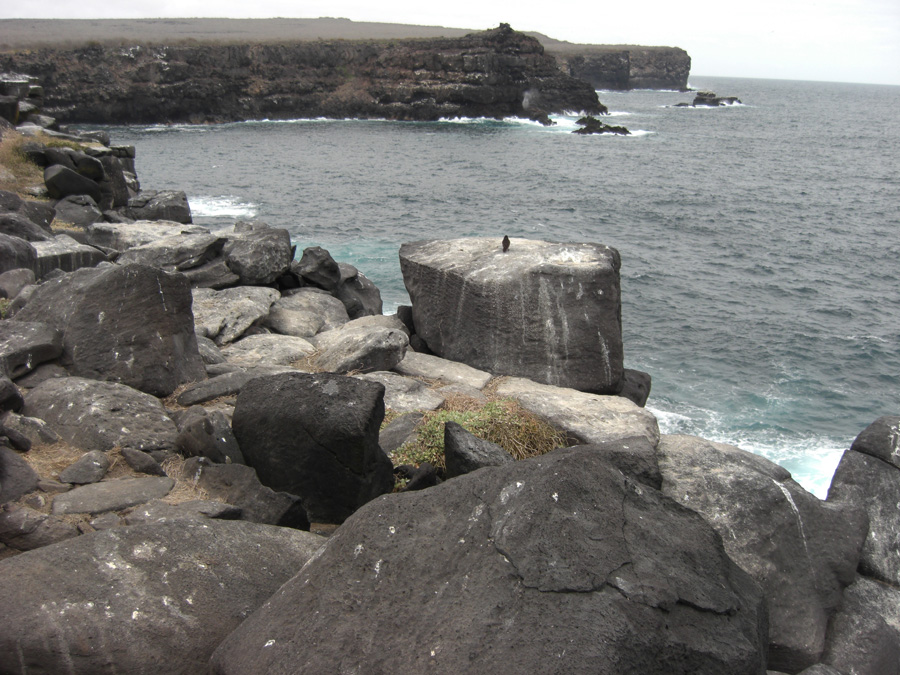
Punta Suárez presents a very rugged coastline. You can see why we chose that quiet beach area for our landing. We return to the ship for lunch to find that the crew has been busy making our cruise a little more interesting.
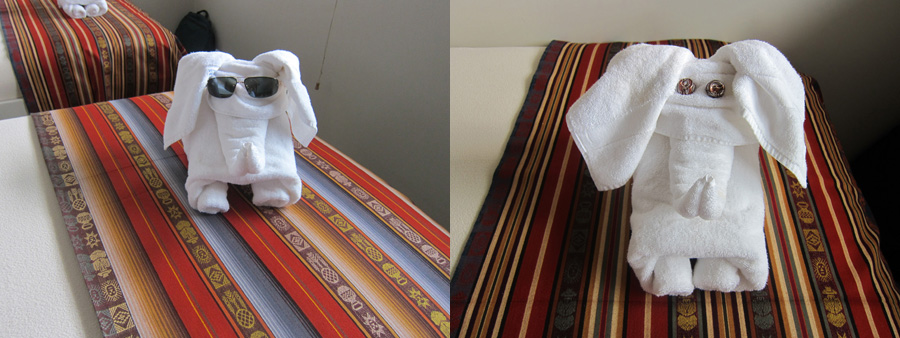
I loved the little elephants we found on our beds. Pretty creative I'd say.
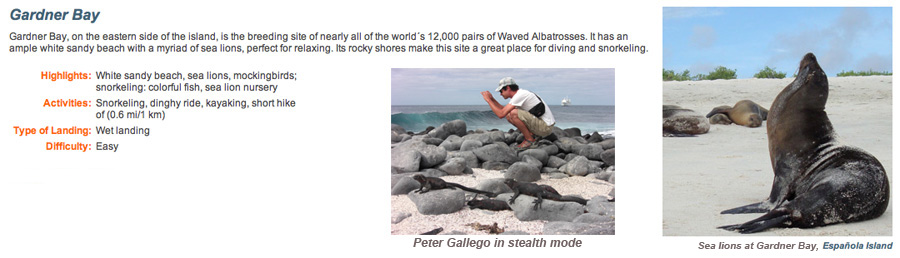
Gardner Bay is located on the North coast of Española Island. The main attraction is the colony of sea lions which inhabit the beach in great quantity during the breeding season. The tortoise population of this island was reduced by human depredation. In 1965 only 12 females and 2 males were found and were transferred to the pens of the Galapaguera on Santa Cruz Island. By the year 1976, in collaboration with the San Diego Zoo a third male was brought. After a world wide search several adults were found, and by 1991 the first tortoises born in the wild were placed back on the island of their origin. Tortoises are concentrated near Manzanillo Bay on the upper part of the island. The beach is also an important nesting area for giant sea turtles. During nesting time tourists must be watchful that they do not step on the nests.
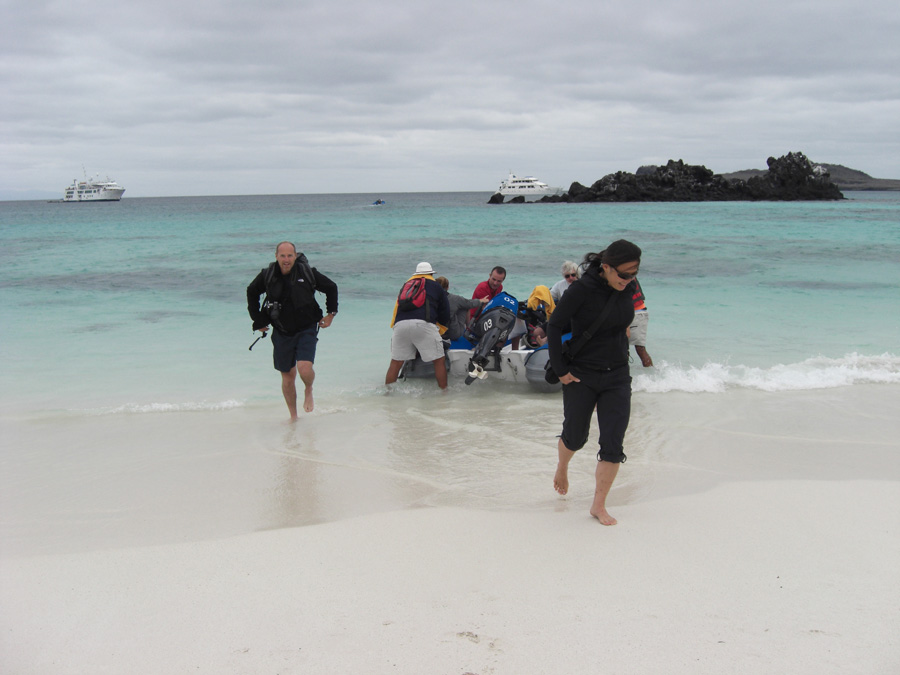
We make a wet landing at Gardner Bay. Jennie and Joe scurry to dry ground.
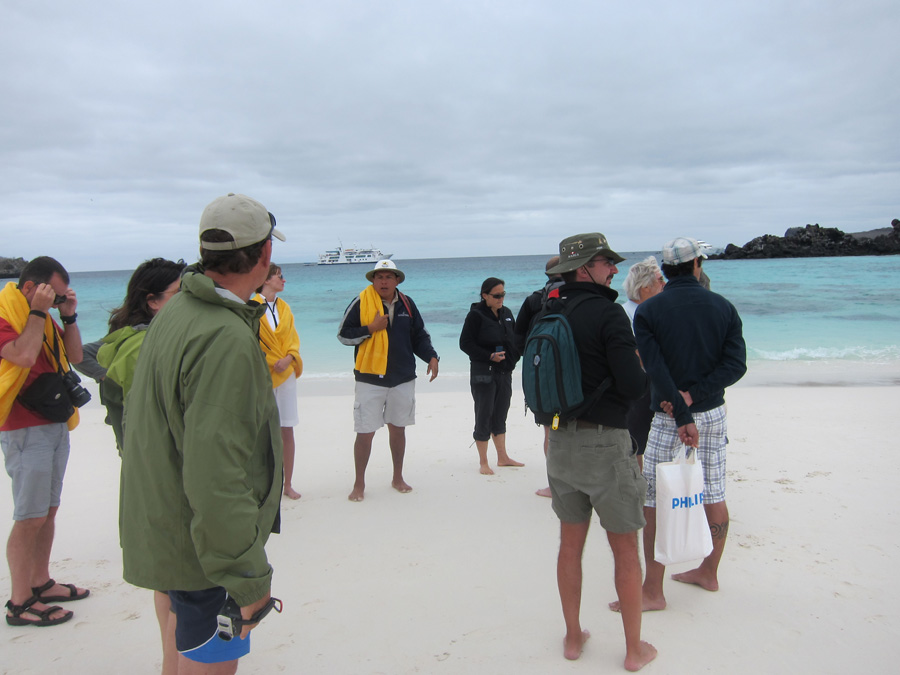
Jorge gives us a briefing of the island, telling us what species we will encounter, etc.
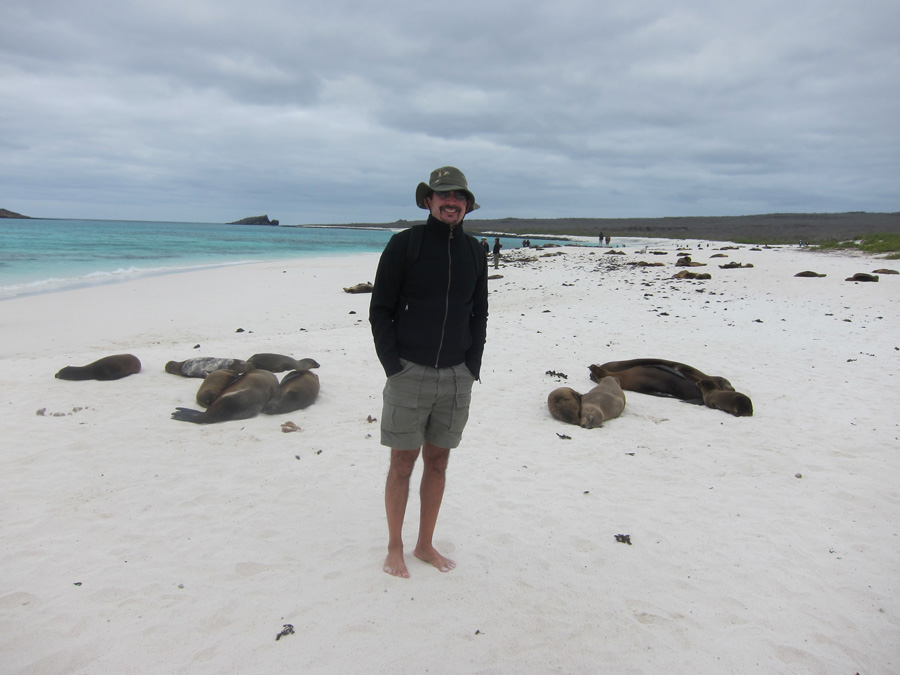
There are lots of sea lions sleeping on the warm beach sand. The pups are so cute.
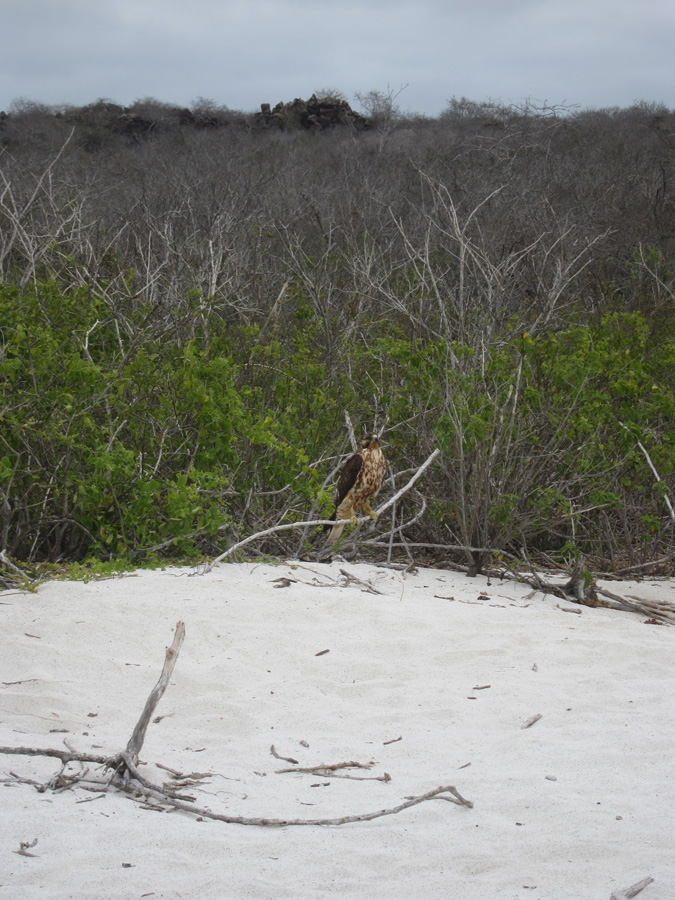
A galapagos hawk sits perched on a branch nearby, observing us closely.
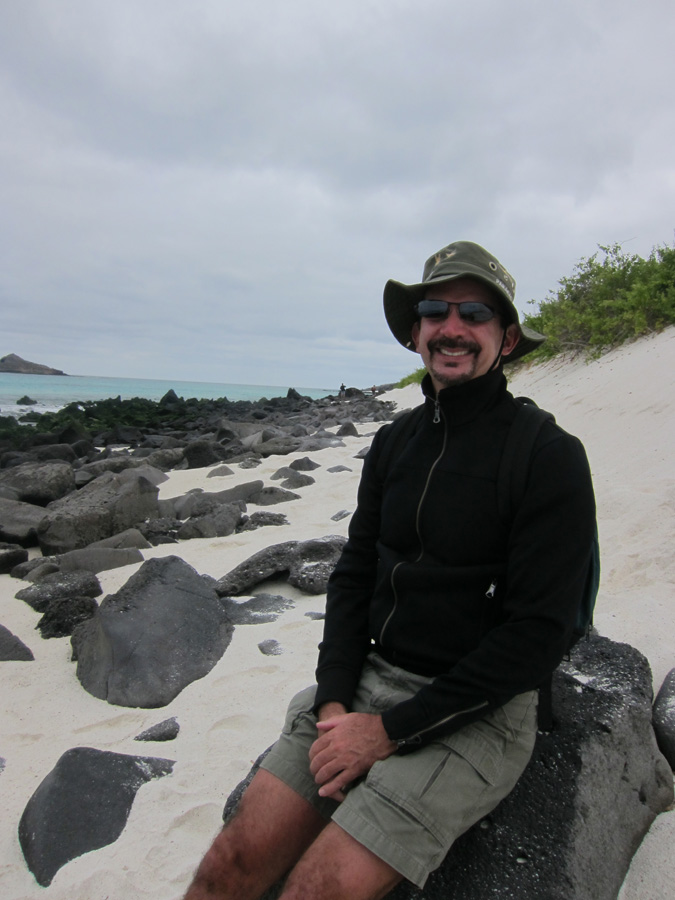
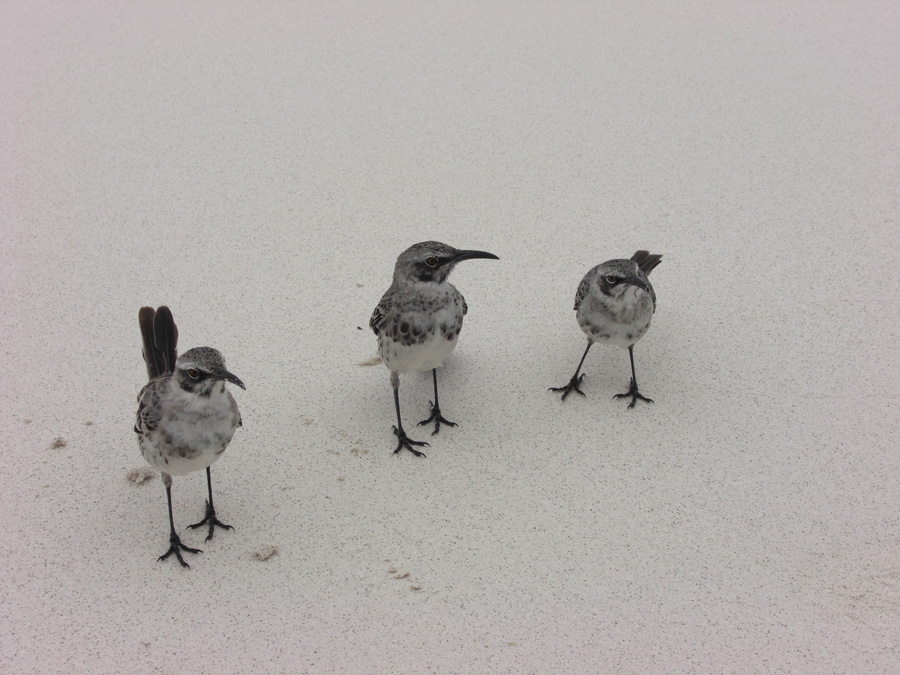
Pete's enjoying the nice stroll along this beautiful beach. Who wouldn't? A variety of mockingbird, lava lizards, Darwin's finches are considered endemic to this island.
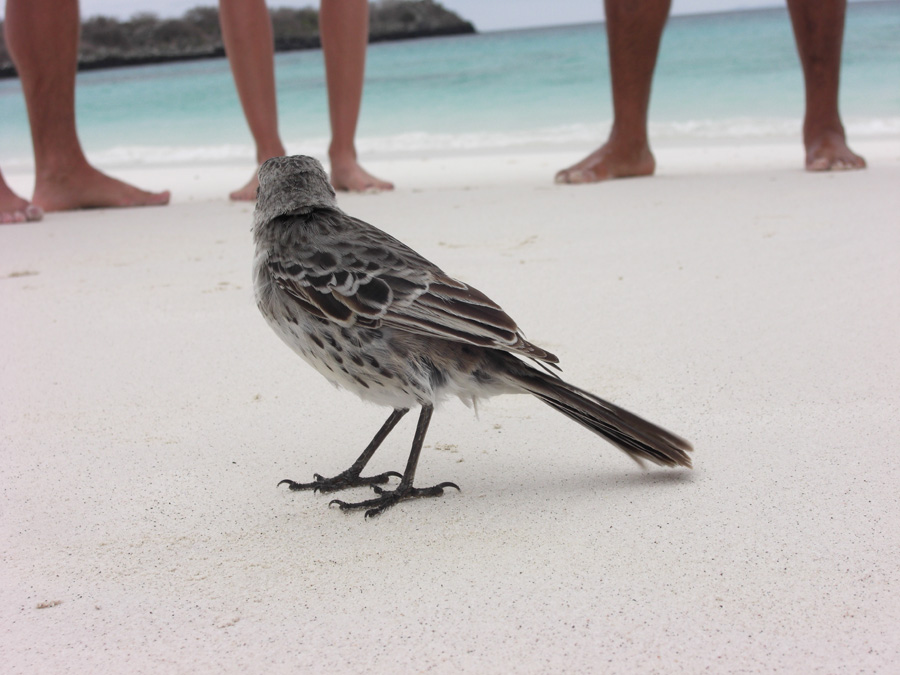
The mockingbird of Española is the largest species in the islands and developed carnivorous
So keep your distance folks, they may decide to add your toes to their diet. I am breaking here, and will resume in Chapter Thirteen. |
||||||||||||
|
||||||||||||