|
|
|
|
|
|
|
|
|
|
|
||||||||
|
||||||||||||||||||
|
Email us at: |
||||||||||||||||||
 |
||||||||||||||||||
 |
 |
|||||||||||||||||
|
Click the sun to see the |
||||||||||||||||||



 |
||||||||||||
|
|
|
|
|
|
|
||||||
|
||||||||||||
|
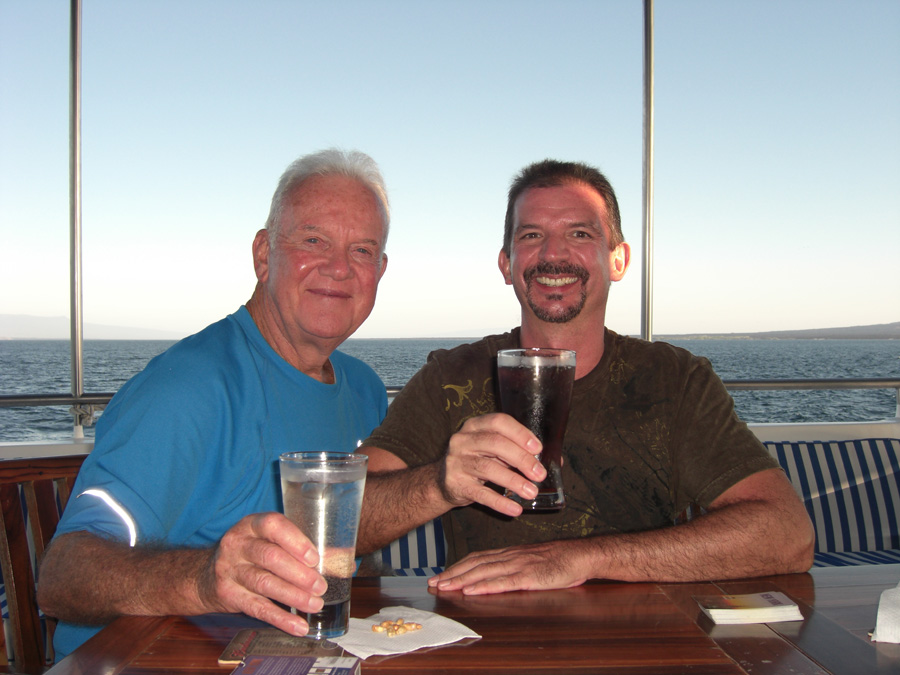
However, DAY FIVE has not quite finished yet. Back on board the Athala there is some time before dinner for a drink at the bar.
Pete and I enjoy playing cards in the evening. It's just something we have formed a habit of doing. Every evening before dinner we play a bit of Game 500, which is normally a game for four, but it has a very good option for two. It's simply our time together to talk about our day, and about the events going on in the world that we've read about during our time on our computers with the various news media we peruse periodically. It's just a nice habit.
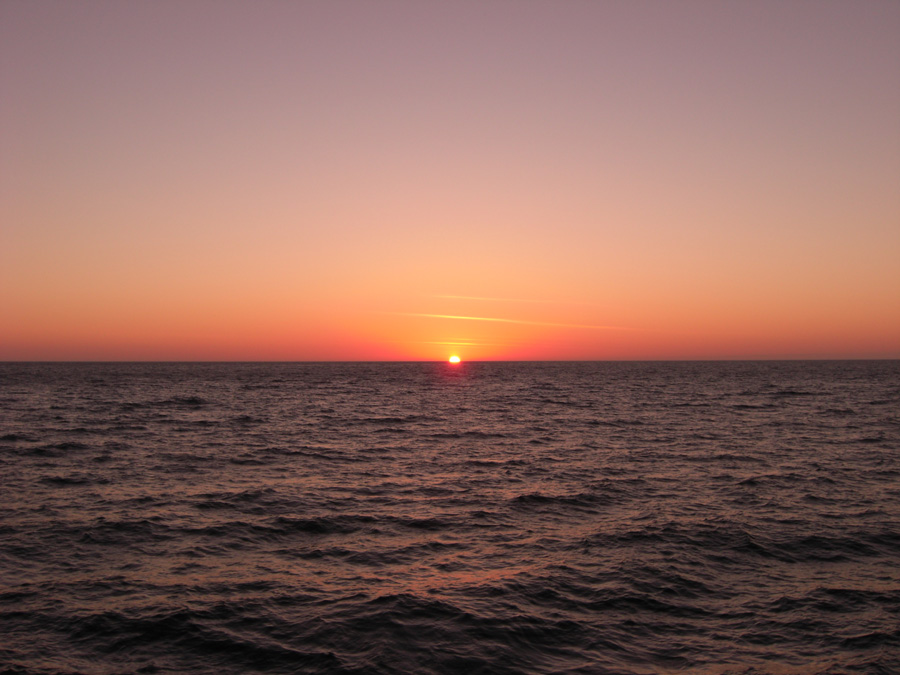
The day ends with a beautiful sunset. This is only our second day on the Athala, and it's been fantastic so far. DAY SIX ~ James Island: Egas Port, and Rábida Island
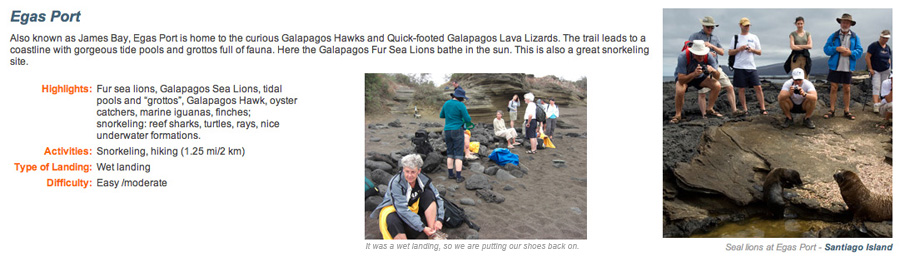
James Island, more commonly known by its older Spanish name Isla Santiago, but also Isla San Salvador, is among the more popular islands to visit. It is the fourth largest in the archipelago at 585 sq. km. The rocks here are mostly black and since there is no real shade, it can get very hot particularly around midday. That is why our visit began at 8:00 in the morning. Whenever I am on a beach, I can't help picking things up. I love to collect shells, and Pete is always telling me to put that down. We've go enough shells at home to sink a battleship. LOL
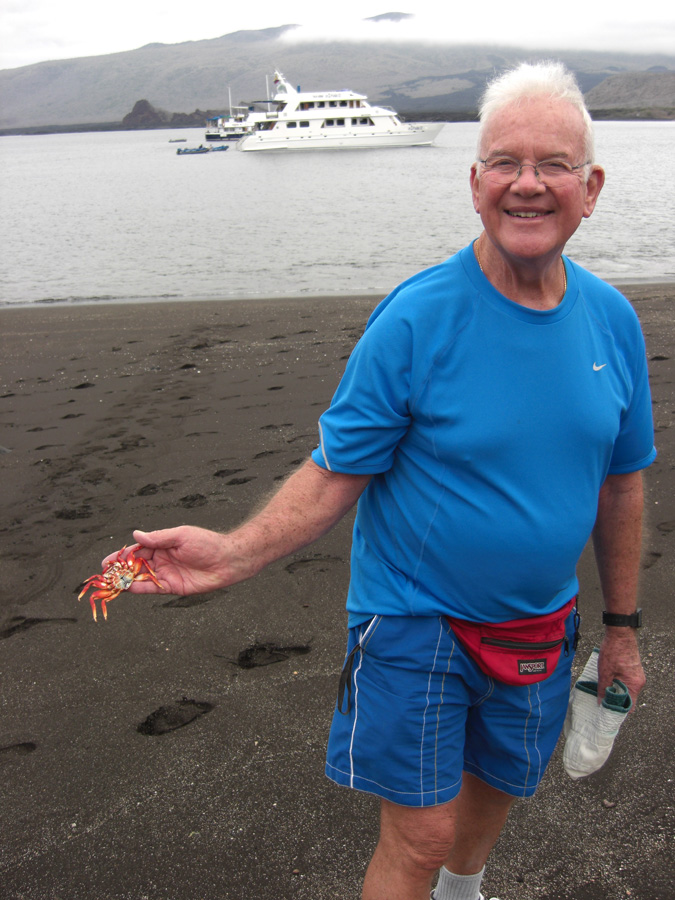
I find a crab shell on the beach. It's just the shell, not the whole crab. Javier told us that the crabs shed their shells. Boy, that was news to me. I always thought the shells just sort of grew with the crab. When they start to feel a little cramped, they open up their belly flap and just back our of their shells, and then they quickly go hide somewhere, because without a hard shell they are a pretty tasty tidbit. He hold us that you can actually tell the difference from the males and the females by the shape of their belly flap.
This is a male crab because the flap is triangular. The females have a "U" shaped belly flap.
These are all live crabs. I wanted to catch one to check its sex, but they are really fast, and they move After spending the morning on Santiago Island we returned to the Athala for lunch.
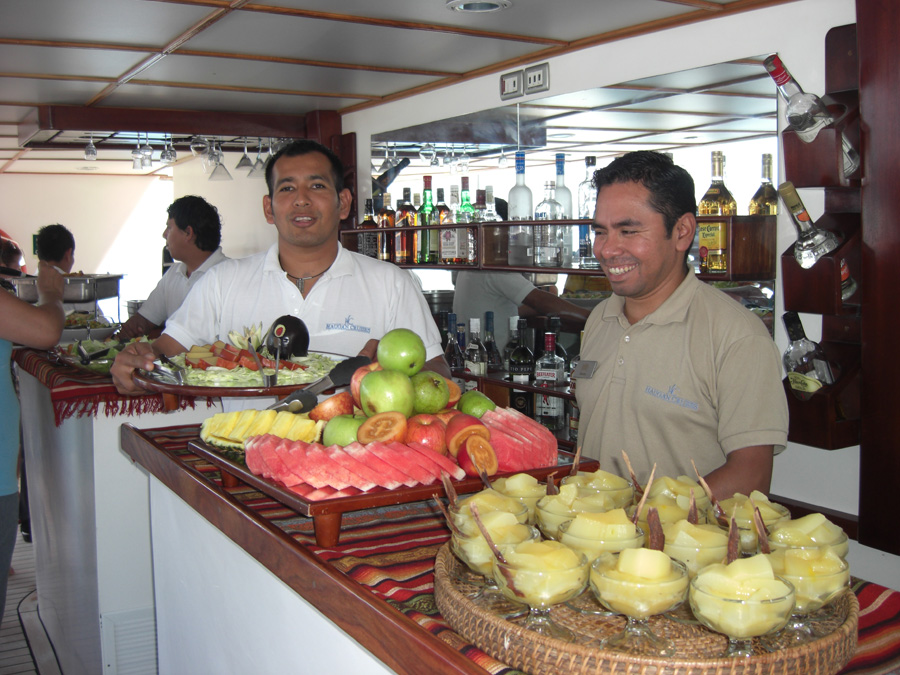
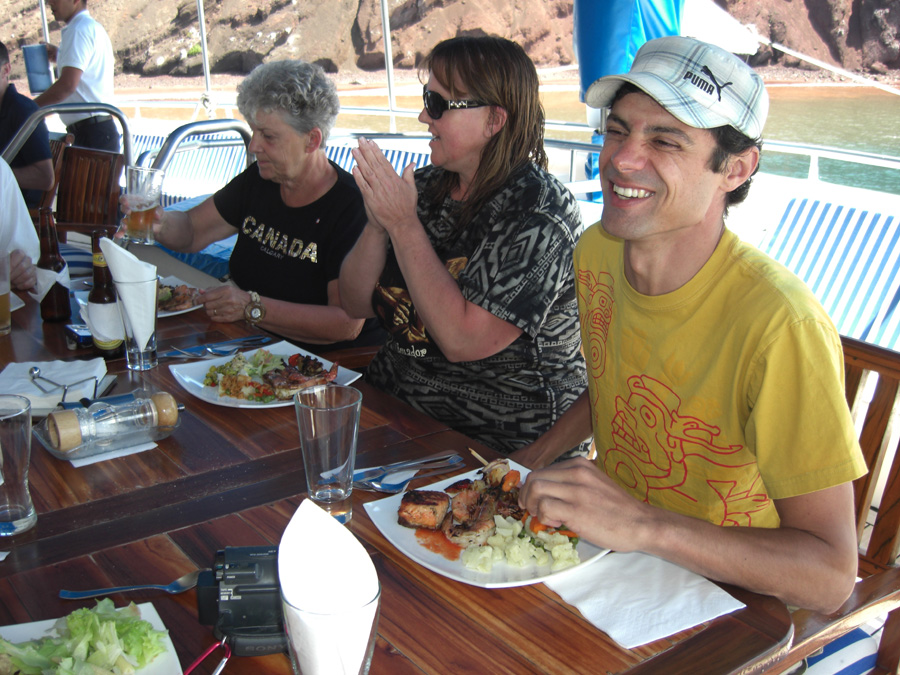
Manuel and Eduardo had a magnificent lunch set out for us at the bar on the upper deck. We would be eating outside.
Lunch was excellent as usual, and it was extra nice to be seated outside, and enjoying the sights around us.
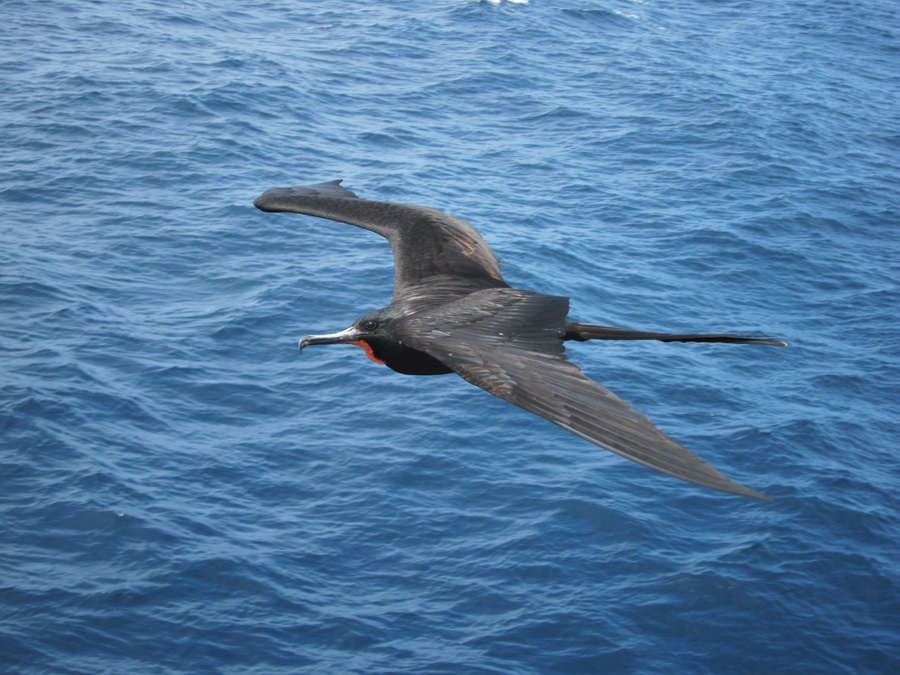
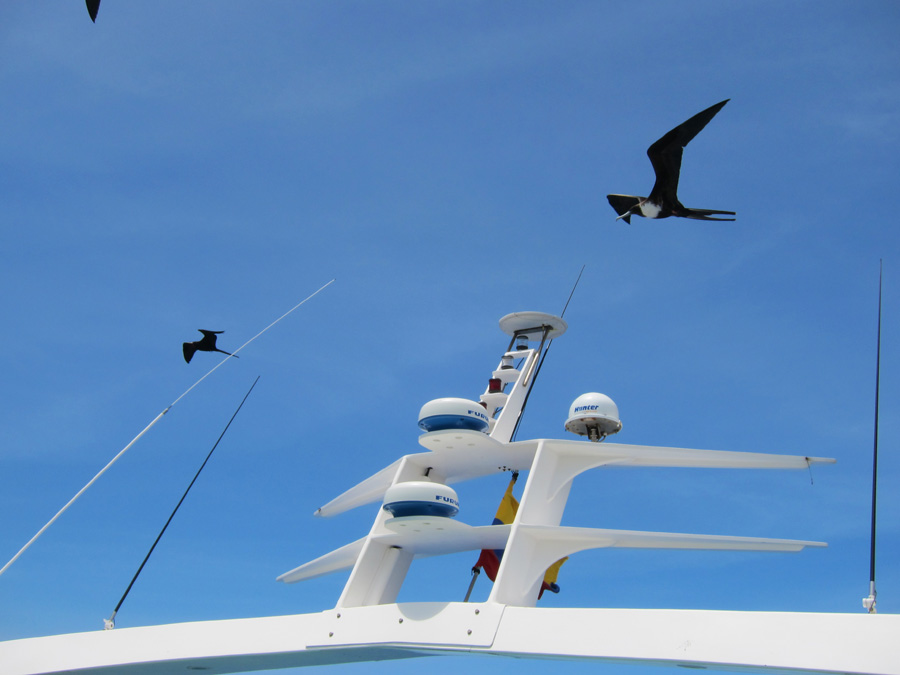
It seemed no matter where we were in our journey, there were always a few Frigate birds nearby.
There was a little time after lunch before we set off in the Zodiacs for Rábida Island. That was nice.
Just gazing up at the sky, watching the Frigate birds circling overhead, was a joy beyond compare.
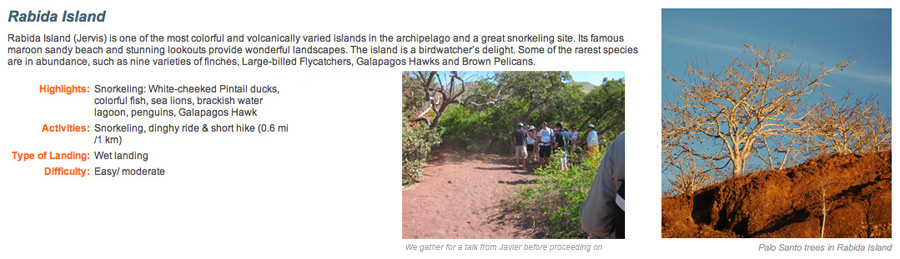
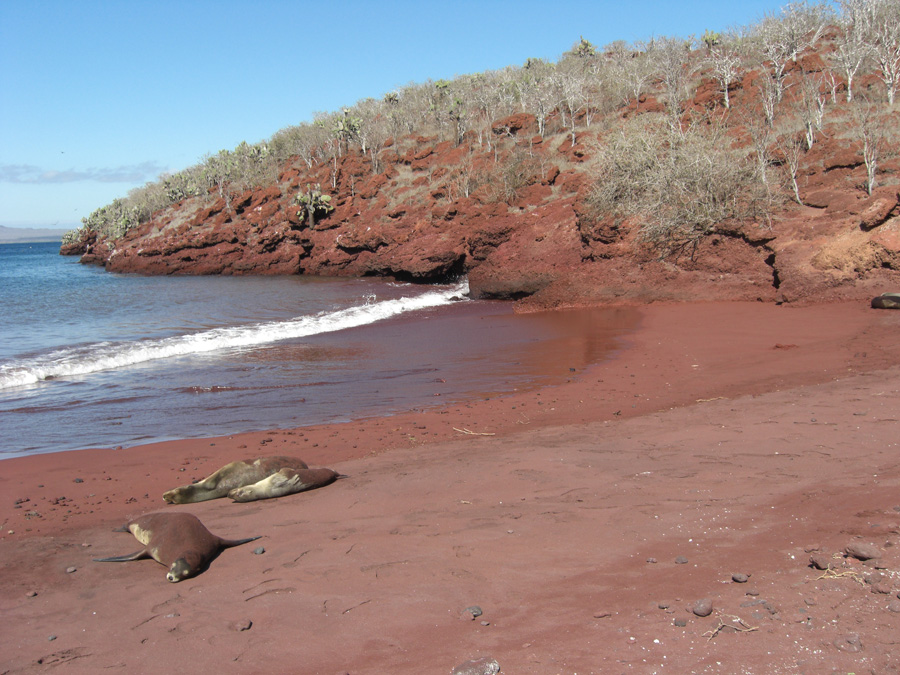
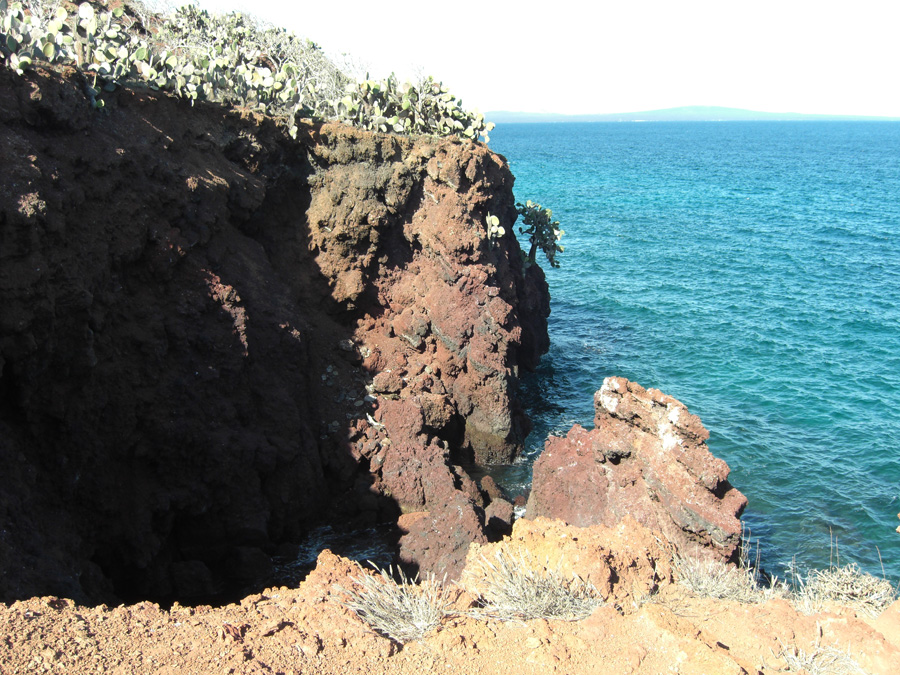
The color of the sand on Rábida Island was a vivid red, from the high iron content. It is really strange to think about, how these islands were formed from the same hot spot in the magma, yet they all look so very different. I can just envision the magma slowly churning away under the crust of the earth, and different formulations being present at different time, to be belched up to form a new and different island. This one was especially beautiful. The island is made of eroded hills and lava ejected from spatter cones. Rábida is more volcanically diversified than any other islands of the Galapagos.
The sea lions seemed to enjoy rolling in this red sand. It stuck to their bodies like a thick blanket.
The color of he water was a beautiful blue, and in sharp contrast to the vivid colors on land. This was one time that I could have kicked myself for not buying a disposable underwater camera. Before lunch we did deep water snorkeling from the Zodiacs. There was a very strong current, and we were dropped off so that we would pass down one side of a huge rock, or very small island. We swept past it on one side, then were picked up and taken back so that we could do it again but pass down the opposite side of the island. The fish and creatures were quite different on each side. There were schools of millions of small fish that we passed through, and there were sea lions curious about us.
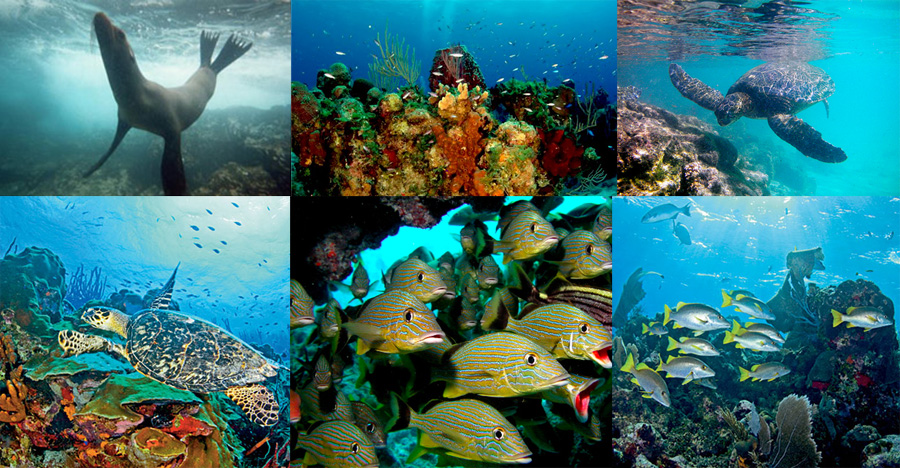
I didn't take any of these photos, but they give you an idea of what we were seeing while snorkeling. Every dive we did was so different, and you had the idea that nature here, in these islands, was very much unspoiled by man. Everything was so pristine, and so in balance, and the diversity was exciting to behold. I wish I could have captured it with my own camera to share with everyone. I think I shall invest in an underwater case for my camera. OOPS! I've reach 5.0 MB. I'll resume our nature walk on Rábida Island in the next chapter. |
||||||||||||
|
||||||||||||