 |
|
|
|
|
|
|
|
|
|
|
||||||||
|
||||||||||||||||||
|
Email us at: |
||||||||||||||||||
 |
||||||||||||||||||
 |
 |
|||||||||||||||||
|
Click the sun to see the |
||||||||||||||||||



|
 |
|
|



|
|
|
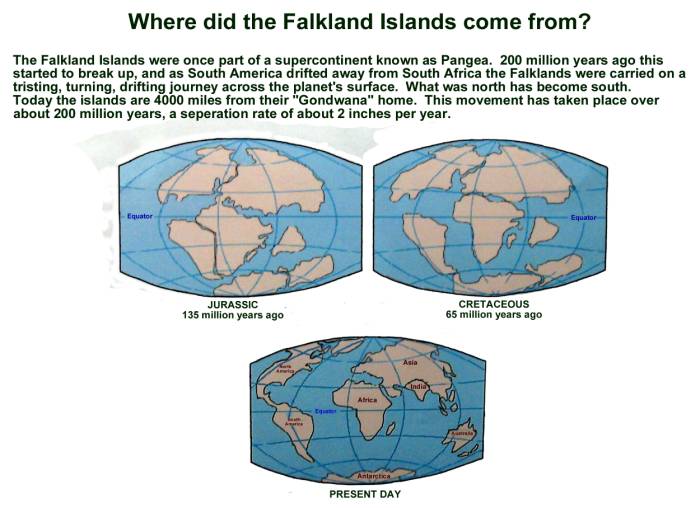
DAY SIX SOUTH ATLANTIC Today’s schedule had the following quote: For sheer downright misery give me a hurricane, not too warm, Apsley Cherry-Garrand Our Russian word of the day: Sea – “more” Wake-up call is at 8:00. This was to be a day at sea, so there were lots of lectures and movies. Tony Marr’s lecture at 9:15 is Ocean Wanderers – In search of seabirds. Before we too far away from the Falkland Islands, it might be nice to know where they came from.
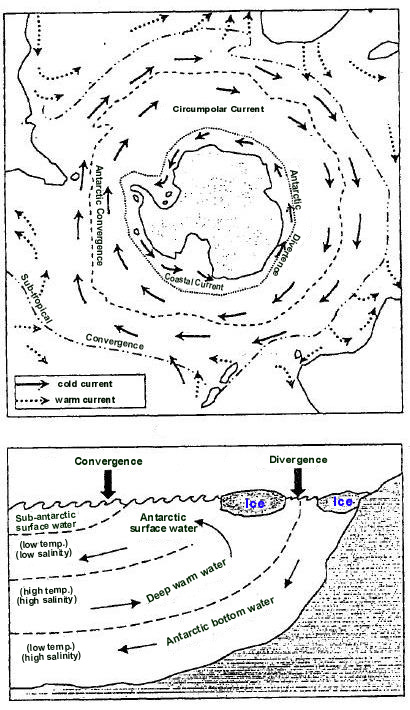
The Southern Ocean consists of a broad band of generally turbulent water surrounding the continent of Antarctica. The northern limit of this ocean is about 40° S latitude. Westerly winds and the associated West Wind Drift, or Antarctic Circumpolar Current, are outstanding features of the Southern Ocean. They cause massive amounts of water to move constantly from west to east around Antarctica. This involves water from the surface down to about 3,000 m, stretched over a distance of some 24,000 km. This averages some 130 million m3 of water per second, continuously on the move. The Antarctic Convergence is a natural boundary between the warm Sub-Antarctic Surface Water and the cold Antarctic Surface Water. The location of the convergence is not a precise line, but varies slightly throughout the year, from year to year, and from century to century. This convergence zone is an important biological phenomenon influencing the distribution of plankton, fish, birds and mammals. The species found are quite distinct as one travels across it. On our voyage from the Falklands to South Georgia Island, we would be crossing the Antarctic Convergence today.
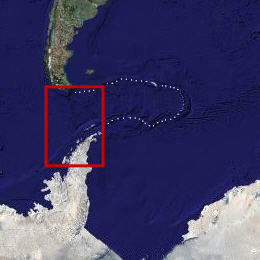
Many eons ago a ridge stretched between the tip of Tierra del Fuego and the Antarctic Peninsula, thus blocking the current that now flows clockwise around the Antarctic continent, (red rectangle) and at that time the water temperature was not cold enough for ice to form on the continent. The water kept mixing with the much warmer waters to the north. Once this ridge was pushed out of the way (the white dotted line) by the natural drifting of the tectonic plates, which is still going on today, the water could freely flow in a clockwise direction around the Antarctic continent, forming the zone of convergence, isolating the much colder water south of the convergence from the much warmer water north of the convergence, thus allowing the temperatures over the continent itself to gradually drop over time, and thus began the formation of continental ice, building up to as much as 3 miles deep in some places today. When we crossed the Antarctic Convergence, we definitely could tell. The temperature dropped noticeably, and the bird species did change.
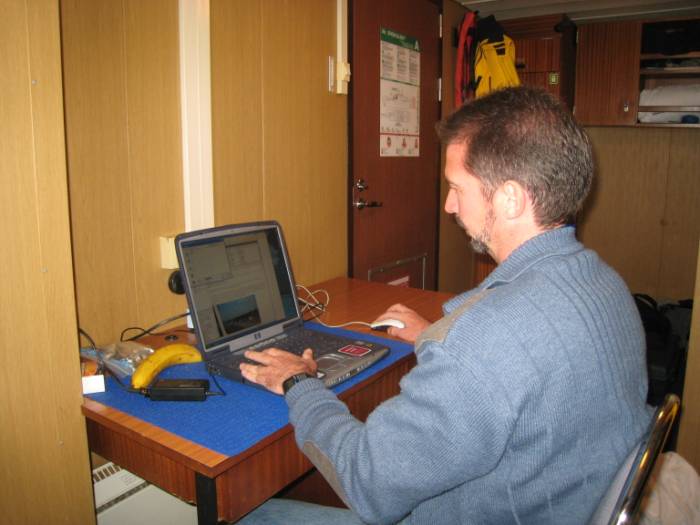
While it was miserable outside, Pete occupied himself by working on our website.
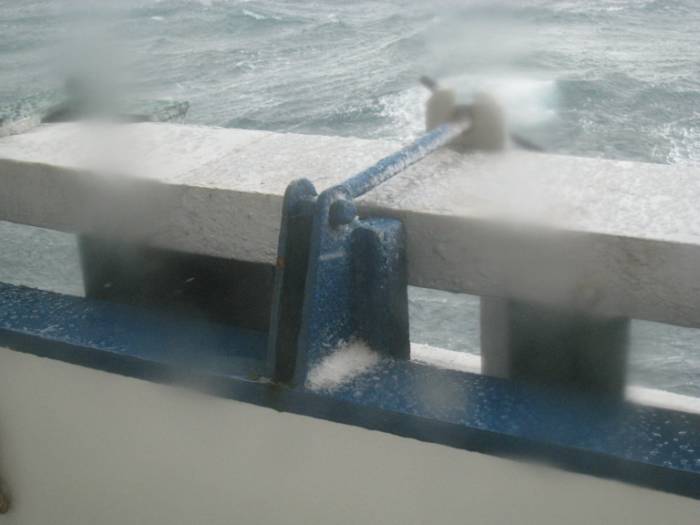
I looked out our window and saw that it was hailing, and ice was collecting on the rail.
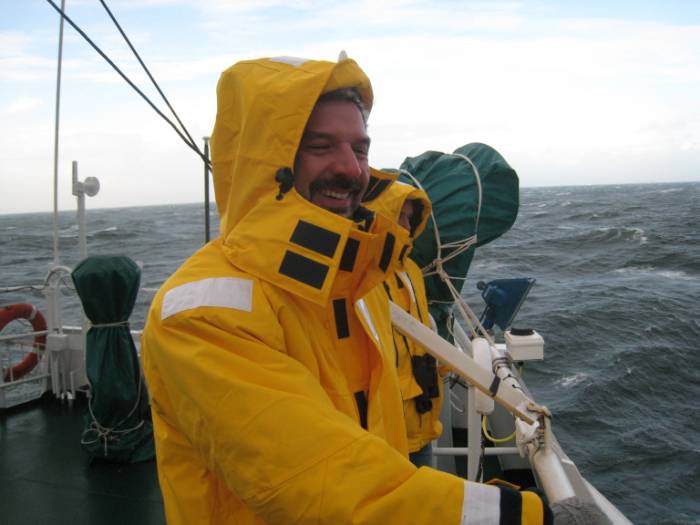
After we had passed through the hailstorm we decided to go out on deck for a breath of air.
It was very definitely brisk and exhilarating, and we could not stay out for long.
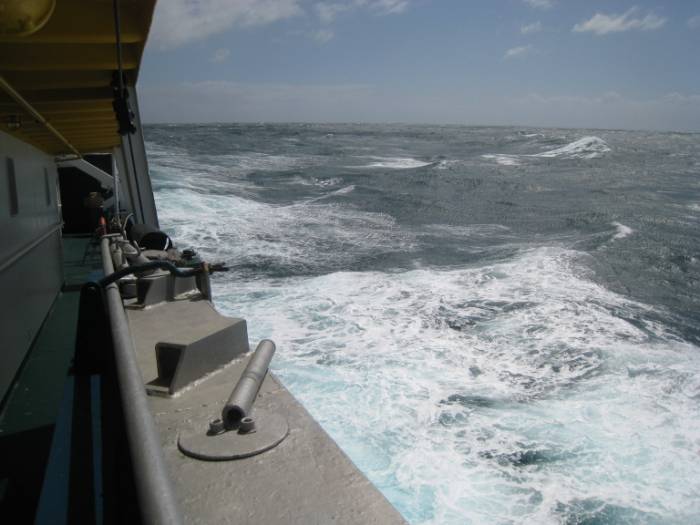
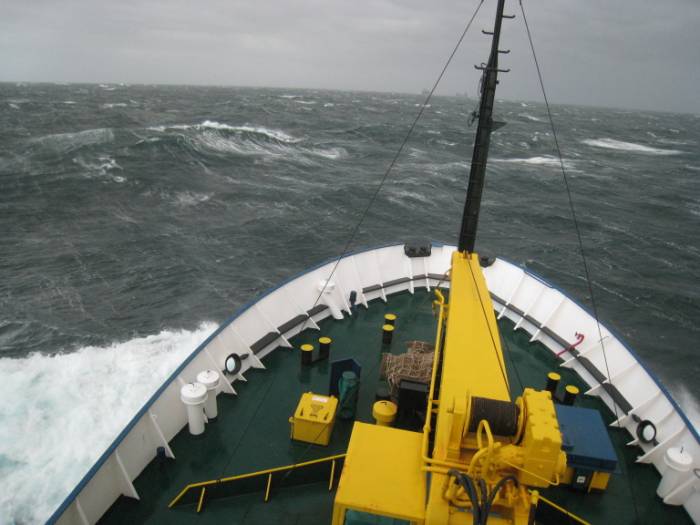
The wind was fairly strong, and the ship was rolling to . . .
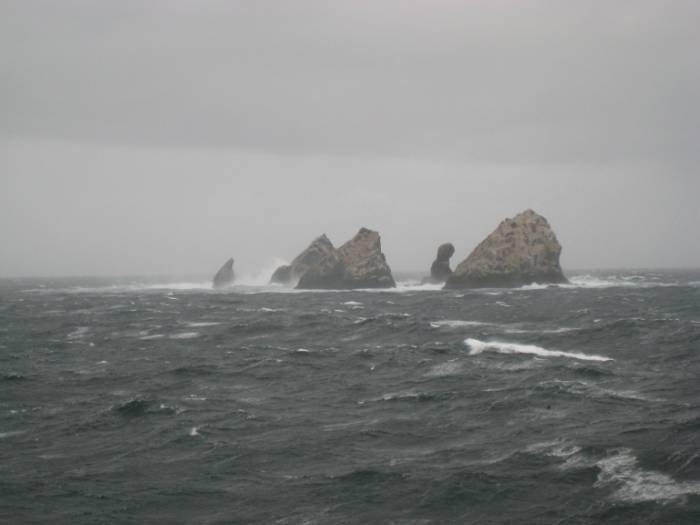
. . . and fro. But this was just a foretaste of what was to come. There was a report via e-mail that another of Quark’s ships that was headed from Ushuaia to the Antarctic Peninsula was experiencing a heavy storm in Drakes passage, and the normal 1½-day trip was taking them 3 days. That storm was headed in our direction. DAY SEVEN AT SEA Today’s schedule had the following poetic quote: How fresh was every sight and sound on open main and winding shore! Lord Tennyson – “The Voyage” We would be crossing into a new time zone, so we had to set our watches ahead one hour before going to bed tonight. Our Russian word of the day: Seal - “Nierpa” This was to be another day at sea, and a busy schedule for lectures. At 9:15 Louise gave her talk: Whaling History of the Southern Ocean Located 240 km (150 miles) west of the main island of South Georgia and 1000 km (620 miles) off the Falkland Islands is the Shag Rocks (Islas Aurora in Spanish). The Shag Rocks cover a total area of less than 20 hectares (50 acres), are situated on the South Georgia Ridge and have a peak elevation above sea level of 75 m (246 ft), and stand in water approximately 319 m (1046 ft) deep.
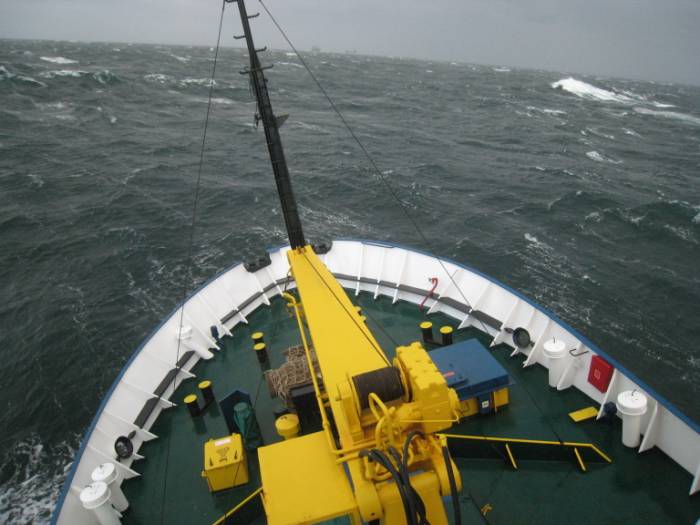
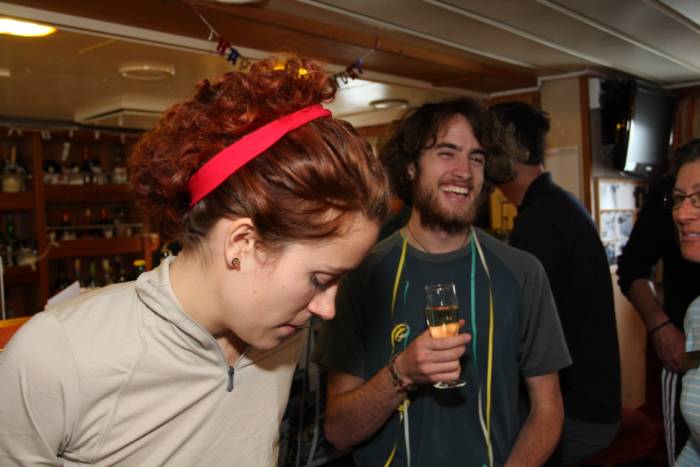
It was rather stormy as we approached the Shag Rocks. I would not like to be wandering these seas with a heavy fog, in a wooden sailing ship, and with no radar. These rocks could spoil your whole day. At 16:45 Shanti gave here educational talk on Seals of the South. Then at 18:10 we joined the Harris family in the bar for complimentary champagne in honor of Nick’s 21st birthday celebration.
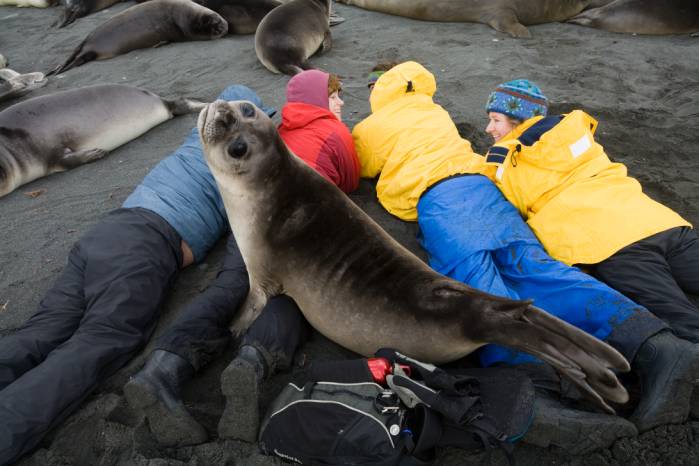
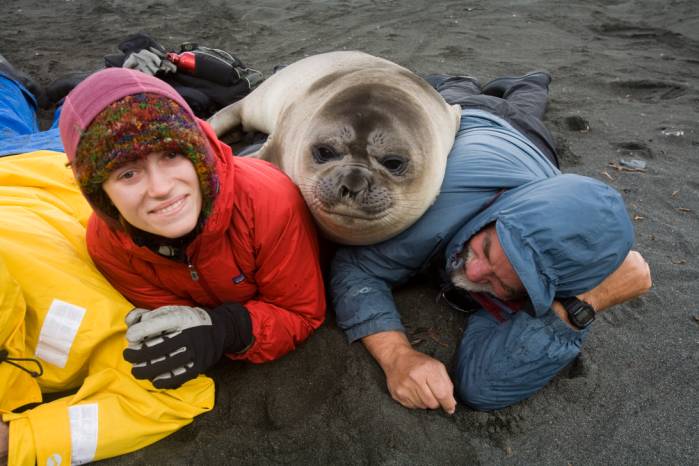
They were a crazy lot, and the elephant seal pups loved them.
How could anyone resist those huge brown eyes?
I think the elephant seal pups just wanted to love, and to be loved.
Nick was thoroughly enjoying all the attention, and the champagne.
Shep Harris (in the beard) probably suffered from dyslexia, because their cabin
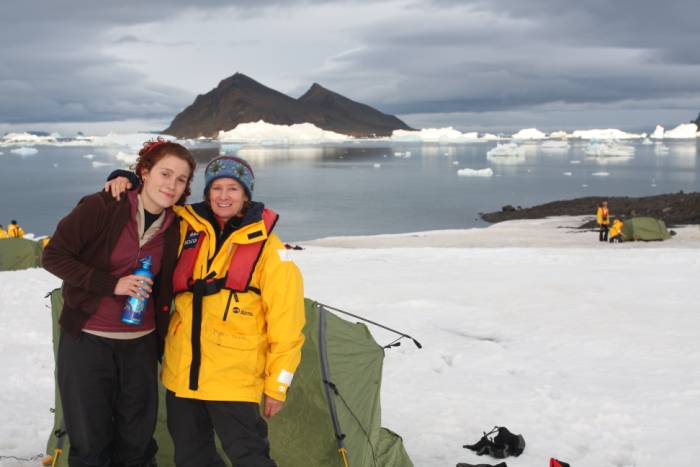
The Harris’ were among the group that went camping overnight on the ice. DAY EIGHT SOUTH GEORGIA ISLAND We had this quote on our schedule for this day: For speed and efficiency of travel, give me Amundsen; Sir Edmund Hillary You had to see the nightly films on famous explorers to appreciate that quote. Our Russian phrase of the day: What’s that? - kak eta? We arrived at Elsehul Bay at around 9:00 AM. We had hoped to do a Zodiac cruise here. At half a mile wide, the shore of Elsehul Bay is one of the main breeding grounds for South Georgia’s Fur Seal population. From November to March when the seals haul out to breed, it is unsafe to land and walk across the beaches. Offshore Zodiac cruising during these months allows for excellent views of Fur Seals, nesting Macaroni Penguins, Grey-headed, Black-browed, and Light-mantled Sooty Albatross. Unfortunately, this was the first stop where our plans were foiled by the weather.
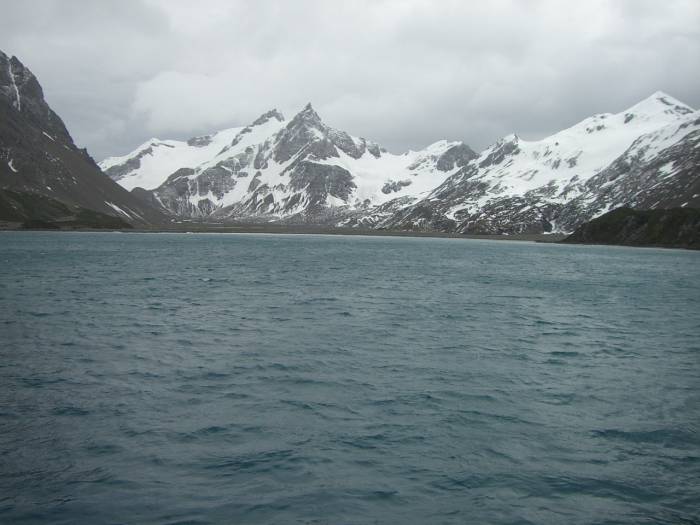
As we approached Eslehul Bay we could see the broad beach, and it looks fairly calm, but It was much the same story at Right Whale Bay. The wind was strong, so much so that when the Zodiac team headed to shore to check things out, they realized on their way back to the ship that a driver alone in the Zodiac was not heavy enough to hold it on the water heading into the wind, and that it could easily flip over.
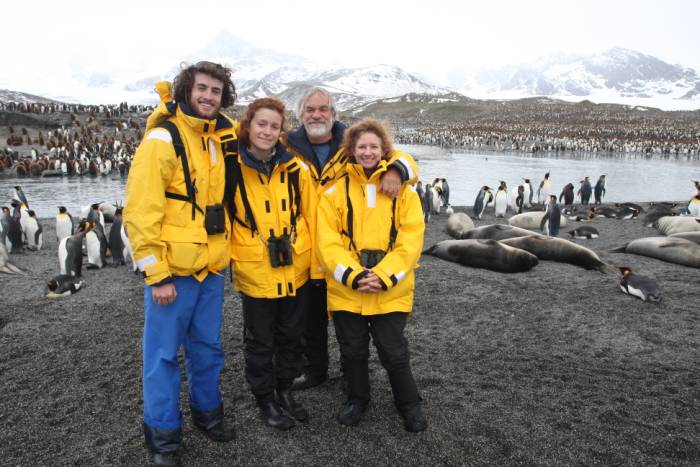
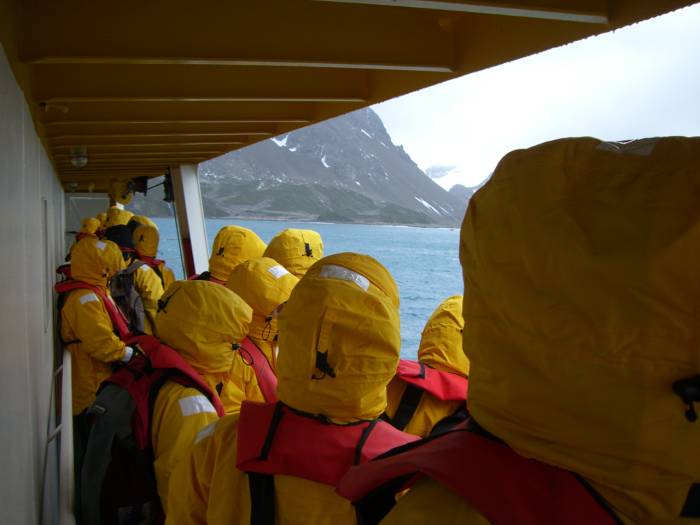
We were all geared up, waiting for the Zodiacs to return from their scouting So this landing was scrubbed for safety reasons. We removed our foul weather gear and enjoyed some free time on board until it was time for our re-cap and briefing in the Bar. Dinner was served at 19:00. DAY NINE SALISBURY PLAIN and FORTUNA BAY, WITH SHACKLETON’S WALK Our daily schedule had this disgusting description to start our day off: If it’s possible to imagine a piece of beef, odiferous cod fish Dr. Frederik Cook, the Belgica Expedition 1885 The Russian phrase of the day: Great Day Ho-ro-shij-djen Now that’s a hard one. We land at Salisbury Plain at around 8:00 am. It is located in the Bay of Isles on the North West corner of South Georgia. This location is home to the second largest King Penguin rookery on the island, with an estimated 250,000 individuals at all stages of life. This location is also home to breeding Elephant and Fur Seals, which can have a bad temper at the best of times, which Shane Evoy, or expedition leader found out the hard way on this day. Towering mountains and the Grace and Lucas Glaciers surround Salisbury Plain.
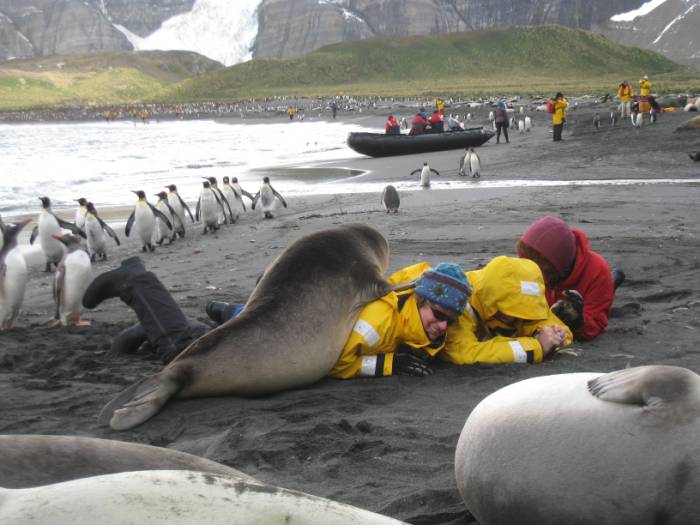
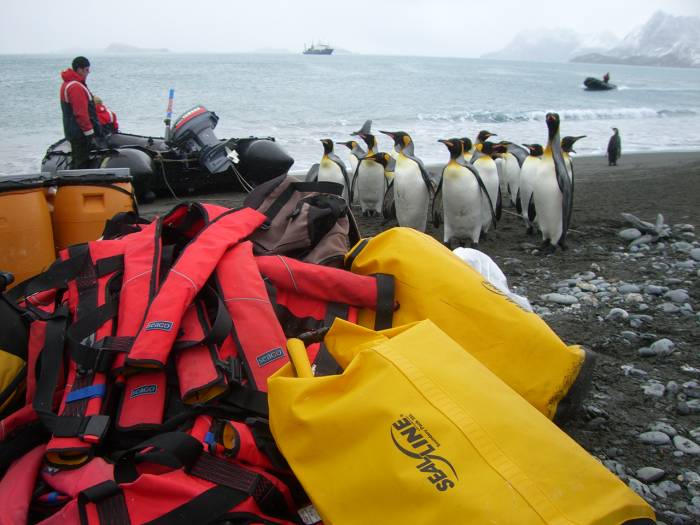
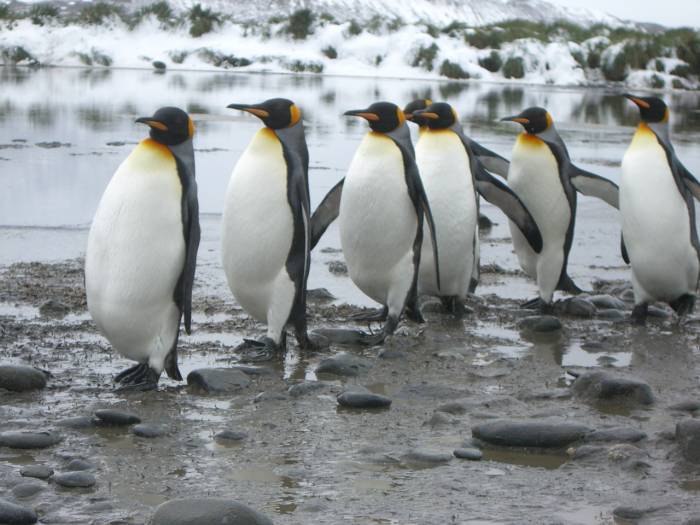
The King Penguins are very curious about our colorful gear and come over to investigate.
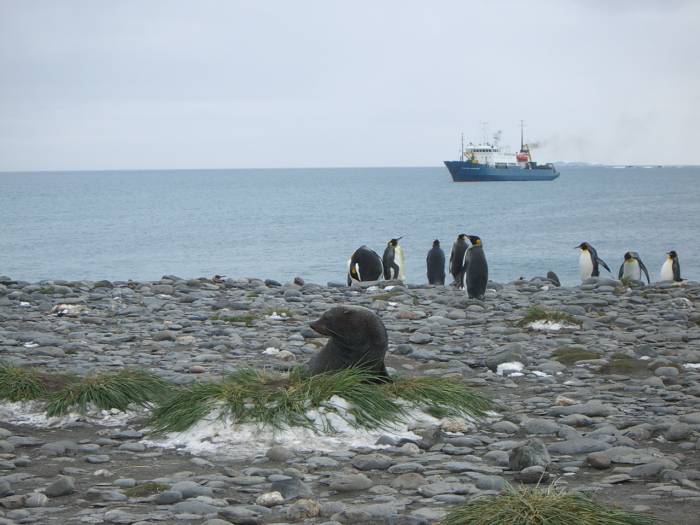
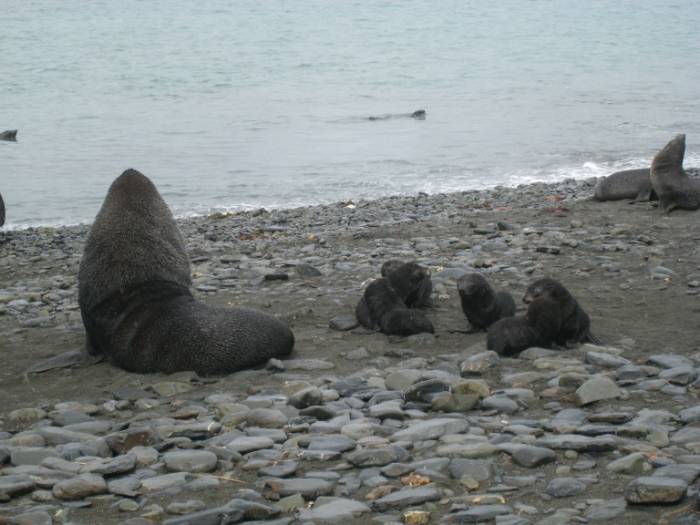
The Fur Seals eye us with concern. I don’t think we are welcome visitors.
We were instructed that if a Fur Seal bull charges us that we were not to run, Shane Evoy has been making these trips for 14 years and a Fur Seal has never bitten him, until today. He got a really nasty bite in his groin, and his waterproof hip waders had a huge hole torn in them. He played the he-man role and stuck out the day on shore. When wading in the water to steady the Zodiacs the salt water probably helped to sterilize his bite. When he got back on board he doc cleaned the wound and put him on some drug regime for the next 5 days. The lesson for the rest of us was to give those Fur Seal bulls a very wide berth.
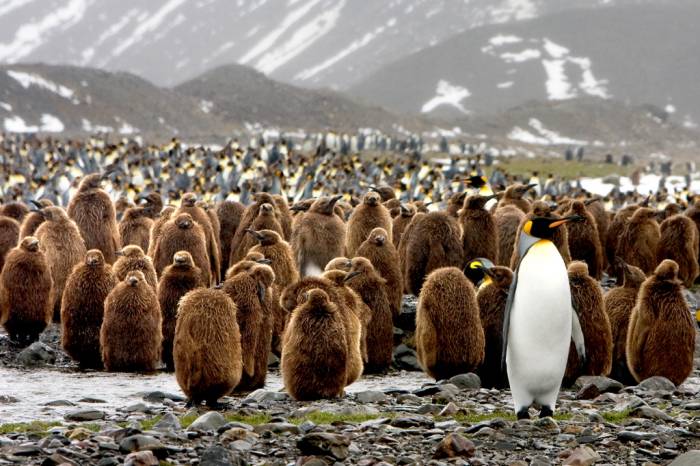
These King Penguin chicks are about a year old, and will soon molt and get their new
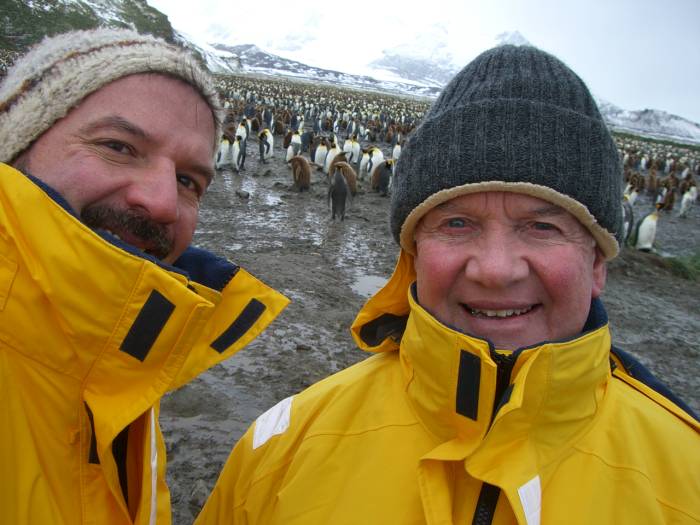
Pete taking this photo at arms length. The ground was very slippery
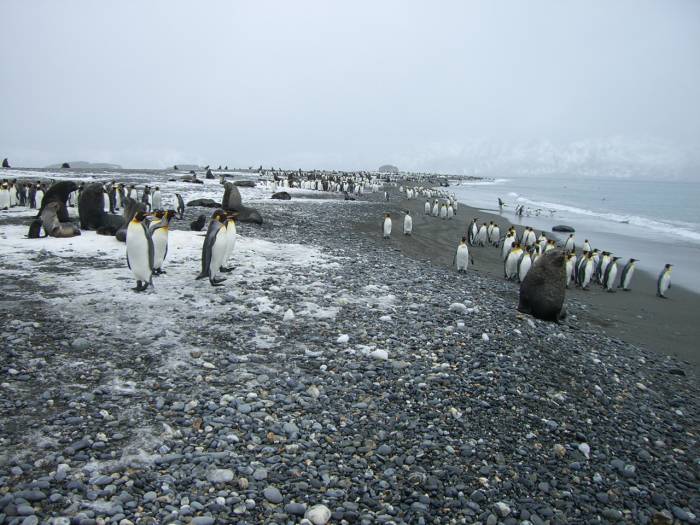
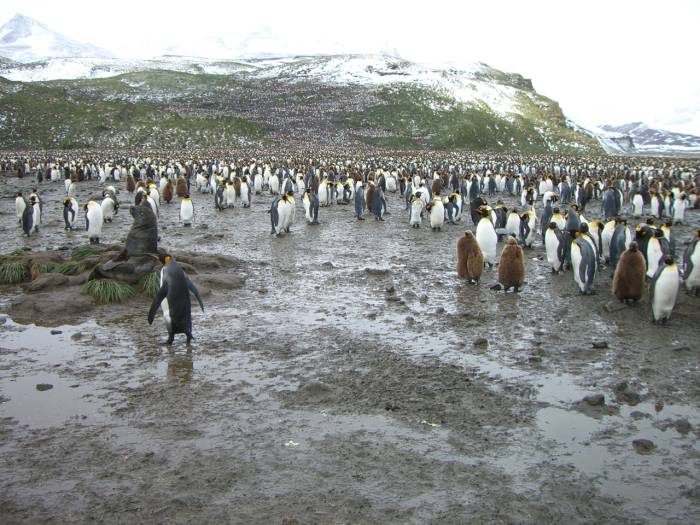
With this view, with the penguins stretching off into the distance clear up to the
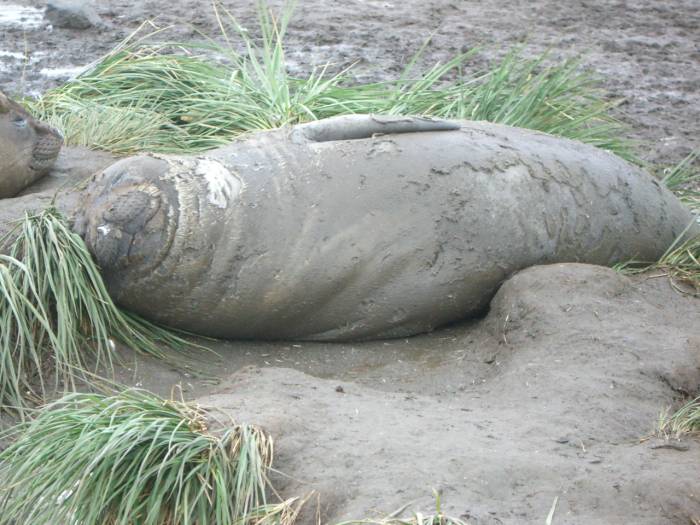
The Elephant Seals were molting as well. They just lie in the sun and sleep all day.
Left, Right, Left, Right, marching to the sea for krill and squid to feed the kids. After a pleasant morning on Salisbury Plain, our visit comes to an end and we head back to the ship for lunch. We land a Fortuna Bay at around 14:00. Fortuna Bay is home to the Fortuna Glacier, both named after the first whale catcher to operate out of Grytviken in the early 1900’s. The bay is home to the Whistle Cove King Penguin rookery as well as the fateful site where Shackleton started the last leg of his epic hike across South Georgia to Stromness. A few hardy souls joined Phil Wickens on the strenuous 7 km hike up and over the hills to Stromness. Pete and I were not among them, although Pete certainly could have been.
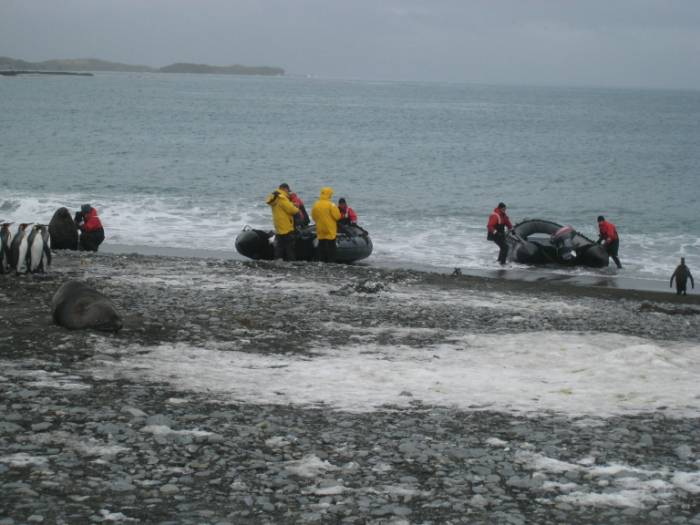
Once everybody is on shore the Zodiac drivers haul the boats up onto the
There was a rather large Fur Seal bull on the beach, but we were far enough away
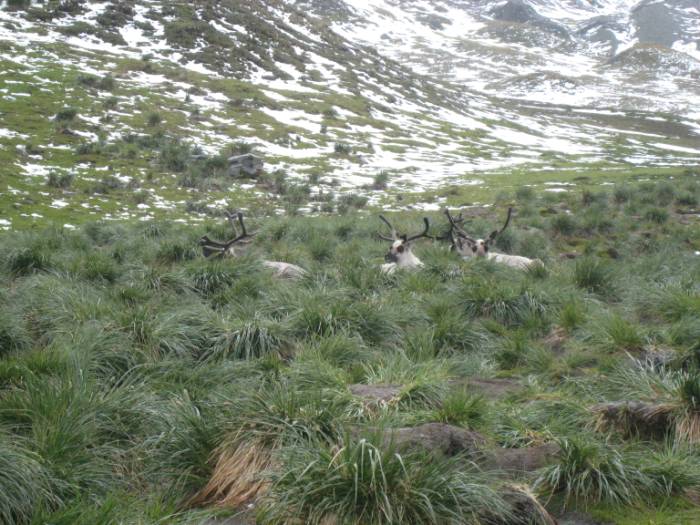
Early in our walk we happened onto a small heard of reindeer.
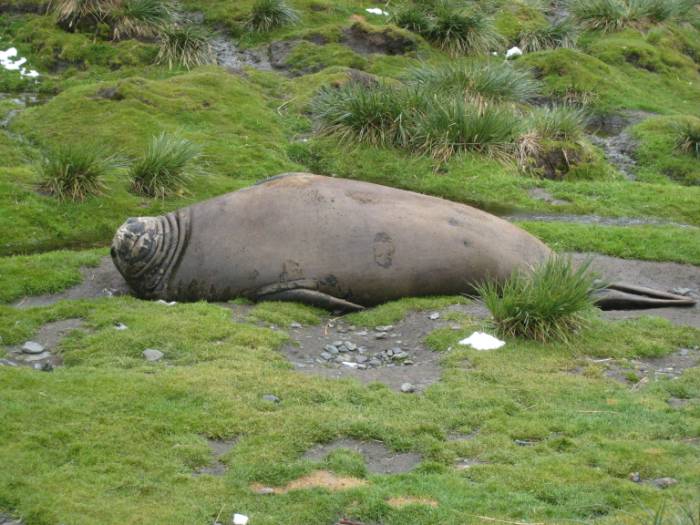
Our presence disturbs the nap of a molting Elephant Seal.
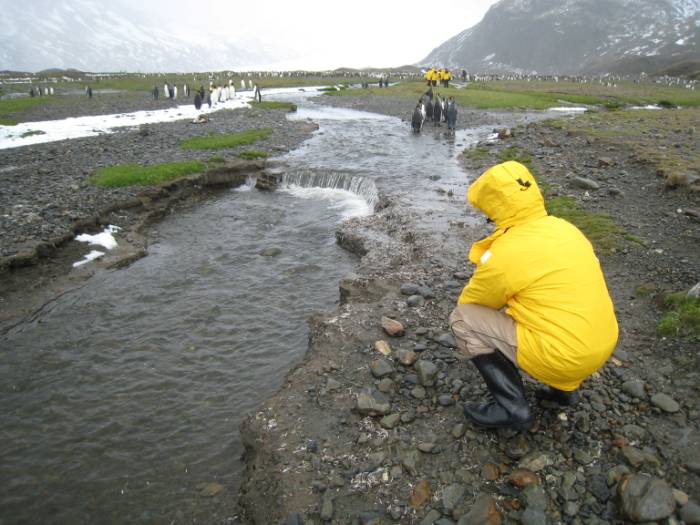
It’s a beautiful little brook, but I doubt there are any trout to be found in it.
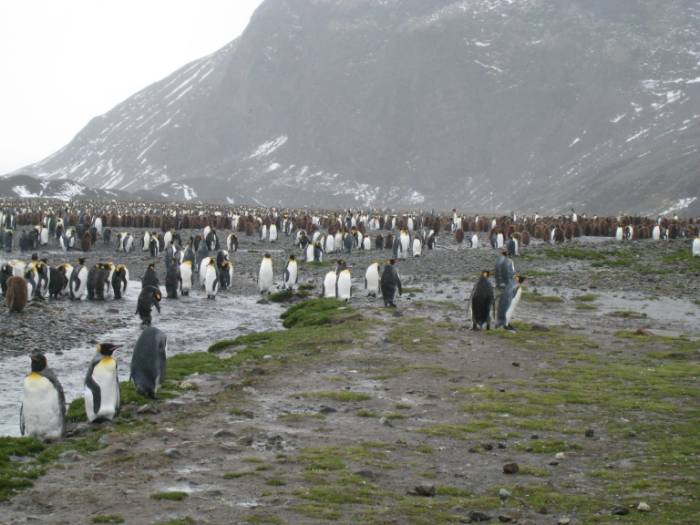
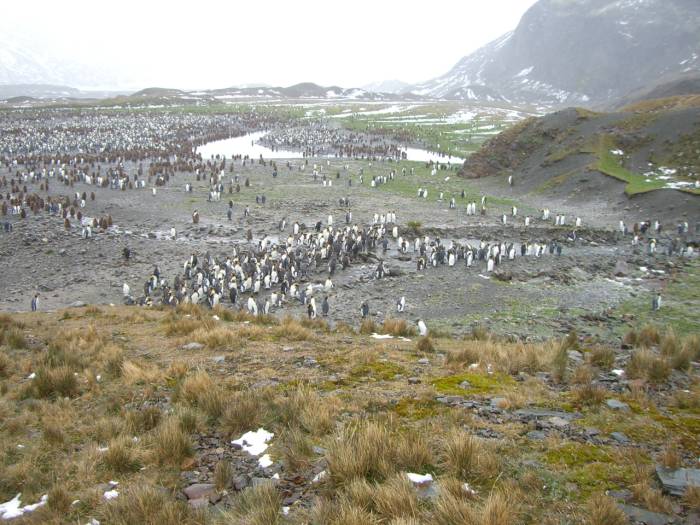
This rookery looks every bit a large as the one at Salisbury Plain.
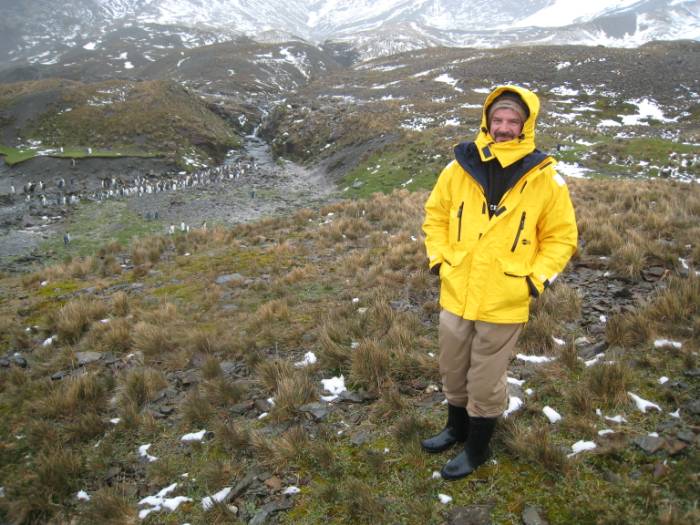
We hike up to higher ground to get a better view.
From this vantage point it appears that this is a much smaller rookery than the I’ll end Chapter 4 here and pick up with St. Andrews Bay and Grytviken Whaling Station in the next chapter. It’s hard to believe this adventure is less than half over and we’ve done so much already. |
|
||||
|