 |
|
|
|
|
|
|
|
|
|
|
||||||||
|
||||||||||||||||||
|
Email us at: |
||||||||||||||||||
 |
||||||||||||||||||
 |
 |
|||||||||||||||||
|
Click the sun to see the |
||||||||||||||||||



|
 |
|
|



|
|
|
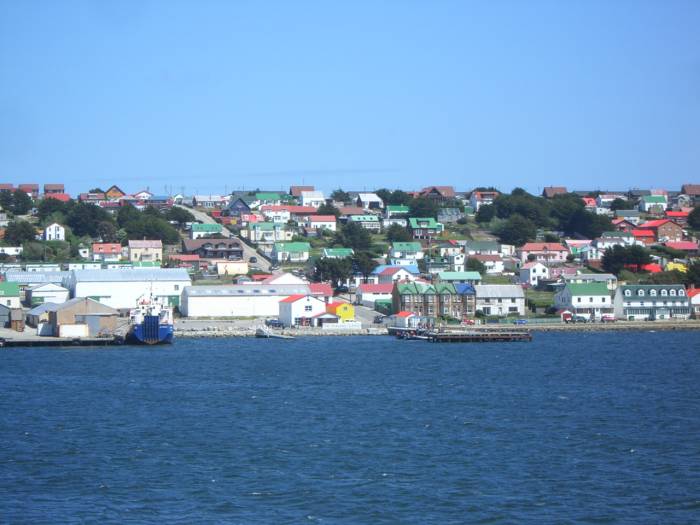
DAY FIVE Today’s schedule had the following verse: Birds have it better than do we, in many ways, and here are three; Our Russian phrase of the day: “Dobry Dien!” – Good Day! This is our day to visit Port Stanley, the colorful and historic capital of the Falklands.
We anchor in the bay and take the Zodiacs to the municipal pier. The town looks picture perfect from the ship. We have the option of going on a Nature Trek with a guide, or just spending the morning in free time walking around the town and getting to know the locals. We opt for the free time, and decide to include the museum in our walk.
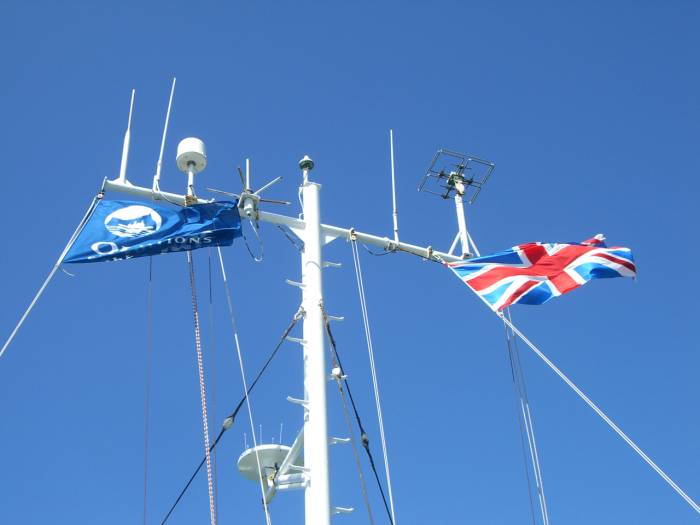
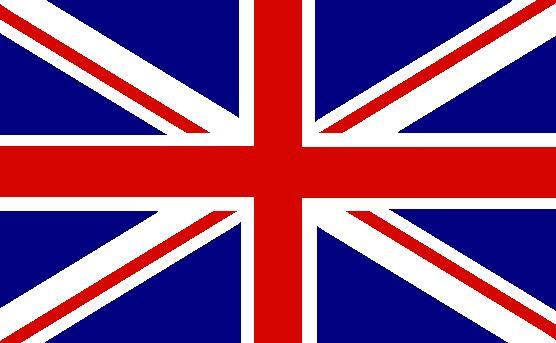
While at anchor in Port Stanley our ship flew the Union Jack.
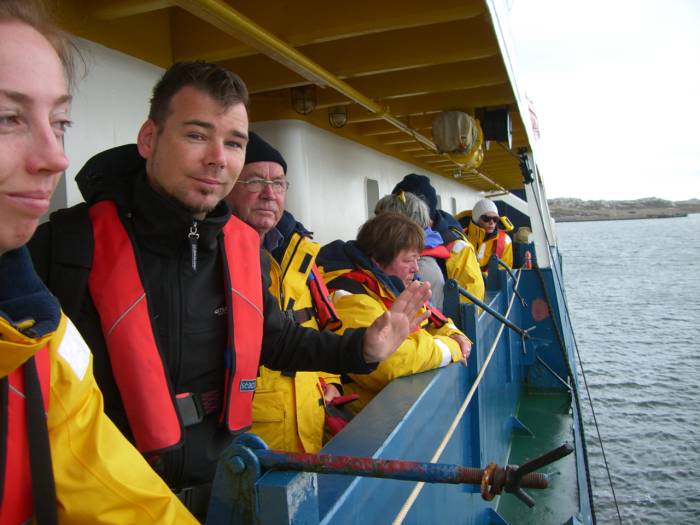
Waiting for the Zodiacs to return from shore for more passengers.
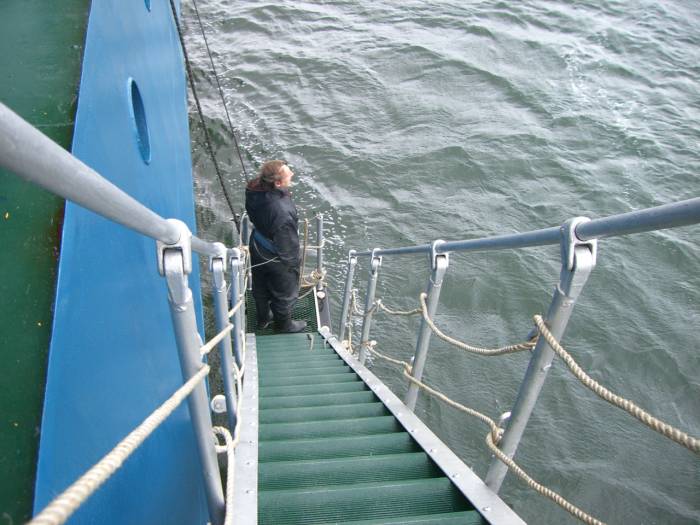
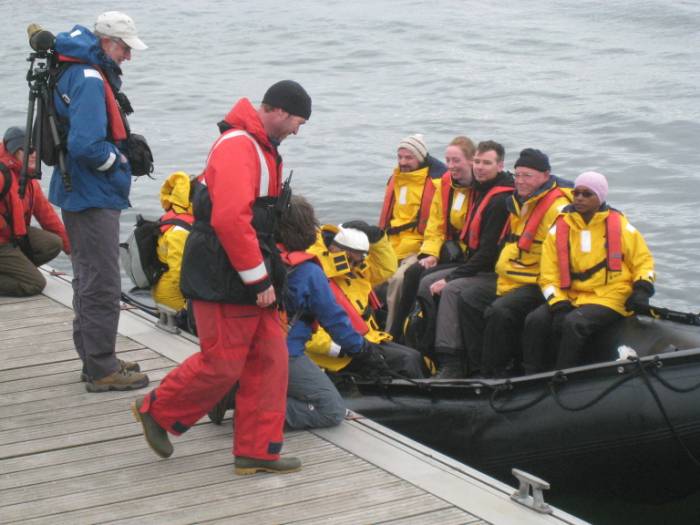
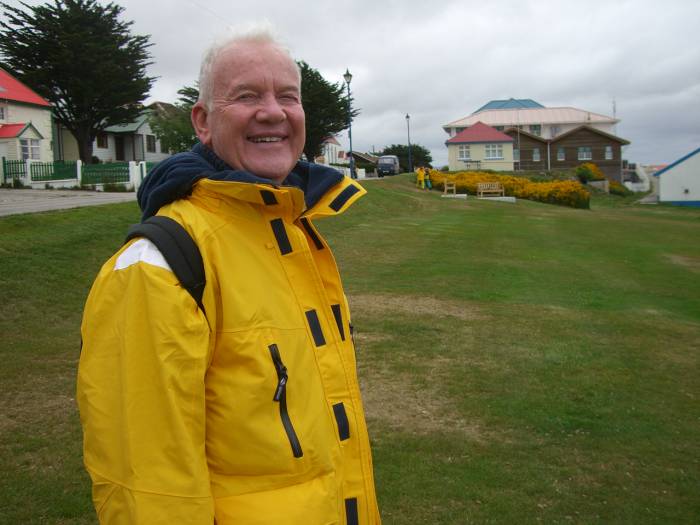
The gangway was a steep climb, and easier to ascend than to descend. I landed ahead of Pete just because when the number got up to 10 persons, I was #10 in my Zodiac, and Pete was #1 in the next Zodiac. So I was able to get this next photo of him coming along side the dock.
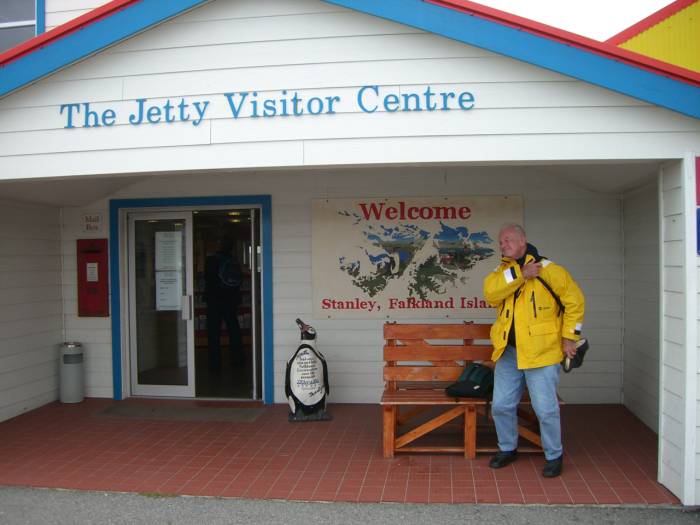
Tony and Phil were there to greet them. I think the staff enjoys not having to wade in the water. Our first stop after leaving our lifejackets in a protected area on the dock was the Jetty Visitor Centre.
There was some very interesting stuff in the Jetty Visitor Centre. (Note the British spelling.) We obtained a tourist map of the town, and the first thing I looked for was where the pharmacy was located. I had forgotten to pack my Aleve, and I was really starting to feel the aches and pains of my age.
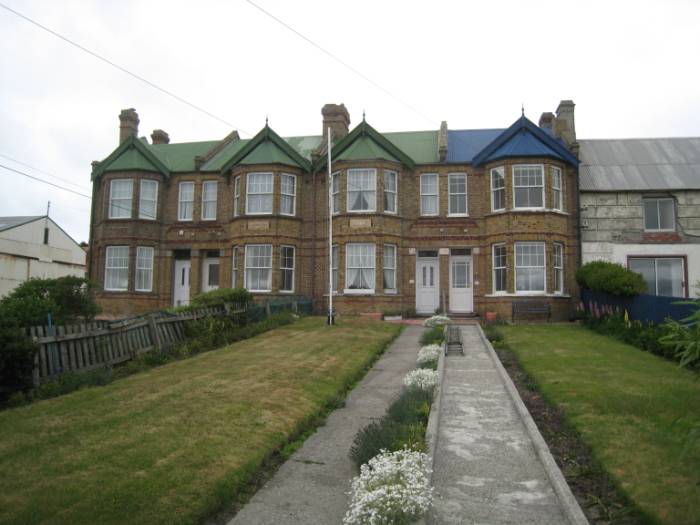
This beautiful old mansion was one of the first buildings we passed by on our walk. It is certainly right out of an English storybook. I thought I was back in the jolly old UK. It is called the “Waterfront Guest House”. The Falkland Islands is an Overseas Territory of the United Kingdom, independent in every way except for defense and foreign affairs (which remain the responsibility of the British Government). Until the introduction of the fishery conservation zones in the 1980s, sheep farming and the export of wool was the mainstay of the Falklands economy for 160 years. To this day, wool still remains the main land-based export.
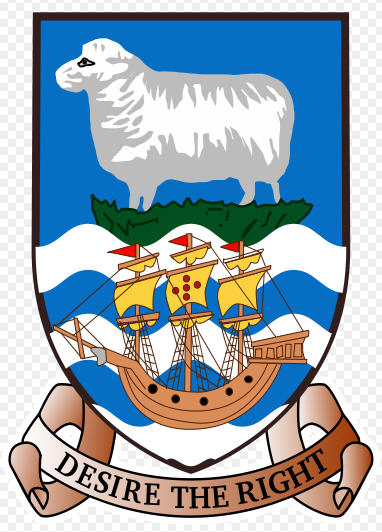
From the Falkland Island’s Cote of Arms it is not difficult to see what their economy is based on.
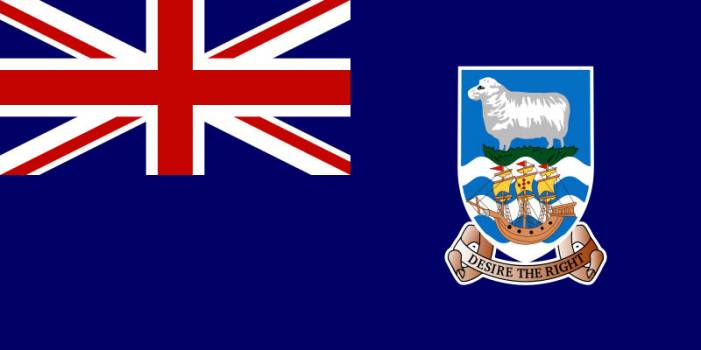
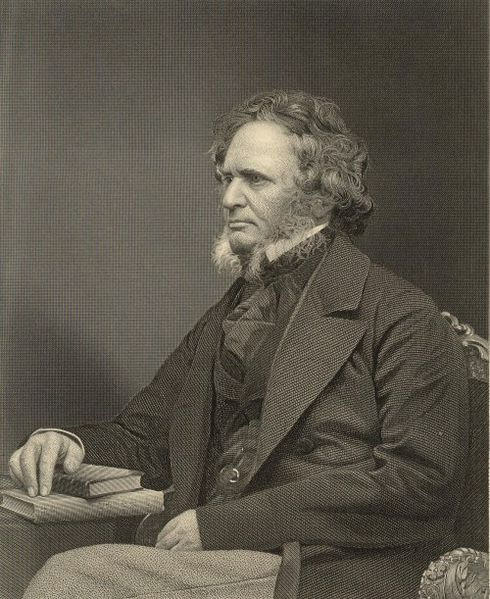
This is the flag of the Falkland Islands. The Falklands have a total land area of 12,173 sq km (approx. the size of Connecticut or half the size of Wales). There are two large islands and over 740 smaller ones. According to the 2006 Census figures, the Falklands population (excluding people affiliated with the military garrison) is 2,478. 2,115 people live in Stanley, which is 85% of the total population. Port Stanley got its name from this gentleman.
Edward Smith-Stanley, 14th Earl of Derby HISTORY l 1592 - First confirmed sighting of the Falkland Islands by English navigator John Davis aboard ‘Desire’. l 1690 - First recorded landing on the Falklands (at Port Howard) by British Captain John Strong aboard Welfare’. l British administration remained un-broken from 1833 until the Argentine invasion on April 2, 1982. l A British task force eventually overcame the Argentine troops and British sovereignty was restored on June 14, 1982. l Falkland Islanders are predominantly of British descent. l Mount Pleasant Airport was opened by HRH Prince Andrew in 1985. This operational base is home to around 1,500 British military personnel and supporting civilian staff. It is situated 35 miles from Stanley.
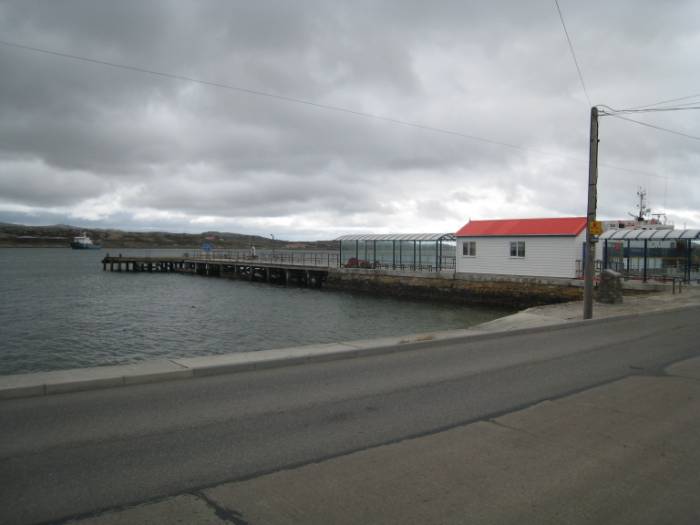
I took a photo of the Jetty Pier. You can see our lifejackets stacked inside the glass shelter
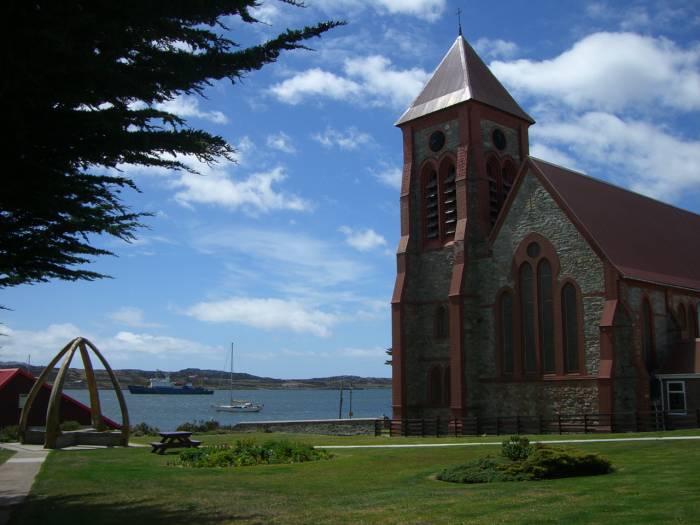
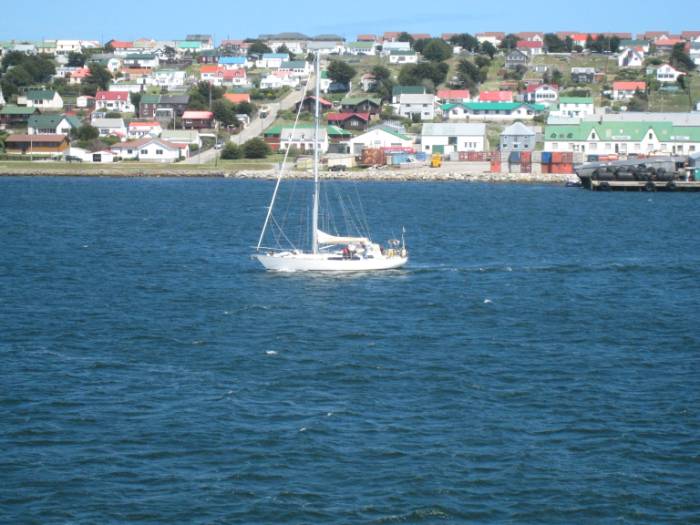
This is Christ Church Cathedral, the most southern Anglican cathedral in the world. The first Bishop of the Falkland Islands, Waite Hockin Stirling, consecrated the cathedral in 1892. In the port you can see our ship, and a sailboat, which will set sail the same time as we do this afternoon.
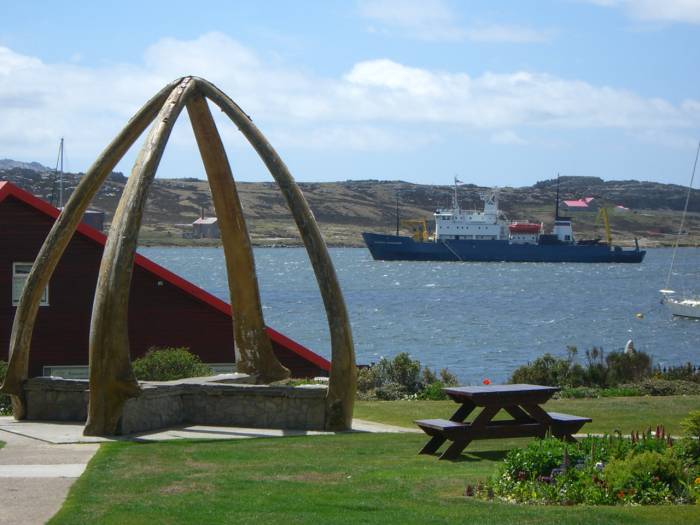
Adjacent to the cathedral is the Whalebone Arch, constructed in 1933 from the jawbones of two
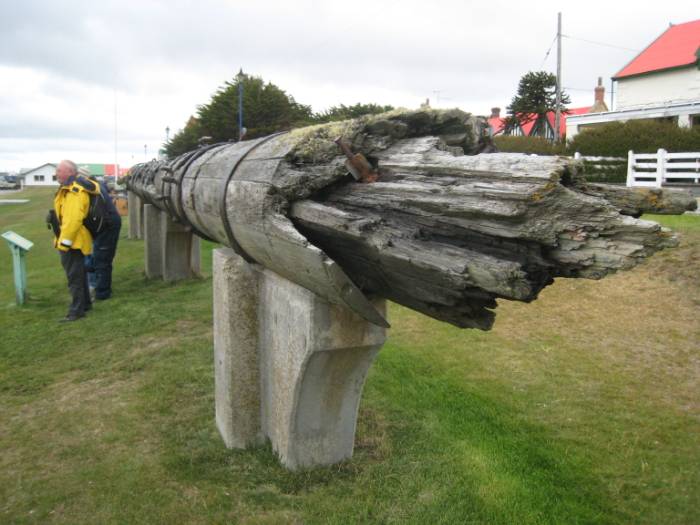
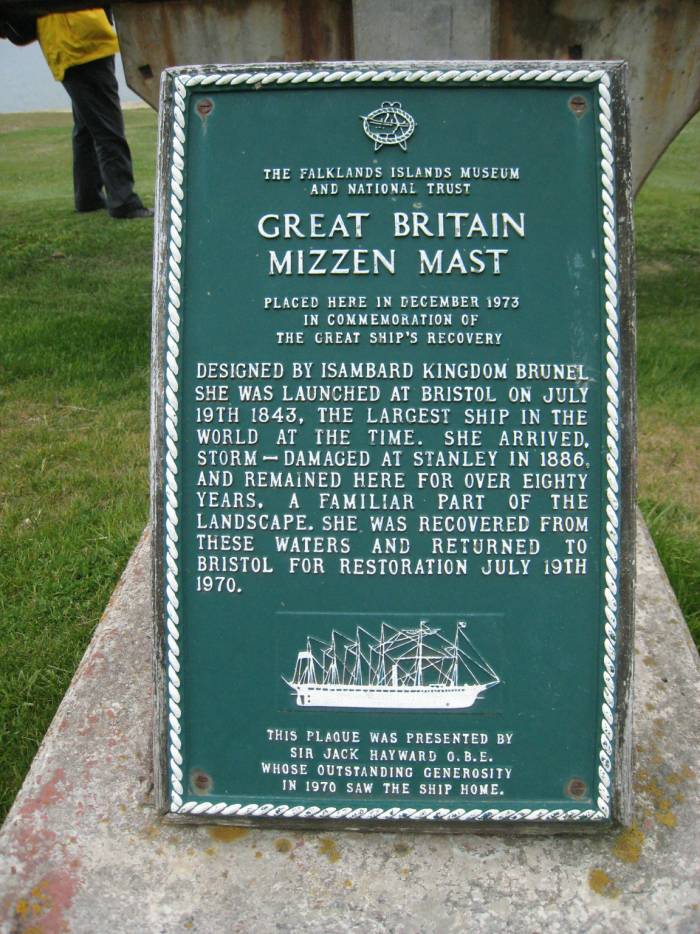
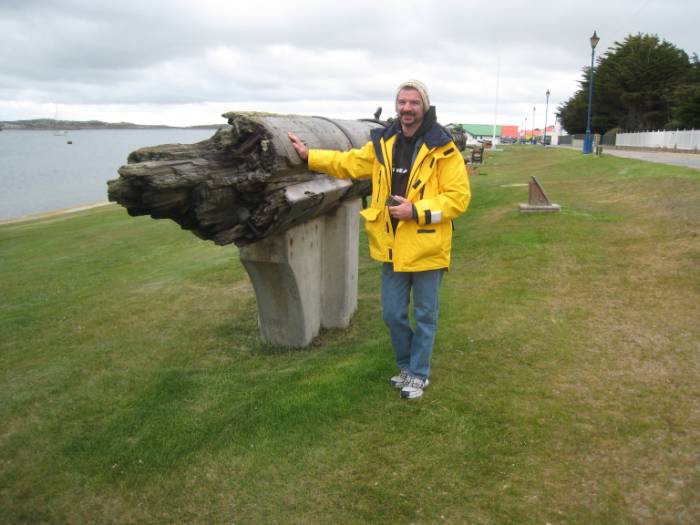
This is the mizzenmast from the ‘Great Britain’, launched at Bristol July 19th 1843.
I think I’ll have to go to Bristol the next time I’m in England, just to see this great ship.
They don’t make mizzenmasts like this anymore. How the art has changed over the years.
This is called Victory Green and was created to commemorate the First World War. On the Queen’s
The Union Jack of the United Kingdom
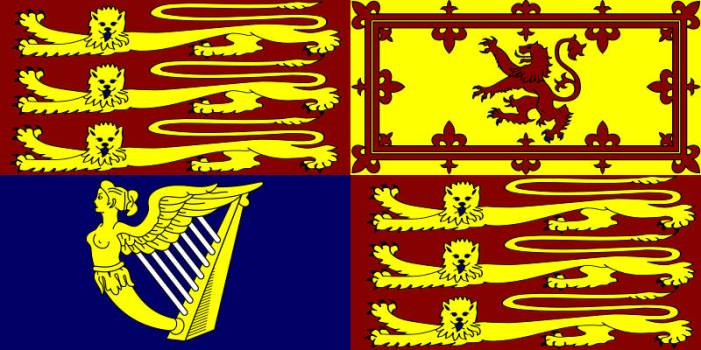
The Royal Standard of Queen Elizabeth II of Great Britain
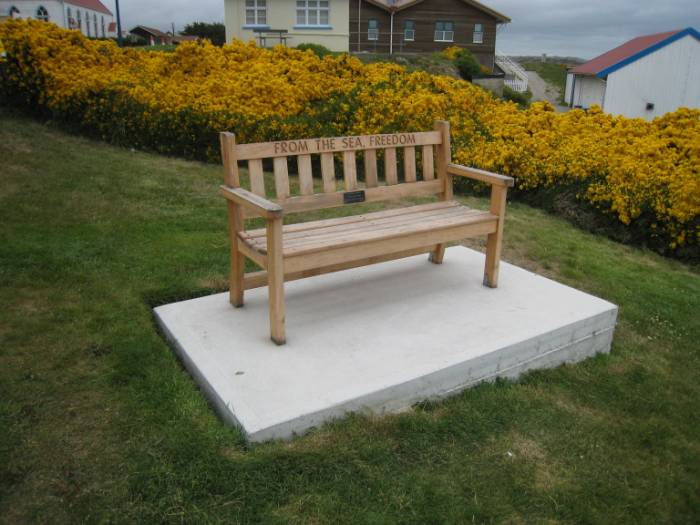
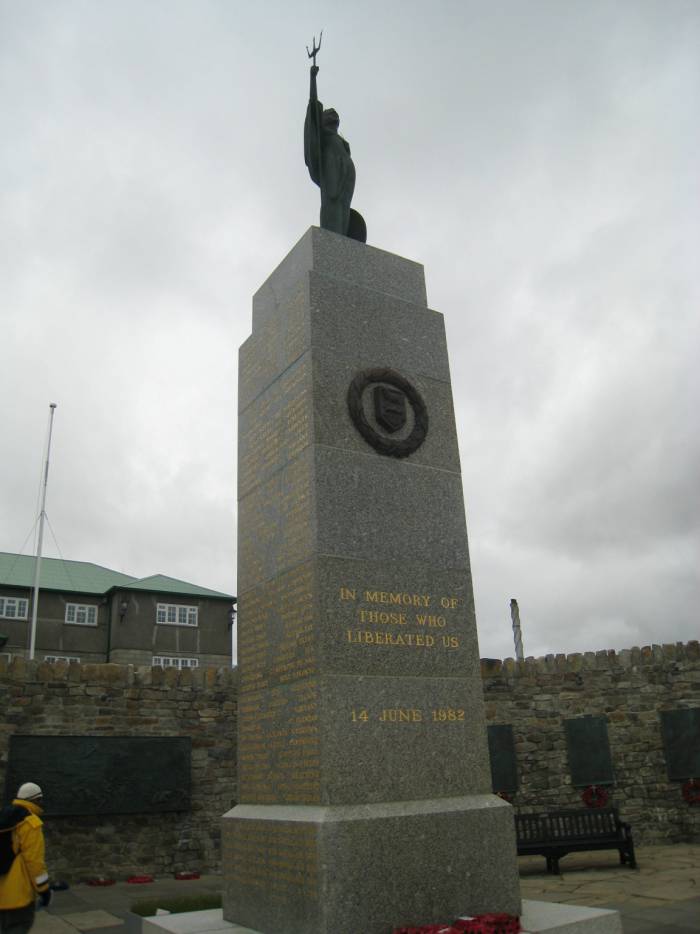
I really liked the sentiment conveyed by the inscription on this bench. The Royal Marine Monument below is a tribute to the long-standing relationship the Royal Marines have with the Falkland Islands. While their history in the Falklands dates back to 1765, this monument marks the 175th anniversary of the restoration of British rule in the Islands.
This monument was unveiled in January 2008.
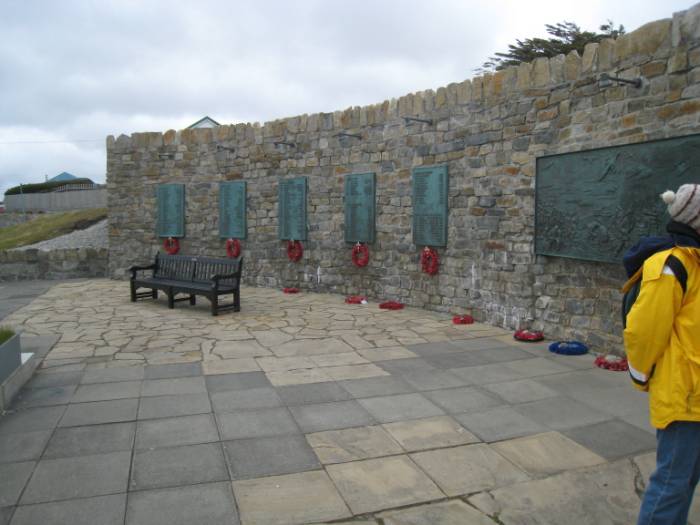
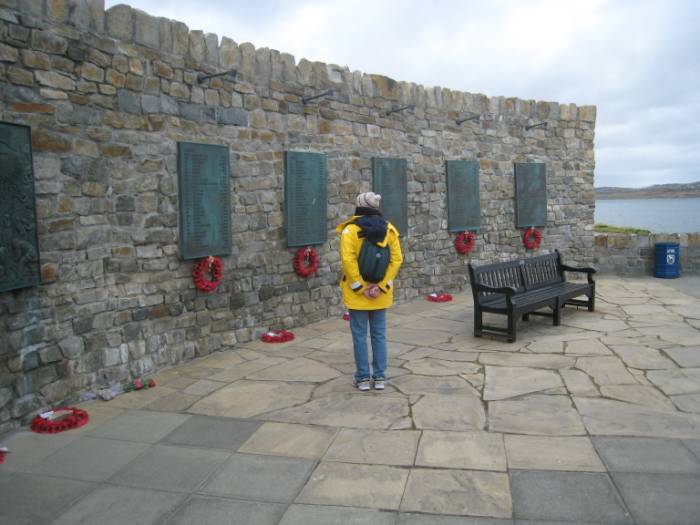
The bronze plaques hold the names of those who lost their lives in the Falklands conflict.
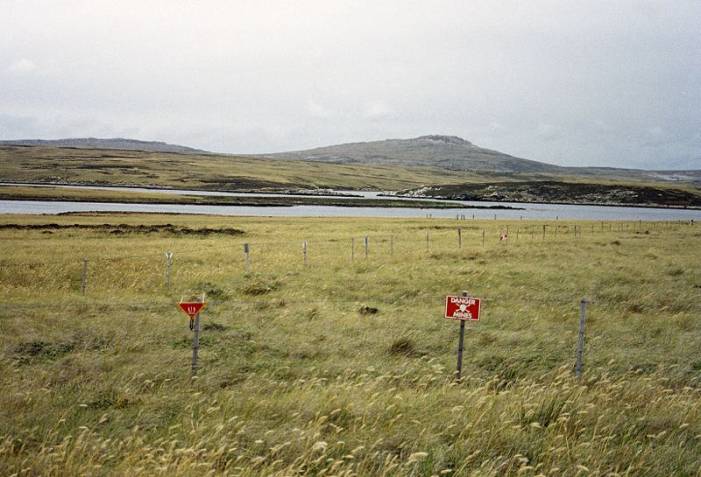
The casualties during the 74-day conflict were 907, of which 649 were Argentine and 258 were British. There remain 125 uncleared mine fields on the islands, and unexploded ordinance are scattered all over the battlefields due to the soft peat ground. 30 British servicemen have died on the islands since the end of the hostilities.
This is one of the uncleared minefields on the islands.
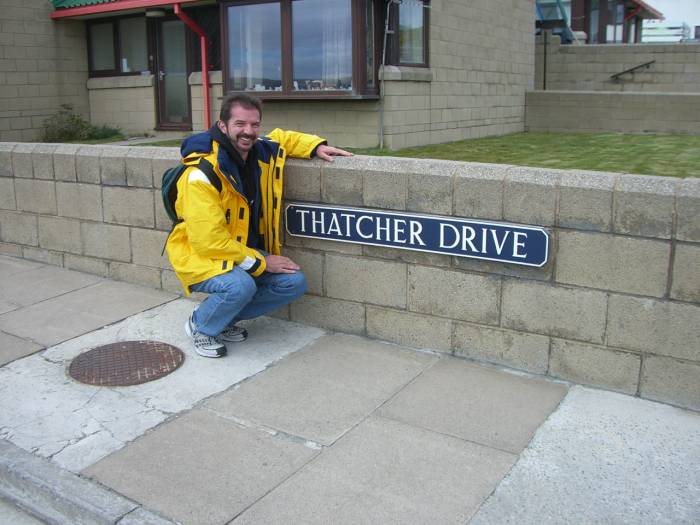
After the conflict a street was renamed Thatcher Drive. This captivated Pete.
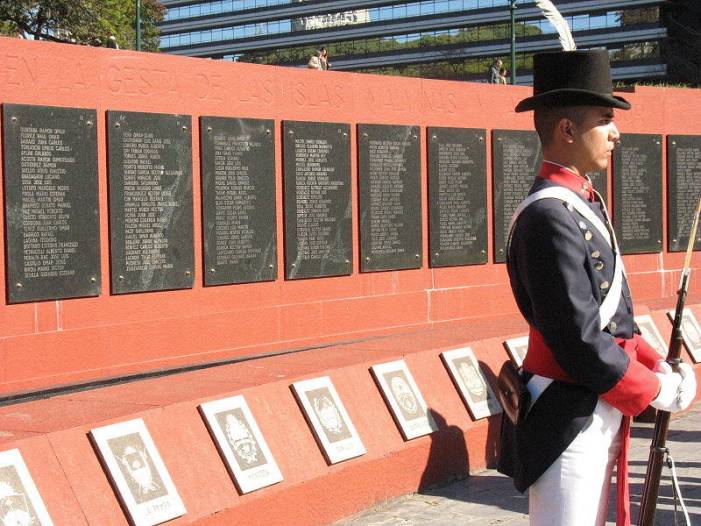
Should you happen to visit Buenos Aires, you can go to Plaza San Martín and visit this You can read an outstanding synopsis of the Falklands “war” by going to this link: http://guest.xinet.com/ignacio/polsi342/falklands.html The document was provided as a resource for a university course. What you will learn from this article is that the popularity of the Argentine military dictatorship during which thousands of people were murdered or disappeared, had fallen dramatically in its sixth year, 1982. The invasion of the Falklands to establish its sovereignty was hoped to be their lifesaver. The miscalculations made by General Leopoldo Galtieri, the current dictator, worked to ultimately take down the military government in Argentina. The complete story is quite interesting, and I highly recommend checking out the link above.
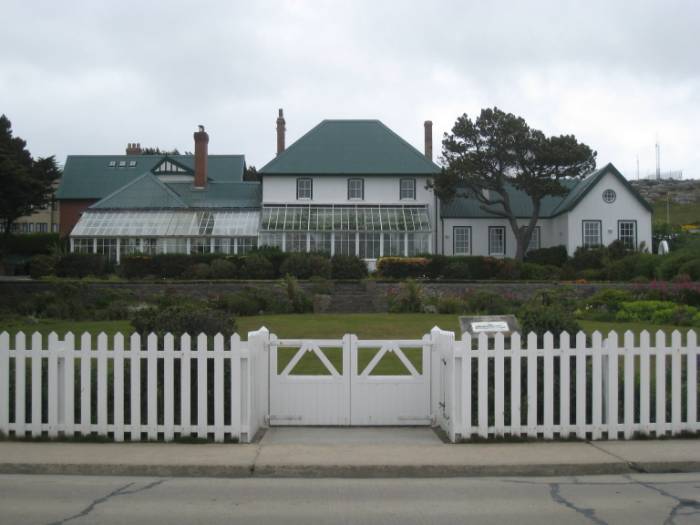
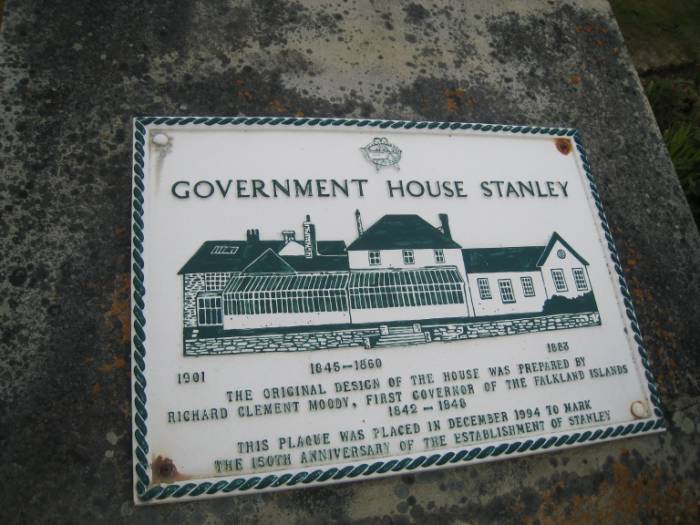
This is Government House. Built in the 1840s to a design by Governor Moody, the house has been
This plaque shows the additions made in 1883 and 1901. I did not realize that the Falklands were involved in World War I, so this monument was a surprise to me.
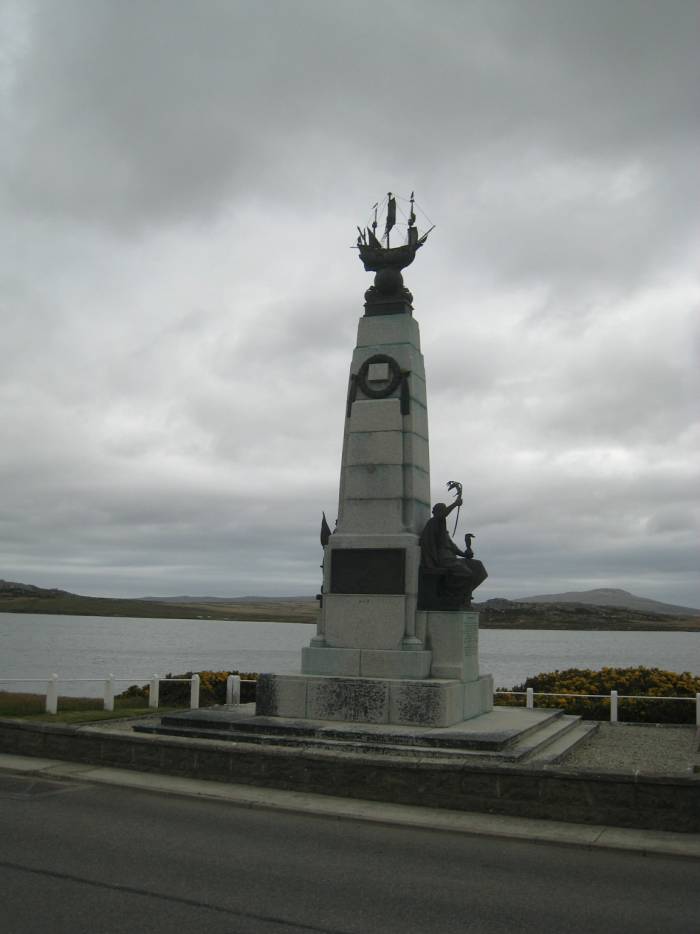
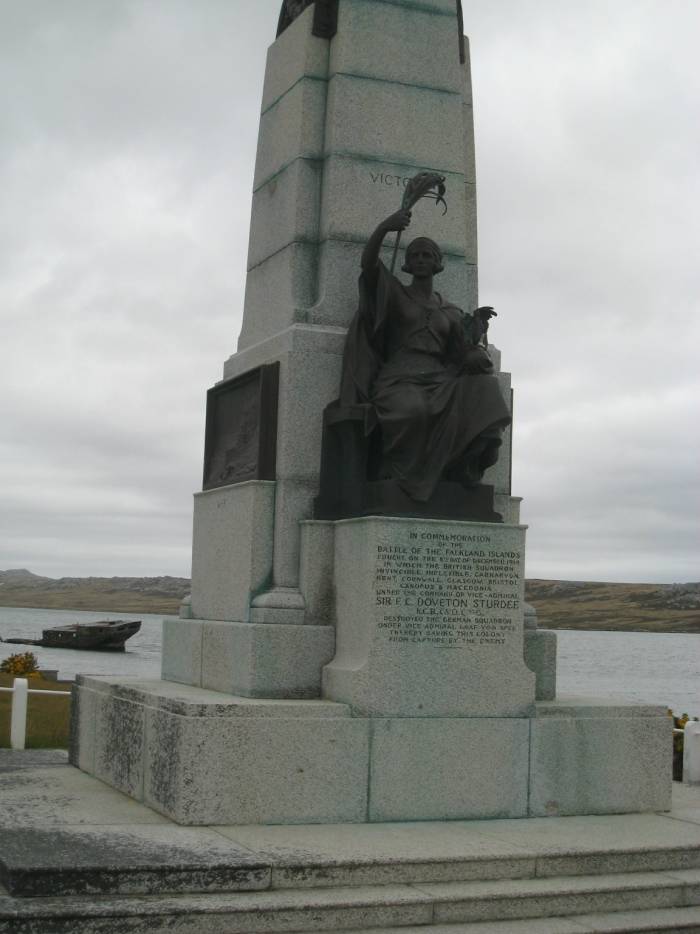
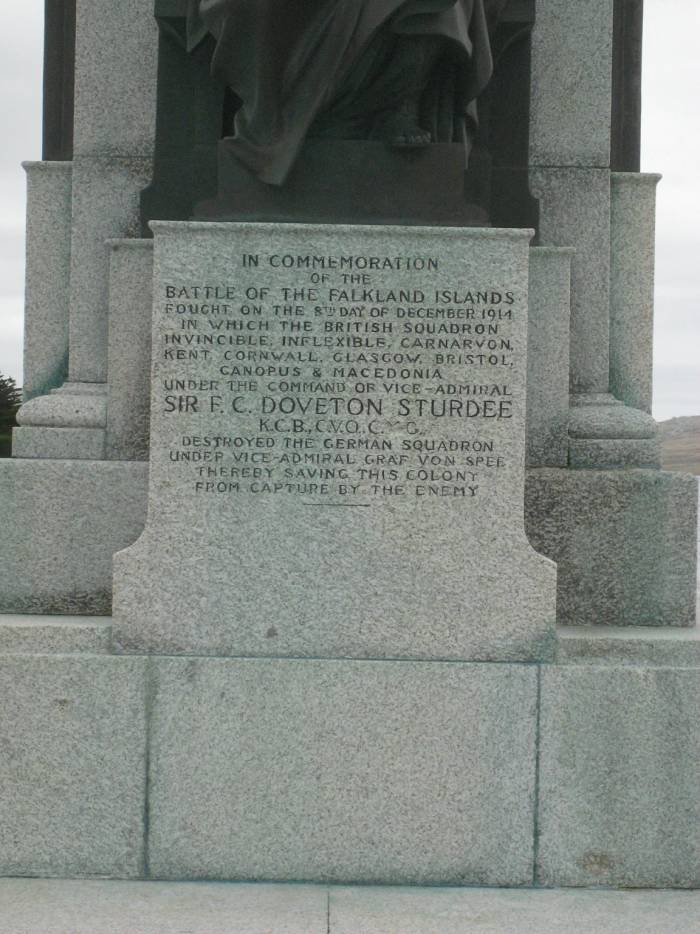
On the 8th of December 1914, a German squadron of warships commanded by Admiral von Spee
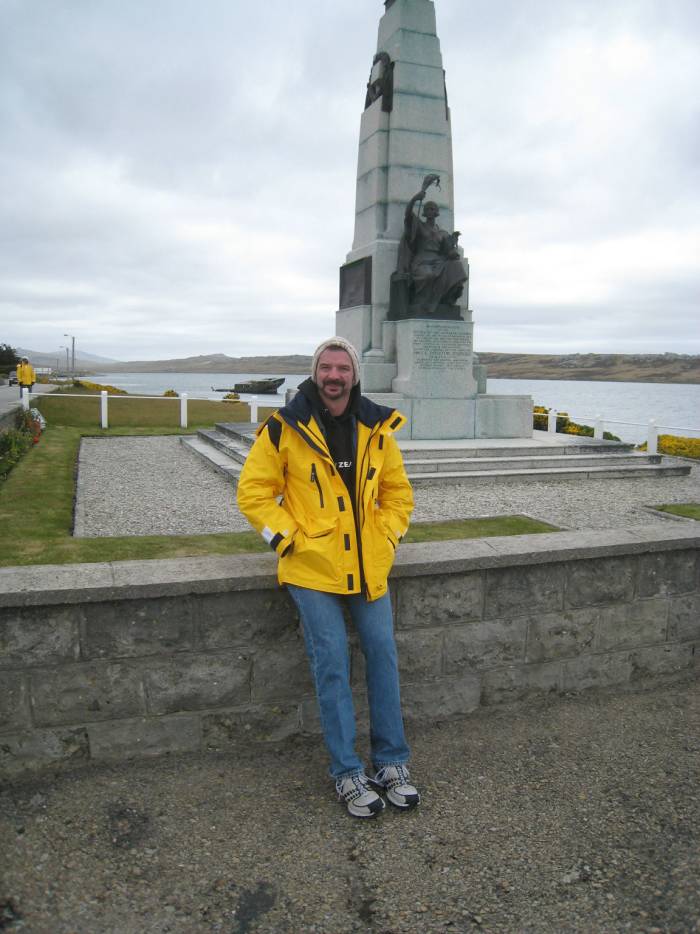
This is a rather beautiful bronze statue. The monument commemorates the Naval action
This was a convenient place to rest our wiry bones from the long but very pleasant walk along the waters edge.
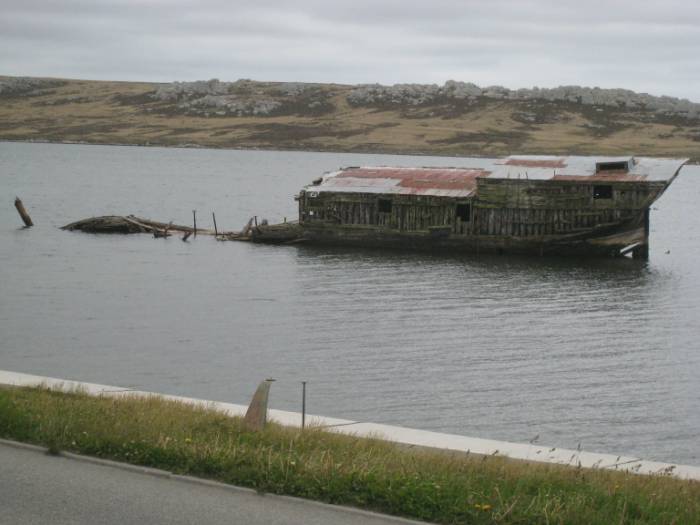
This is all that’s left of ‘Jhelum’ shipwreck. Launched in Liverpool (UK) in 1849,
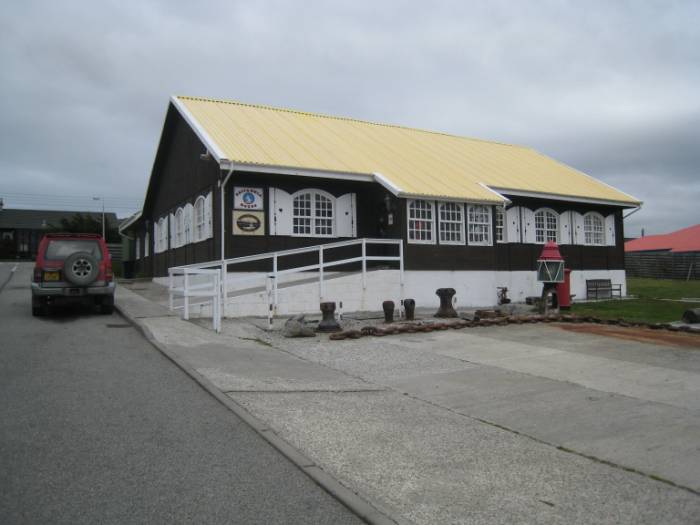
The Falkland Islands Museum was quite impressive. The entry fee is $6.00 per person, and well worth it.
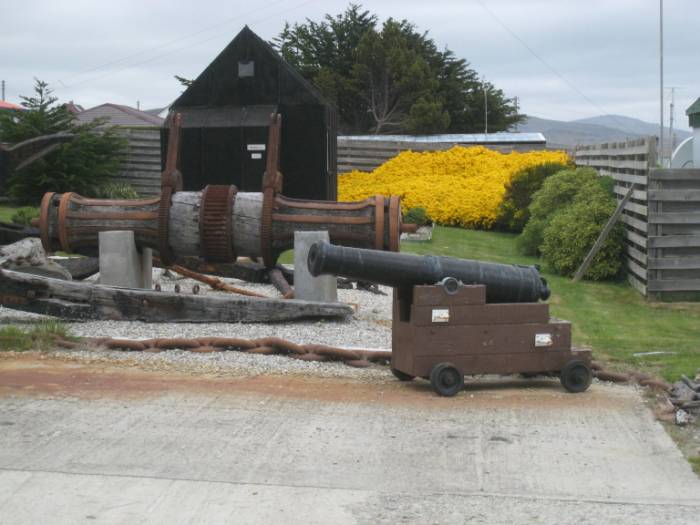
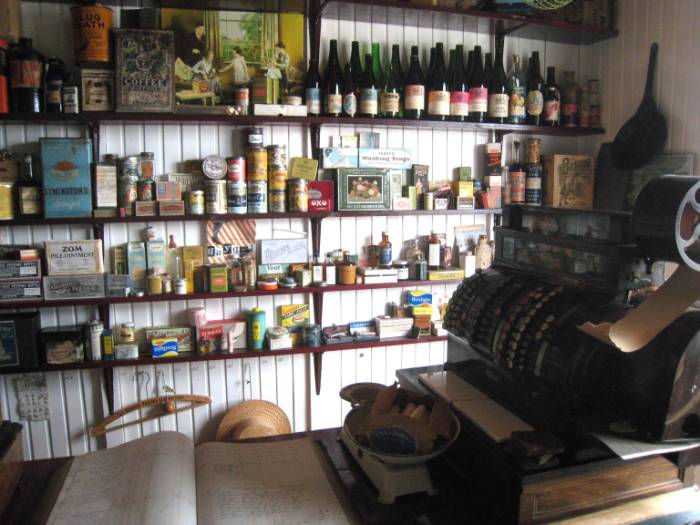
That’s got to be the second biggest windlass I’ve ever seen. LOL Inside the museum was an amazing array of things to see. An old cash register was huge, and actually printed a receipt on paper that was more like cardboard, and was about 3 inches wide.
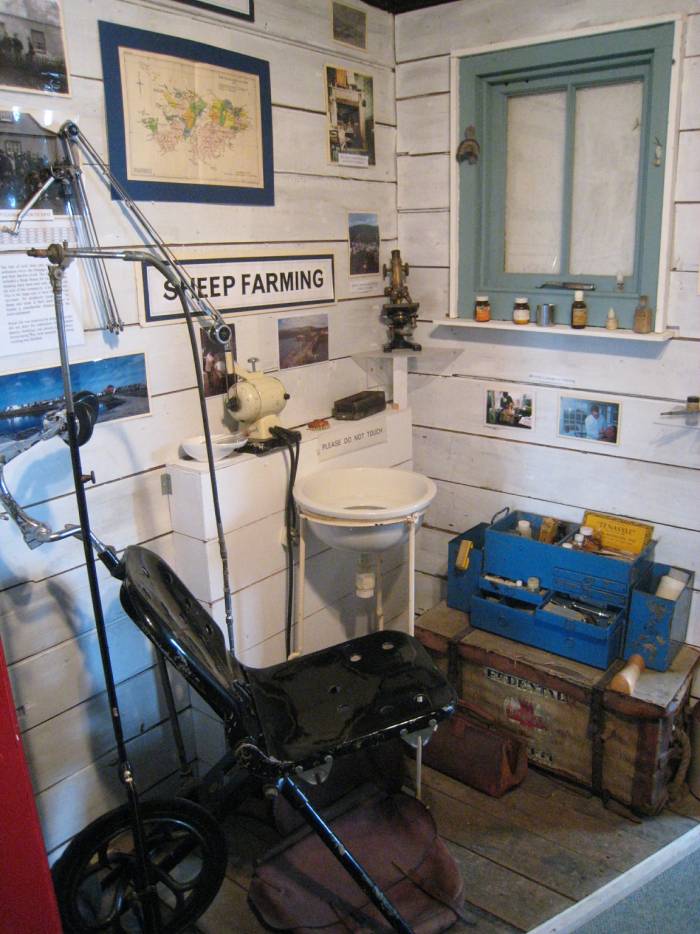
The store from the very early days. Where’s the jar of licorice? What really intrigued me was the dentist’s office.
I really wouldn’t want to sit in that chair fifty or so years ago. There’s not even
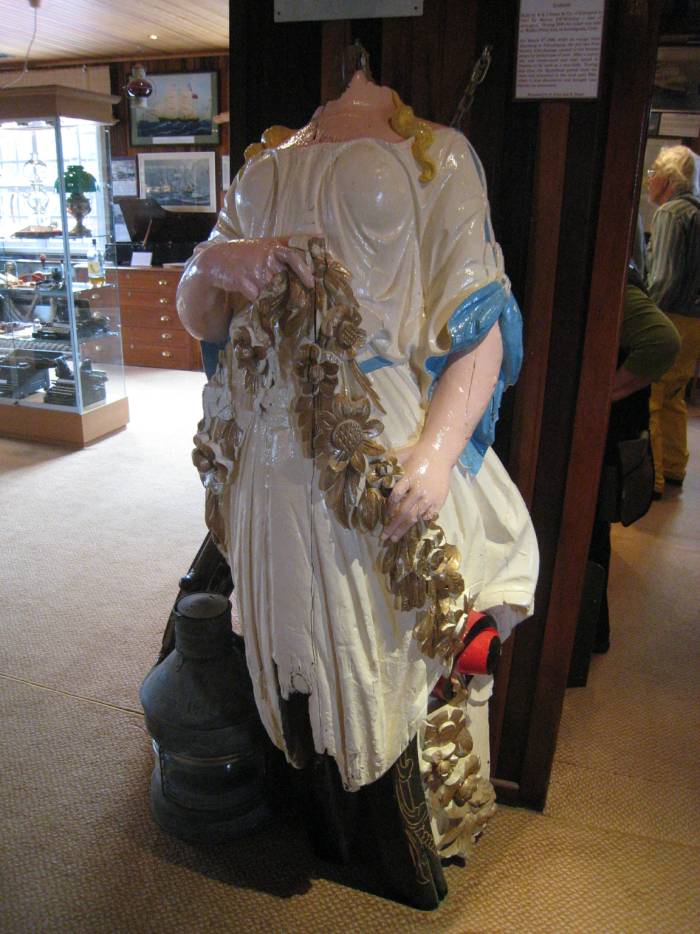
This prow statue from an old ship was carved from a solid piece of wood, and was a
This sailboat was leaving Port Stanley just as we were weighing anchor. The next The following is a copy of a brochure Pete picked up at the museum, and it gives a fairly detailed account of the Falklands conflict of 1982. I thought it was pretty interesting, though a bit long. If you are as interested in this sort of historical event as I am, read on. Or, you can just scroll past it. FALKLAND ISLANDS MUSEUM & NATIONAL TRUST The Falklands’ conflict of 1982 At 8,000 miles from the United Kingdom and 4,000 miles from the nearest airbase at Ascension Island, only the Royal Navy could attempt to liberate the Falkland Islands should Argentina invade. Such was the advice that the First Sea Lord, Admiral Sir Henry Leach, gave to the Prime Minister, Mrs. Margaret Thatcher, in the House of Commons on 31 March 1982. He went on to tell her, robustly and against other military opinions, that should the Argentines invade, he believed that the islands could and should be liberated. Mrs. Thatcher fortunately agreed, as did the Chief of Defense Staff, Admiral of the Fleet Sir Terence Lewin, when he returned from abroad. Within five days of this meeting, a major naval carrier and amphibious group had dialed fully loaded from the UK aiming to join up with another naval group exercising off Gibraltar. A large fleet of Merchant Navy and Royal Fleet Auxiliary ships as rabidly gathered to support the Royal Navy and the Landing Force. The latter was made up mainly from the Royal Navy’s 3 Commando Brigade Royal Marines. The brigade was soon reinforced by two battalions of the Army’s Parachute regiment, some Blues and Royals and extra Royal Artillery detachments. The RAF set about creating an important air-bridge to Ascension Island, which became a vital halfway house for equipping, re-organizing, training and planning. The whole operation, codenamed Operation Corporate, was mounted by Admiral Sir John Fieldhouse from the RN Fleet Headquarters at Northwood, Middlesex. He then commanded the Task Force. It was the first real conflict the Royal Navy had been called upon to fight since WWII and the first major British operation to use satellite communications to any extent. A force under command of Captain Brian young, Royal Navy, liberated South Georgia without loss of life. In doing so an Argentine submarine was badly damaged by a RN helicopter’s missile. A naval blockade of the Falkland Islands might have been successful in defeating the occupying troops, but with winter approaching and the possibility that the Aircraft Carriers might not be able to operate continuously, there was a risk that a blockade could be broken. Furthermore, with an extended blockade, the Islanders would probably suffer more than the enemy. It was, therefore, decided to liberate the islands by mid-June using ground forces. To ensure time for the troops to deploy, 3 Commando Brigade would have to be landed by late-May. Hopefully, the Army’s 5 Brigade would be made available in time to support them. To gain the intelligence needed for planning the British attack, Special Forces needed to be inserted on about 1 May. All, of course, was subject to the diplomatic situation. The Government always hoped that the Argentines would withdraw peacefully. Before the landings could be made in reasonable safety, it was vital to achieve a degree of sea and air supremacy in the landing area. Vice Admiral Peter Herbert, the Flag Officer Submarines, quickly achieved surface and sub-surface supremacy by deploying HMS Conqueror and four other nuclear powered submarines. With theBelgrano sunk, there was little further threat from Argentine warships. Achievement of air supremacy was less simple since the Argentine air forces would not be easily drawn into battle before the landings. Nevertheless, Rear Admiral Sandy Woodward, in command of the Carrier Battle Group, sailed ahead of the amphibious Task Group. He made significant efforts to prevent their air forces having free rein over the islands. At the same time, his ships and Sea Harriers harassed the occupying troops. Many new and unproven weapons systems and equipment were employed and suitable tactics quickly developed. Much ingenuity was used with, for instance, anti-submarine helicopters acting as Exocet missile decoys. The Royal Air Force deployed Vulcan bomber and Victor tanker aircraft to Ascension Island and initiated raids against Stanley airfield. While not very successful in bombing terms, they were aspectacular success in terms of airmanship at long range and brought home to Argentines just how potentially vulnerable were their own mainland targets. The encouragingly successful amphibious advance force operation on Pebble Island, using troops from the Special Air Service, destroyed eleven aircraft. Because of an acute shortage of helicopters for a Landing Force of the size envisaged, the landings had to be by boat. Commodore Michael Clapp, in command of the Amphibious Task Group, and Brigadier Julian Thompson, commanding the Landing Force, chose San Carlos Water where there was little risk of swell or surf. This was essential to allow the safe loading of landing craft and mexeflote rafts from the Ro-Ro ships’ ramps and then landing men and equipment onto the beaches by day and night. The water was deep enough for the largest ships while the land around offered sites for a fuel farm, ammo and stores dumps, a field hospital and a Harrier pad. Unfortunately, the necessity of using San Carlos Water meant the landings had to be too far up-threat for comfort. This gave the Argentine aircraft ample time on task but little time for our Sea Harriers to remain overhead as Combat Air Patrol. Nevertheless, between them, the Sea Harriers and escorts severely reduced the numbers of aircraft and the morale of the Argentine aircrew. Speed in establishing the Landing Force ashore would, however, be vital. Unfortunately, it also meant that the landing force would have a long march to battle near Stanley over very difficult terrain with little vehicular transport and far too few helicopters. The RN escorts were armed only for the open waters of the Eastern Atlantic. Surrounded by land, they had too little warning of attack and their radars could not cope with the land echoes. They were almost defenseless in such waters. Nevertheless, they maneuvered to take the brunt of the bombing. While protecting the landings, three escorts were sunk and several were damaged together with some RFA ships. Not one Merchant Navy ship was damaged and, very fortunately, no RFA Landing Ship Logistic (LSL) was sunk. The logistic position was so tight that the loss of only one LSL might have prevented further military action. Thanks in very large part to the bravery of the RN’s Mine Clearance Divers who, although untrained for the job, removed some 11 unexploded bombs from ships, not one item of the Landing Force’s ammunition, fuel or other stores was lost to enemy action. Two RM helicopters and three aircrew were lost during the assault. Remarkably, however, no other marine or soldier was lost. Within six days, the whole Landing Force together with almost all its equipment was safely ashore and ready to advance to contact. The battle for Darwin and Goose Green began. When Major General Jeremy Moore and 5 Army Brigade landed, there was low cloud over San Carlos Water and little risk of air attack. 5 Bde consisted of a Battalion each of the Scots Guards, Welsh Guards and Ghurkha Rifles with additional Royal Artillery and Sapper support. 3 Cdo Bde had already established a forward base at Teal Inlet on the north coast, which was being re-supplied by the LSLs. Again, all the men, ammunition, fuel and stores were landed safely but 5 Bde had arrived without transport. When the Atlantic Conveyor was sunk three Chinook heavy lift as well as eight Wessex support helicopters were lost. The overland transport problem was dire but many Islanders gave invaluable help with tractors, trailers and local knowledge. Before assaulting the Argentine defenses around Stanley, Maj. Gen Moore decided to open a second southern front close to enemy lines. This required a forward base at Fitzroy. A large amount of ammunition, fuel and stores, and many soldiers were taken forward by a long sea passage at night from San Carlos Water. On 8th June, when the sky cleared and air attacks restarted, HMS Plymouth, the RFA LSLs Sir Tristram and Sir Galahad were damaged and the landing craft F4 was sunk. Unfortunately, some Welsh Guards and Sappers had remained onboard Sir Galahad but almost all the equipment had been lifted ashore together with a Field Ambulance team, four Rapier missile units and much aviation fuel. Throughout the advance to Stanley, the LSLs and RN support helicopters provided the main logistic support to the land forces. A huge sealift reinforced the whole operation. 44 Royal Navy manned ships took part while over 65 civilian manned ships were involved. RN Minesweepers cleared areas so that the escorts could provide naval gunfire support at night, thus allowing the Royal Artillery to re-deploy and re-supply their guns in darkness. The misfortune at Fitzroy necessitated a delay of two days. However, both brigades were now well established with well-stocked forward bases and the final land assault could begin. The Argentine garrison surrendered on 14 June but the possibility of hostilities continued at sea and in the air. The cost of failed diplomacy had been considerable. In all, the British services lost 253 lives and many wounded. Three Islanders were sadly killed by gunfire. The maritime forces arguably had the hardest fight. In all, about 170 men were killed at sea, of whom 85 were RN while 18 were MN. In addition, over 65 other servicemen were killed at sea or in naval helicopters. 4 escorts were sunk and 7 badly damage. A further 2 ships (1 RFA and 1 MN) were sunk and 4 damaged. In the land battles, over 63 men lost their lives. In the air, the Royal Navy lost 6 Sea Harriers and 11 helicopters. The RAF lost 4 Harrier GR3s while the Royal Marines lost 3 helicopters and the Army one. With the Atlantic Conveyor, 3 Chinook and 8 Wessex helicopters sank. The Argentine lost over 60 aircraft and several ships as well as over 900 lives. Protected by a strong garrison, the Falkland Islanders are now enjoying greater security and affluence under a government of their choice. Long may it last. Written for the Falkland Island Museum & National Trust by Commodore Michael Clapp FALKLAND ISLANDS MUSEUM & NATIONAL TRUST Britannia House, Holdfast Road, Stanley. Website: www.falklands-museum.com
We prepare to leave Port Stanley and begin our 2½ days at sea en route to South Georgia. Dinner will be at 19:00, and this evening’s feature is The Blue Planet: Seas of Life OCEAN WORLD. Our visit to the Falklands was a most enjoyable part of this adventure. I actually would like to have had more time there. In Chapter 4, we experience life on the open sea again, and arrive at South Georgia. |
|
||||
|