|
|
|
|
|
|
|
|
|
|
|
||||||||
|
||||||||||||||||||
|
Email us at: |
||||||||||||||||||
 |
||||||||||||||||||
 |
 |
|||||||||||||||||
|
Click the sun to see the |
||||||||||||||||||



 |
|||||||||||
|
|
|
|
|
|
|
|||||
|
|||||||||||
|
|||||||||||
|
|||||||||||
|
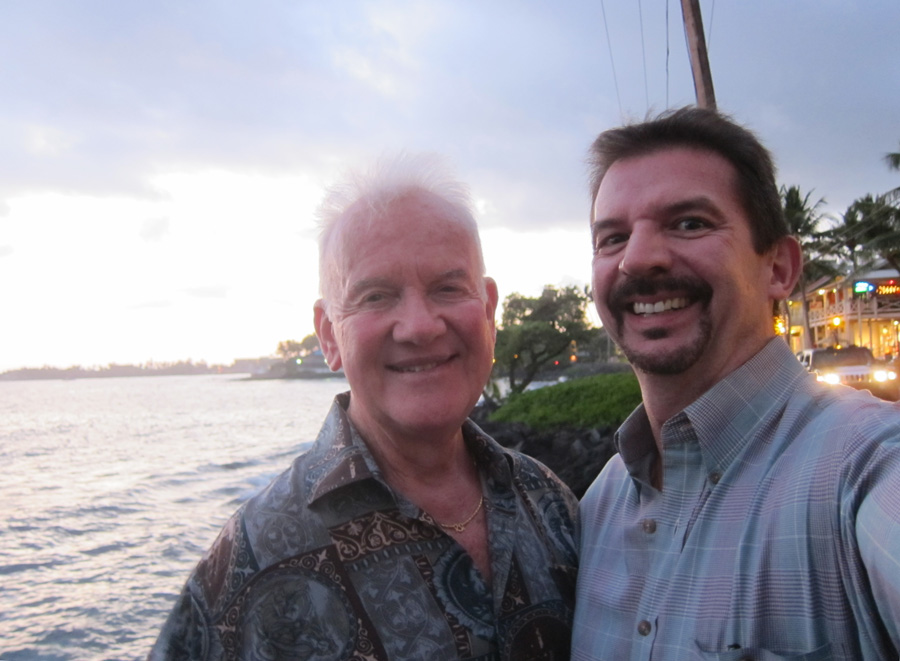
Our first day went very well, despite the jet lag. It is now quite different from the old days when we'd hop on a plane in San Francisco and be there in 5½ hours. But we were so happy to have finally arrived, that we could still smile, and planned to make up for those two lost days.
Here, we are on our way to dinner at a Thai Restaurant within easy walking distance of the Kona Reef.
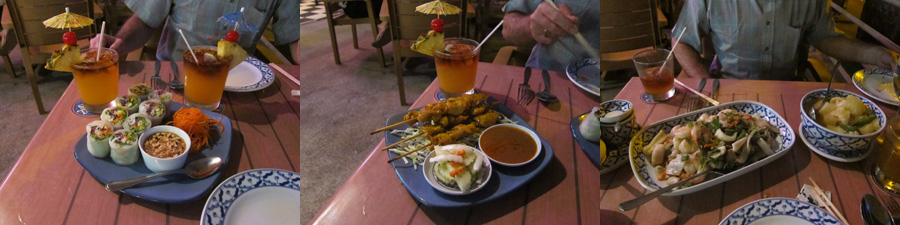
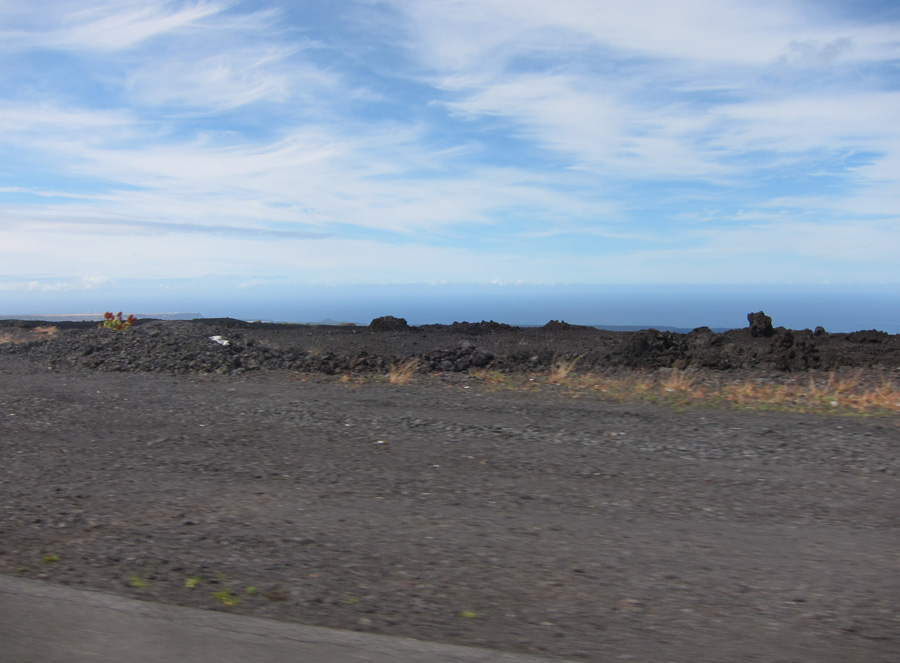
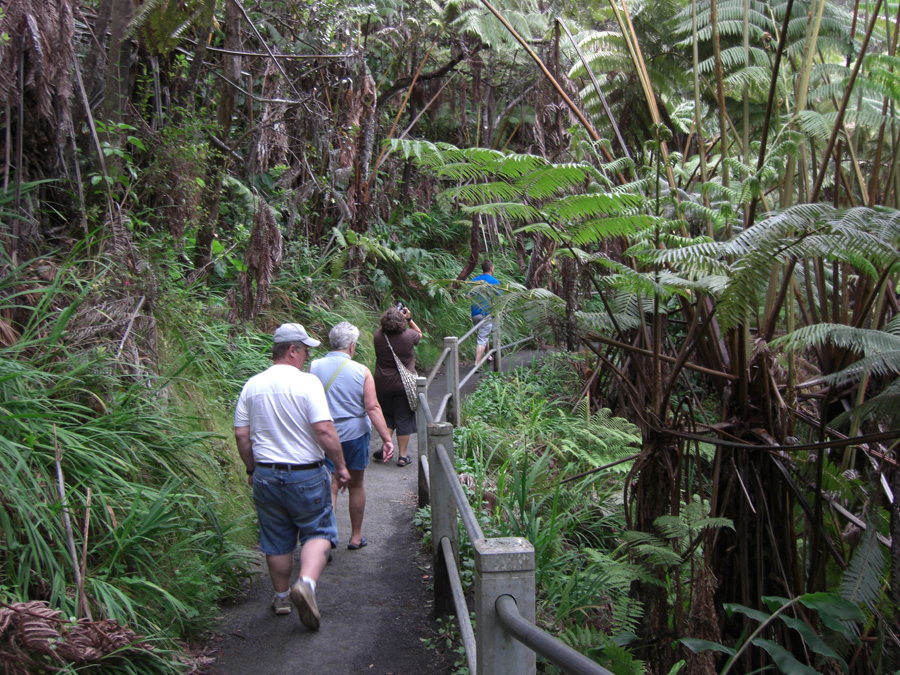
For appetizers we had the Spring Rolls and Chicken Satay, and neither of us can remember what else we ordered. The next day we did nothing but relax by the pool, reading and sunning. We needed some down time to recuperate from the stress of just getting here. On our third day we decided to drive to the Hawai'i Volcanoes National Park. It was about a 90 mile drive. Along the way, the scenery went from looking like the surface of the moon to lush tropical rain forests.
Nothing seems to grow in a lava flow, which makes me wonder how the soil was created for the lush green rain forests.
The striking contrast is unbelievable. I'm always awestruck by the diversity and wonder of Nature. We started off our trip to the park at 8:30 in the morning, and arrived at the Visitors Center at approximately 11:00 AM. We learned from listening in on a park ranger who was giving his spiel to a small group, that there was no flowing lava that we could see on the surface today, though that lava actually was flowing, but through an underground lava tube directly into the ocean deep below the surface. We would, however, be able to see the red glow under the crust if we returned at night. Perhaps next time we will do just that.
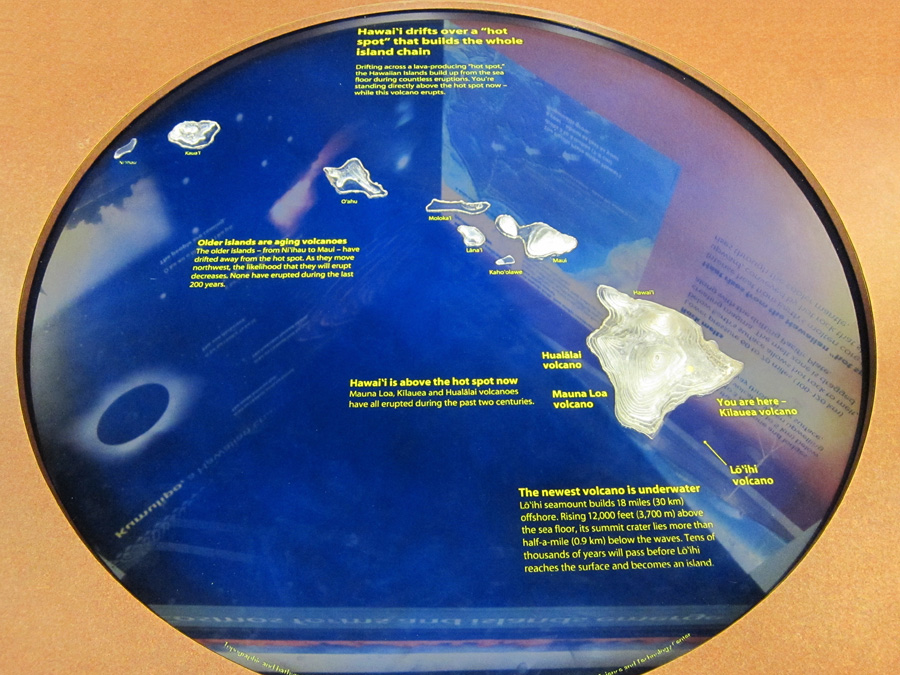
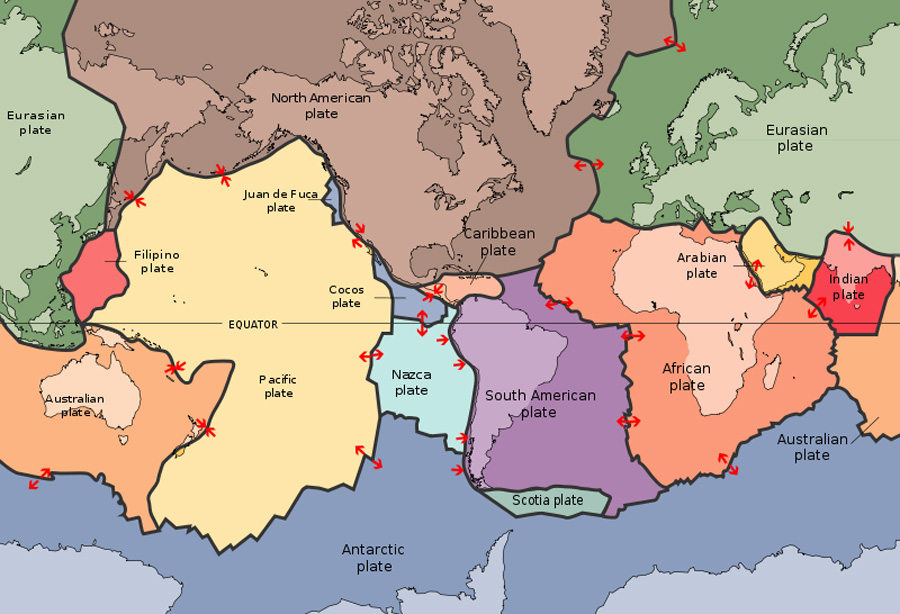
This is a little hard to read without a magnifying glass. I was surprised to learn about the newest volcano forming, We had first learned about island chains slowly drifting over a hot spot when we were in he Galapagos. Those islands are also a volcanic island chain, and they are drifting east with the tectonic plate movement over a similar hot spot. The Galapagos Islands are on the Nazca plate, and the Hawaiian Islands are on the Pacific Plate.
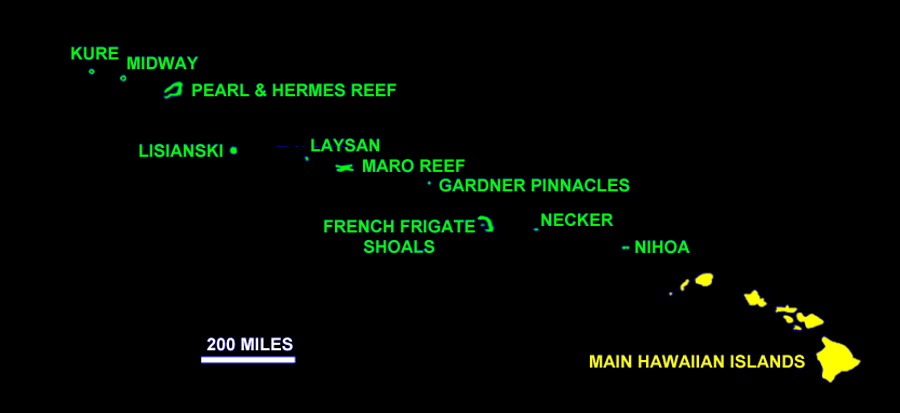
This map shows that the island chain is actually much larger than the group we know of as the Hawaiian Islands.
A map showing the various tectonic plates comprising the earths crust. From closer inspection, you
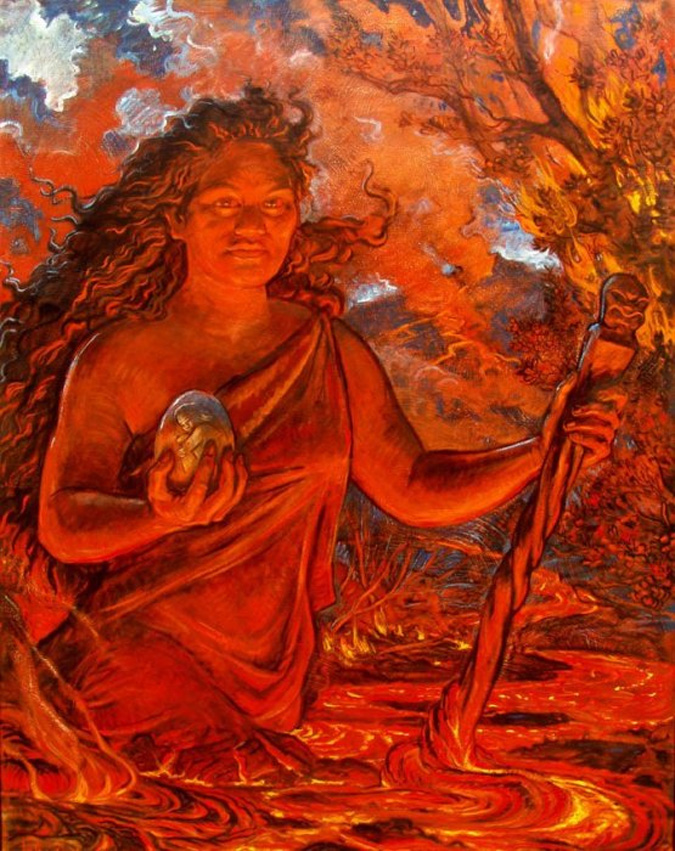
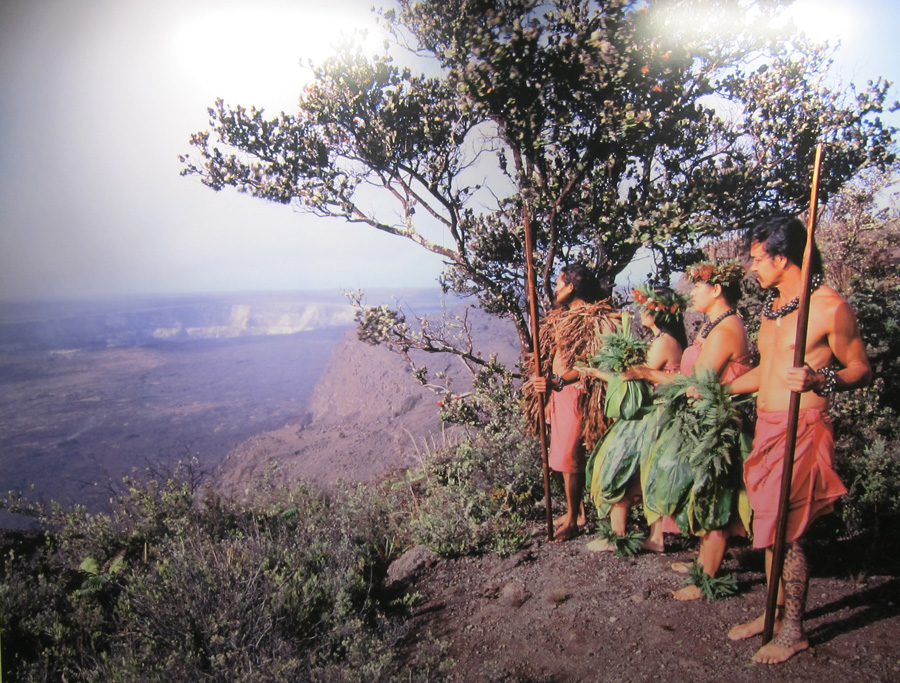
Meet Pele, the Hawaiian goddess of fire, lightening, dance, and volcanoes, a popular figure in Hawaiian mythology.
The Goddess Pele, painted by Arthur Johnson, Kilauea Visitor Center
In times of old, Hawaiians would bring various gifts to appease the goddess in the hopes of quelling her wrath. From the Visitor Center we first went to the Jaggar Museum. Thomas Augustus Jaggar was an American volcanologist. He founded the Hawaiian Volcano Observatory and directed it from 1912 to 1940.
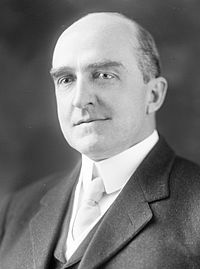
Thomas Augustus Jaggar The museum is located on the rim of the Kilauea volcano crater. It is a very arid spot, devoid of vegetation of any consequence.
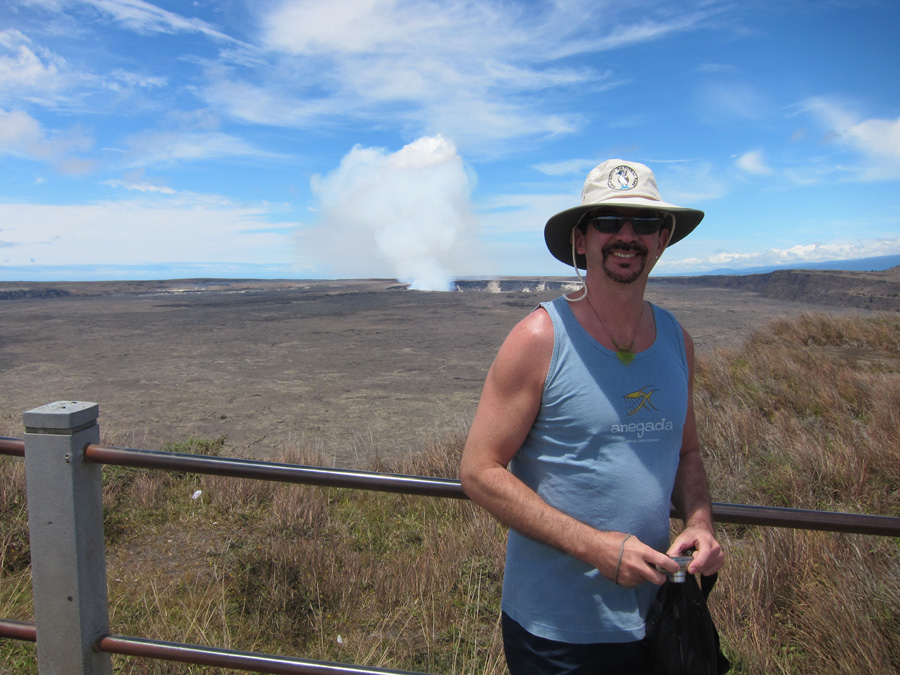
Here I have zoomed in on the Halemu'uma'u crater at Kilauea's summit. Just beyond that wire fence it drops Kilauea is a shield volcano, which is a type of volcano usually built almost entirely of fluid lava flows. They are named for their large size and low profile, resembling a warrior's shield. This is caused by the highly fluid lava that erupts, which travels further than lava erupted from more explosive volcanoes.
About 15 or 20 feet beyond this fence, there is a drop off of several hundred feet to the floor of the volcano.
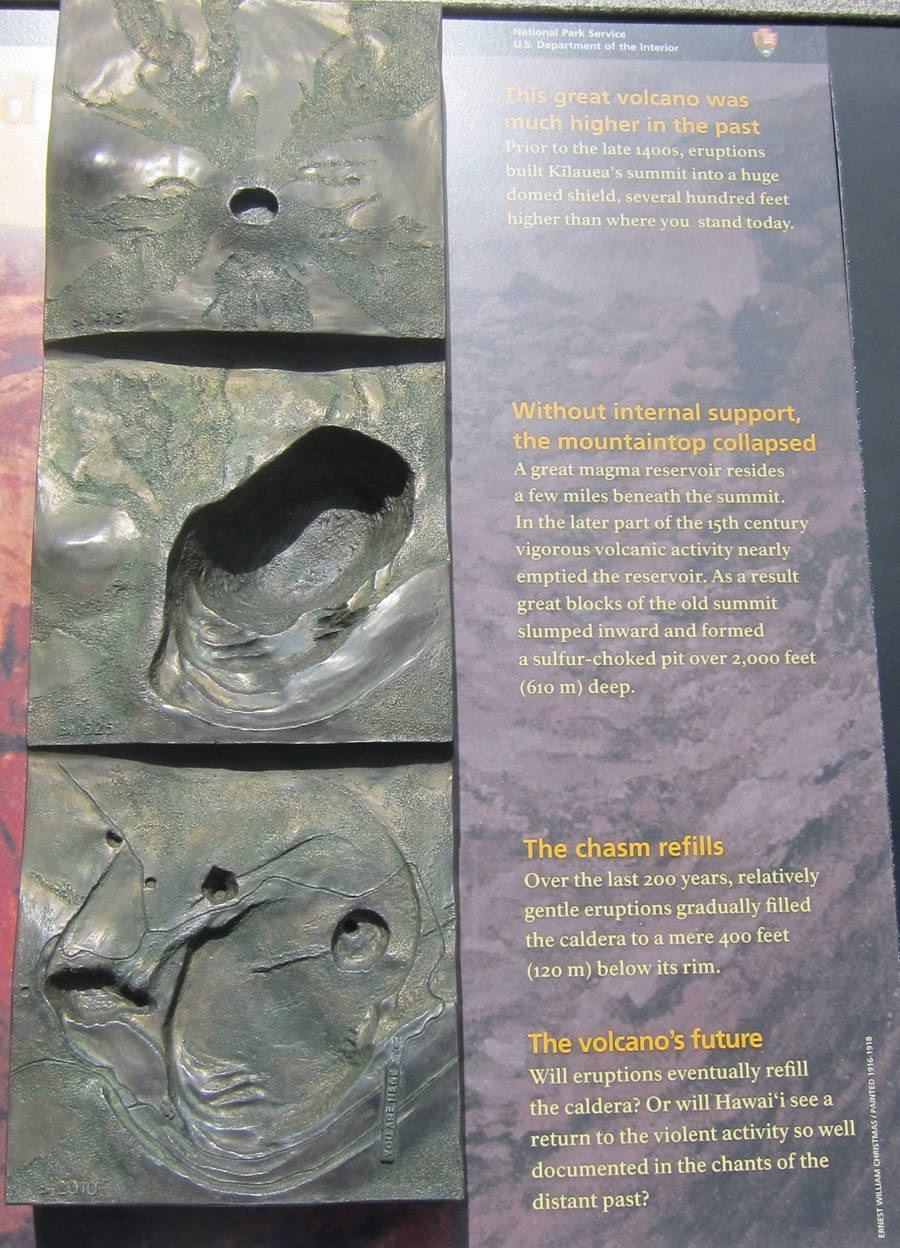
The descriptions above of the historical changes in Kilauea's appearance I found to be fascinating. Since it was now about lunch time, we made the decision to continue our drive and completely circle the island, stopping in Hilo for lunch. But before we leave the park, in the next chapter we'll take you inside a huge lava tube.
|
|||||||||||
|
|||||||||||
|
|||||||||||
|
|||||||||||