 |
|
|
|
|
|
|
|
|
|
|
||||||||
|
||||||||||||||||||
|
Email us at: |
||||||||||||||||||
 |
||||||||||||||||||
 |
 |
|||||||||||||||||
|
Click the sun to see the |
||||||||||||||||||



|
 |
|
|


|
|
||||||||||||||||||||||||||||||||||||||||||||||||||||
|
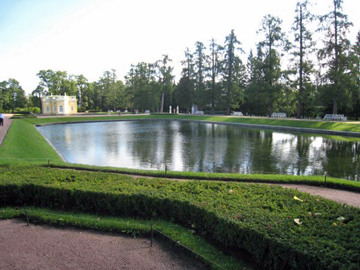
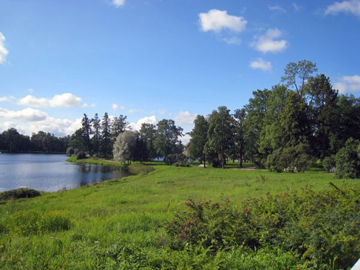
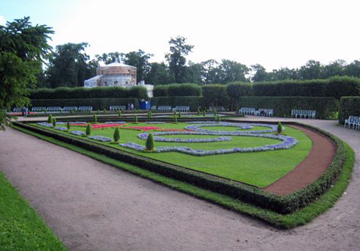
Back in the real world, outside of the Catherine Palace, we took a leisurely walk around the huge grounds that surrounds it. There were many other buildings, and lakes, and beautiful gardens well maintained.
There is a large pool for swimming, and a bathhouse at the far end of this lake.
This huge lake and parkland were ideal for strolling on such a beautiful day.
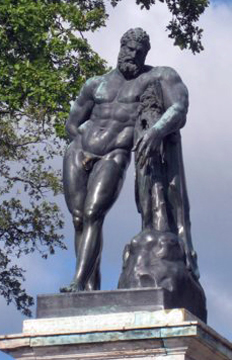
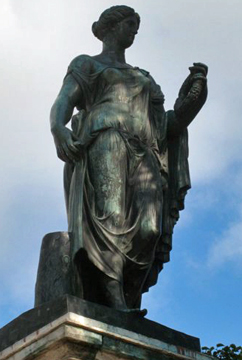
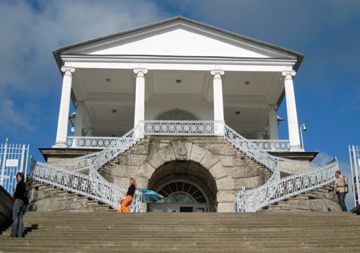
There were lots of beautiful bronze statues. This one is the ancient hero Hercules. Flora, the goddess of flowers is on the opposite side. Together, these beautiful bronze statues flank the staircase leading up to the gallery.
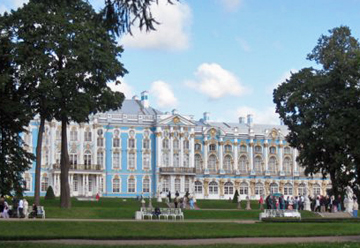
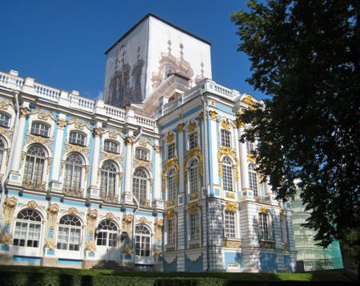
This view kind of gives you a sense of the immenseness of this magnificent palace. During our visit, the beautiful onion domes were covered by the screen you see above and to the right, but they were painted on the sides of the screen. Seeing them in this way, under restoration, is not the same thing as seeing the real thing. I can't believe the fabulous weather we are having, in contrast to a couple of days earlier. Look how blue the sky is.
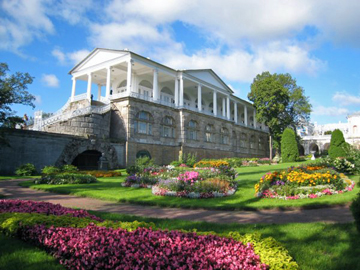
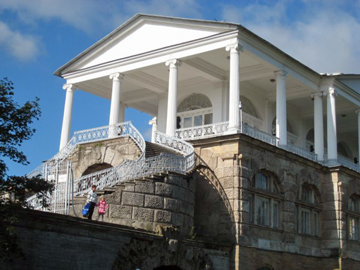
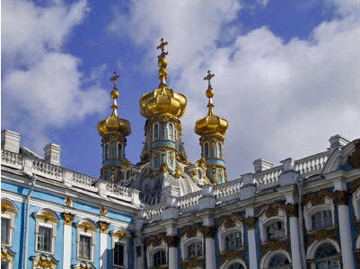
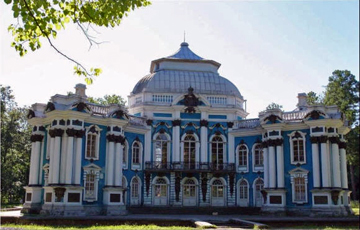
This is the scene I wish we could have seen, without the shroud of restoration. The Hermitage Pavilion sits a short distance away from Catherine Palace and is one of two garden pavilions on the grounds of the palace. The concept of the Hermitage Pavilion was to be a place of solitary abode or entertainment for the royals. Rastrelli's design made it much like a miniature palace. Well, in the photos that follow, it doesn't appear to be quite so miniature.
The Hermitage Pavilion at Catherine Palace in Pushkin. One of the most interesting features of this place of respite was the use of mechanisms to raise tables already set with meals into the Central Hall of the upper floor. Guests would be amusing themselves and chatting when suddenly the floors would open and exquisite dishes appear to everyone's delight. Oh, to be a royal.
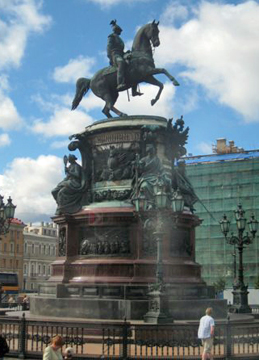
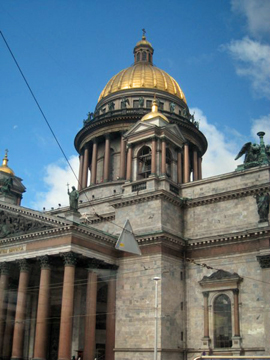
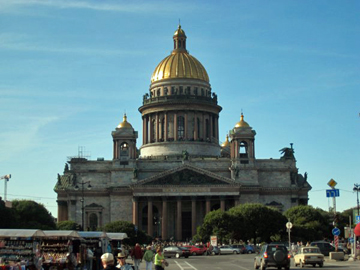
This is the beautiful St. Isaac's Cathedral.
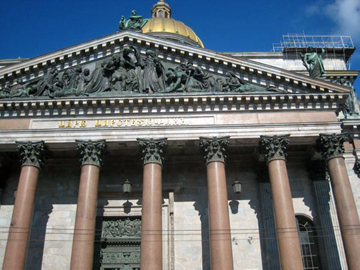
The portico was magnificent with its Corinthian columns and the bronze artwork above. St. Isaac's Cathedral dominates the skyline of St. Petersburg and its gilded cupola, rising 101.5 meters high, can be seen glistening from all over the city. You can climb up the 300 or so steps to the observation walkway at the based of the dome and enjoy a breathtaking view of the city.
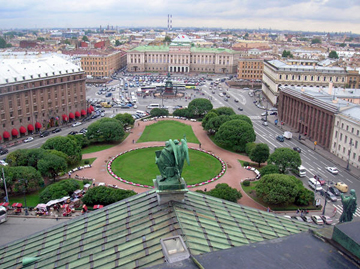
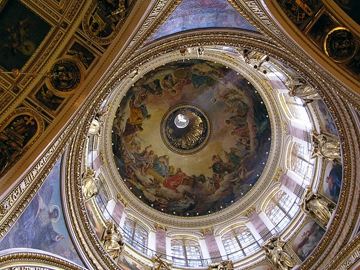
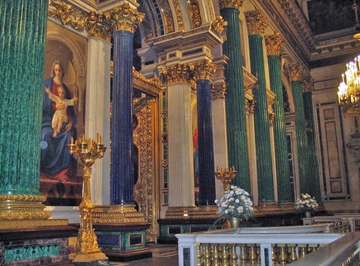
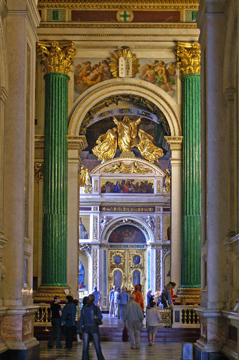
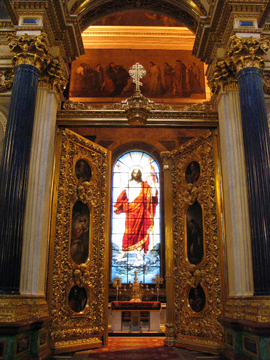
The view looking out from the cathedral onto St. Isaac Square The church on St. Isaac's Square was ordered by Tsar Alexander I, to replace an earlier Rinaldiesque structure. During World War II, the dome was painted over in gray to avoid attracting attention from enemy aircraft. The church itself is an architectural marvel. Built by the French-born architect Auguste Montferrand to be the main church of the Russian Empire, the cathedral was under construction for 40 years (1818-1858), and was decorated in the most elaborate way possible. When you enter the cathedral you pas through one of the porticos - and note that the columns are made of single pieces of granite and weigh over 80 tons (about 177,770 pounds) each. The cathedral which can accommodate 14,000 worshipers, now serves as a museum and services are held only on significant ecclesiastical holidays. As you will see from the following photos, no expenses were spared when it came to the elaborate interior decorations.
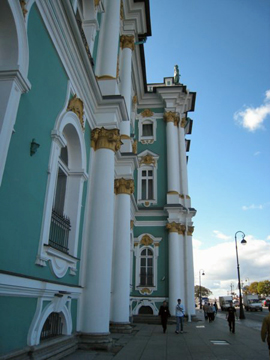
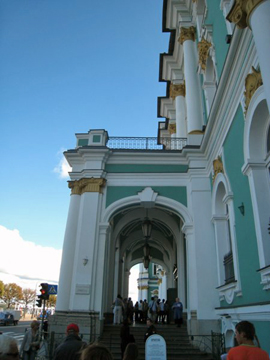
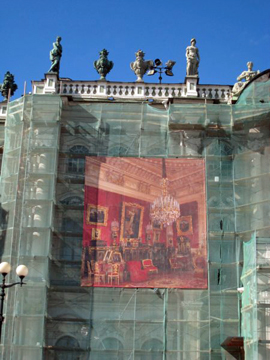
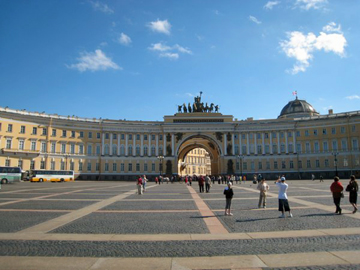
On the opposite side of the Hermitage that faces the Palace Square, it was being restored, and they had it covered in mesh.
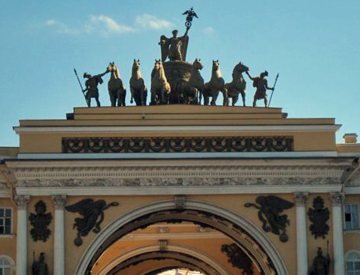
Note the quite good artwork they painted on the mesh, and the large statuary on the roof. One thing we noticed, when restorations are in progress, the outside of the structure is dressed in a very attractive mesh so as not to look unsightly while the work is going on. I remember that a building opposite of Red Square in Moscow was an entire block long, and it was under restoration. The entire building was covered with a mesh screen that was painted with windows, doors and archways that were a duplication of what the building will actually look like when the restorations are completed.
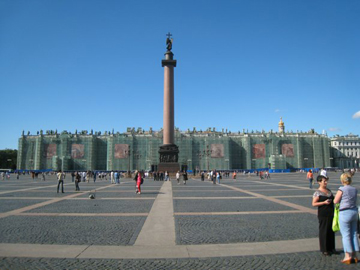
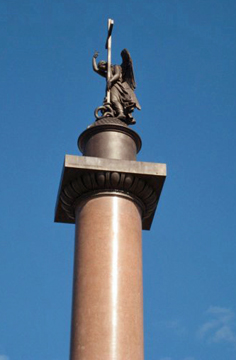
It appears to be a Roman emperor in a chariot, on a triumphal return form a battle of conquest Alexander Column is the focal point of Palace Square. The monument was erected after the Russian victory in the war with Napoleon's France. Named after Emperor Alexander I, who ruled Russia between 1801 and 1825, the column is an interesting piece of architecture and engineering. It was built between 1830 and 1834, and unveiled on August 30, 1834. The monument — the tallest of its kind in the world — is 47.5 m (155 ft 8 in) tall and is topped with a statue of an angle holding a cross. The face of the angel bears great similarity to the face of Emperor Alexander I.
The column is a single piece of red granite, 25.45 m (83 ft 6 in) long and about 3.5 m (11 ft 5 in) in diameter. The granite monolith was obtained from Virolahti, Finland and in 1832 was transported by sea to Saint Petersburg, on a barge specially designed for this purpose, where it underwent further working. Without the aid of modern cranes and engineering machines, the column, weighing 661 dons, was erected by 3,000 men under the guidance of William Handyside in less than 2 hours. It is set so neatly that no attachment to the base is needed. We had elected to take the optional Canal Cruise, so after we left the Hermitage we headed for the canal.
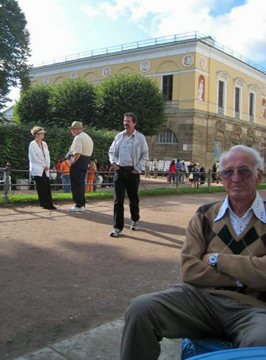
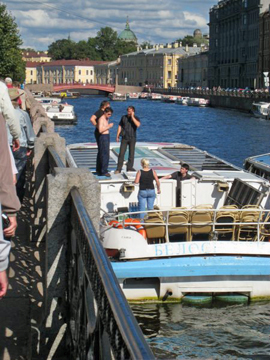
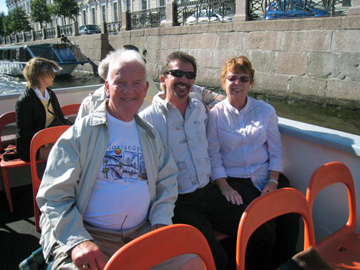
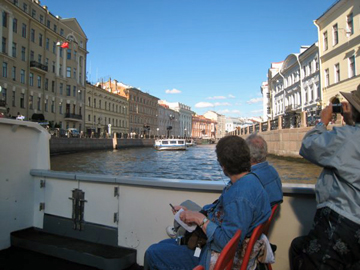
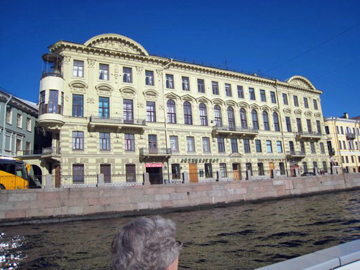
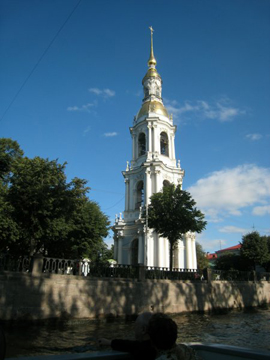
We don't look too worn out from the long day of Catherine's Palace and the Hermitage. But I must say it did feel good to sit down for a while. From the canals you do get a very different perspective of the buildings along the way.IMG_4680
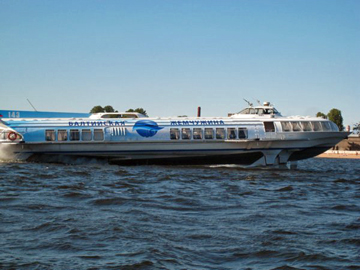
Note the tiny people along the shore enjoying the sunshine and bathing in the Neva River. We passed under many beautiful bridges along the way.
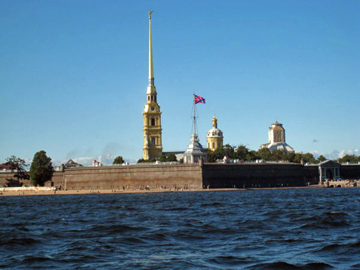
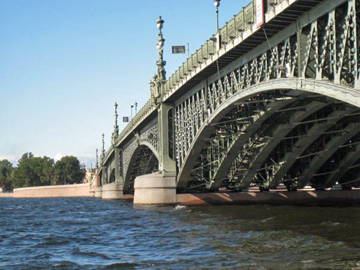
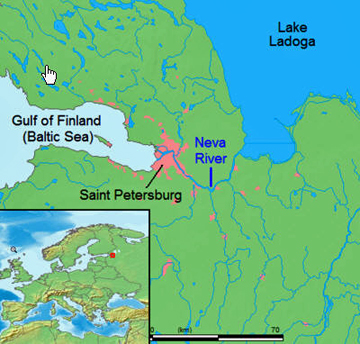
Trinity Bridge The river is quite wide, and originates from Lake Ladoga and flows to the Gulf of Finland. It is the third largest river in Europe in terms of average discharge (after the Volga and the Danube), but it's length is only 74 km (46 mi). 28 km (17 mi) of these are within the city boundaries of Saint Petersburg. The average depth of the Neva is 8-11 meters (26-36 ft) with a maximum depth of 24 meters (79 ft).
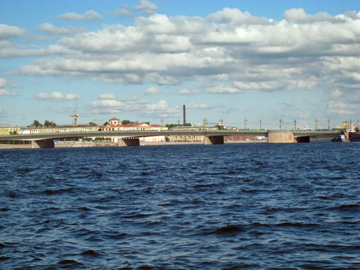
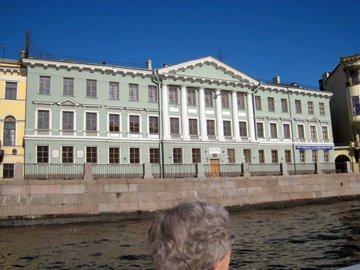
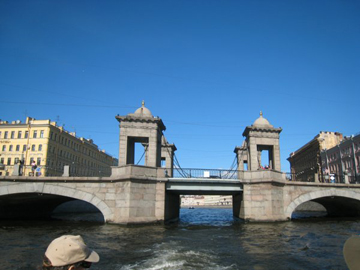
Liteyne Bridge, very near the deepest spot on the river of 24 meters (79 ft). The buildings facing the canals were quite beautiful and well maintained.
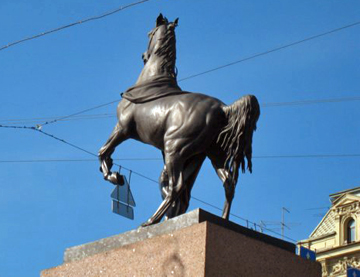
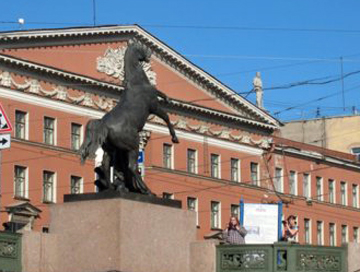
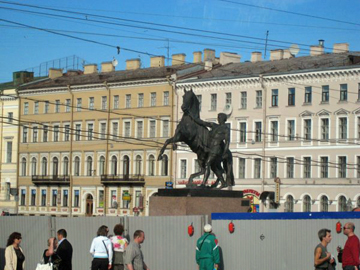
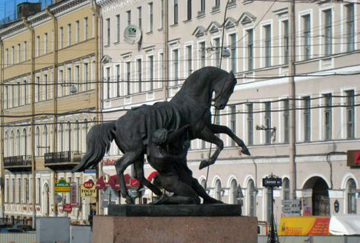
I kept getting this woman's head in my shots. We passed under the Anichkov Bridge, so I tried once again to get photographs of the four wild horse sculptures.
Many of the canal bridges were quite attractively designed.
At the end of our canal cruise the deck hand tied us up to the quay wall and we disembarked.
We walked the short distance to Saint Isaac Square where our bus was waiting for us to take us back to the hotel.
On the ride back to our hotel we crossed over Anichkov Bridge once more, and I made one final attempt to get pictures of the other two statues, but wouldn't you now it, I just couldn't remember which ones I already had, and of course I took photos of the same two statutes I already had.
We'll just have to return to Saint Petersburg and take a walking tour that includes Anichkov Bridge. LOL
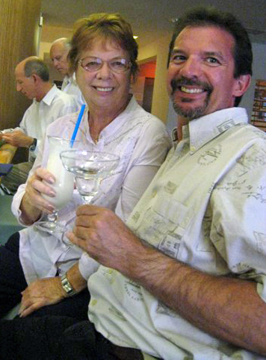
Back at the hotel, we stopped by the bar for an afternoon cocktail before getting ready for dinner. The next day Pete and I were taken to the Saint Petersburg International airport for our flight home, via Rome, Italy.
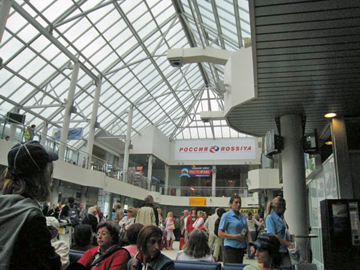
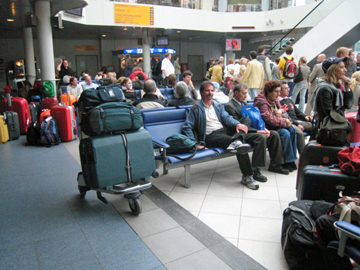
They had gotten us there with plenty of time to spare, so we waited a long time before we could even enter the customs area. They allowed passengers in by the clock. The end of another great vacation. Getting home was much smoother than getting here. I suppose that by now Alitalia has ceased all flights, since I read after we returned home that they did not get the money from the Italian government to bail them out of Chapter 13. Perhaps that's for the best. If an airline can't be managed in such a way that it is profitable, then perhaps it shouldn't be in business. It just may be that the sacrifices made to achieve profitability includes a cut back on maintenance, and that's not a comforting feeling for its passengers. I hope you have enjoyed this vicarious trip to Russia. Given the current world economic situation, this may be our last big trip for some time. Let's all hope that the world comes to grips with it's propensity to spend beyond its means, and finds a way to get it's financial house back in order. |
|
|||
|