 |
|
|
|
|
|
|
|
|
|
|
||||||||
|
||||||||||||||||||
|
Email us at: |
||||||||||||||||||
 |
||||||||||||||||||
 |
 |
|||||||||||||||||
|
Click the sun to see the |
||||||||||||||||||



|
 |
|
|



|
|
||||||||||||||||||||||||||||||
|
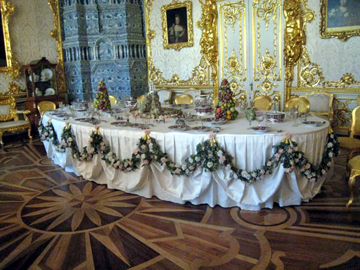
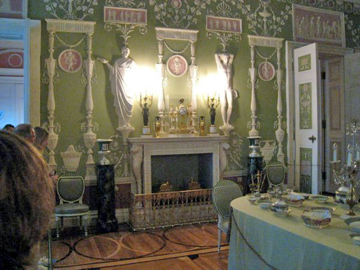
I left off in Chapter 9 with our tour of Catherine's Palace, or the Summer Palace. The Winter Palace which is now the Hermitage Museum, we will be visiting after lunch today. It seems that there were a lot of dining rooms in this palace. This one is particularly beautiful, and is set with exquisite place settings. It was very inviting. Especially since we had not had lunch yet. LOL
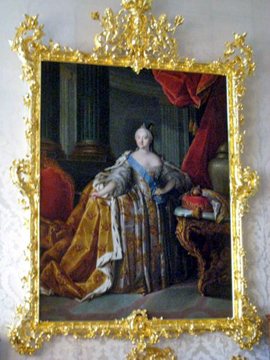
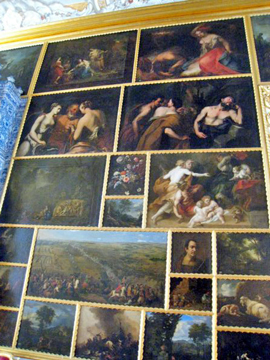
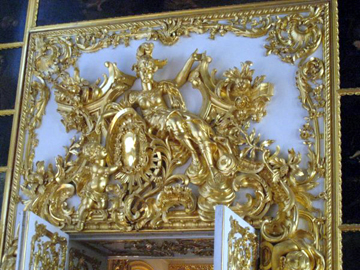
Pete and I have some nice art in our home, but nothing with a frame like this. But then, neither of us are titled with Russian nobility either. I guess that's the difference. Or perhaps is would look just a little out of place. You really need a palace for something this beautiful.
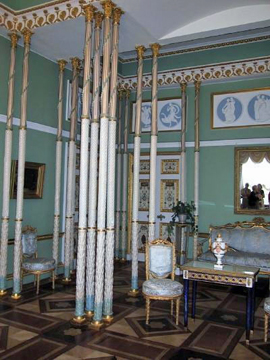
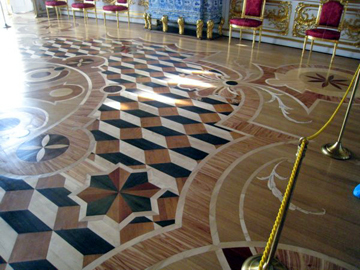
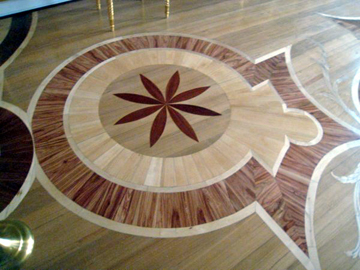
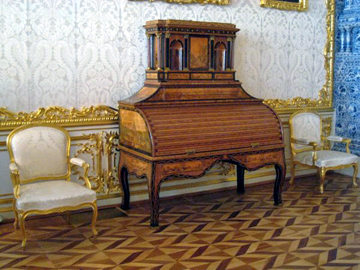
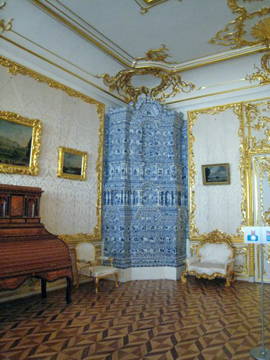
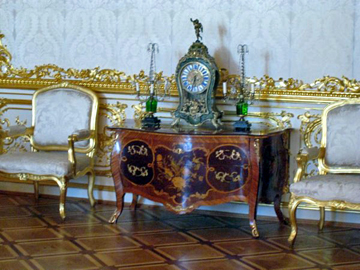
The next 8 photos I've included just to show that the hard wood floor patterns actually are different in each room.
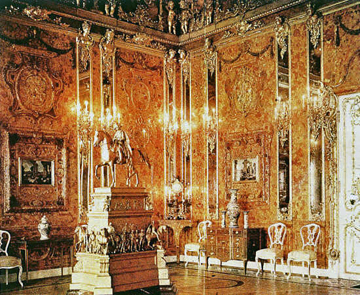
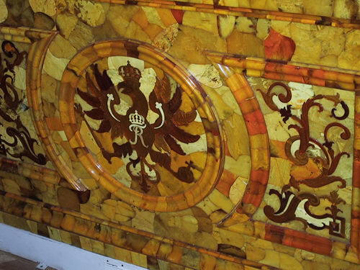
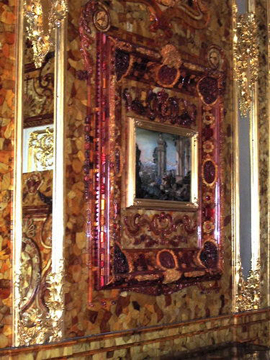
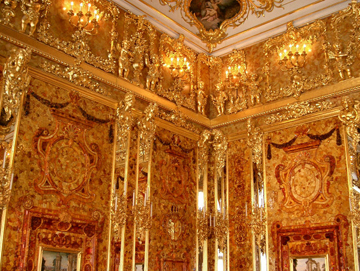
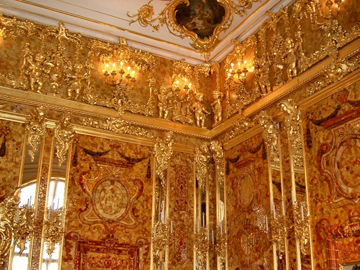
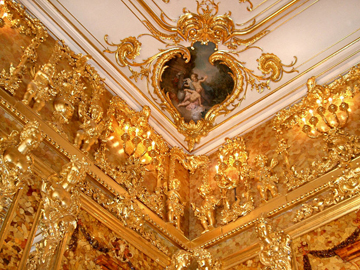
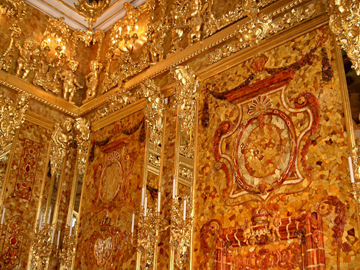
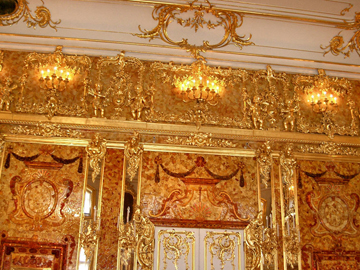
The one room where we were absolutely forbidden to take photographs is the Amber Room. However, due to the wonders of the Internet, I was able go get not only some very good photos of the Amber Room, but also a very interesting account of the history of it's creation, disappearance and ultimate reconstruction. The original Amber Room represented a joint effort of German and Russian craftsmen. It's construction began in 1701 and continued until 1709 in Prussia. The room was designed by the German baroque sculptor Andreas Schlüter and was constructed by the Danish amber craftsman Gottfried Wolfram. It remained at Charlottenburg Palace, home of Friedrich I, the first king of Prussia, until 1716 when it was given by Prussian king Freidrich Wilhelm I to his then ally, Tsar Peter the Great of the Russian Empire. In Russia it was expanded and after several renovations, it covered more than 55 square meters and contained over six tons of amber. Shortly after the beginning of the German invasion of the Soviet Union in World War II (Operation Barbarossa), the curators responsible for removing the art treasures in Leningrad tried to disassemble and remove the Amber Room. However, over the years the amber had dried out and become brittle, so that when they tried to move it, the fragile amber started to crumble. The Amber Room was therefore hidden behind mundane wallpaper, in an attempt to keep Nazi forces from seizing it. However, the attempt to hide such a well-known piece of art failed. Nazi soldiers disassembled the Amber Room within 36 hours under the supervision of two experts. On 14 October 1941, Rittmeister Graf Solms-Laubach commanded the evacuation of 27 crates to Königsberg in East Prussia, for storage and display in the town's castle. Mysteries abound as to what happened to it from that point. In any event, the Amber Room was never seen again, though reports have occasionally surfaced stating that components of the Amber Room survived the war. Many different individuals and groups, including a number of different entities from the government of the Soviet Union, have mounted extensive searches for it at various times since the war, without any success. However, in 1997 one Italian stone mosaic that was part of a set of four which had decorated the Amber Room did turn up in western Germany, in the possession of the family of a soldier who had helped pack up the Amber Room. In 1979 efforts began to rebuild the Amber Room at Tsarskoye Selo. In 2003, after decades of work by Russian craftsmen, the reconstructed Amber Room was inaugurated in the Catherine Palace in Saint Petersburg, Russia. The new room was dedicated by Russian President Vladimir Putin and German Chancellor Gerhard Schröder at the 300-year anniversary of the city of Saint Petersburg.
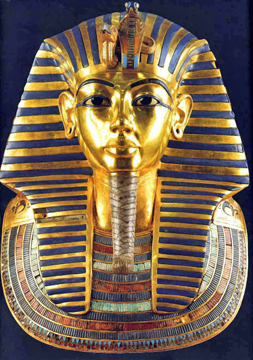
I can remember most vividly standing in the Egyptian Museum in Cairo, looking into those eyes, and realizing that the young man who wore it in death, was in deed the Pharaoh of Egypt, and he died at the very young age of 19. I asked myself, what had I accomplished by the age of 19. I didn't think very hard about it, since I already knew that the answer would be agonizingly paltry. But that's a story from another chapter in my life. Back to the Amber Room.
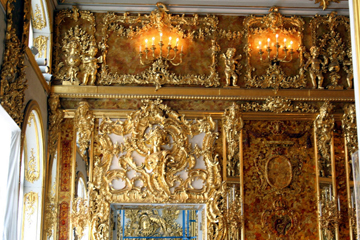
This is the view of another wall in the room. You can see how magnificent this room is, and why it has become so famous. In all of these photos you should note that all the bulbs in the ceiling lights are lit. It was the same when we were there. No burned out bulbs. And you don't just stand on a chair to change a bulb when it burns out. The ceiling was quite high.
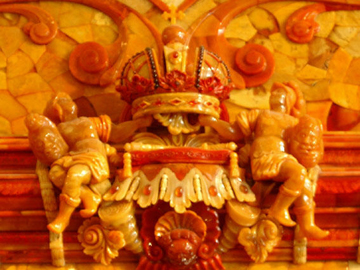
Note the intricate carving and polishing of the amber. Real craftsmanship.
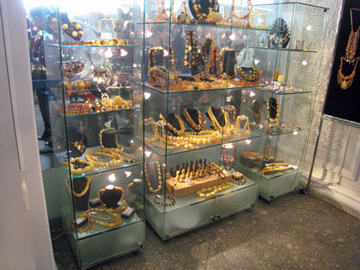
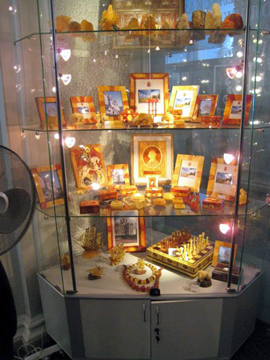
Just in case we were completely enamored by all the amber in the Amber Room, there was a marvelous gift shop as we left the palace. We could have easily doubled the cost of this trip just in this gift shop alone, on purchases of amber objects.
I loved the chess sets. There wasn't a price tag. I suppose that if you had to ask the price, you probably couldn't afford it. We managed to run this gauntlet of temptation without making a single purchase. Such restraint. Well, as we are about to leave the palace, this is a good place to end this chapter. I'll pick up with our tour of the beautiful grounds surrounding the Catherine Palace in Chapter 11. |
|
||||
|