 |
|
|
|
|
|
|
|
|
|
|
||||||||
|
||||||||||||||||||
|
Email us at: |
||||||||||||||||||
 |
||||||||||||||||||
 |
 |
|||||||||||||||||
|
Click the sun to see the |
||||||||||||||||||



|
 |
|
|



|
|
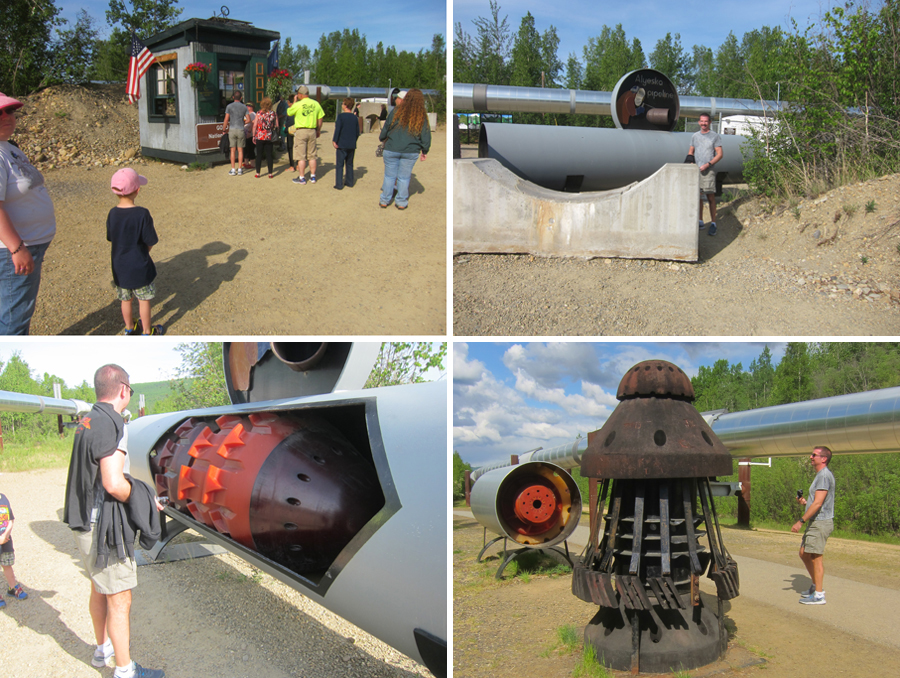
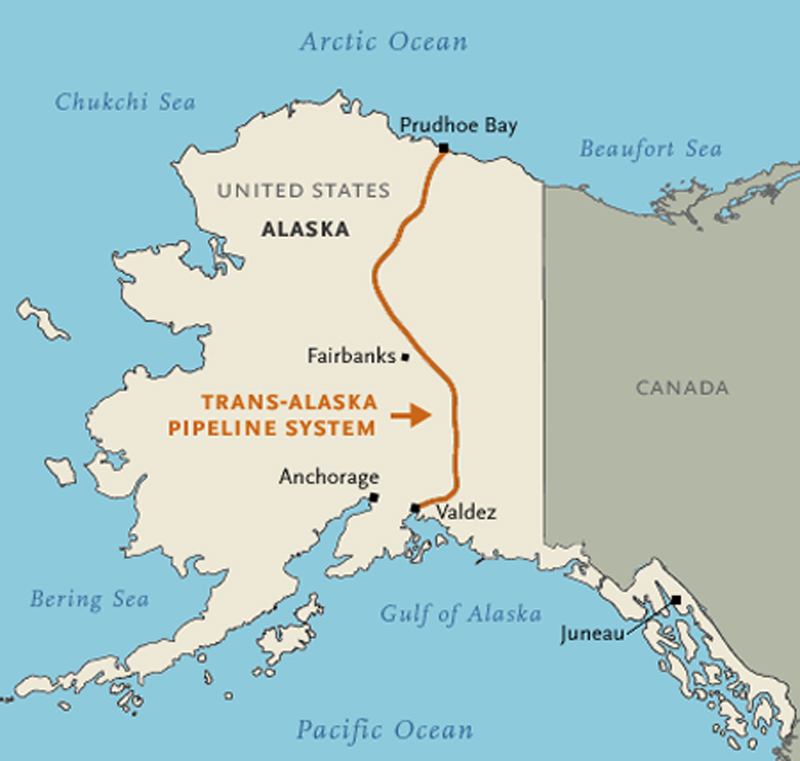
A brief HISTORY. In 1968, oil was discovered in Prudrhoe Bay on the North Slope, located between the Brooks Range Mountains and the Beaufort Sea. A consortium of oil companies determined that a pipeline offered the best means to transport the crude oil to a navigable port where it then could be shipped by tankers to the continental U.S. Alyeska Pipeline Service Company was established in 1970 to design,construct, operate and maintain the pipeline. It began moving oil in 1977. The 800-mile-long Trans Alaska Pipeline System (TAPS) starts in Prudhoe Bay and stretches through rugged and beautiful terrain to Valdez, the northernmost ice-free port in North America. Cheryl is purchasing tickets for us to ride the train to Gold Dredger 8, and on the way, visit a small section of the Alaska Pipeline. What Pete is looking at is called a “Pig”, given that name because as it pass through the pipe it squeal, sounding much like a pig.
The “pig” improves the flow of oil through the trans Alaska pipeline and monitors its condition. Pigs are launched and retrieved at pump stations and travel through the pipeline with the moving oil. The orange polyurethane pig at left above is a cleaning and flow improvement pig. Other more sophisticated pigs use magnetic fields and ultrasonic signals to detect small changes in the pipe’s wall thickness and shape. Pigs are among the most important tools available for protecting the pipeline and detecting potential problems. The pig on the right is a more intensive scraper pig that scrapes the wax buildup from the walls that results when the oil becomes too cool. It needs to be kept at 100ºF or more. Although we saw only a very small section of the pipeline, the 48 inch pipe runs for 789 miles across 3 mountain ranges and 70 rivers or streams, and has 12 pumping stations.
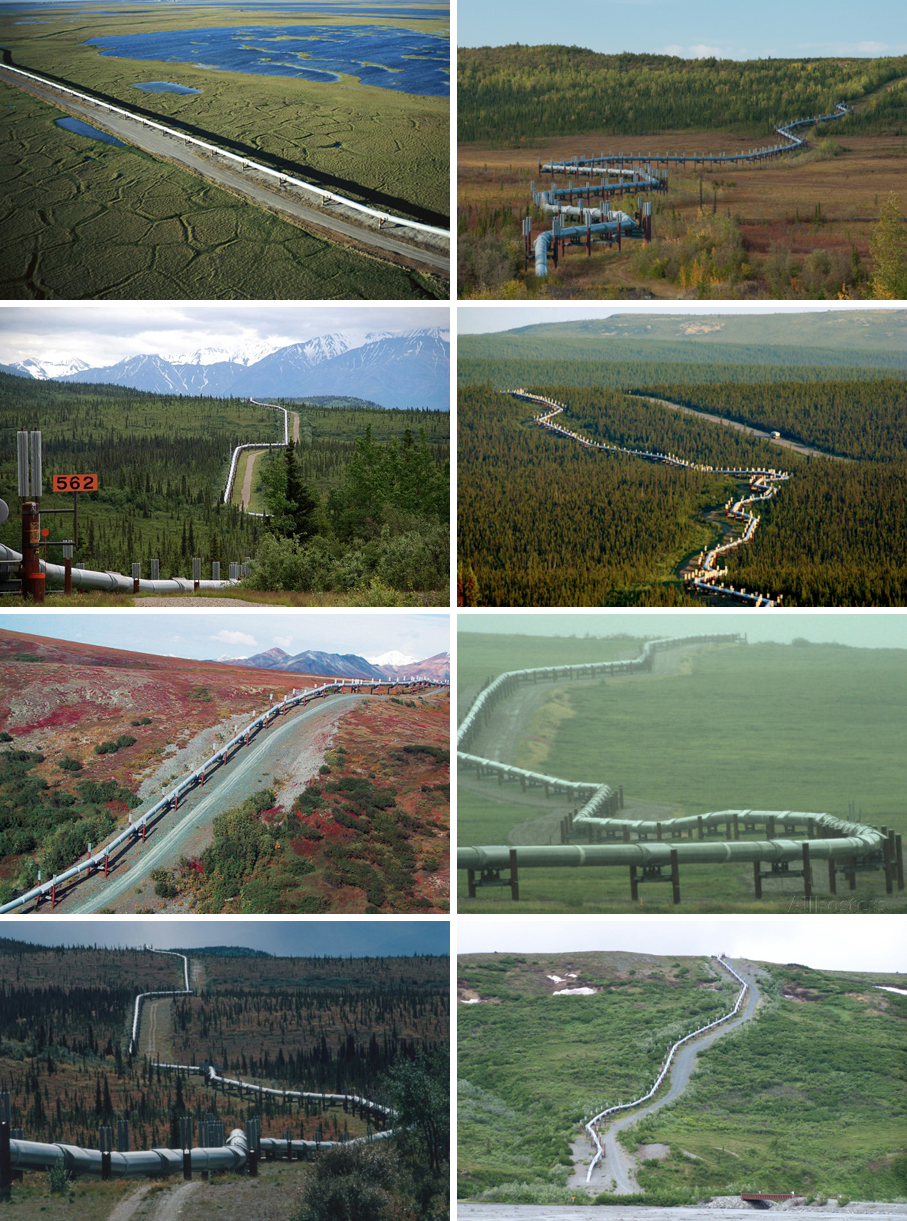
Here are some Internet photos of the pipeline at various locations, showing the different terrain that had to be dealt with, and the natural elements such as earthquake faults, permafrost, rivers and mountains. It was a massive undertaking executed brilliantly.
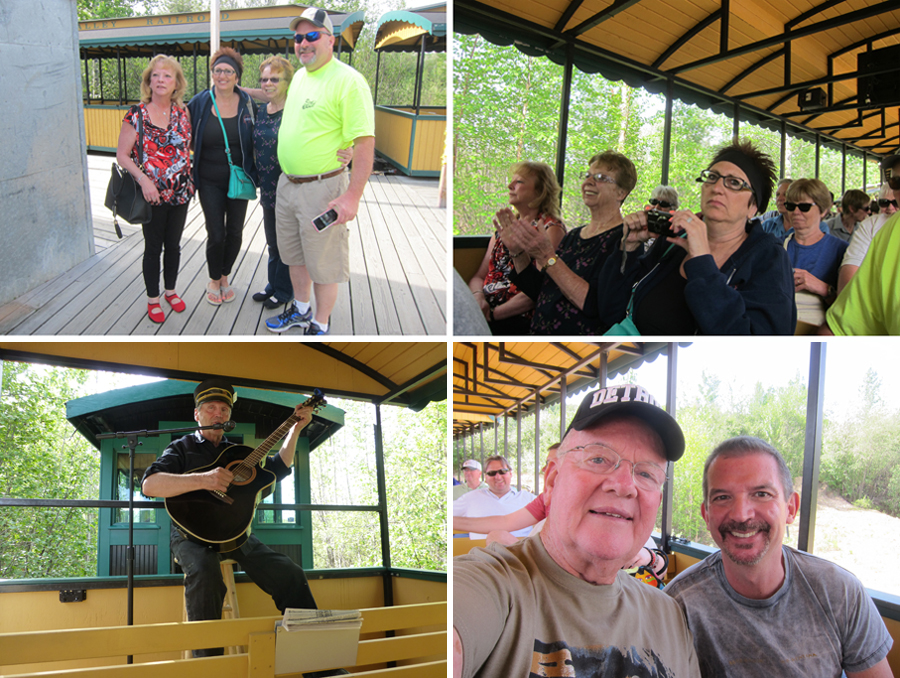
It survived the 2002 Denali earthquake with minimal damage to some of the pipeline sliders designed to absorb similar quakes, and was shut down for more than 66 hours, but only as a precaution. Construction began March 27, 1975 and was completed May 31, 1977. First oil moved through the pipeline June 20, 1977. First tanker to carry crude oil from Valdez: ARCO Juneau, August 1, 1977. Between 1979 and 2010, more than 16 billion barrels of oil were transported through TAPS. In 2011, the Alaska Department of Revenue estimated 40 billion barrels of crude oil are available on the North Slope and offshore. But we were more interested in panning for gold. So we boarded the train, and were serenaded while waiting for everyone to get on board, which took a while, by a singing conductor.
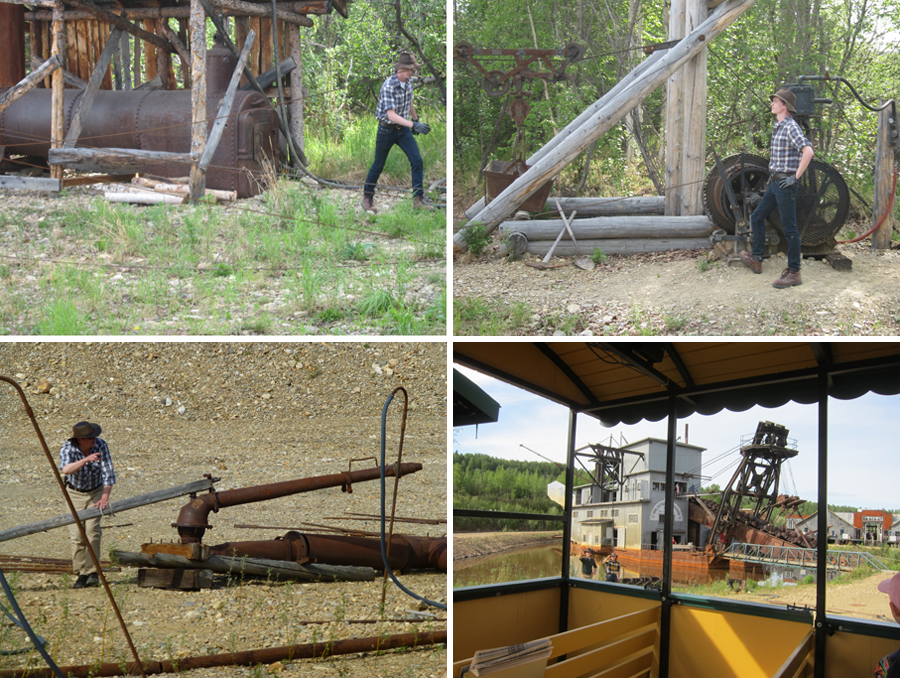
He wasn’t bad, but we were a captive audience. ;o) As the train moved on, we passed by areas where we saw various paraphernalia preserved from mining operations of years ago. There were boilers for making steam, steam engines for pulling cables, lots of cables and high wires, and things I didn’t recognize.
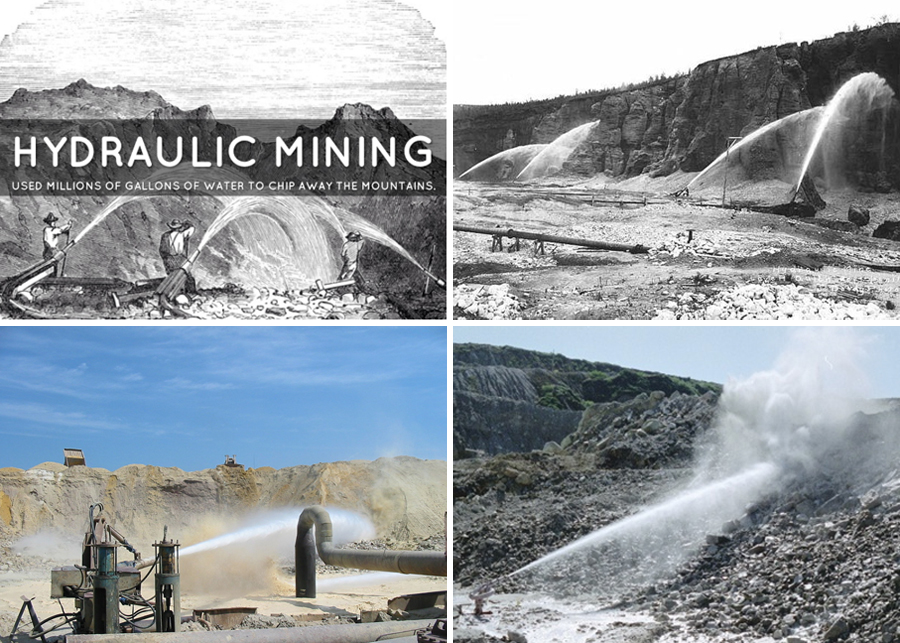
The thing that looks like a huge gun is a high pressure water canon used in hydraulic mining, famous for laying waste to much of the state of California. Water under high pressure was used to wash away mountains, creating gravel that could be run through a sluice to extract gold.
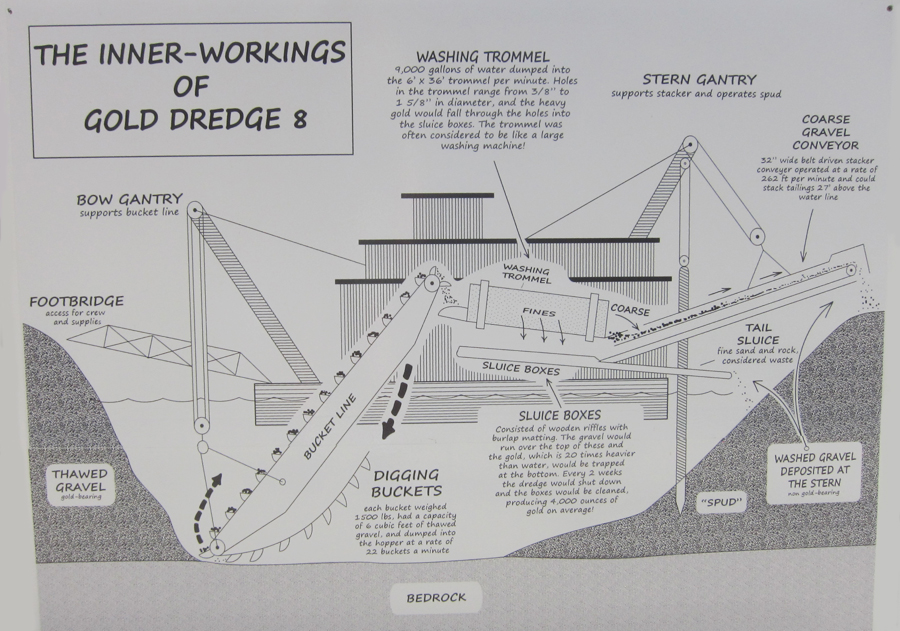
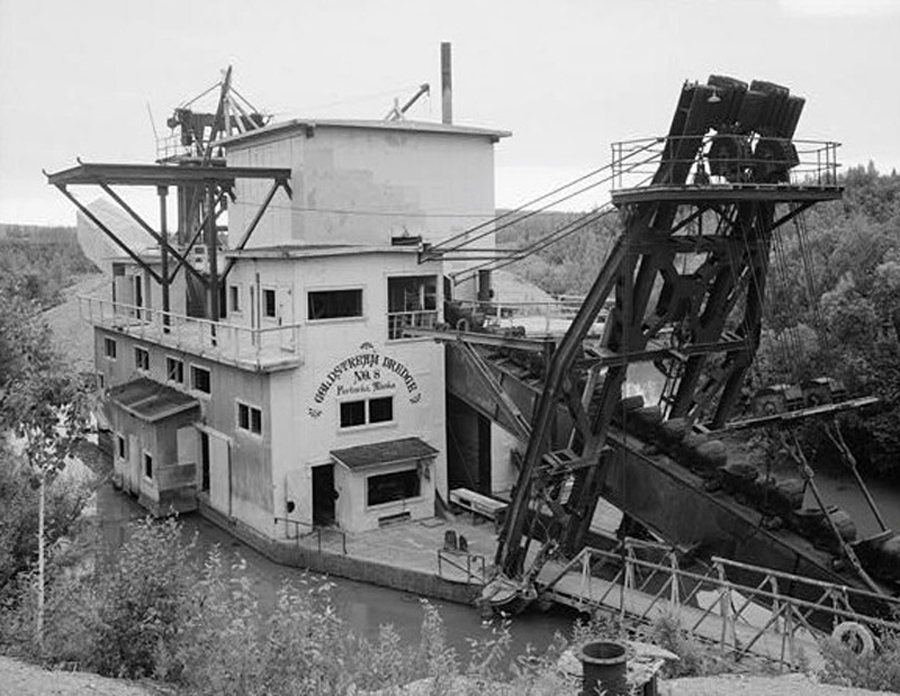
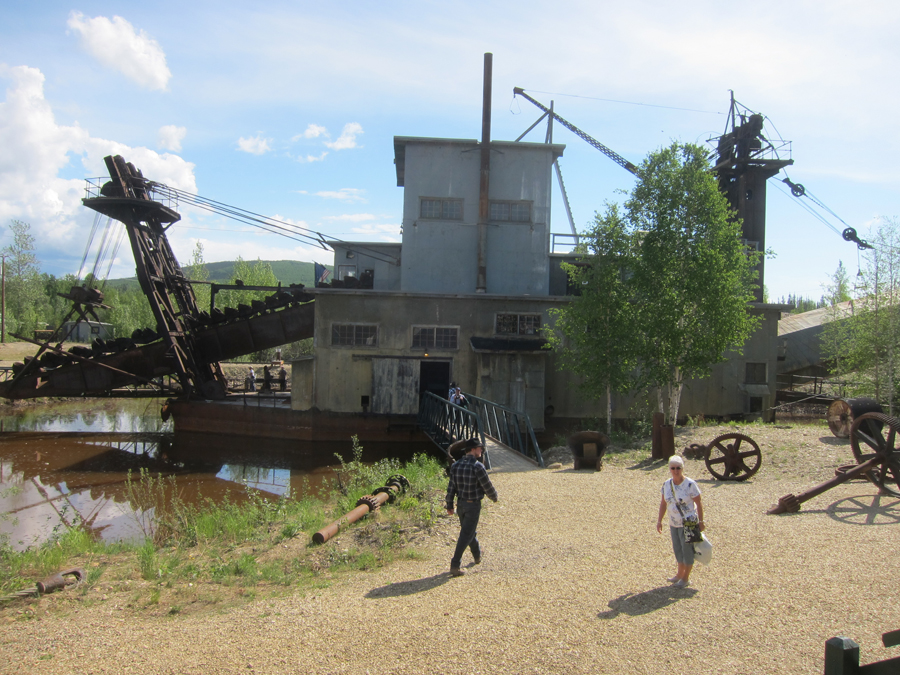
What was left after this mining method was a waste land of rubble, huge ponds, and beautiful mountains were gone forever. But we are visiting a Gold Dredger, and it is totally amazing. It is a ladder dredge, and was operated by Fairbanks Exploration Co. from 1928 to 1959. Starting in the 1920s, water was brought to the area through the 90-mile Davidson Ditch for gold mining. The Goldstream Dredge #8 cut a 4.5 mile track and produced 7.7 million ounces of gold.
If I remember correctly, Dredge 8 was built in Pennsylvania, disassembled and shipped by train to San Francisco, where it was reassembled to make sure all the pieces arrived, and was disassembled again and shipped by train from San Francisco to Fairbanks, Alaska. This is what it looked like when it was in operation . . .
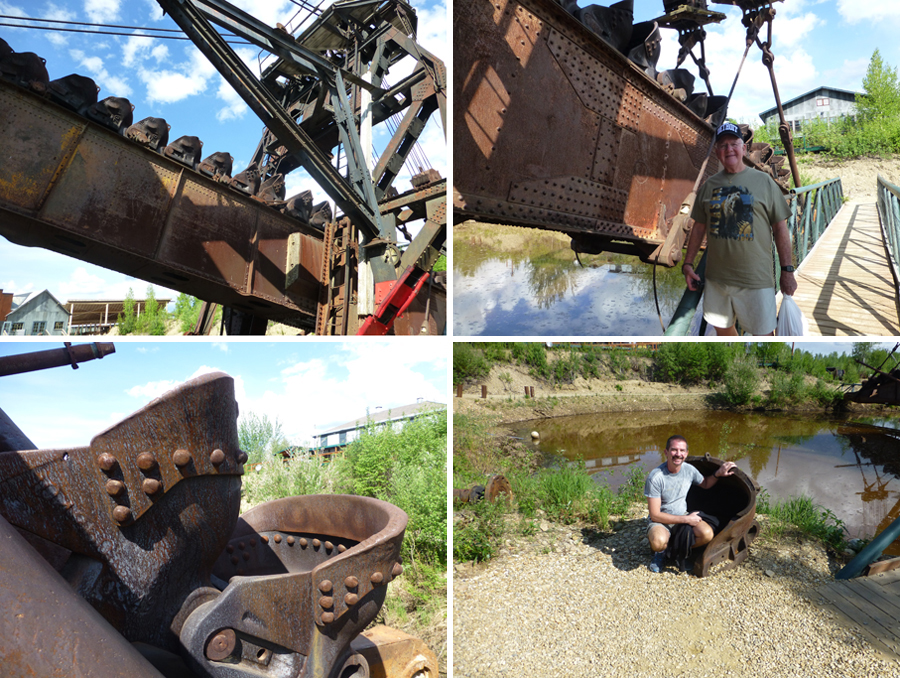
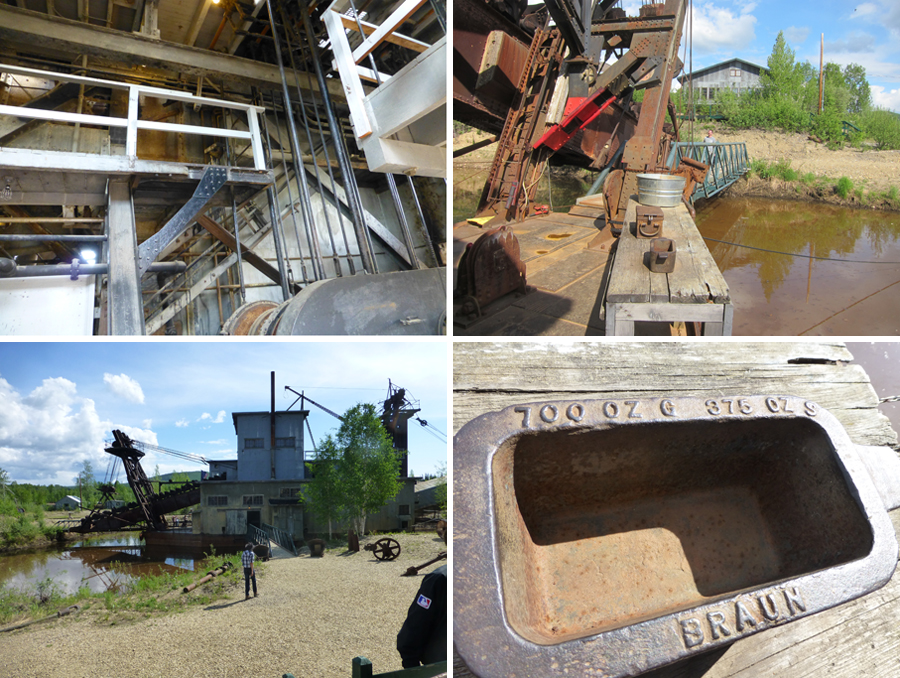
. . . and this is what it looks like today, as a great tourist attraction. When you walk on it, and see the massive structure up close, you realize what a huge project it would have been to assemble and disassemble it for shipment by rail.
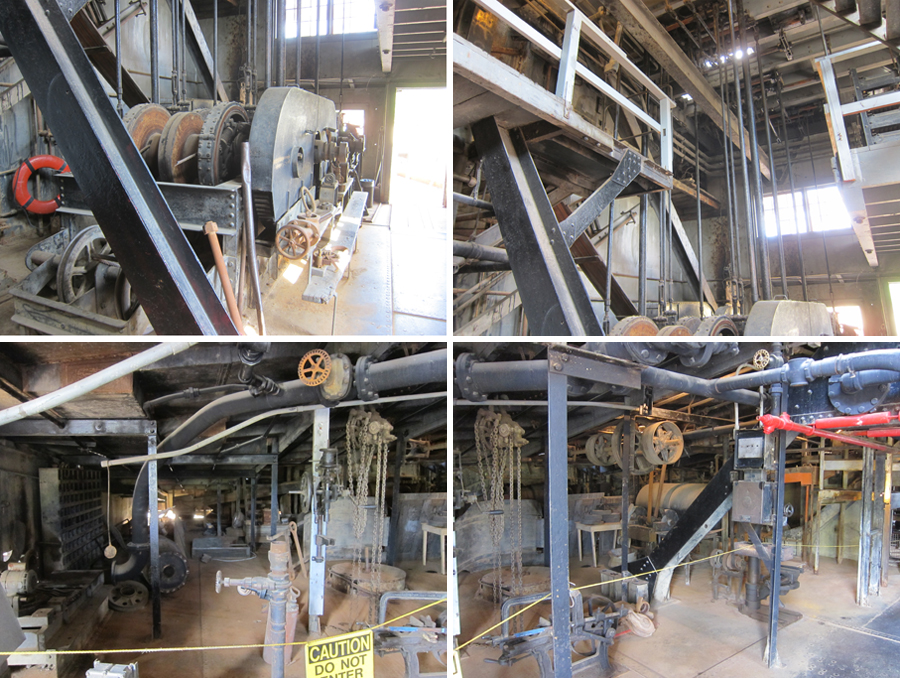
Inside Dredge 8 you can see what a maze of machinery is involved in making it work. The huge I-beams, gears, chains, cables and what not, lead one to believe that when it was running, the noise level inside must have been deafening.
This mechanical monster extracted 7.7 million ounces of gold out of the earth during it’s operational years, and at todays price of gold, that’s $8,844,600,000, which may seem like a lot of money, until you consider that it is only 0.04777 % of todays Nation Debt, and then you start to lose all perspective.
That’s right, our National Debt today, 11 June, 2015 is a staggering $18,514,844,471,000. That’s over 18.5 TRILLION dollars. YIKES! Back in the days when gold was fixed at $35 an ounce, the value of the gold this old clunkier extracted was a mere $282.5 million, which is just slightly more than Hillary Clinton spent on her bid for the presidency in 2008. ;o)
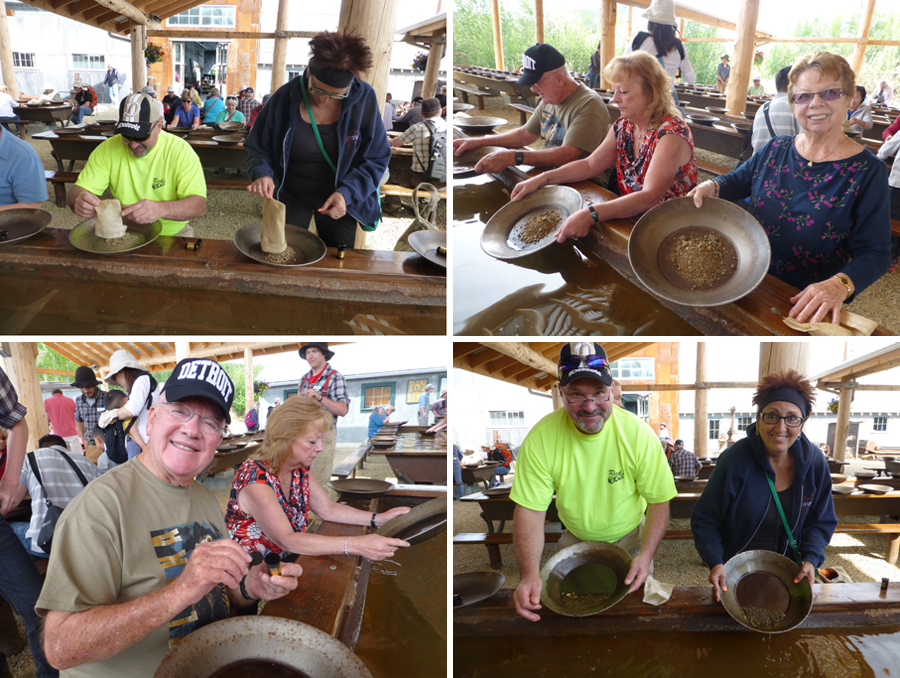
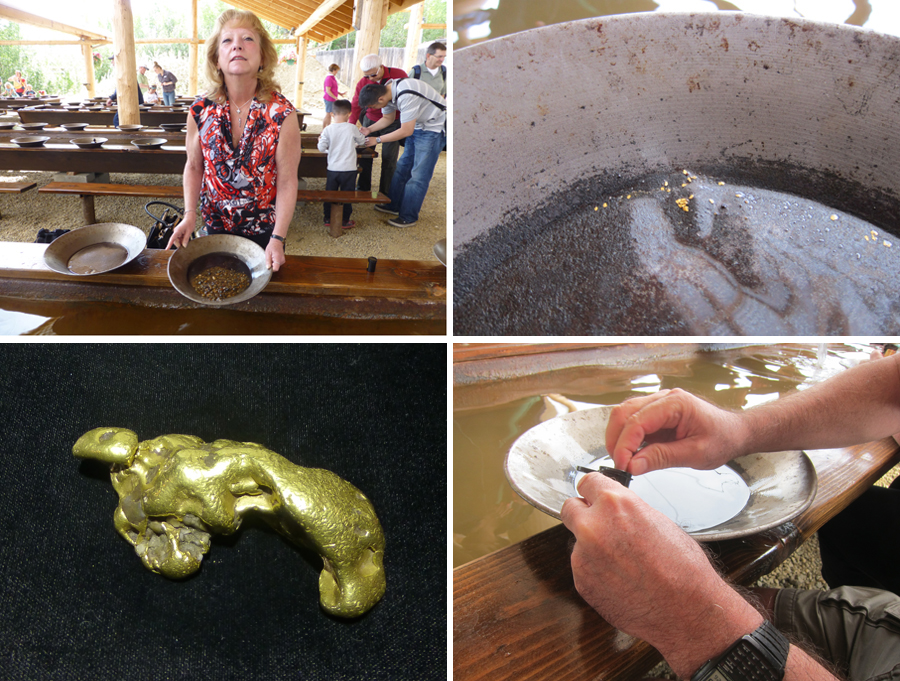
The gold is melted down and poured into the above ingot form. I thought it was surprising that gold is nearly twice a heavy as silver. Of course, if I paid more attention in my High School chemistry class, I shouldn’t have been surprised at all. ;o) But enough about the Dredger. We came here to pan for gold, and that’s what we intend to do. We were each given a bag of dirt and directed to the banning shed. Thank goodness we didn’t have to do this at the creek all squared down on our haunches. Sitting on a comfortable bench made it a whole lot easier on my old bones. ;o) As Joey and Terry dump their dirt in the pan, Pat and Cindy are ready to start the process of washing it to reveal the gold.
I hit pay dirt already, and put my gold in the plastic vile they gave us. Joey and Terry are smiling like they have gold too. I don’t see any gold in that pan Cindy. It’s supposed to look like this ;o)
This 19 oz nugget they had on display was said to be worth Pete is putting his gold in his plastic vile to take it to be Tomorrow evening Pete and I will be flying to Cozumel for two weeks. I’ll try to write the next chapter there, but if you don’t see it, it’s probably because we are enjoying the margaritas too much. ;o) |
|
|
|
||||
|