 |
|
|
|
|
|
|
|
|
|
|
||||||||
|
||||||||||||||||||
|
Email us at: |
||||||||||||||||||
 |
||||||||||||||||||
 |
 |
|||||||||||||||||
|
Click the sun to see the |
||||||||||||||||||



|
 |
|
|



|
|
|
DAY TEN ~ PASSAU The Viking Var arrives in Passau at 9:45 AM, and we have vacated our staterooms, settled our accounts and are ready for a walking tour of Passau, which will include an organ concert in St. Stephan's Cathedral. But first, a little history. Passau is known as the City of Three Rivers. It lies at the confluence of the Inn, the Danube and the Ilz Rivers. It is the last major German city on the Danube at the border of Austria. Originally a settlement of the Boii Celtic tribe called Boiodurum, it was later the site of the Roman camp Castra Batava. In 739, an English Celtic monk named Boniface founded the diocese of Passau, the largest see of the Holy Roman Empire for many years. Passou was an important medieval center for the salt trade. During the Renaissance it became famous for making high-quality knife and sword blades. Local smiths stamped their blades with the Passau wolf, and superstitious warriors believed that the wolf granted them invulnerability. So, the practice of placing magical, protective charms on blades came to be known as "Passau art."
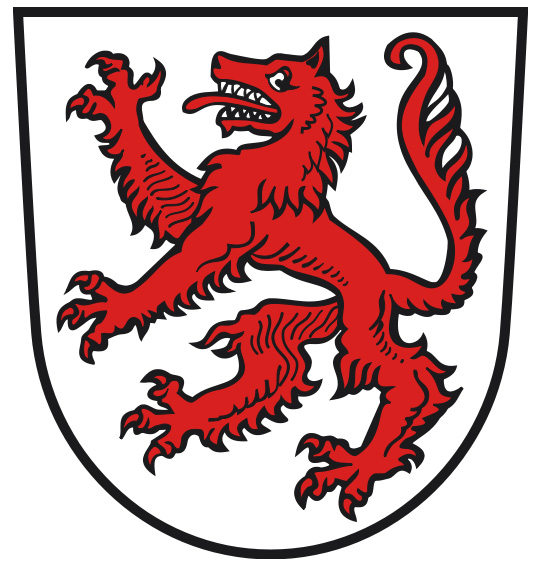
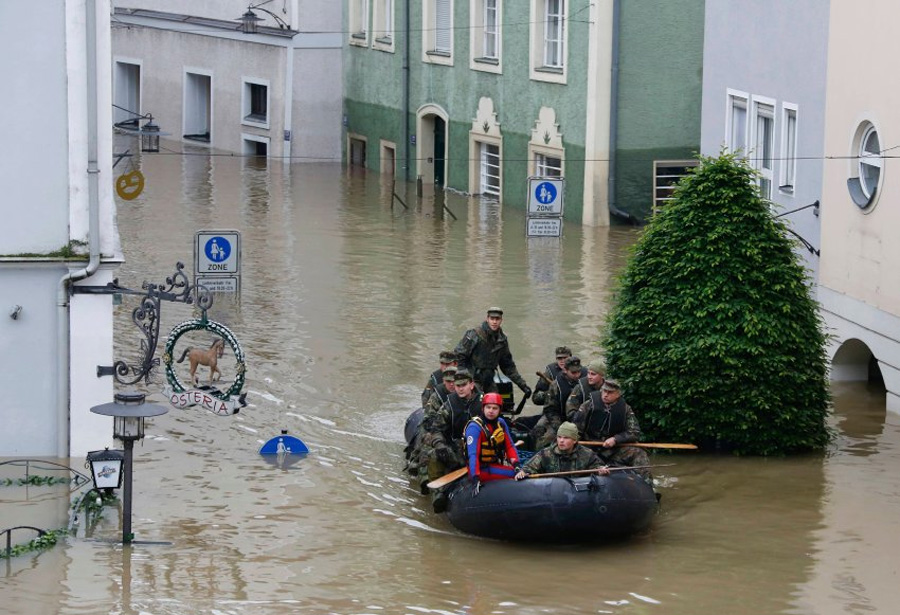
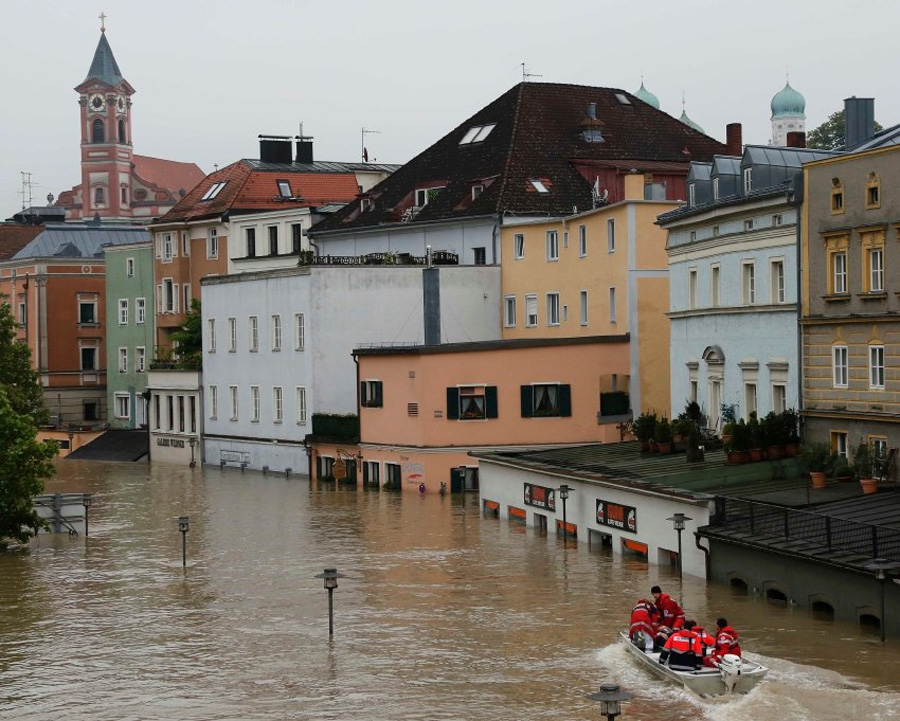
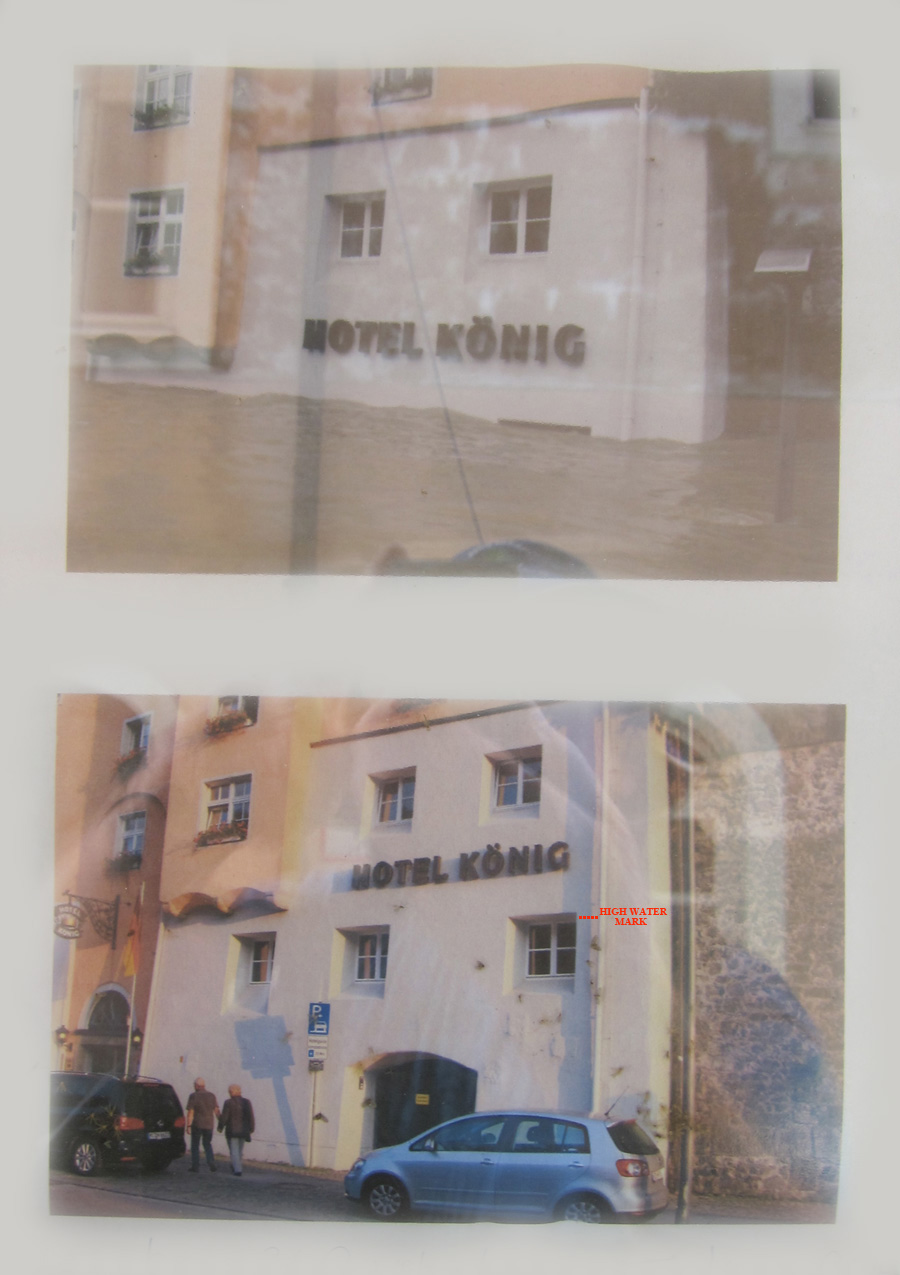
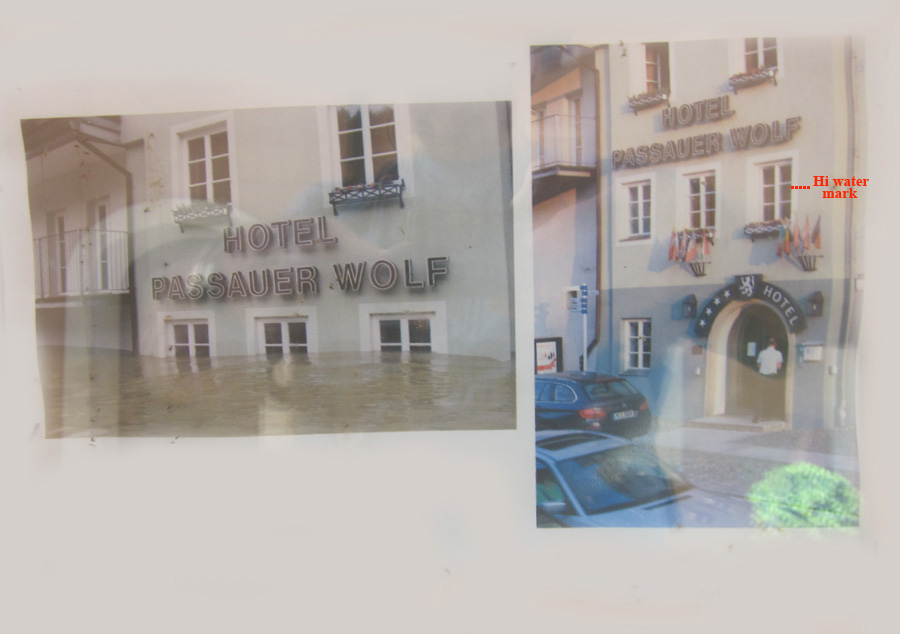
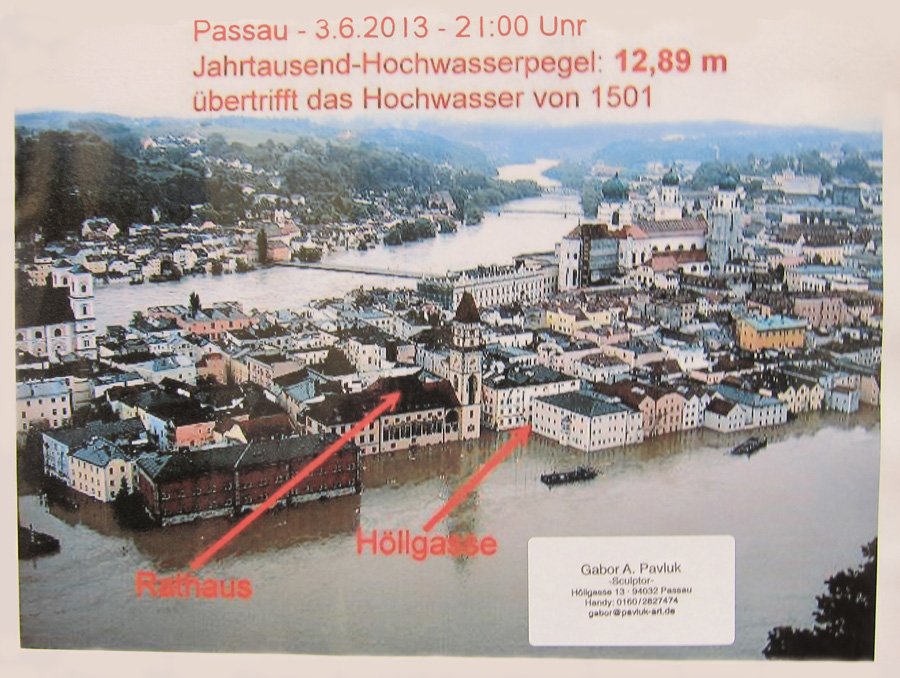
This is the Passau Cote of Arms, and it was stamped on the blades produced by the Now it would seem that building a city at the confluence of three rivers, one might suspect that there would be a possibility of flooding when there are heavy rains upstream. This is exactly what happened on 3 June of this year, when the rivers rose to a peak of 12.89 meters. It never dawned on me that these next two scenes took place a mere 59 days prior to our visit on 2 August 2013.
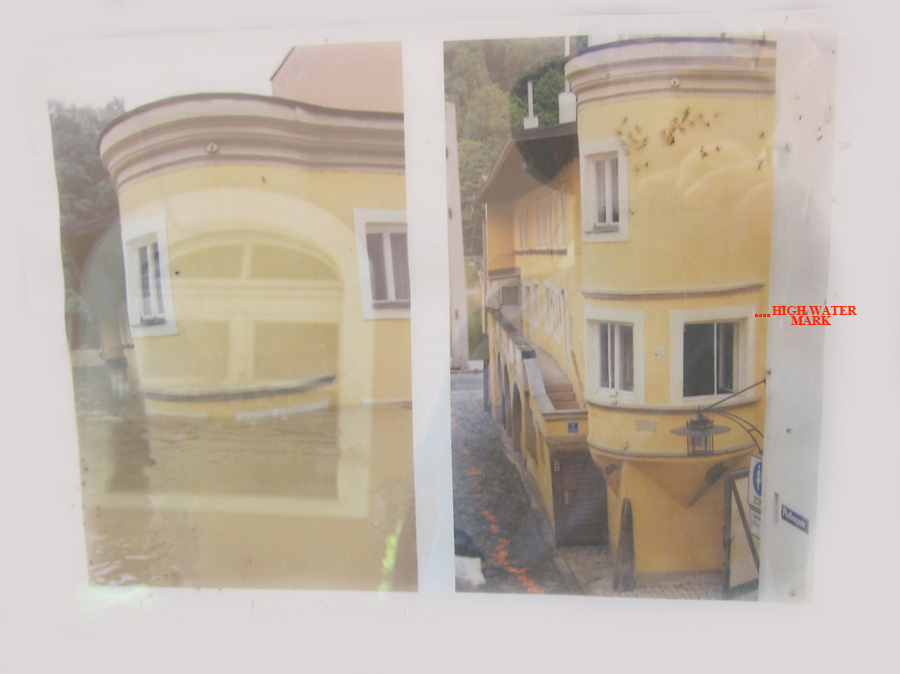
This was said to be the worse flood in 500 years. As we walked through the streets, we noticed that many doors were left open, because they were still trying to dry out the inside of the buildings. In the shops and residences windows there were photographs showing what the building looked like before the flood, and at the peak of the flood. It was astonishing to see how bad it was, and to realize just how quickly the citizens were able to clean up from the tons of mud that filled their streets and the insides of their buildings. These next three photos were taken looking in a window with the photo taped to the inside of the glass, so there is lots of reflections from behind me. It was impossible to avoid the reflections.
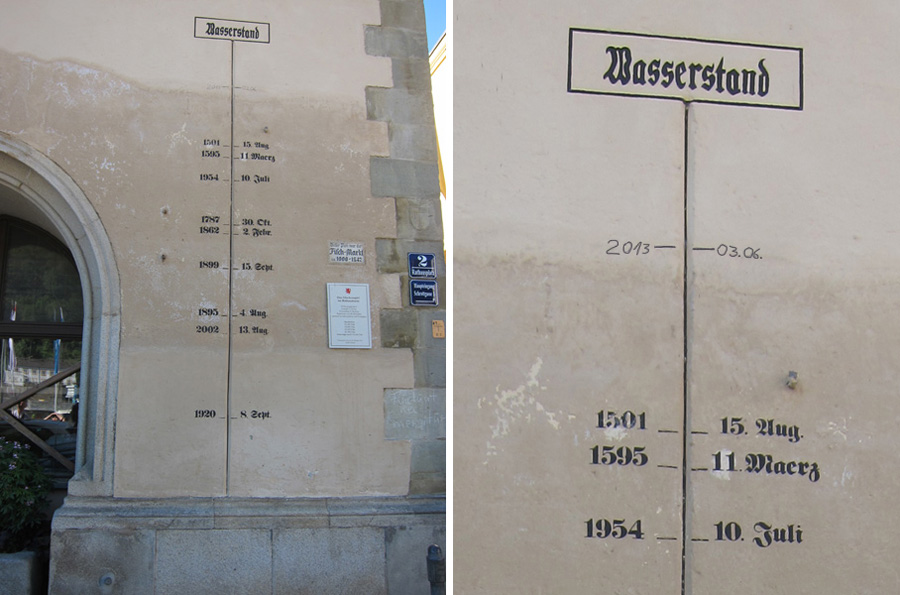
"Jahrtausend-Hochwasserpegel" means "Thousand-year flood level" and "übertrifft das Hochwasser von 1501" I just can't imagine going through something as catastrophic as an epic flood like this. The following link is to a YouTube video of the flooding as it was taking place. It is 12 min 05 sec long, but worth watching when you have the time. http://www.youtube.com/watch?v=6e8LHX1J6eQ The people of Passau seem to be proud of their history of flooding, as they keep an accurate record of the events.
With so many floods in their history, you'd think they would start moving things a little further away from the rivers. If moving the town higher up isn't an option, then perhaps digging a 12.89 meter trench on both sides of the river and putting a steel reinforced concrete wall in it that could be hydraulically raised whenever needed to keep the water out of the town, and in the bounds of the river at normal flow, would be a good idea. The Norwegians have created some pretty impressive structures to protect themselves from the ravages of North Sea storms. And aren't the Germans supposed to be far more ingenious than the Dutch? ;o) I should submit a design for them to consider. LOL Yeah, RIGHT!
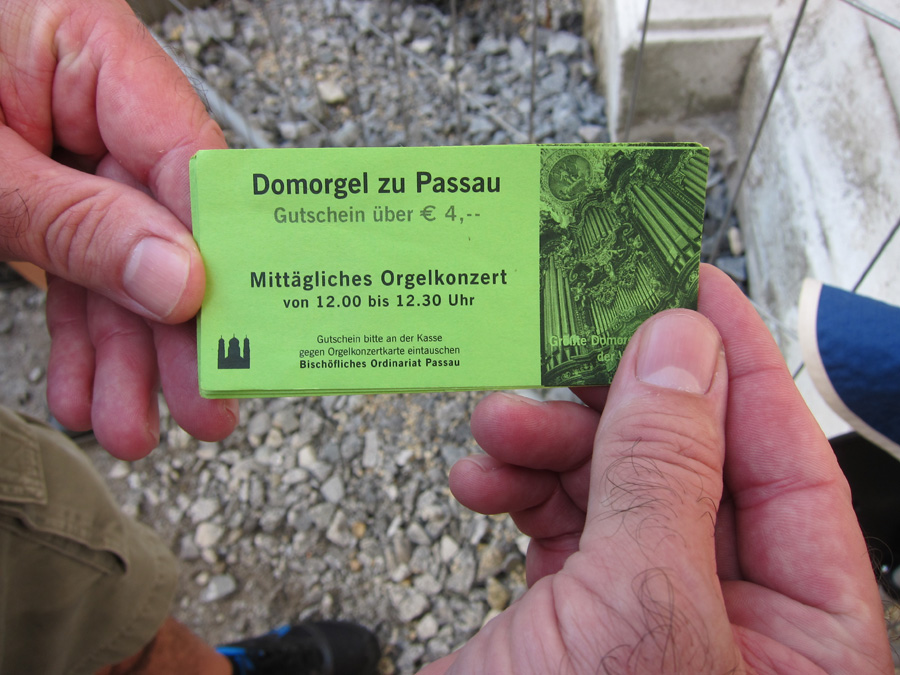
As I mentioned earlier, we will be attending an organ concert in St. Stephen's Cathedral, and these are our tickets.
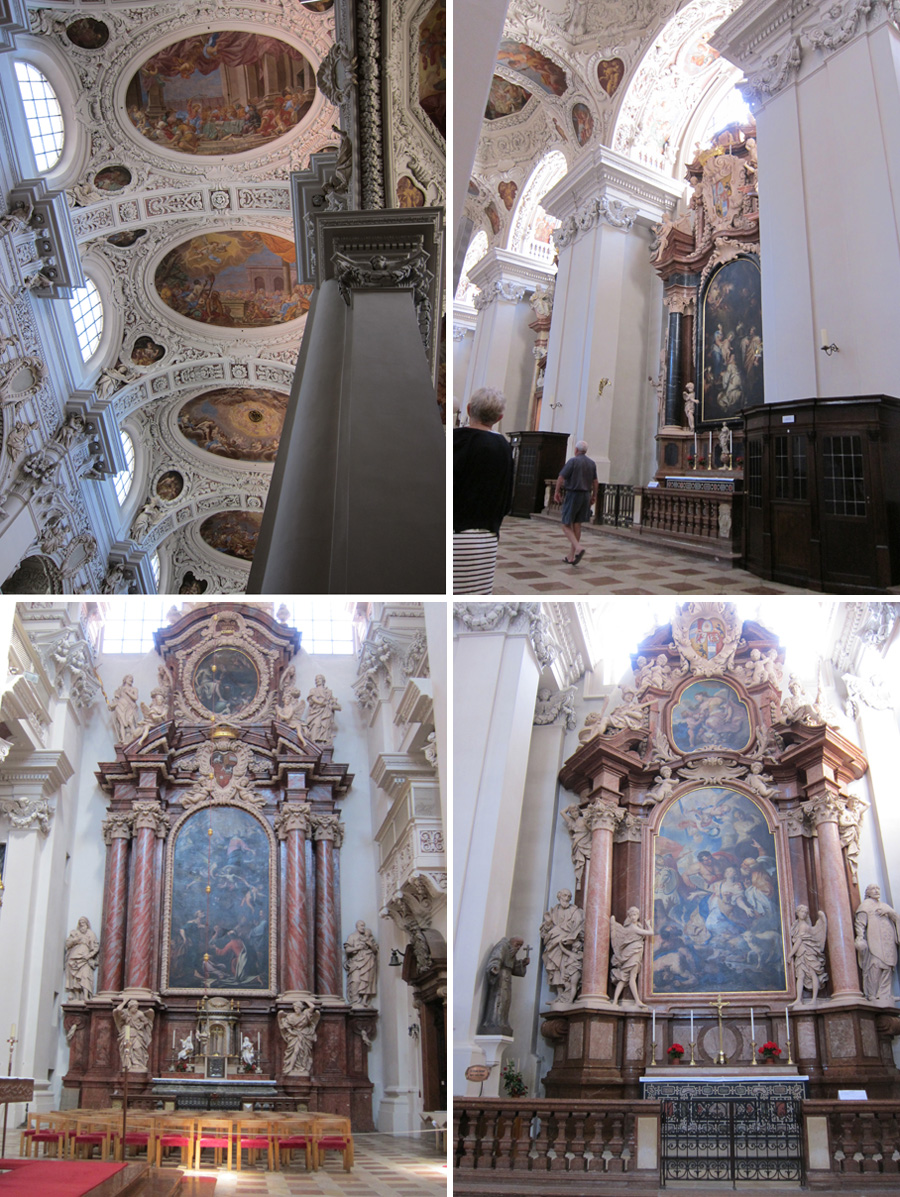
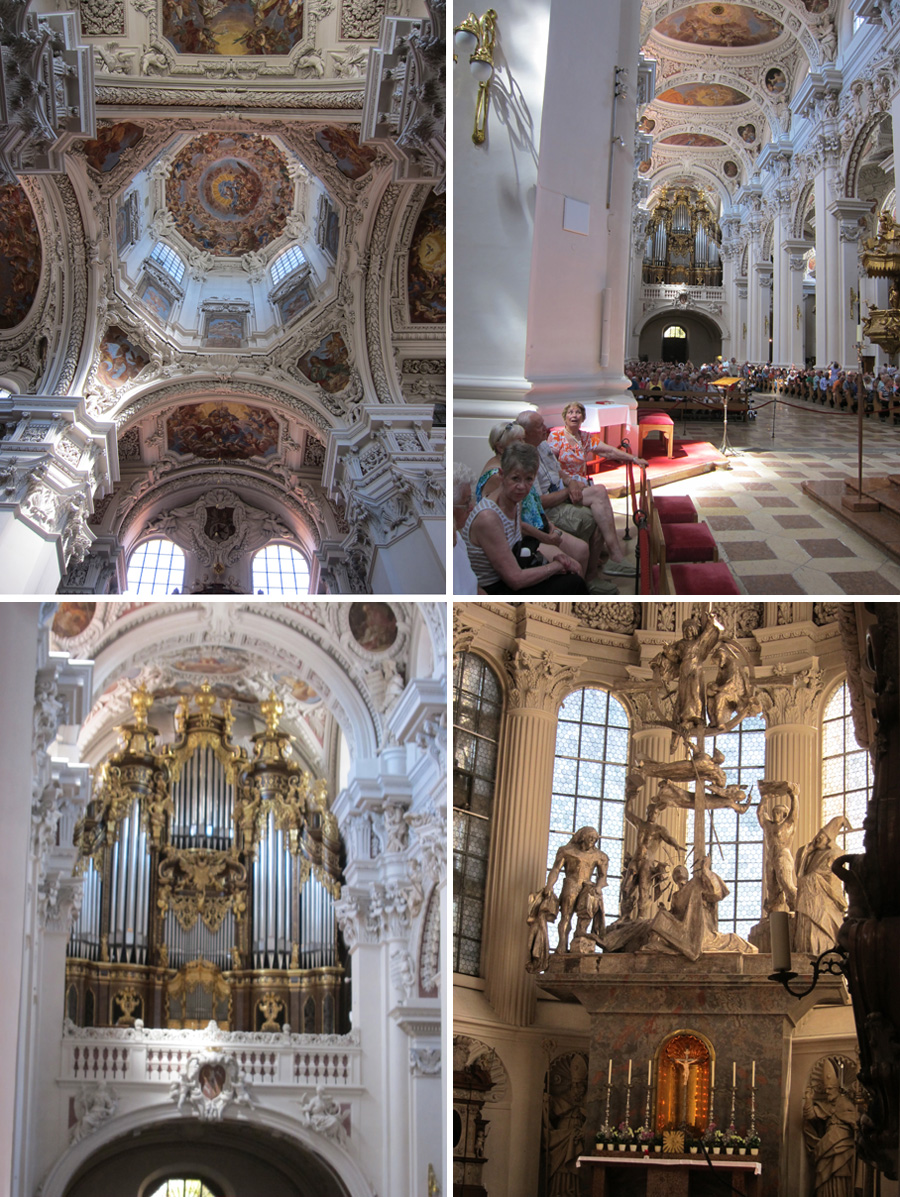
St. Stephen's Cathedral is very beautiful inside. The marble works of art are stunning, and the massive interior St. Stephen's Cathedral is home to the largest cathedral organ in the world, with 17,974 organ pipes, 233 stops and four carillons. Yes, I had to look that one up. A carillon is a melody played on bells. I learn something new every day. All five parts of the organ can be played from the main keyboard, one at a time or all together, offering the visitor an unforgettable acoustical delight. If you are ever in Passau this is something not to be missed.
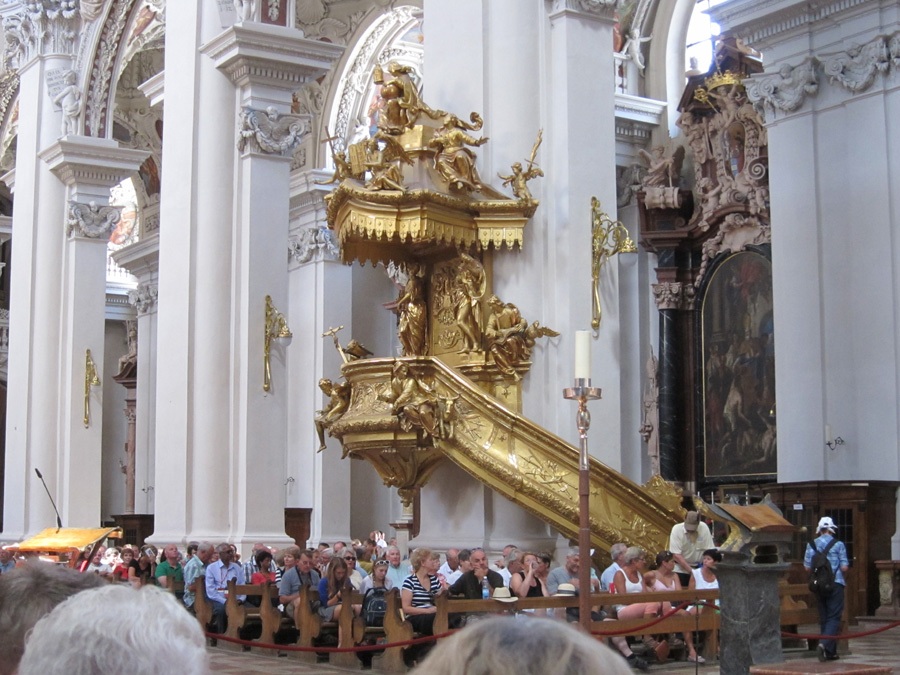
I know this gilded structure must have some special name in the catholic faith, but I'll just call it a pulpit. It's awesome.
There is so much to see, and most of it is very high, so you need to take care not to do damage to your cervical.
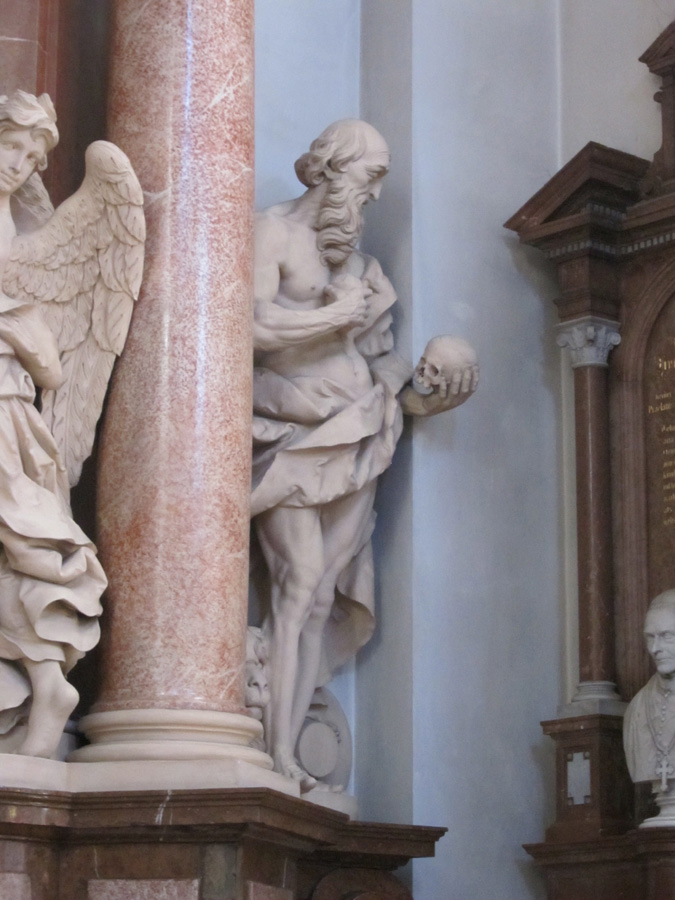
I thought this old geezer contemplating the human skull in his palm was a bit odd. We enjoyed a little more strolling around Passau, and then it was time for lunch back on the Var. We were given free time in Passau from 2:00 to 5:00 PM, and our concierge Oliver was offering a Beer Garden Stroll at 3:00 PM, but we opted to skip that. We had to be onboard the Freya by 5:00 PM, because it was casting off at 5:30 PM, leaving Passau for Melk and Dürnstein.
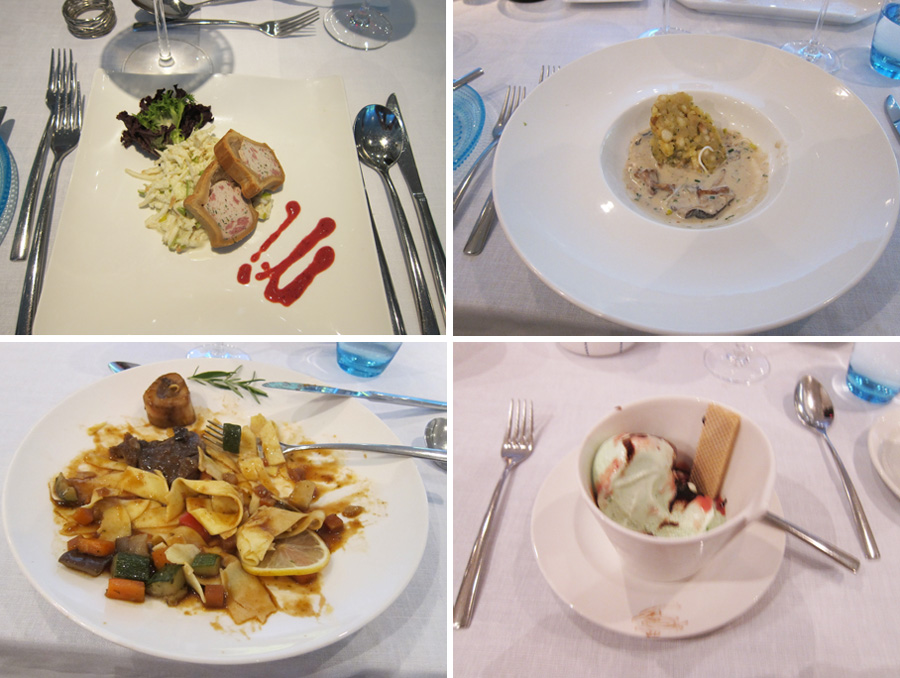
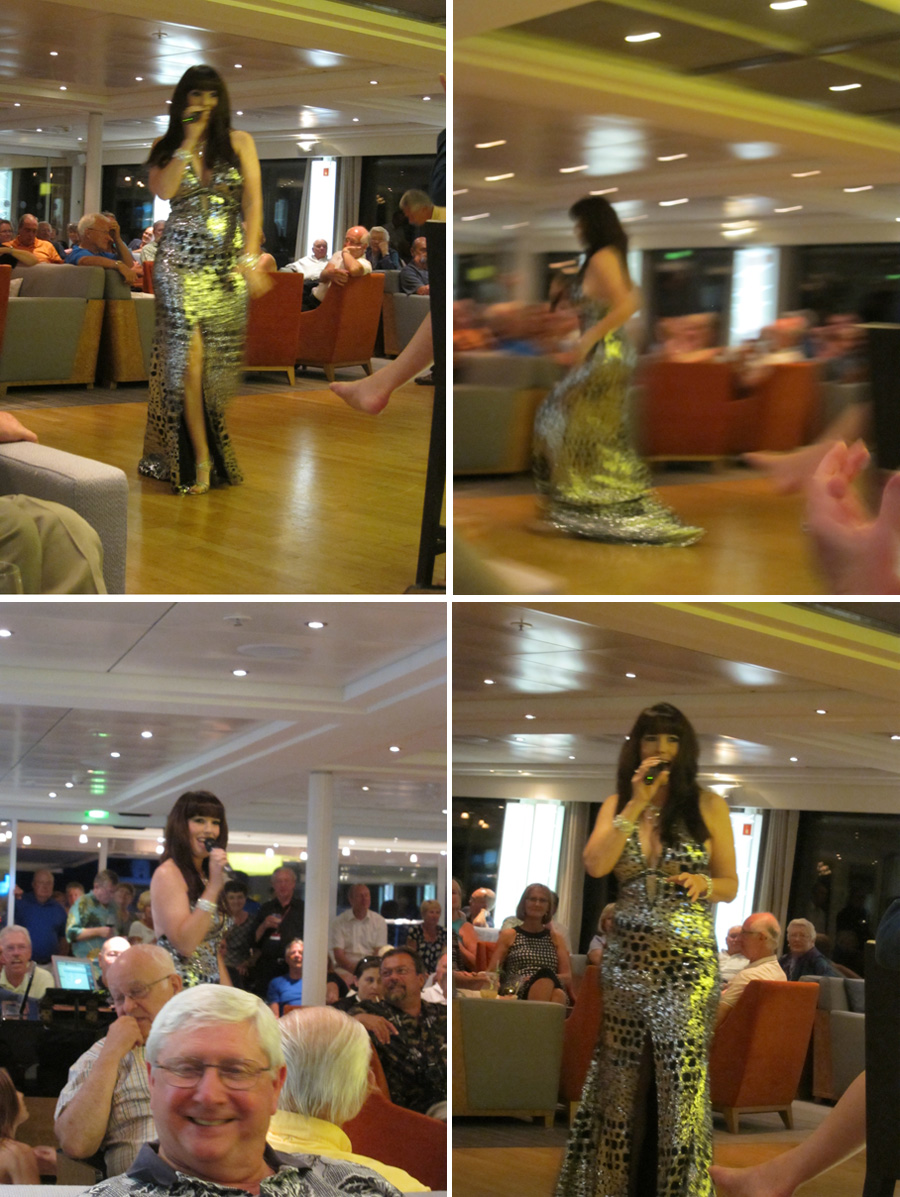
Dinner was served at 7:00 PM, and it was our first meal on the Viking Freya. The first course was a choice of a Meat Pâté or After dinner we were invited to the Freya lounge to enjoy the magical voice of our Program Director, Dawn. I didn't even know she could sing, much less that she was a very good singer at that.
I think Dawn surprised everyone when she appeared to sing. She got herself all glammed up and wore a knockout dress.
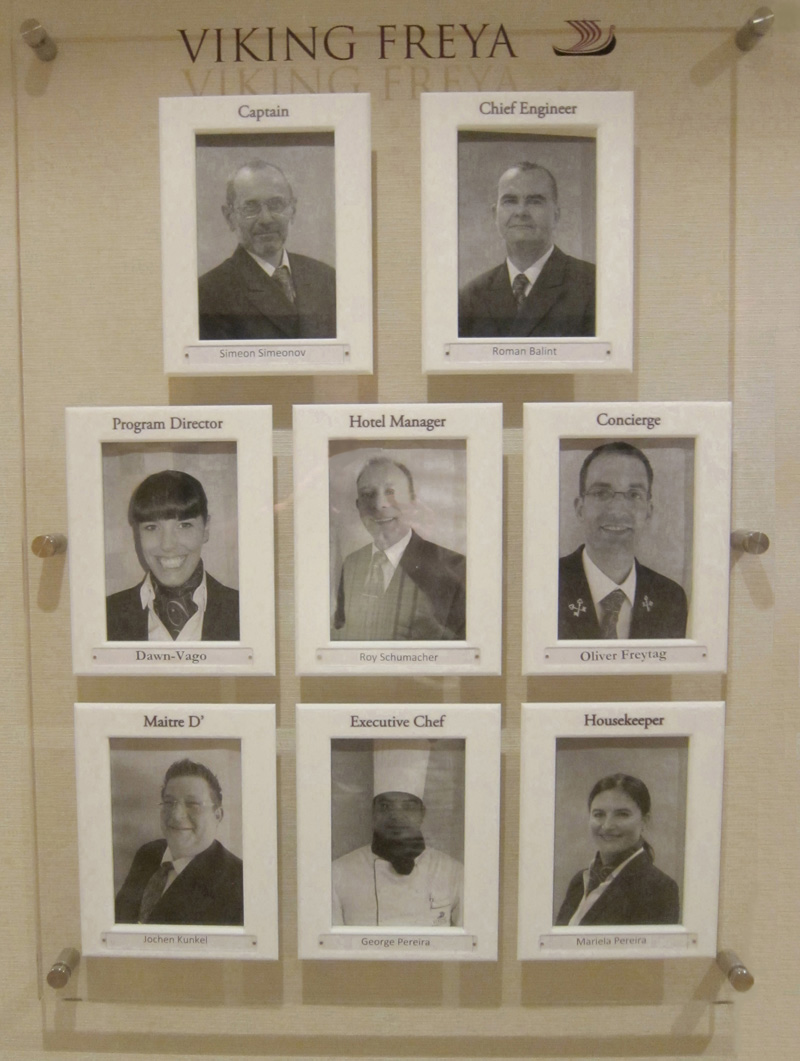
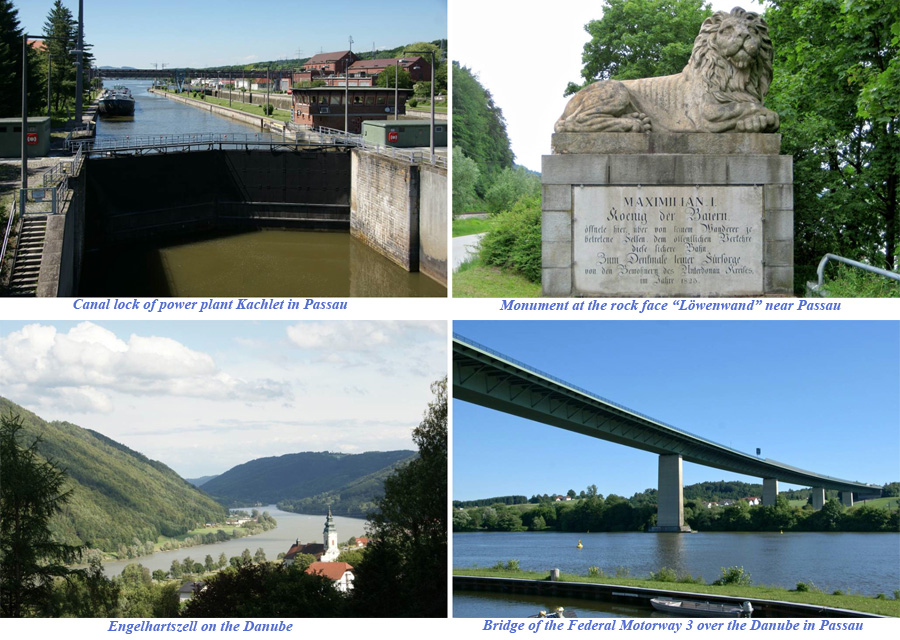
Here is a not so great photo of the Viking Freya Crew and staff. Until this night we only saw Dawn An interesting town nearby was Hofkirchen. It's annual tradition caught my attention. On Pentecost Sunday, the parish of Hofkirchen organizes a candle pilgrimage to fulfill a 500-year-old vow. During the pilgrimage, they carry a candle measuring 40 feet and weighing about 110 pounds up the mountain. If the candle bearers drop their charge, it is said that bad luck will follow. Town legend says that it has fallen only twice, once before the outbreak of World War I, and next before World War II. How's that for a bit of serious bad luck. Let's hope the candle doesn't get dropped again, at least no in our lifetime. No telling what bad luck will ensue. ;o) Before we leave Passau, here are a few photos of sites to see there.
I like casting off early, as when we left Passau at 5:30 PM. This gives us some daylight hours to see the wonderful sites as we cruise down the Danube. July/August is a perfect time of year to do this trip. There is so much to see, and the weather couldn't have been nicer. Between the two of us, Pete and I took over 3,000 photos, so you can imagine how difficult it is for me to select photos for this travelogue. We will be arriving at Melk at around 7:30 in the morning, and then leave on a shore excursion to visit the Melk Abbey. Until then, au revoir. |
|
||||
|