 |
|
|
|
|
|
|
|
|
|
|
||||||||
|
||||||||||||||||||
|
Email us at: |
||||||||||||||||||
 |
||||||||||||||||||
 |
 |
|||||||||||||||||
|
Click the sun to see the |
||||||||||||||||||



|
 |
|
|



|
|
|
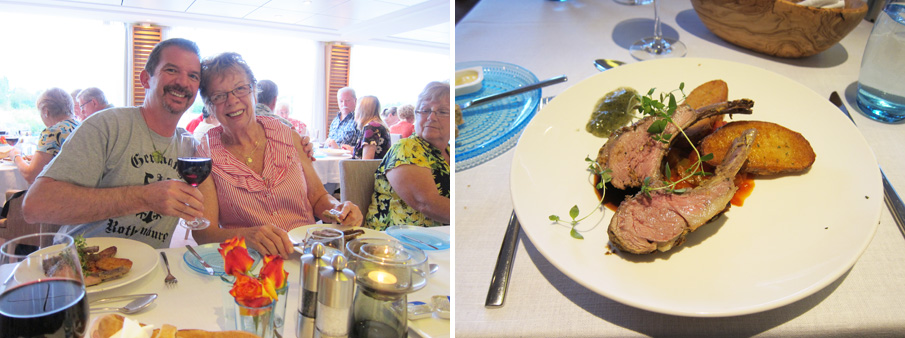
Well, our chef did not disappoint us at all. I love lamb, and so does Pete. We were elated with our dinner this night.
Believe me, there were smiles on my side of the table as well. The lamb was roasted to perfection. Thanks Karl!
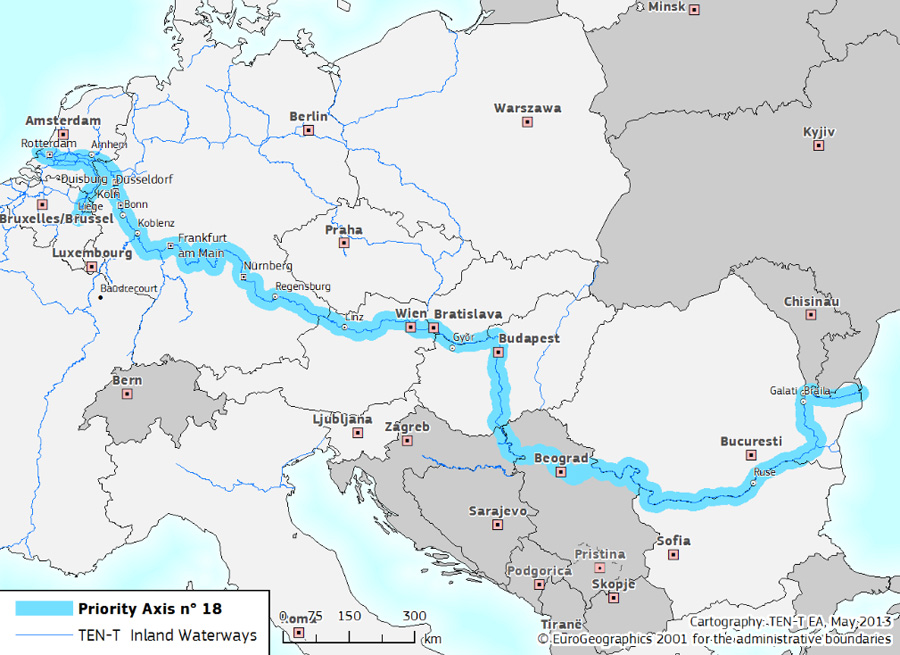
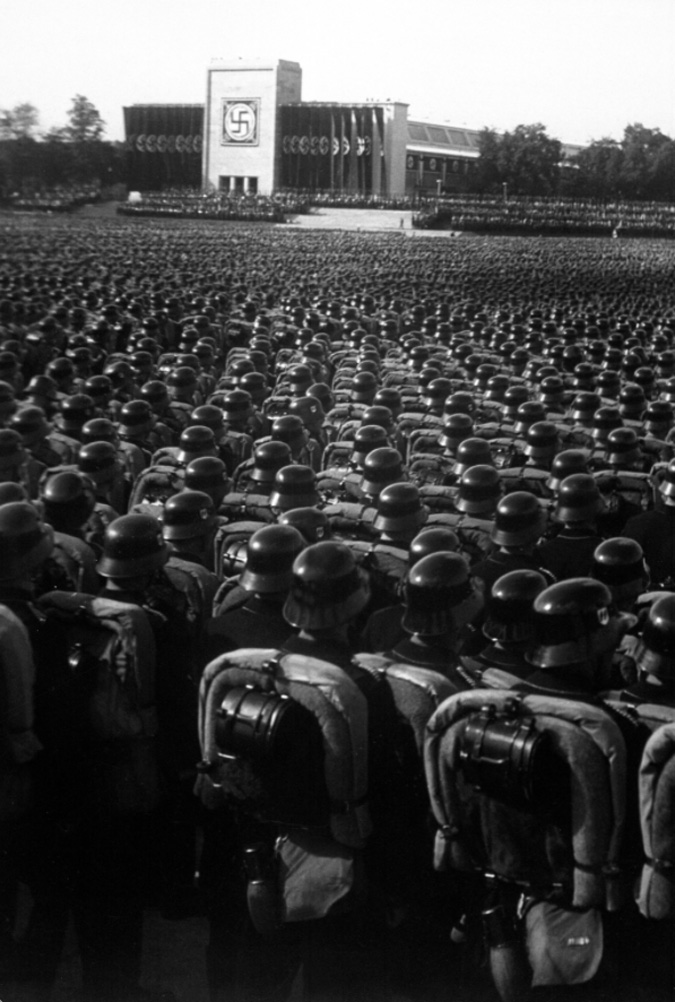
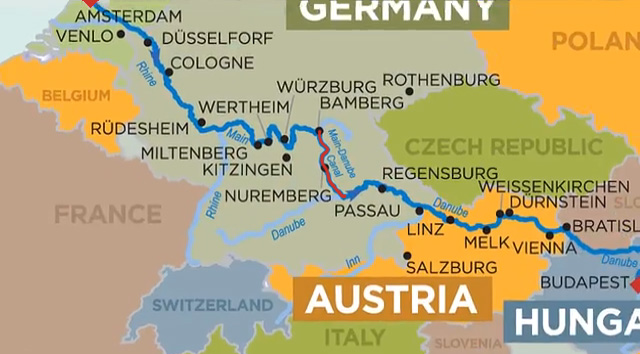
This map shows how a ship can go from the Atlantic and the North Sea all the way to the Black Sea. Well, perhaps not, after viewing this short YouTube video: http://www.youtube.com/watch?v=mkVNeThG6ZU ;o) DAY EIGHT ~ NUREMBERG We arrived in Nuremberg at noon today. We began our shore excursion after lunch. In Nuremberg the Nazis saw the ideal setting for their activities. It was here that the fanatical party rallies were held, the boycott of Jewish businesses began and the infamous Nuremberg Laws outlawing Jewish citizenship were enacted.
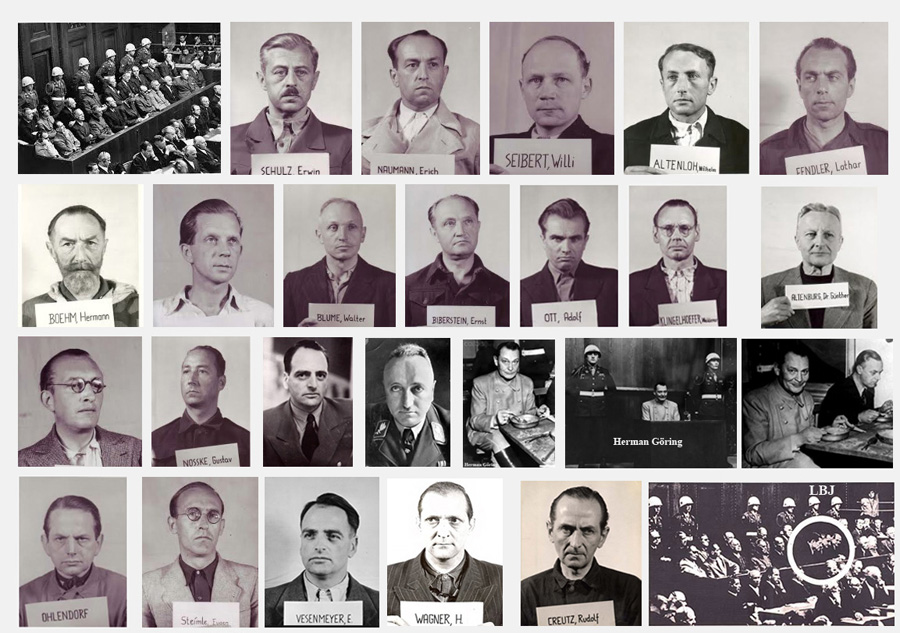
A Nazi Party Rally in Nuremberg, prior to the beginning of the war. After WW II the city was chosen as the site of the now famous Nuremberg Trials held by the Allied Forces of World War II, most notably for the prosecution of prominent members of the political, military, and economic leadership of Nazi Germany.
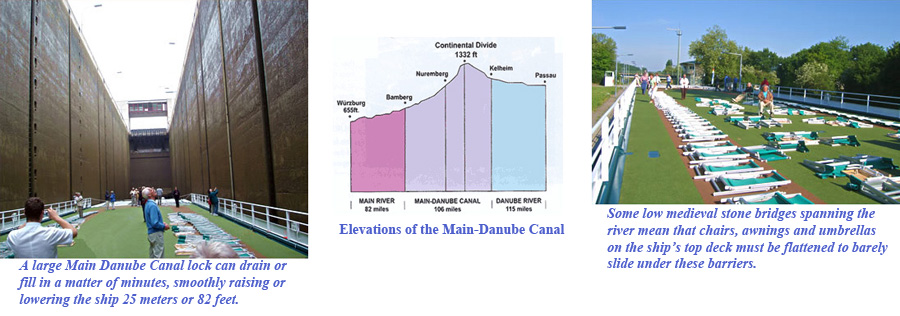
A sad end to perhaps the saddest period in human history. May the madness that brought about WW II never be repeated. The painstaking reconstruction—using the original stone—of almost all the city's main buildings (flattened in January 1945 by Allied bombers), including the castle and old churches in the Altstadt (town center), returned the city to some of its former glory. First envisioned by Charlemagne in the 8th century, the Main-Danube Canal is a feat of modern engineering that has transformed travel and trade in Europe. Its stair-step locks allow ships to cross Europe's Continental Divide between the Main and Danube rivers. It runs from Bamberg via Nuremberg to Kelheim, connecting the North Sea and Atlantic Ocean to the Black Sea. One hundred and six miles long, the Main-Danube Canal took 32 years to construct, and was completed in 1992.
In this section of our journey, the Main-Danube Canal, there are only 16 locks. We will pass through 67 locks
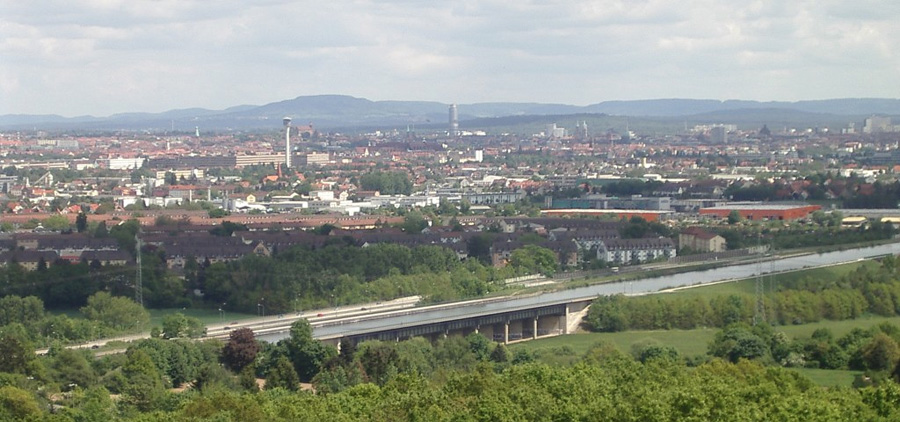
A view of the Main-Danube Canal as it passes through Nuremberg.
If you would like to watch a short YouTube video of a ship passing through the lock above, then go to this link. http://www.youtube.com/watch?v=NqSubjKaeb0 Duration: 3 min 43 sec The narrator gives a lot of interesting facts about the Main-Danube Canal.
To give you an idea of the scope of the Main-Danube Canal, it is that short distance Nuremberg is Bavaria's second-largest city. A vibrant place, which brews beer as dark as some of the local history. The city's dungeons date back over 700 years. The city is surrounded by massive walls and boasts an abundance of 15th- and 16th-century art and architecture.
This was to me the most interesting site we saw in Nuremberg. It was this huge brick, unfinished stadium.
Walking through the inside of the structure was reminiscent of entering the coliseum in Rome.
I thought it strange that bricks were used just like so many Roman buildings from the time
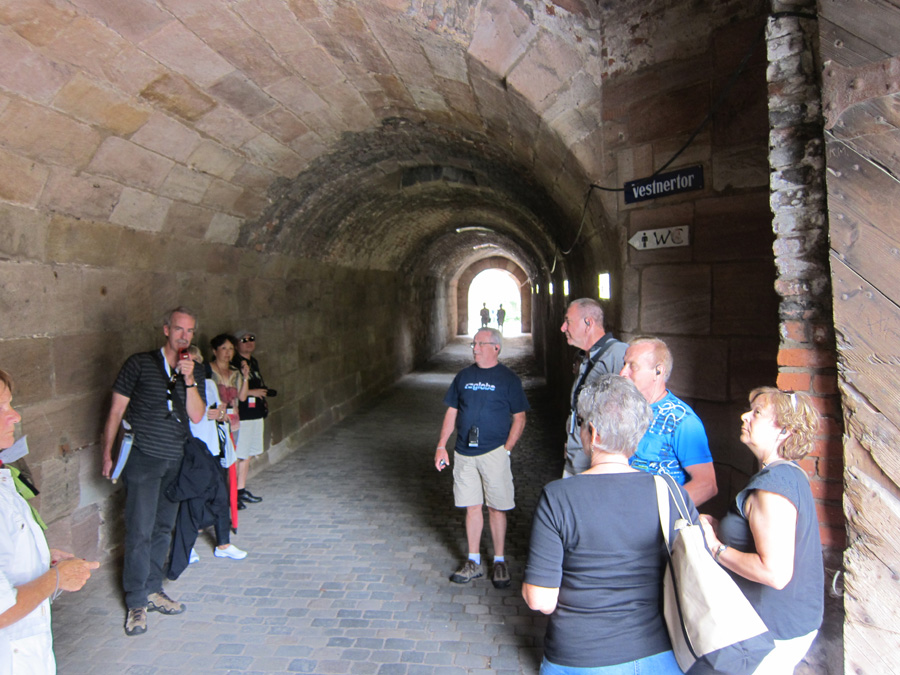
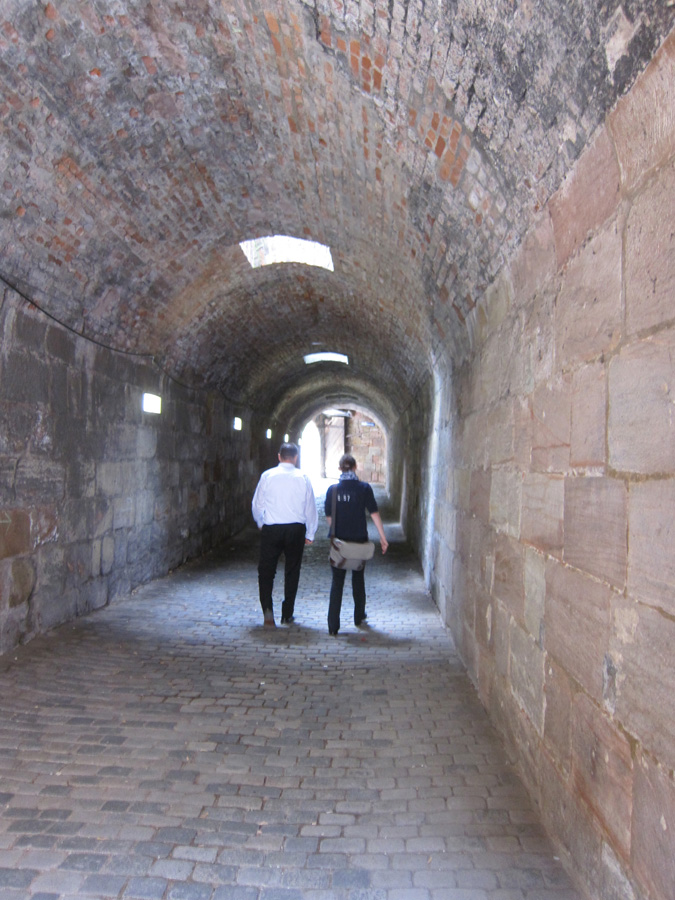
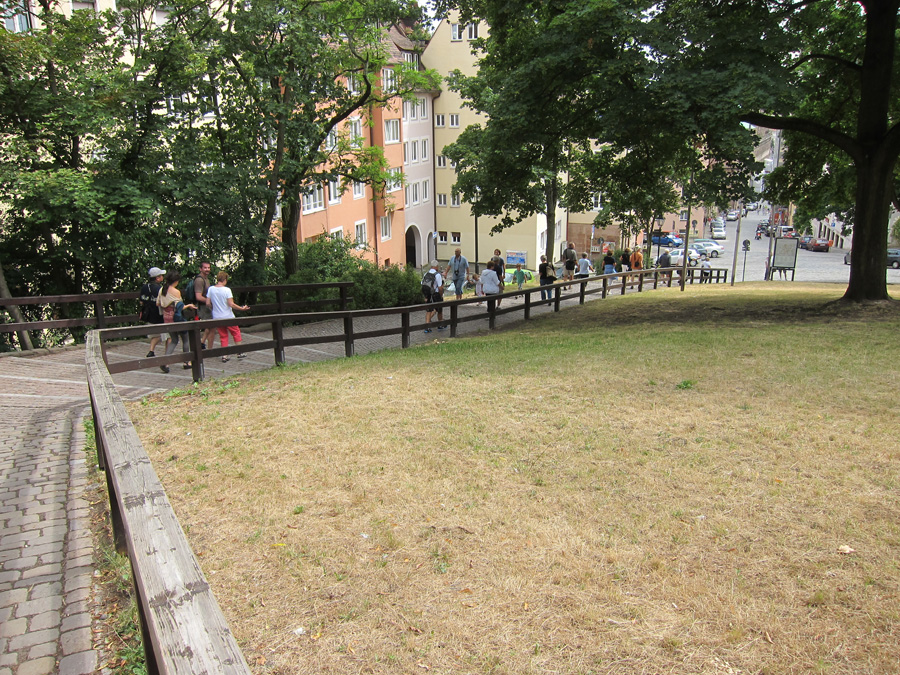
We did an awful lot of walking on our city tour of Nuremberg. This sort of vacationing is not for sissies. ;o)
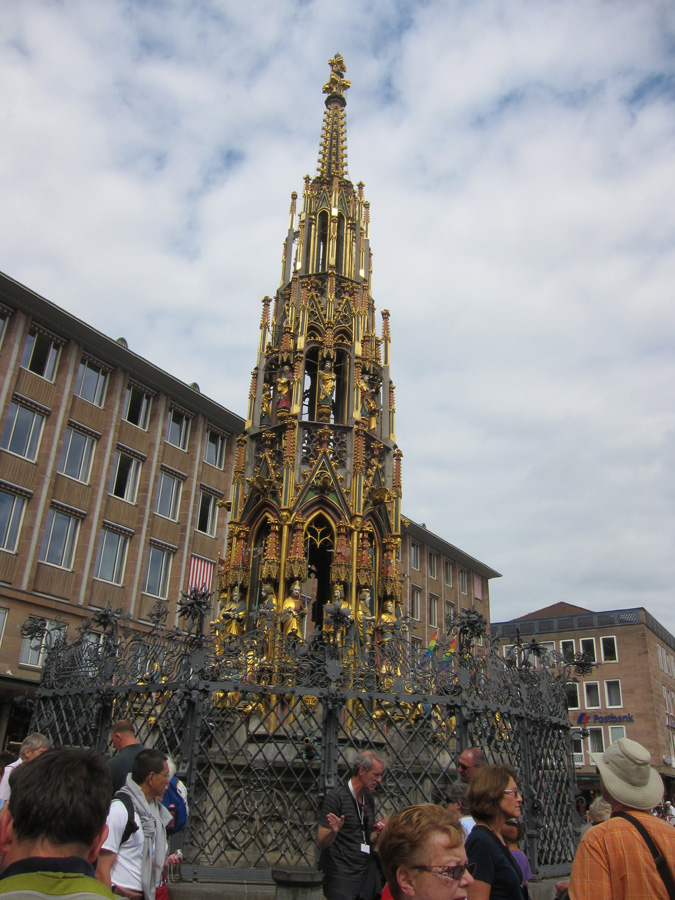
This beautiful fountain is located in front of the Town Hall, in the beautiful Markt Platz.
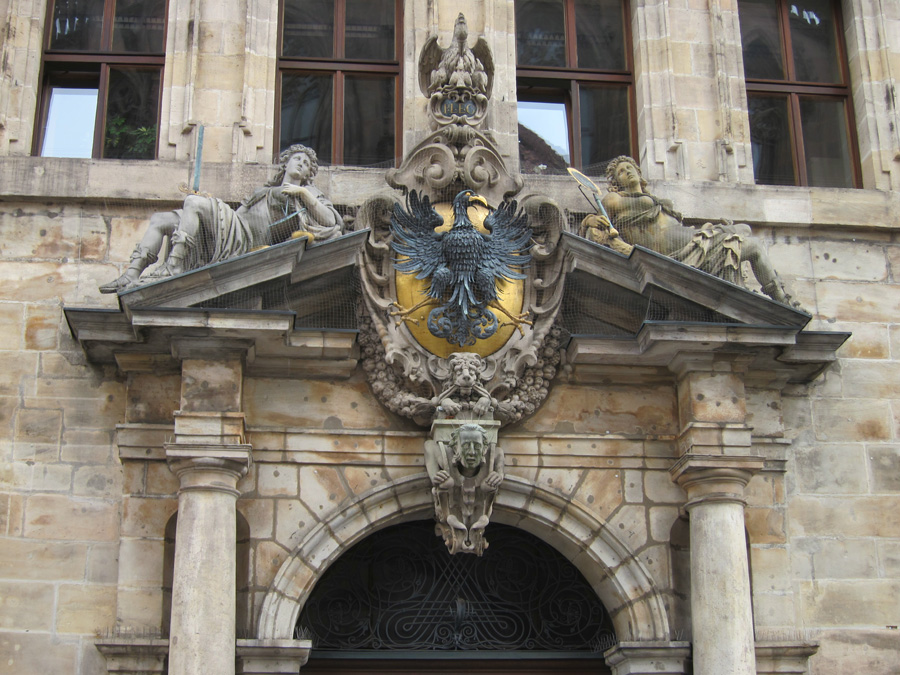
The unmistakable Austrian eagle adorned the portico of this building.
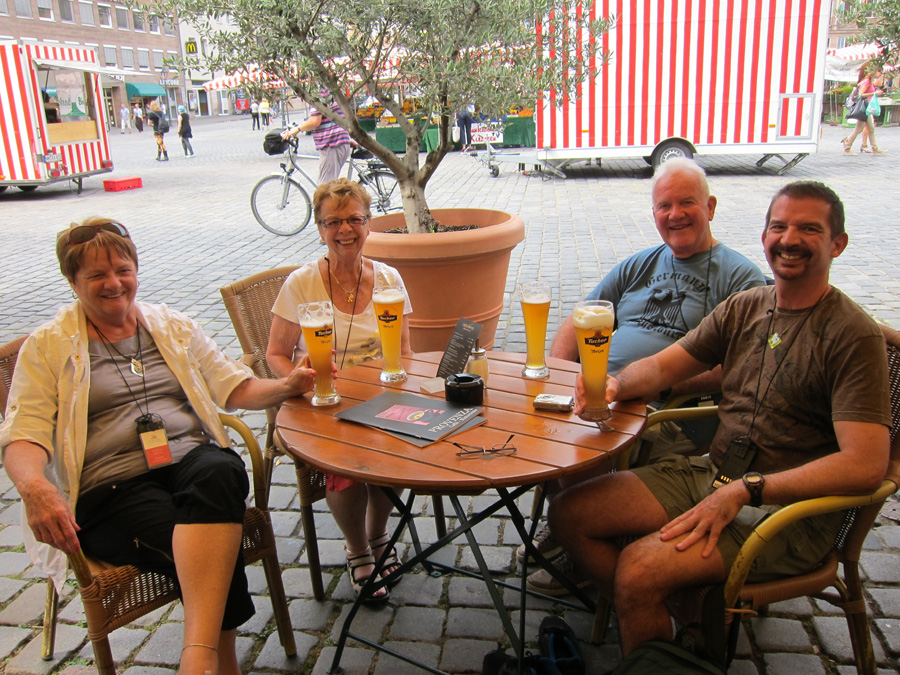
AAaahhh! At last we have some free time, and it didn't take us long to find a place to sit down and enjoy a brew.
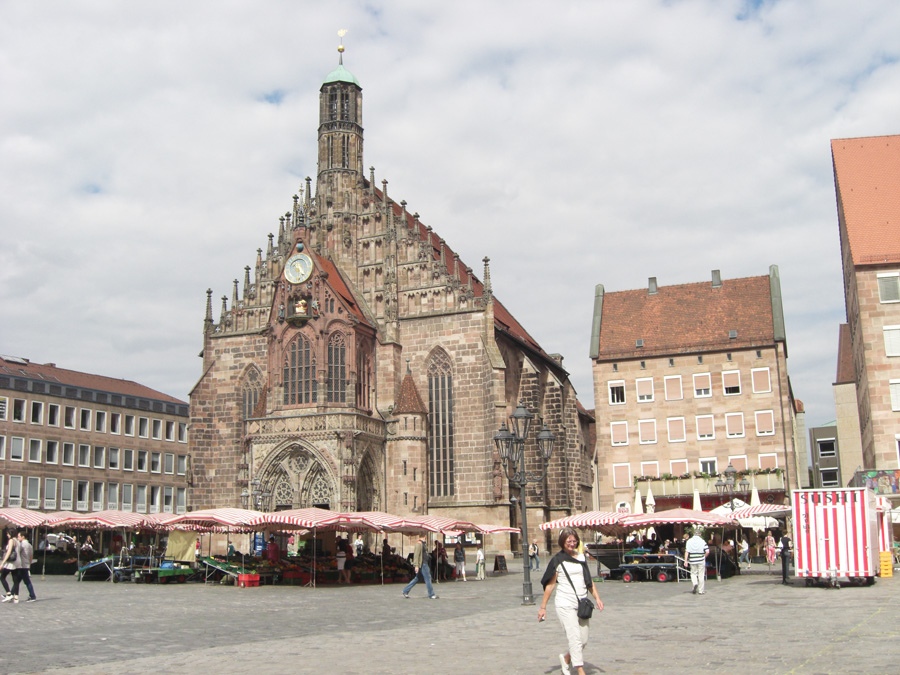
This is our view from the table where we are enjoying our cold beers. You can see the farmer's market stalls
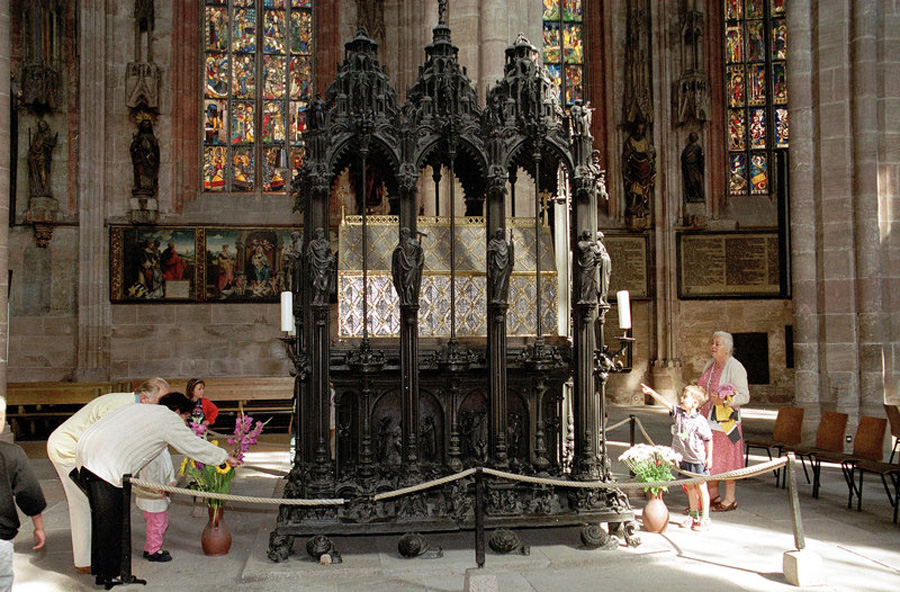
The interior of the church is far more striking than the exterior. It is not only the architectural
St. Sebald is the patron saint of Nuremberg, his coffin is enshrined here, created by the Nuremberg sculptor and smith Peter Vischer. After we finish our relaxing cold brew on the market plaza, we head back to the boat for an interesting presentation: European Union, given by a guest lecturer, Andreas. At 5:30 PM we cast off and leave Nuremberg for Regensburg, and Day Nine of our voyage. |



|
||||
|