 |
|
|
|
|
|
|
|
|
|
|
||||||||
|
||||||||||||||||||
|
Email us at: |
||||||||||||||||||
 |
||||||||||||||||||
 |
 |
|||||||||||||||||
|
Click the sun to see the |
||||||||||||||||||



|
 |
|
|



|
|
|
|
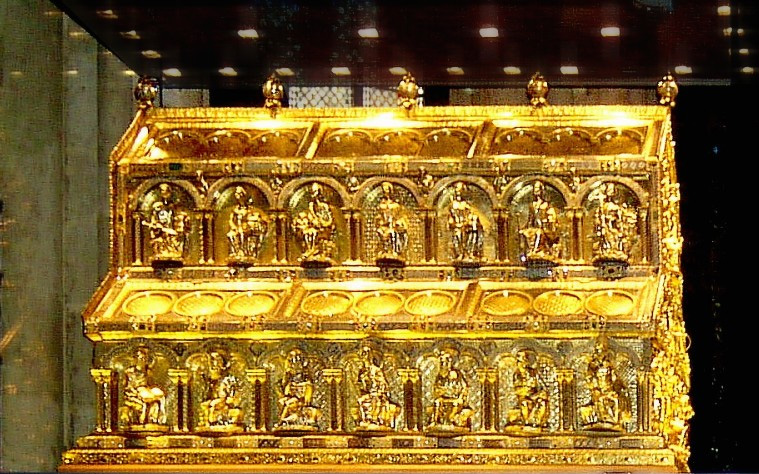
Still inside the Cologne Cathedral, we see this magnificent gold leafed relic. The great amount of detail and ornateness signifies that this must be something pretty important to the Catholic faith. It is the Shrine of the Three Kings. It may be right up there in level of important with the Arc of the Covenant, which is the chest described in the Book of Exodus as containing the Tablets of Stone on which the Ten Commandments were inscribed. Remember Indiana Jones?
The most celebrated work of art in the cathedral is the Shrine of the Three Kings, which is traditionally
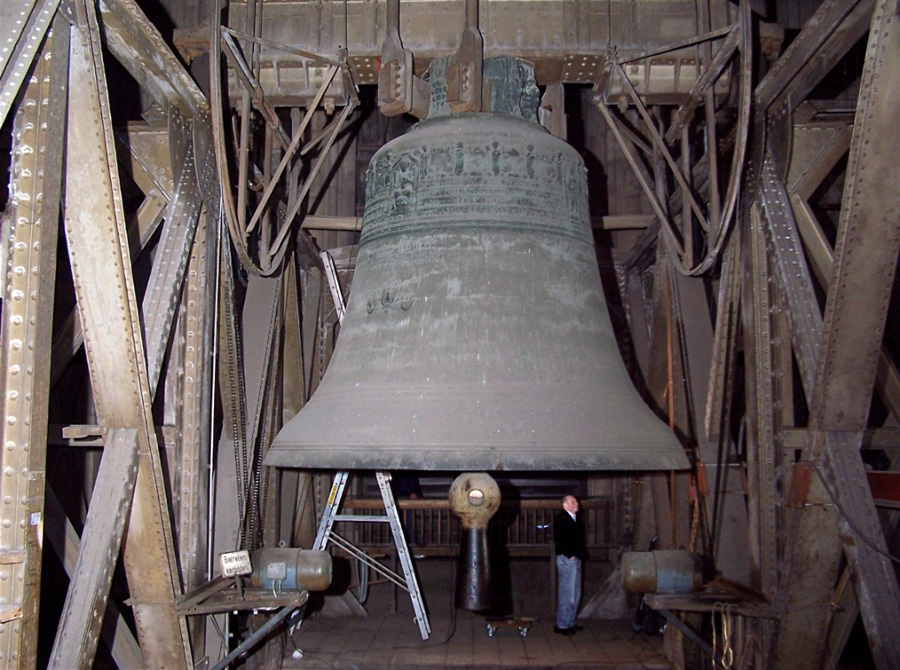
This is Petersglocke, St. Peter's Bell, the largest of the bells of the cathedral, which weighs 10.5 tons. The next site we visited on the tour was St. Martin's Church.
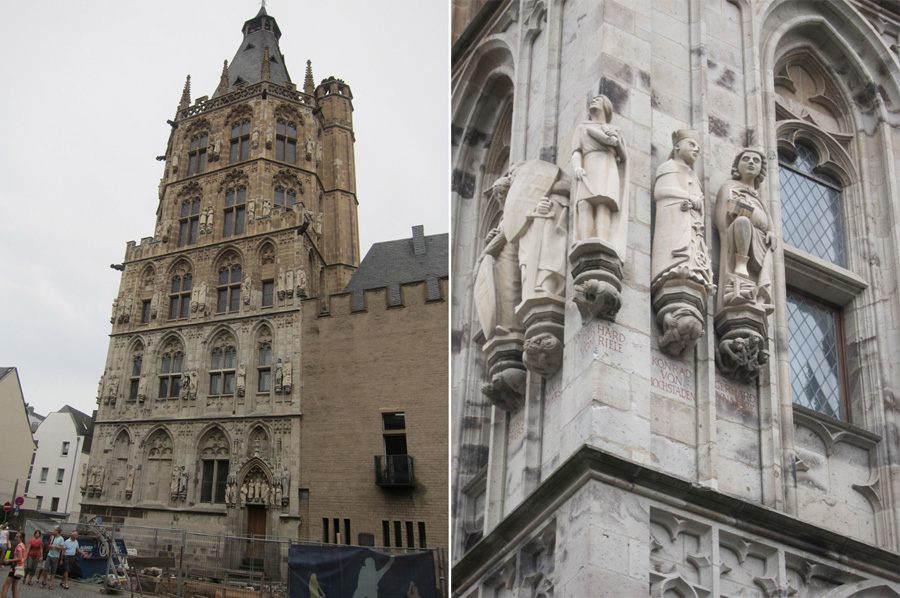
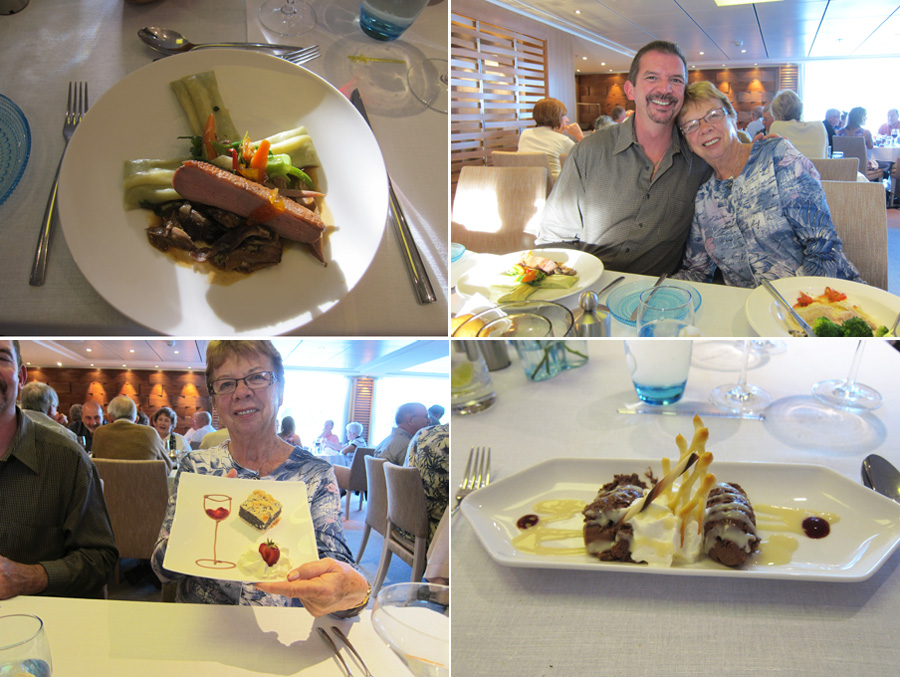
St. Martin's Church pales in comparison to the Cathedral. It was not open, so I took a few Our City Tour ended and we went back to the boat for lunch, followed at 2:30 with a presentation by a local man on "Germany Today", a very interesting talk on Germany and its place in the European Union today. The politics which was discussed raised many questions from the audience. It was nice to become educated from the German point of view. Whether I agreed with him or not, I found the discussions quite stimulating. I haven't mentioned yet how much we like the chef. When the ships company was being introduced to us on our first day, and it became time to introduce the chef, this huge man took the microphone and one of the first things he said after saying "Welcome!" was "you can't trust a thin chef". He has certainly proven that to be TRUE. Every meal has been both unbelievable and unforgettable.
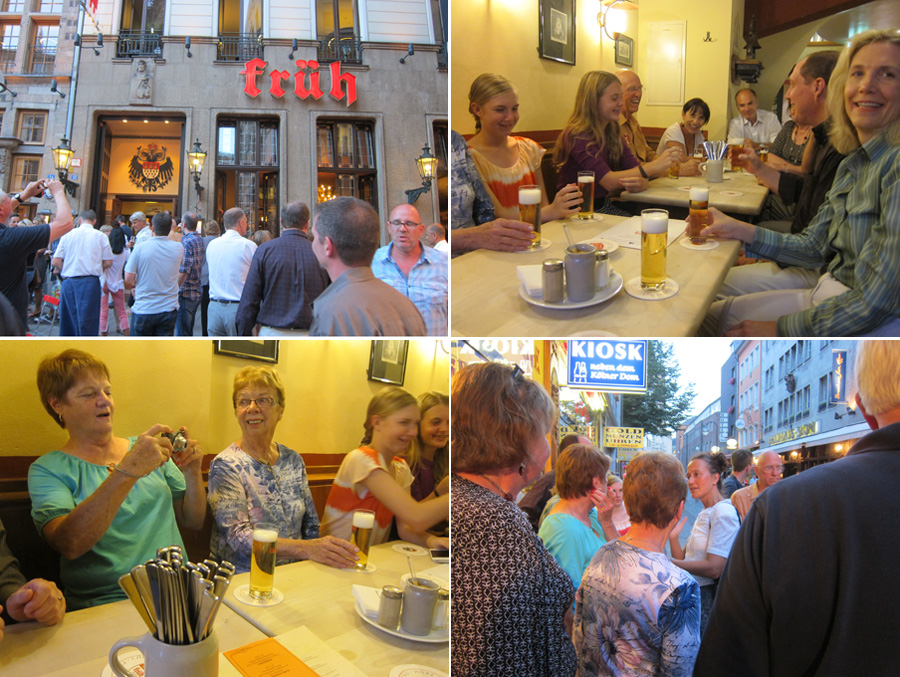
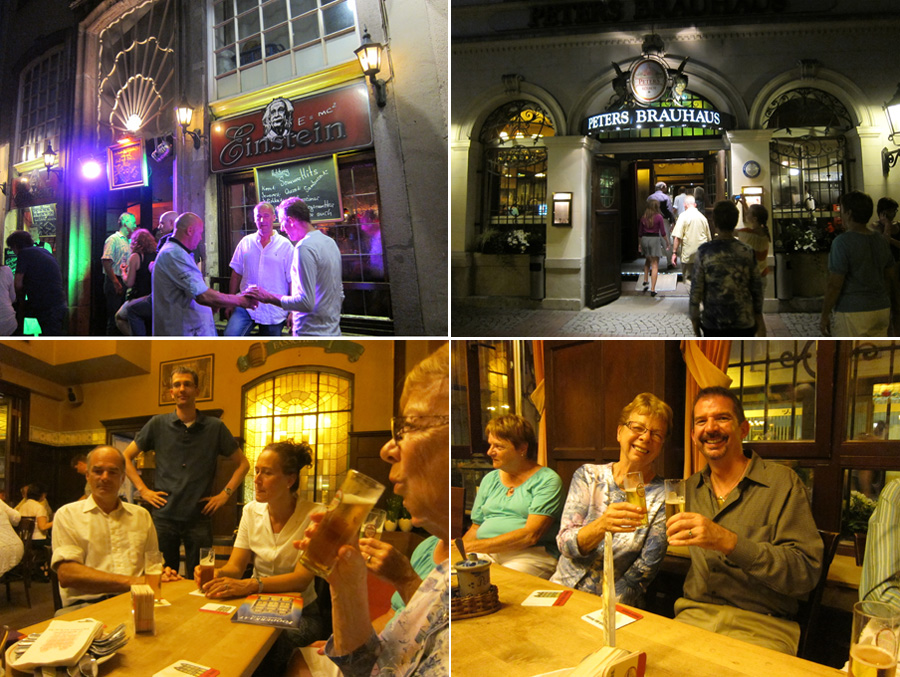
Check out the deserts. The chef runs a very creative kitchen. His staff was selected very carefully I'm sure. After dinner there was an optional excursion: "Cologne's Beer Culture", where we did what our guide called a Pub Crawl. She took us on a walking tour to visit the pubs of Cologne.
This was our first stop. We all had just one glass of beer. They would have served us more, but we had places to go.
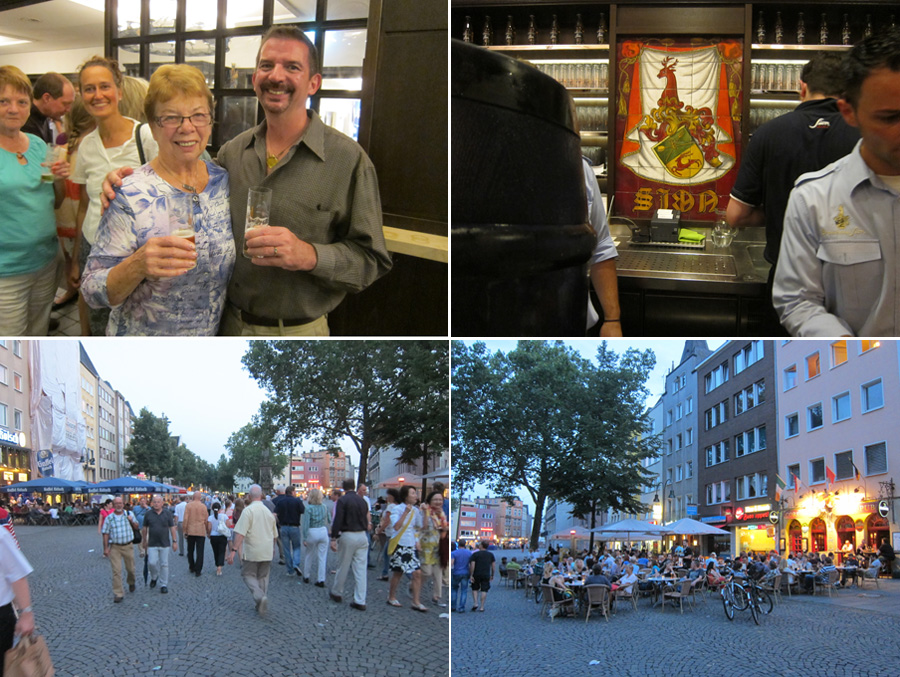
The top two photos were at our second pub stop. In the bottom two we
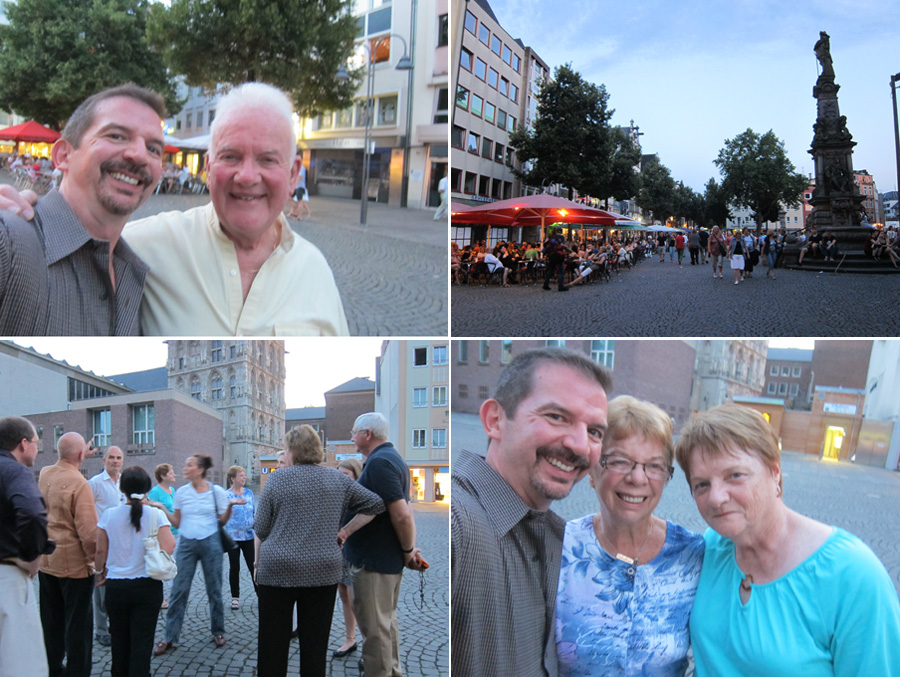
We're all looking pretty happy. Our guide in the third photo is giving us the lowdown on the next pub we are about to visit.
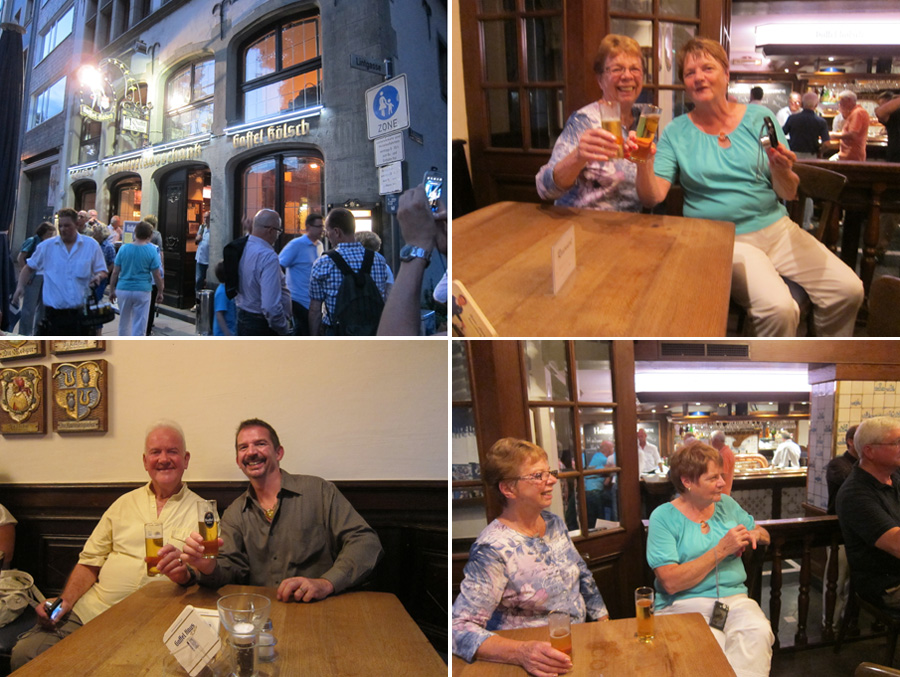
And here we are, inside and enjoying another beer. There are more than 100 traditional brewpubs in Cologne. H-E-L-P!
And as we "crawl" to the next pub, we find it to be most appropriately named, "Peters Brauhaus". Fortunately, this At 11:00 PM this night we cast off from Cologne and headed for Koblenz. DAY FOUR ~ KOBLENZ and MARKSBURG CASTLE - July 27, 2013
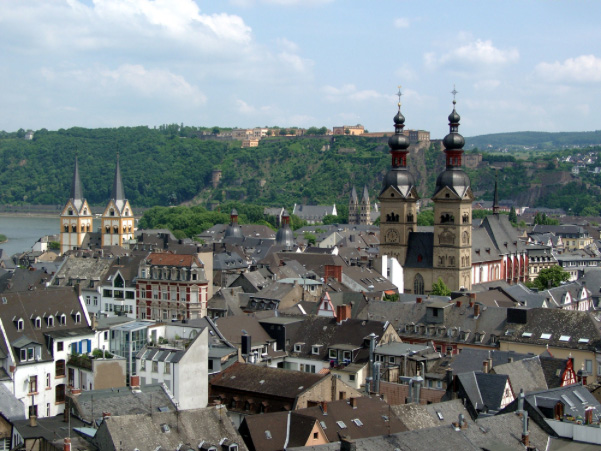
The town of Koblenz. On the hill in the background is the Ehrenbreitstein Fortress. This beautiful town has a history that dates back to the Romans, Drusus having established a military stronghold in the town around 8 BC. The town celebrated its 2000th anniversary in 1992.
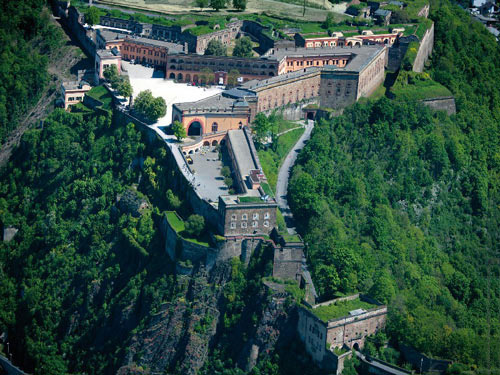
Ehrenbreitstein Fortress was built by Prussia between 1817 and 1832 and guarded the Our stay here is short, just long enough for a shore excursion to visit Marksburg Castle, a beautifully preserved, 800-year-old hilltop fortress.
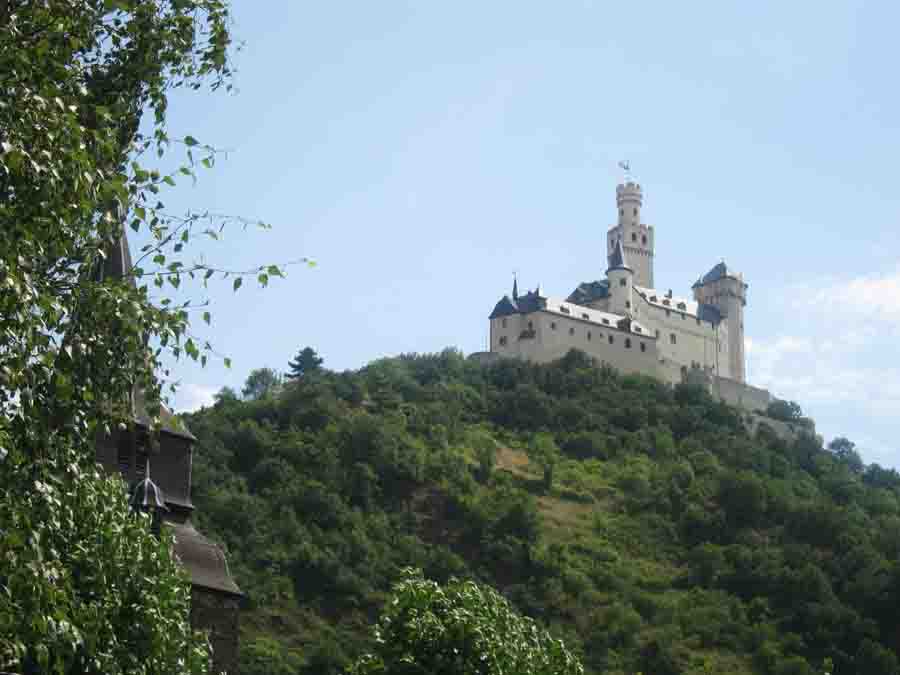
The Marksburg Castle sits on a hill, commanding fantastic views of the the surrounding countryside, and since While many of the dramatic castles on the Rhine are rebuilt versions of the original, Marksburg has retained nearly all of its initial construction and stands today as the best-preserved castle on the river. The reason that the fortress has seen 800 years of change and turmoil without being significantly blemished is its location. The hill it sits atop is steep and isolated, on a bend in the river. In the past, formidable terrain so discouraged enemies that the castle was never attacked during the countless wars that raged around it through the centuries.
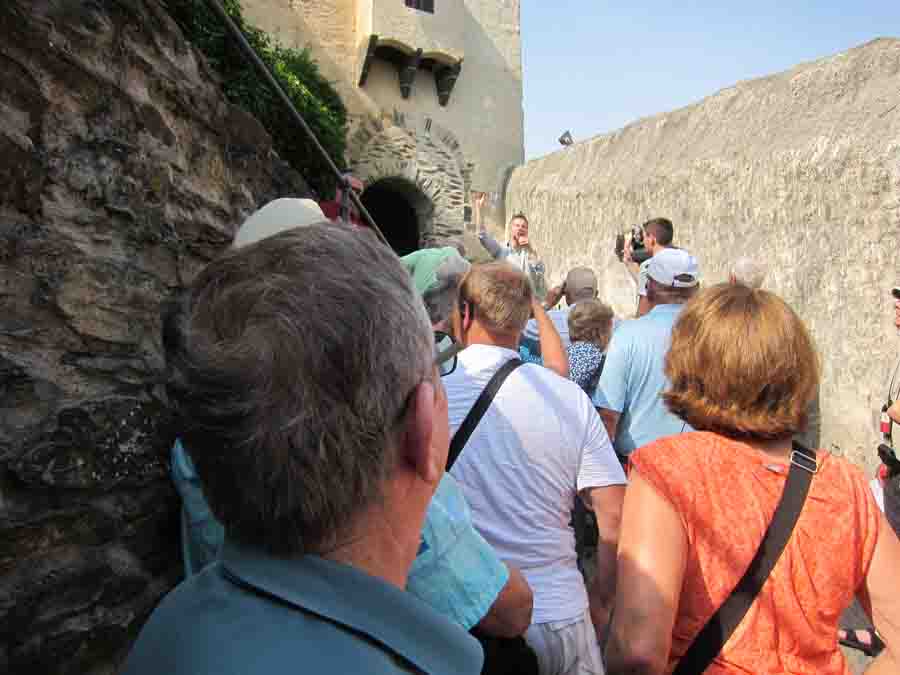
Our guide leads us up this narrow passageway, and in his hand (at the top), he holds a key which he says will open
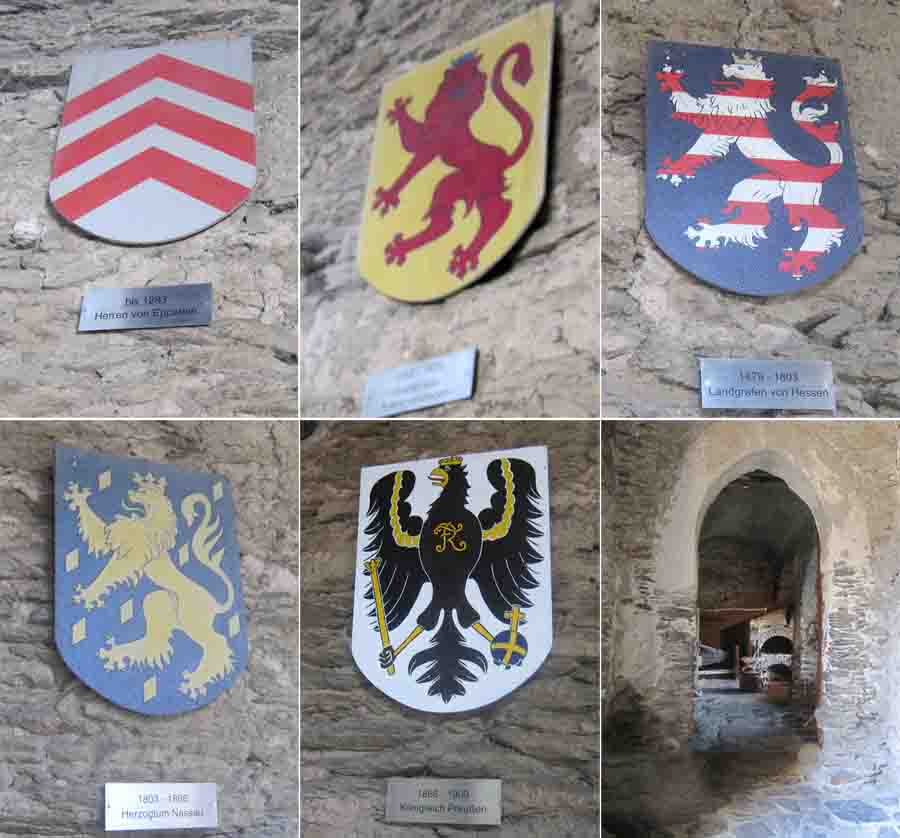
On the wall just inside the castle, hung these family crests which represented the various families who occupied the
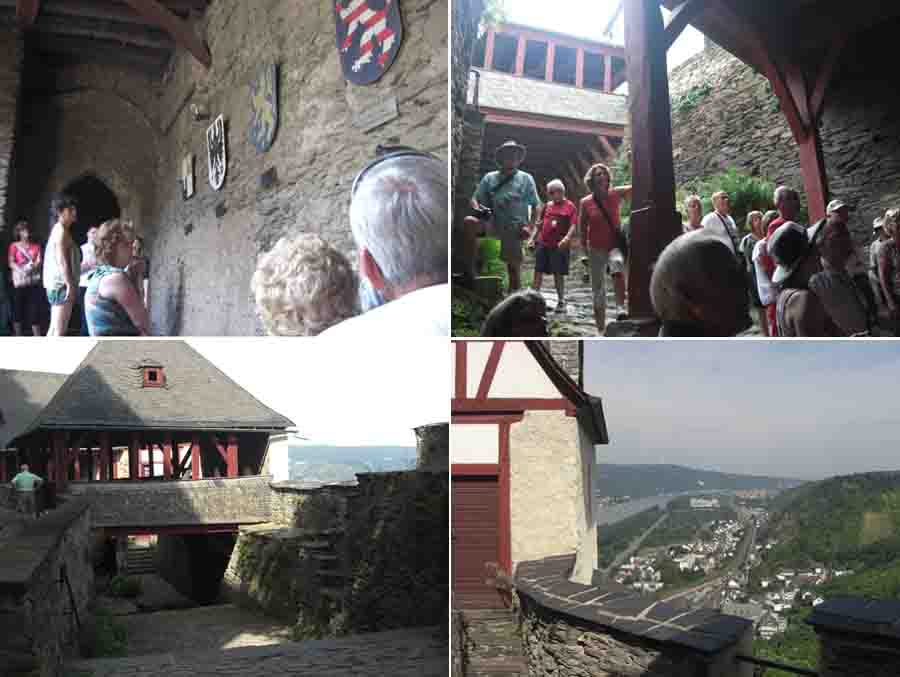
Walking through the castle was not made easy by modernizing the crude rock passageways, as maintaining the original
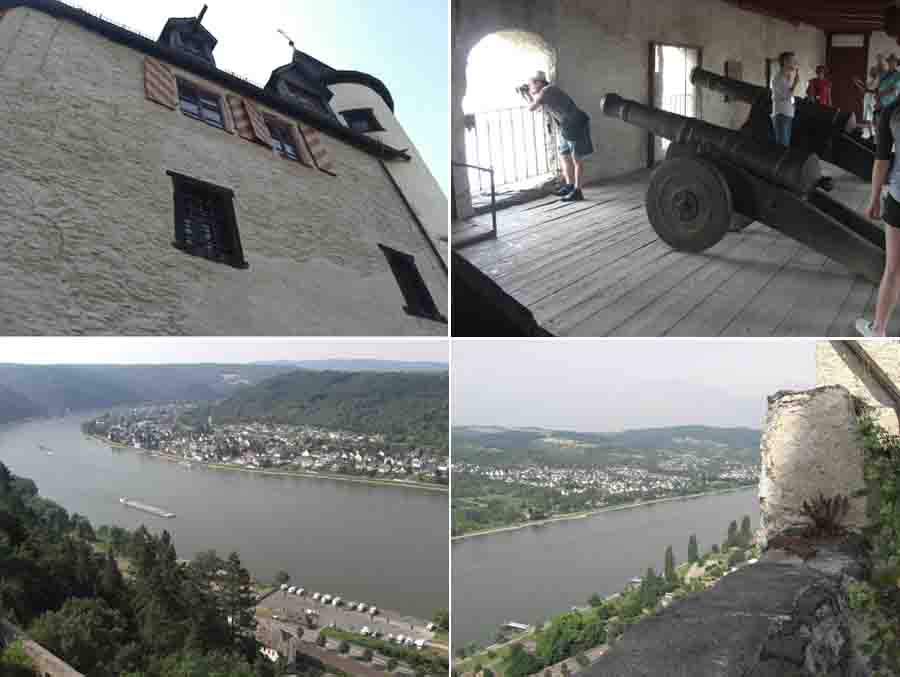
I suspect that the only action these cannons ever saw was target practice. Looking through
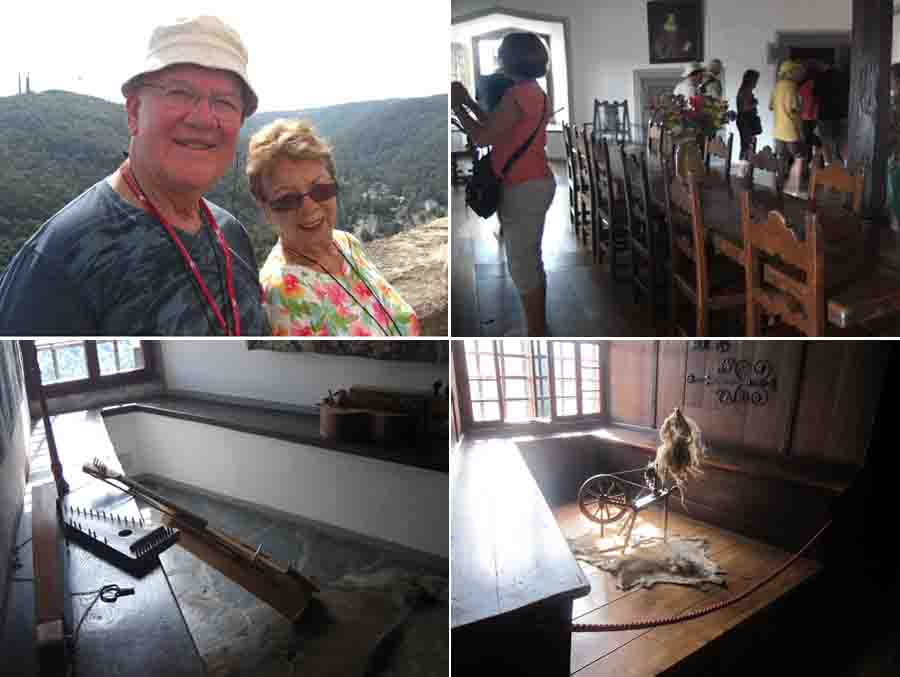
Besides a dining room, there was a music room and a sewing room. Any takers on spinning yarn from wool?
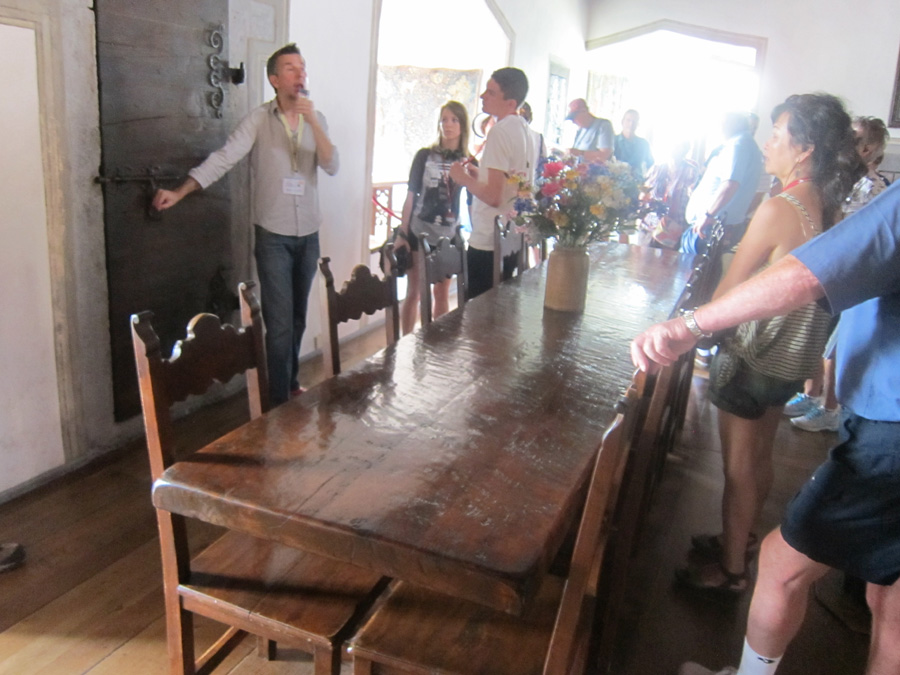
In the dining room the guide has his hand on the latch for the conveniently located "bathroom door".
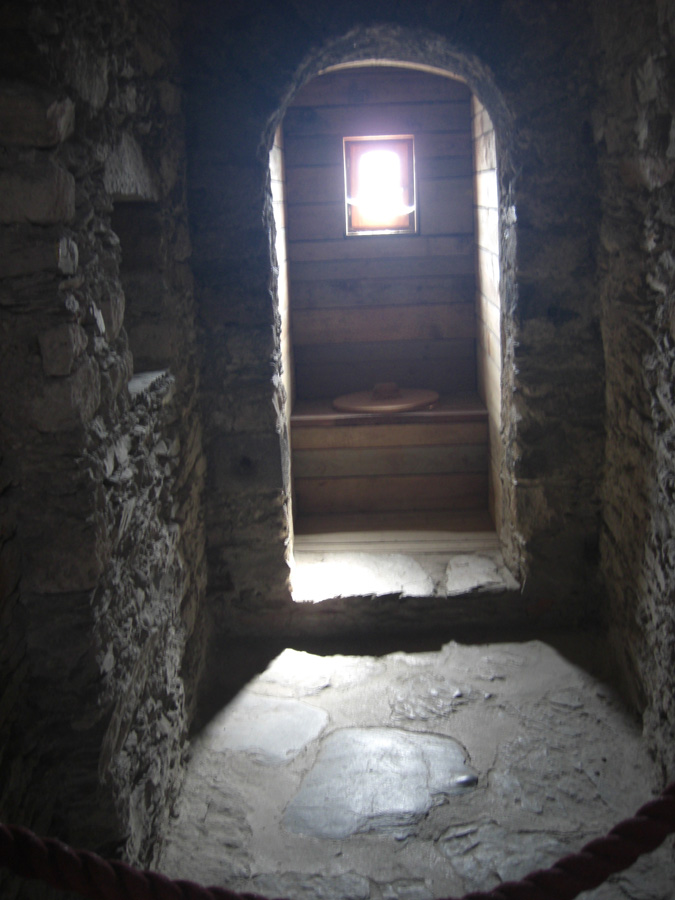
The bathroom consisted of a commode, which hangs beyond the castle wall and allows the
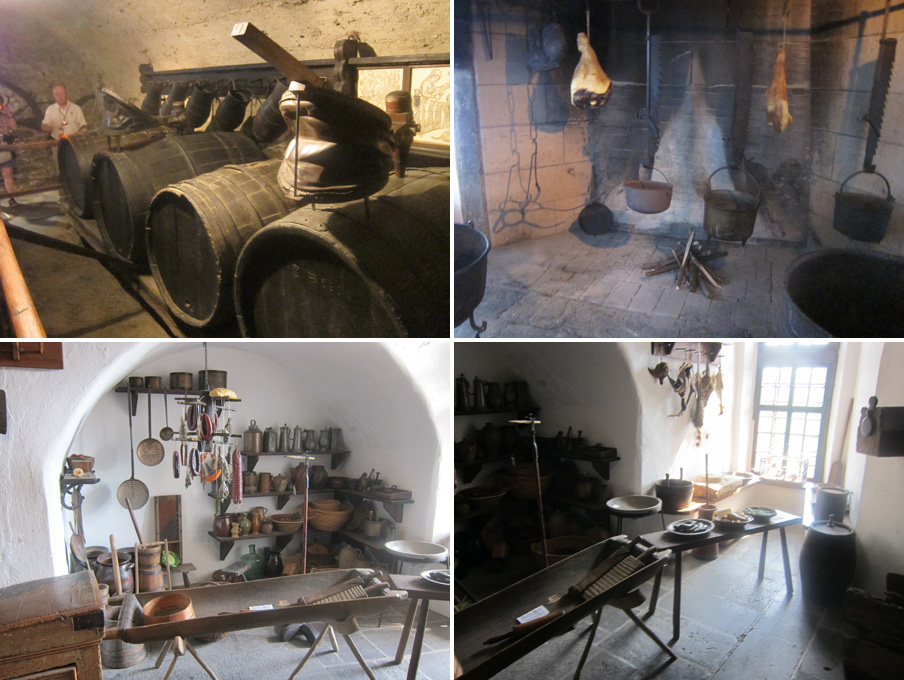
The wine cellar was adjacent to the kitchen, and boy, was that a crude kitchen. The cooking fire was built on the floor,
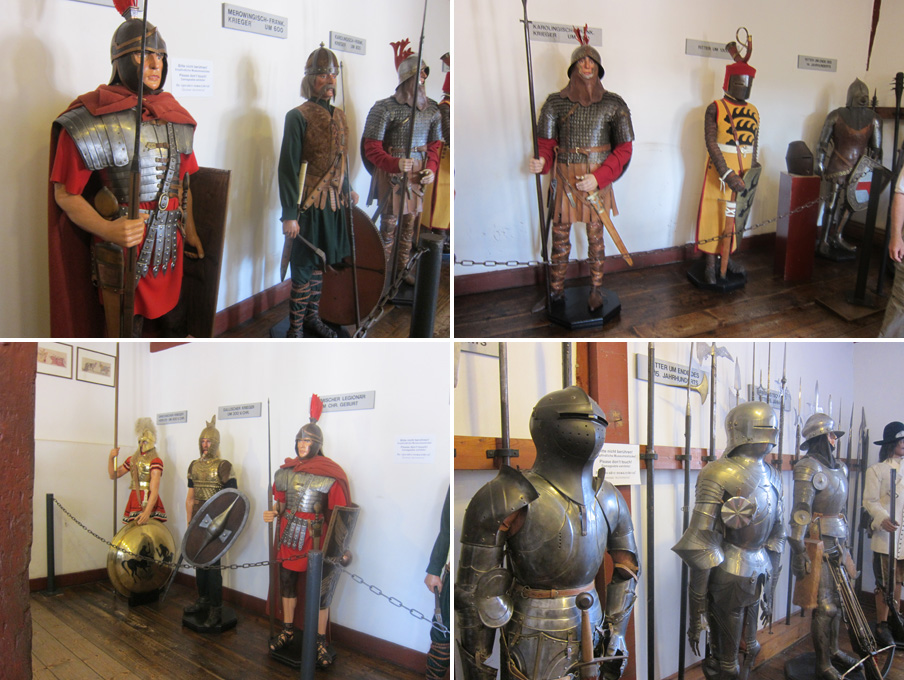
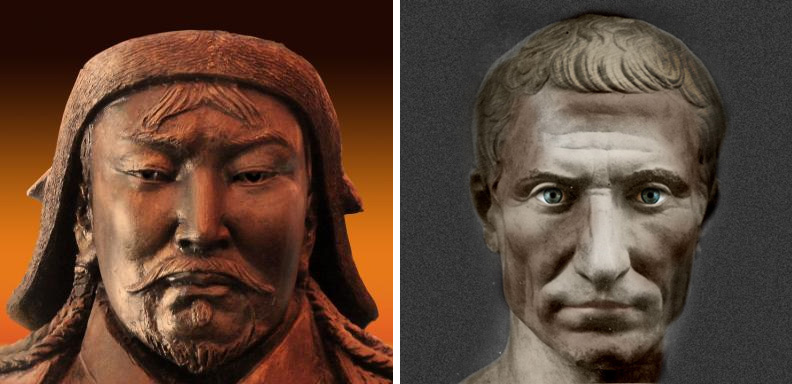
The armory was a very interesting room indeed. To see how the armor worn by soldiers evolved over the centuries Now you might wonder what type of predator these castles were meant to protect the people from. Of course, there were the invading hordes of Genghis Khan, the armies from the expanding empire of Julius Caesar, and the random nearby kingdom reaching out for more power.
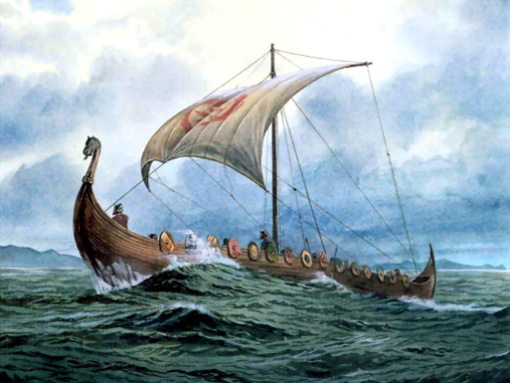
Genghis Khan Julius Caesar There was also another threat, coming from the North. Here are a few Viking facts. Dragon-headed longships known as drekar were stealthy troop carriers. Under full sail, they could cross open oceans. Closer to land, the crew clutched oars and hoisted the prow over costal waves for lightning-fast beach landings. Far surpassing English and French vessels in lightness, efficiency and maneuverability, these might longships carried Vikings from the rocky shore of northern England to the desert sands of north Africa. Many villages along the rivers Rhine, Maine and Danube were sacked by these mighty warriors, the Vikings.
This is a dragon-headed Viking longship, a far cry from the "Viking Longships" of today, one of which we are plying the waters of 3 rivers as we go from Amsterdam to Budapest. And rest assured, we will not be going to sea in OUR Viking longship, unless we intend to sink it. It is strictly a river boat, and would probably break in half with the first huge sea swell it encountered. The Middle Rhine is a river valley with precipitous cliffs, a castle perched on virtually every hilltop, and quaint villages line the river banks. Myths and legends abound in this area, such as the story of the Lorelei, the beautiful siren of the rocks who lured sailors to their doom. It is here where you see steep hills covered by vineyards that produce the famous Rhine wines.
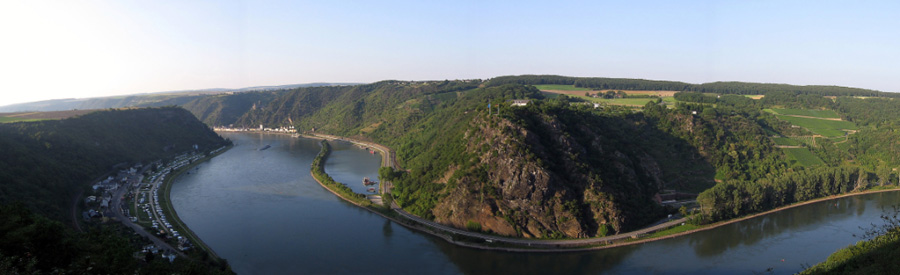
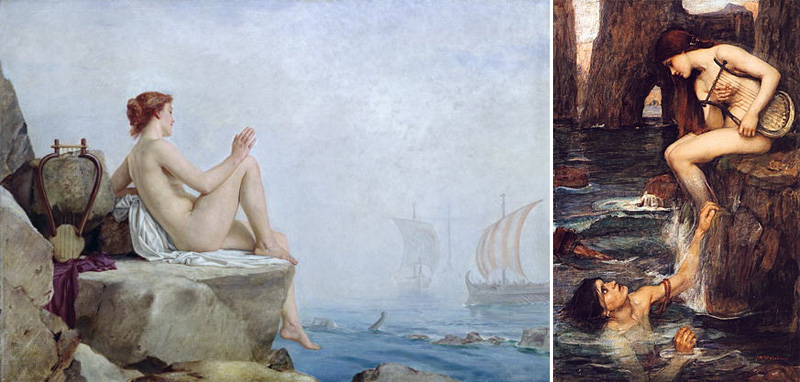
Lorelei rock on a bend in the river above Koblenz. The river narrows, and it is the deepest part of the Rhine. The name comes from old German words "lureln" (Rhine dialect for "murmuring") and the Celtic term "ley" (rock). The translation of the name would therefore be "murmuring rock". The heavy currents and a small waterfall in the area created a murmuring sound, and this combed with the special echo the rock produces to act as a sort of amplifier, giving the rock its name. An 1801 poem by German author Clemens Brentano, first told the story of an enchanted female associated with the rock. In the poem, the beautiful Lore Lay, betrayed by her sweetheart, is accused of bewitching men and causing their death. Rather than sentence her to death, the bishop consigns her to a nunnery. On the way thereto, accompanied by three knights, she comes to the Lorelei rock. She asks permission to climb it and view the Rhine once again. She does so and falls to her death; the rock still retained an echo of her name afterwards. A later German poet, Heinrich Heine, seized on the adapted Brentano's theme in one of his most famous poems, Die Lorelei, which is one of the most celebrated poems ever written in the German language. It describes the eponymous female as a sort of siren who sitting on the cliff above the Rhine and combing her golden hair, unwittingly distracted shipmen with her beauty and song, causing them to crash on the rocks. Translated, the last verse of Heinrich's poem reads: The boatman has heard, He's blind to the reefs And now the wild waters awaken And this is what with her singing,
Artists loved the theme of the Sirens both for their captivating beauty, and the tragedies they caused. A brief history of Germany The united country of Germany did not exist until 1871 when Bismarck created the German Empire. Prior to this, Germany was made up of individual territories including Franconia, Bavaria and Lorraine. From 800 A.D., various rulers and dynasties reigned, including Charlemagne, the Saxon Dynasty, the Salian Dynasty, the Hohenstaufen Dynasty and the Habsburgs in 1273. Excavation in Hedeby in northern Germany close to the border of Denmark revealed evidence that Vikings lived here in 948 A.D. In 1806 Napoleon defeated the Holy Roman Empire and the post Napoleonic Germany was dominated by Austria and Prussia. During the late 19th and early 20th centuries Germany saw much industrialization and began colonizing parts of North Africa. The international aspirations of the German Empire were a contributing factor of the First World War. The empire was defeated in 1918 and replaced by the Weimar Republic. The financial struggle that followed the First World War in Germany led, in part, to the rise of Hitler as the leader of the New German Empire in the 1930s. A combination of Hitler's aggressive foreign policy and eventual invasion of Poland precipitated the Second World War (1939-1945). Following Germany's defeat in the Second World War the country was divided into British, French, U. S. and Soviet occupation which led to the formation of two separate states; The German Democratic Republic (East Germany) and The German Federal Republic (West Germany). In 1990, after 45 years of 'Cold War,' Germany was reunified and Berlin was made capital of Germany. After our tour of Marksburg Castle we are taken buy motor coach to Braubach where we meet our boat and returned to the ship for lunch, "A Taste of Germany", with a selection of German specialties. At 12:30 we cast off from Braubach for Miltenberg. And that will be the subject of DAY FIVE in Part 4. |
|
||||
|