 |
|
|
|
|
|
|
|
|
|
|
||||||||
|
||||||||||||||||||
|
Email us at: |
||||||||||||||||||
 |
||||||||||||||||||
 |
 |
|||||||||||||||||
|
Click the sun to see the |
||||||||||||||||||



|
 |
|
|



|
|
|
Chapter 9 Day 16 ~ Wednesday 17th December 2008 Paulet Island & Esperanza Station An Antarctic expedition is the worst way to have the best time of your life. Apsley Cherry-Garrard “The Worst Journey in the World”
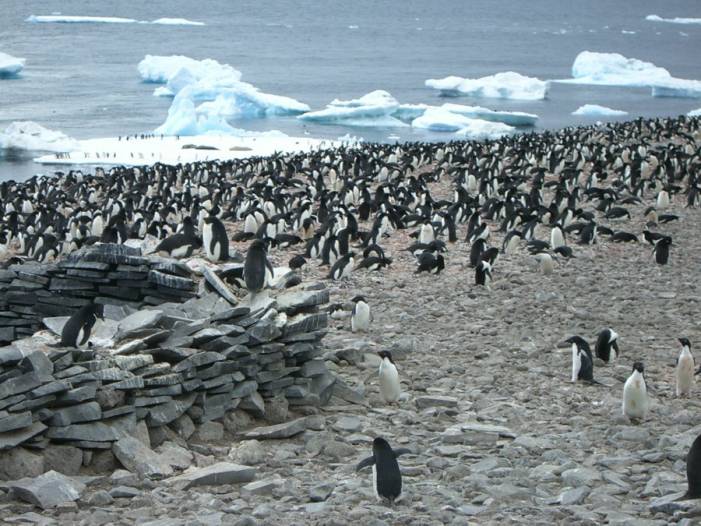
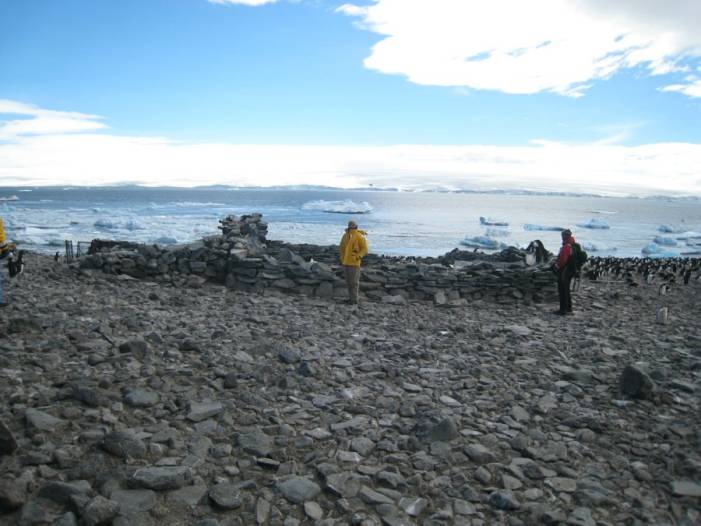
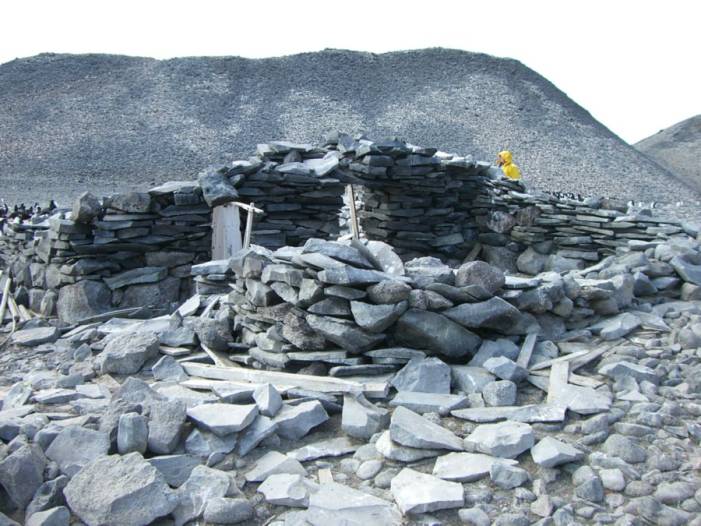
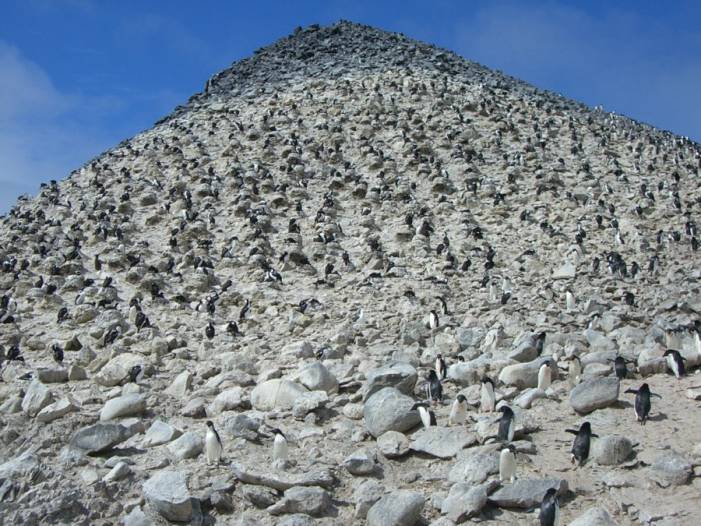
Russian phrase of the day: I (don’t) understand ya (ne) panimayu Before I continue, let me give you some statistics on this amazing continent. Antarctica: A Continent of Extremes Antarctica is large (14.2 million km2 or ~ 5.5 million mi2) and the least known of all seven continents. l It accounts for 10% of the Earth’s land surface. l In summer it is roughly twice the size of Australia, 1½ times as big as the USA and 50 times the size of 000.the UK l During the Austral winter, the formation of sea-ice causes Antarctica to double in size. l 99% of Antarctica is a permanent icecap. l The thickness of the ice averages 1.6 km (1 mile). l In some places, the ice is over 4.8 km (3 mi.) deep – half the height of Mt. Everest. l It is formed from the compacted accumulation of some 100,000 years of snow. l Antarctica embodies 90% of the world’s ice. l The volume of the Antarctic icecap is ~30 million km3 (7.2 million mi3) l The Antarctic icecap contains 70% of the world’s fresh water. l If all the ice in Antarctica melts, the sea level would rise 60 – 65 m (210 ft). Coldest Antarctica is the coldest place on earth. The lowest recorded temperature to date is –89.6°C (-128.6°F), recorded 21 July 1983 at the Russian Vostok Station. Crevasses The largest Antarctic crevasses are 40 m (131 ft) deep and 25 km (16 mi.) long. Driest Antarctica is the driest continent – precipitation is 5 cm (2 in.) per year, which means it can be Classified as a true desert. Glacier The largest Antarctic Glacier is 400 km (249 mi.) long and 64 km (40 mi.) wide. Highest Antarctica is the highest continent – because of the thick layer of ice the average height above Sea level is 2300 m (~7500 ft). The highest point is the Vinson Massif at 4897 m (~16,066 ft). The lowest point discovered so far is the Bentley Subglacial Trench at 2499 m (8200 ft) below sea level. It is covered with more than 3000 m (more than 9840 ft) of ice and snow. Iceberg - The largest Antarctic iceberg was 335 km x 97 km (208 x 60 mi.) – larger than Belgium. Old ice - The first Antarctic ice formed 30,000,000 years ago – 15 times older than mankind. Penguins - The Antarctic penguin population is estimated to be around 75 million.. Population - Antarctica is the least populated continent – the official human population is zero. Sun - 80% of the sun’s heat falling on the Antarctic icecap is reflected back into space. Treaty - Seven nations claim territories in Antarctica: Argentina Australia, Chile, Franc, Great Britain, New Zealand and Norway. These claims were all put aside in the name of Scientific research, when the countries concerned all sign the Antarctic Treaty in 1961. Wide - At its widest, Antarctica is 5500 km (3418 mi.) across – Dundee to New York. Windiest - Antarctica is the windiest continent – the maximum recorded wind speed is 320 km per hour (200 mph) recorded at a French base in July 1972. Winter - There is no sun for 182 days during the Antarctic winter – half the year. Our first landing after the long and arduous sea passage from South Georgia Island to the Antarctic Peninsula would be at Paulet Island. It lies south of Joinville and Dundee Islands, in the Weddell Sea. We geared up immediately after having breakfast, and lined up at the gangway for the Zodiac ride to shore. The island has a distinct volcanic cone, reaching 353 meters (1,158 ft) above sea level. It is home to more than 100,000 breeding pairs of Adélie penguins, making it one of the biggest colonies in Antarctica. The remains of a historic hut are also found at Paulet Island. Captain Carl Larsen, 19 of his men and the ship’s cat from Nordenskjöld’s 1901-4 expedition were marooned here for a winter after their ship Antarctic sank 40 kilometers (25 mi.) away. The hut was made from stones found on shore and measured 20 by 7 meters (65 by 23 ft). They stockpiled penguins for food and lived off this supply over the winter.
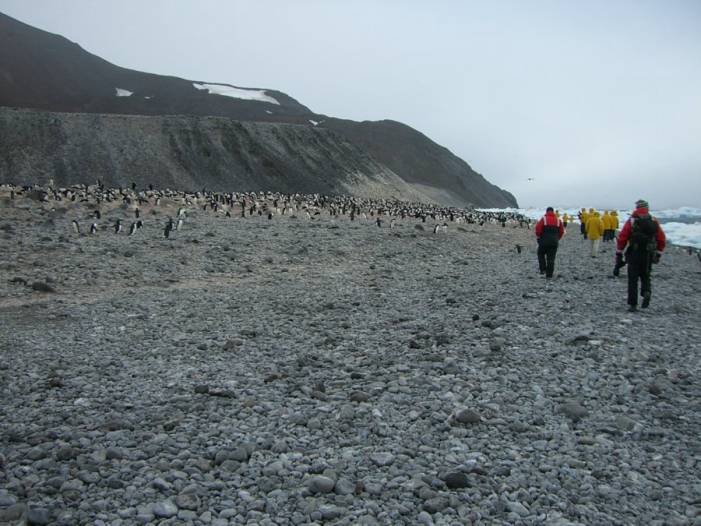
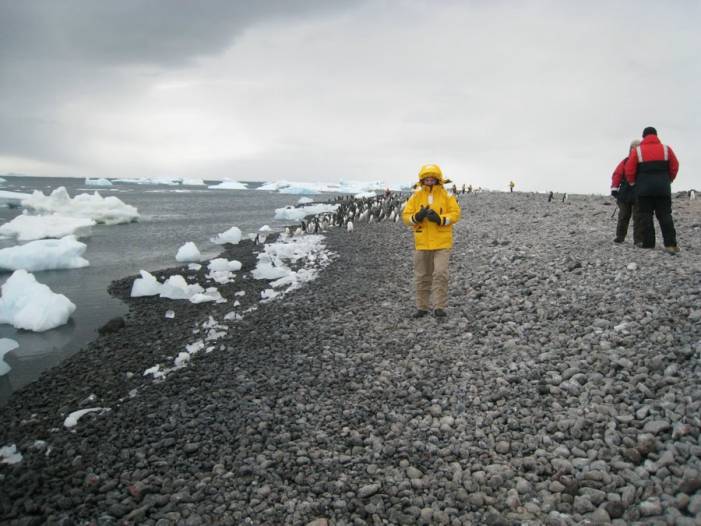
We land on Paulet Island with calm sea but severely overcast skies.
The shore was rocky and the whole island seemed to be barren and inhospitable.
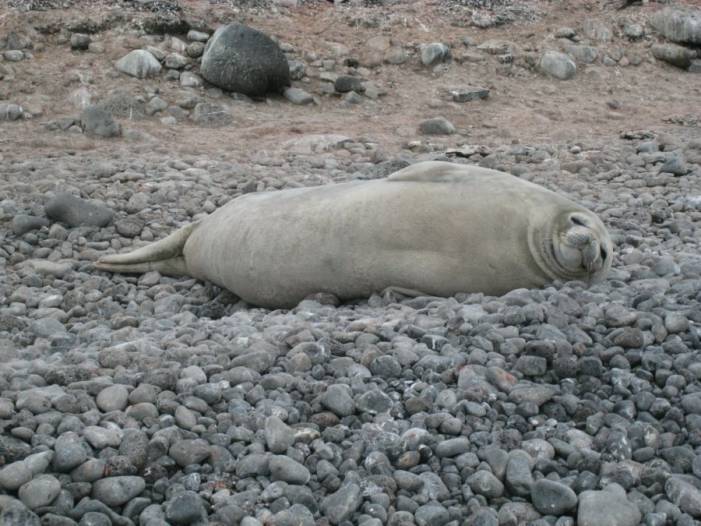
We come upon a sea lion pup, somewhat less than curious about our presence.
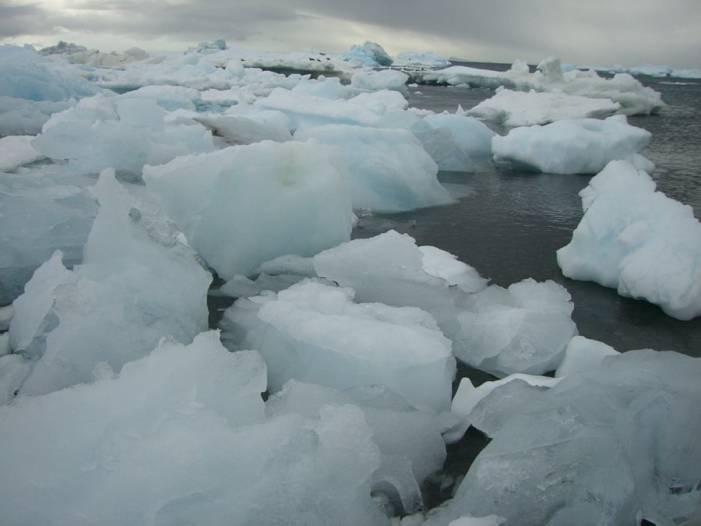
There’s lots of pack ice loosely adorning the shore, making landing tricky.
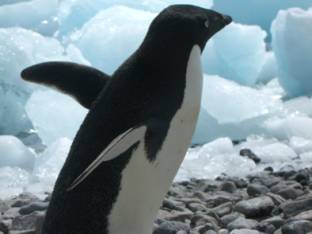
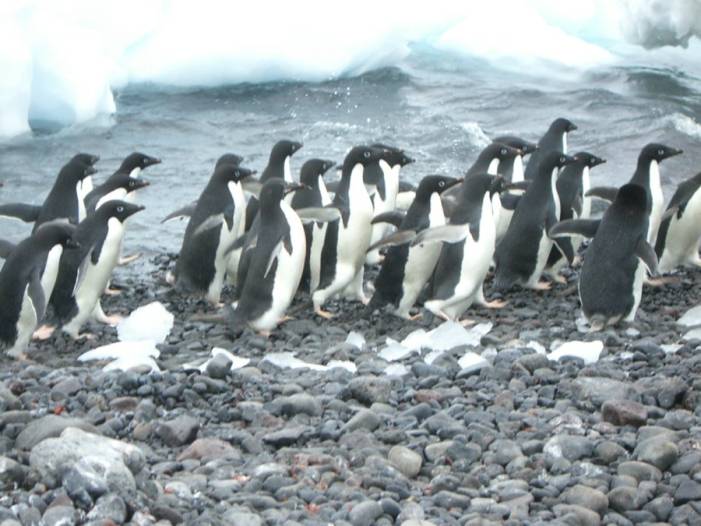
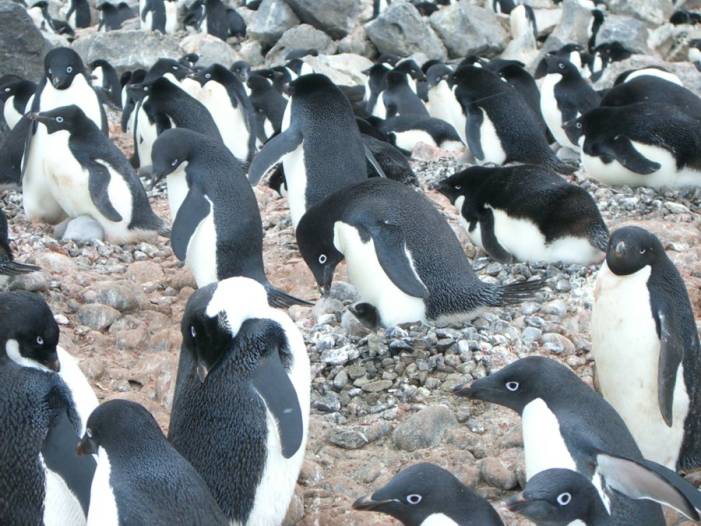
There was no shortage of Adélie penguins there to greet us.
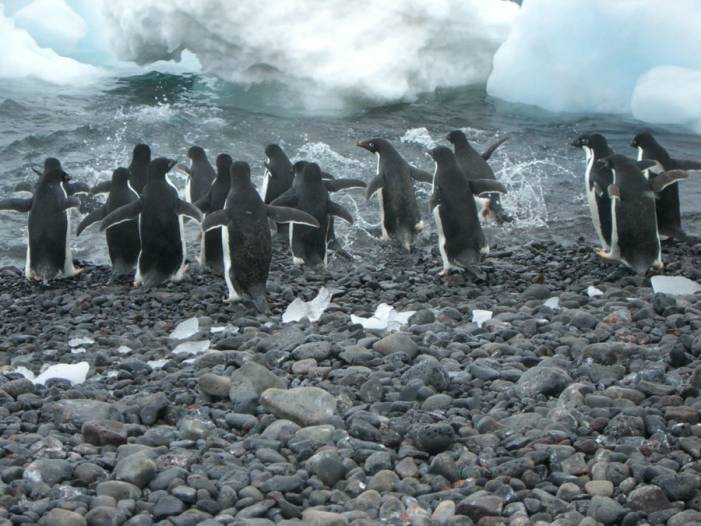
It was their time to go foraging for food, so they all took to the water.
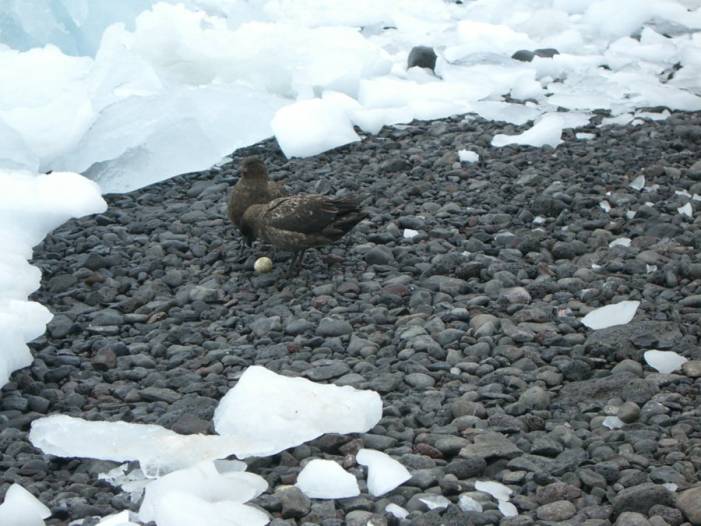
We came across a couple of Skua with an egg. I didn’t know if they were about to
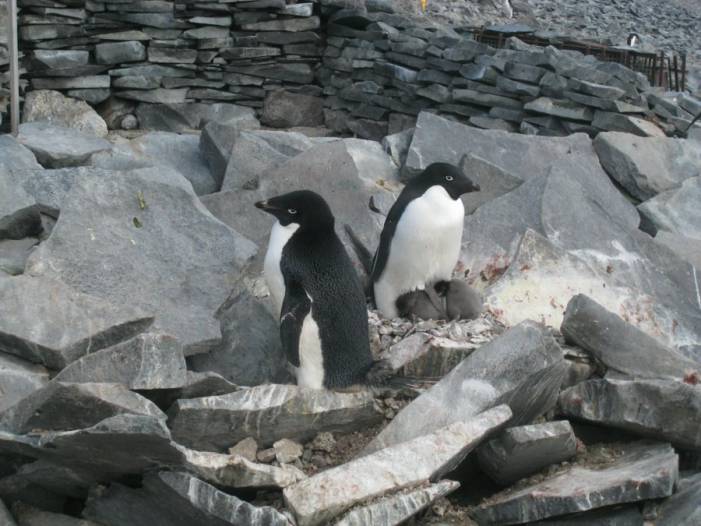
The Adélie each seemed to have two chicks, and they are constantly being fed.
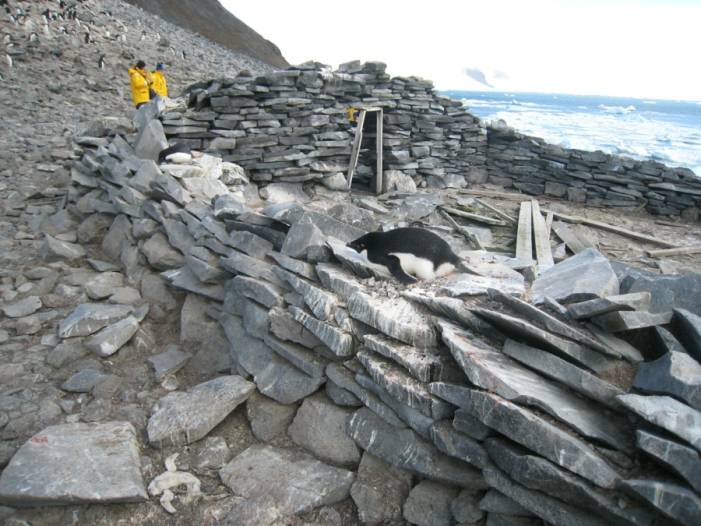
This is what remains of the stone hut built by the Nordenskjöld expedition in 1903.
The overcast weather we had at the time of our landing has cleared up very nicely, providing us
I certainly wouldn’t relish the idea of spending a winter here with nothing to eat but penguins
The walls serve as a nesting place for some of the penguins, but judging from
These chicks are trying to stay warm, and get a little sleep.
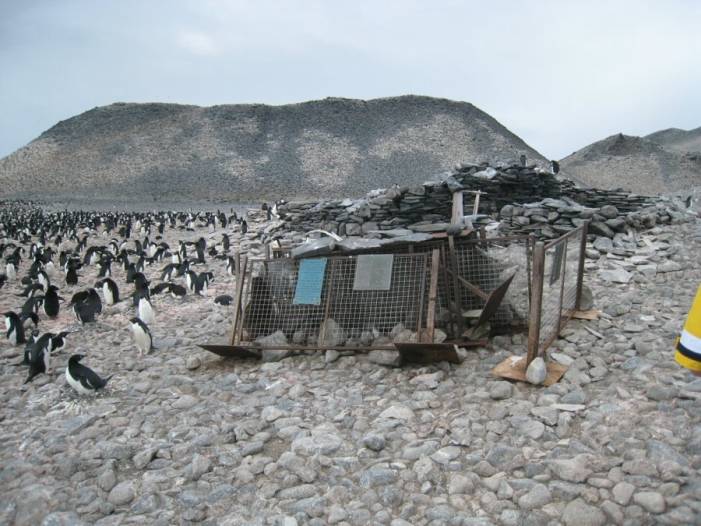
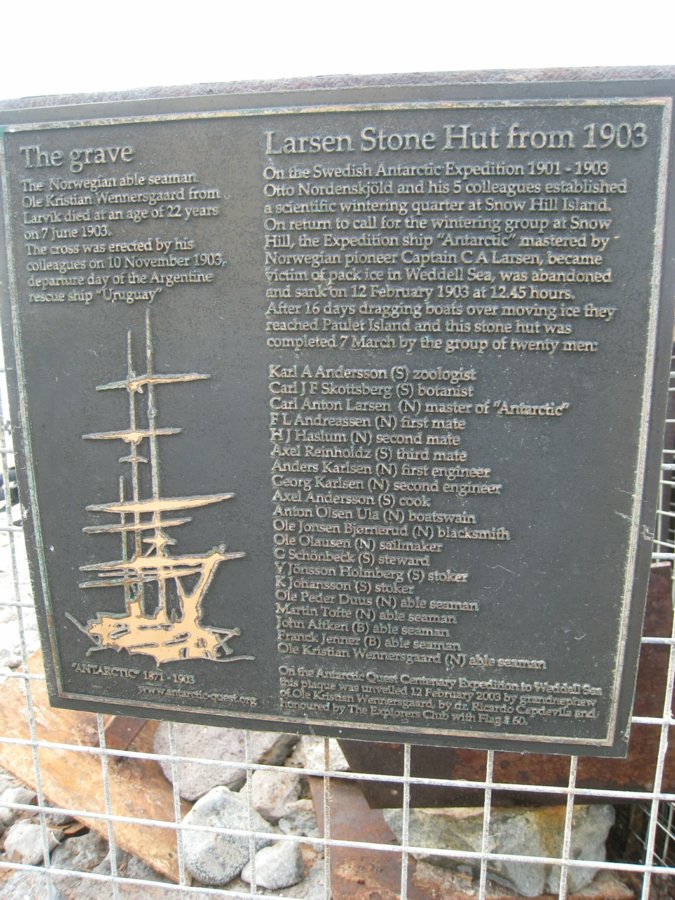
There were a couple of bronze plaques placed on this grave site, containing
We much prefer our life in Buenos Aires, but are certainly enjoying this expedition.
The Adélie seem to build their crude nests everywhere, and don’t seem
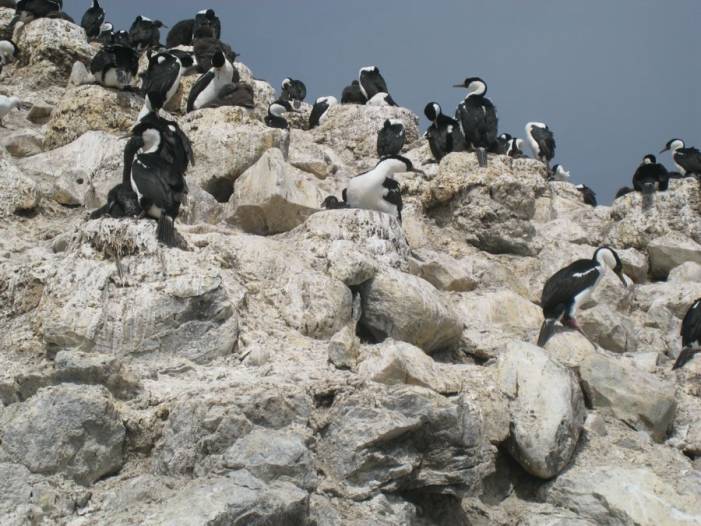
We also came across a flock of nesting Imperial Shags. They are diving birds,
After a bit of a hike around Paulet Island, we take to the Zodiacs and go for a photographic journey around this beautiful sea of icebergs and wend our way back to the ship. During lunch the captain weighed anchor and headed for Esperanza Station, Argentina’s research station located in Hope Bay, on the tip of the Antarctic Peninsula. (Esperanza is Spanish for hope).
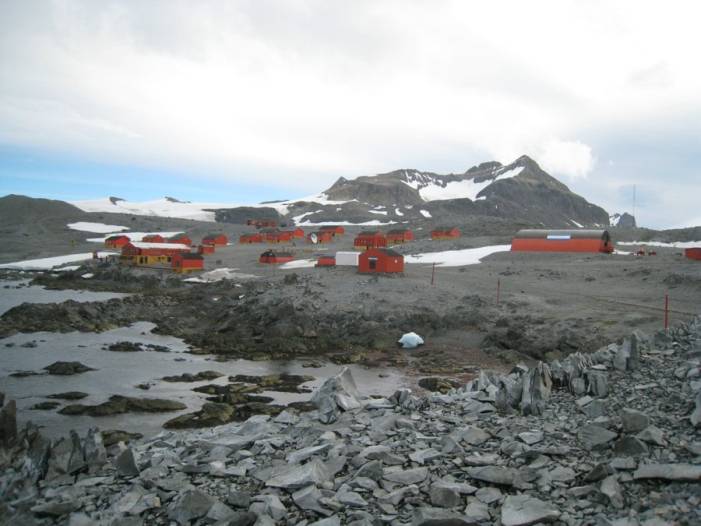
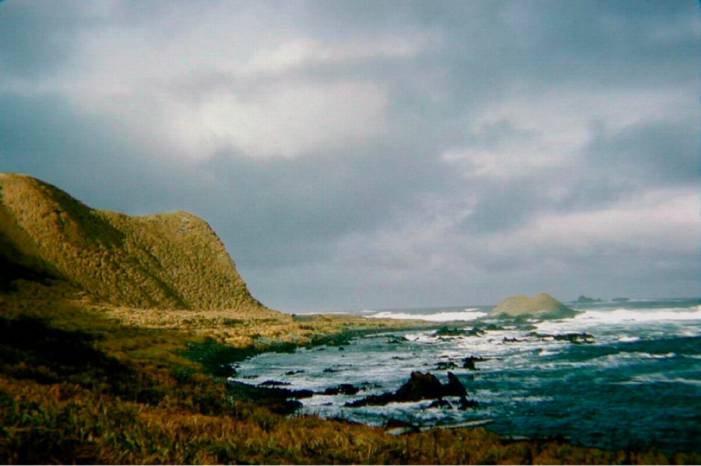
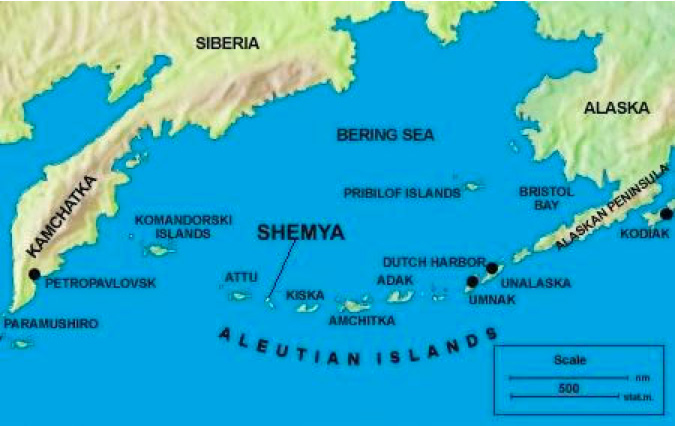
Isn’t this about the bleakest inhabited place you’ve ever seen? Even the small island of Shemya, Alaska, in the Aleutians, where I spent some time in my early Navy days, was more hospitable than this place.
Just as a point of contrast, this is Shemya Island in summer.
Map showing the location of Shemya Island Now back to Esperanza Station. The station has operated continuously since December 1952. It is manned by the military but unlike other stations, personnel live here with their families, including children. Can you imagine being a teenager and spending your youth in such a place? The population ranges from about 55 in winter, up to 90 people in summer. There are numerous buildings at this site including a Catholic chapel, school, radio station, scientific laboratories and an infirmary. Esperanza is also famous for being the birthplace of many Antarcticans, as pregnant women give birth here in an effort to strengthen Argentina’s territorial claim on the Peninsula. Their intensions are for scientific purposes but a brief visit to their laboratories left us in doubt. It’s clear they’re a military presence yet they still take a lot of bride in their unique assignment. Pay is good for the married men … they receive three times a normal mainland salary and wives are paid as well. If they complete good service they’re invited back for another entire year. The residents enjoy skiing everywhere in the winter months. It’s very cheap as well, as there are no ski lifts to purchase ticket for. Just lots of healthy exercise hiking to the top for a down hill run.
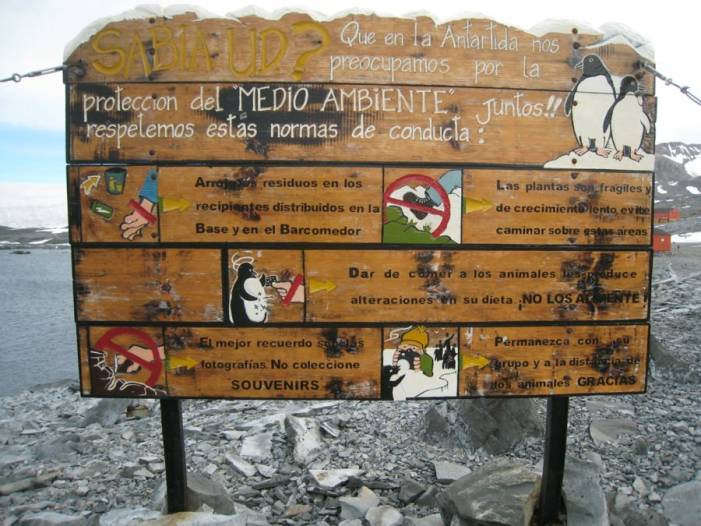
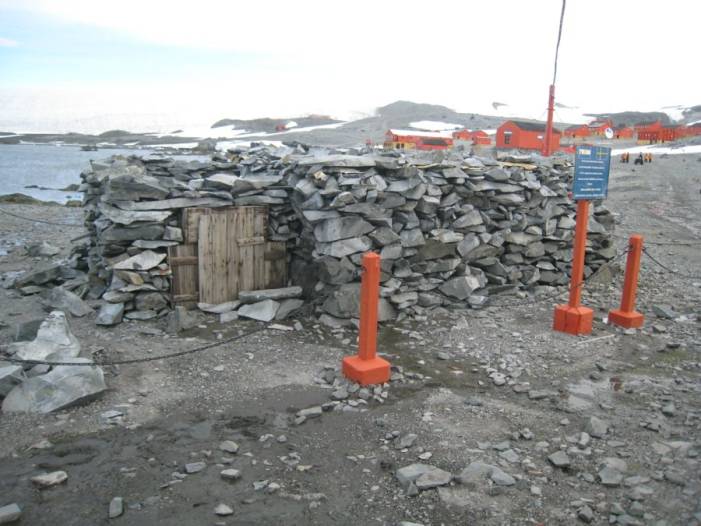
We were greeted by this sign, stating clearly what things we should NOT do here. Within the station limits there is also a historical hut where three of Otto Nordenskjöld’s party spent a winter here (unexpectedly) in 1903.
When you find yourself marooned on a bare rock island, or the Antarctic Peninsula, and you need to shelter yourself from the elements; a stone hut is about all that is possible to create. This is the stone hut built by three stranded men from the Otto Nordenskjöld’s party in 1903. The hut must be rebuilt every year. The 180km winds are so fierce they knock down the walls. The stones are original but not the stacking.
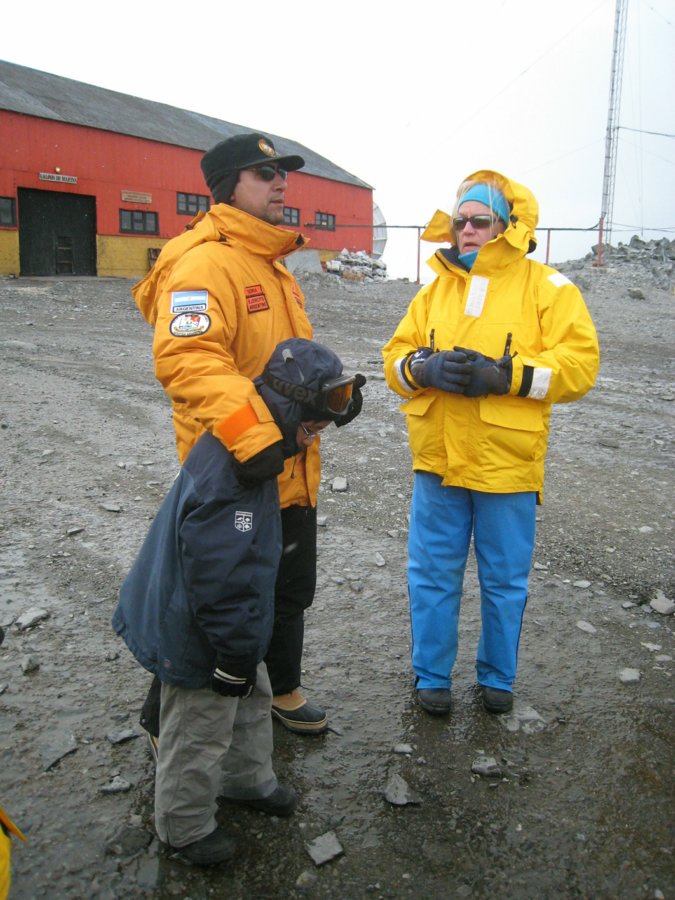
This is our military guide with his son, and Cecily Viall, a member of our party
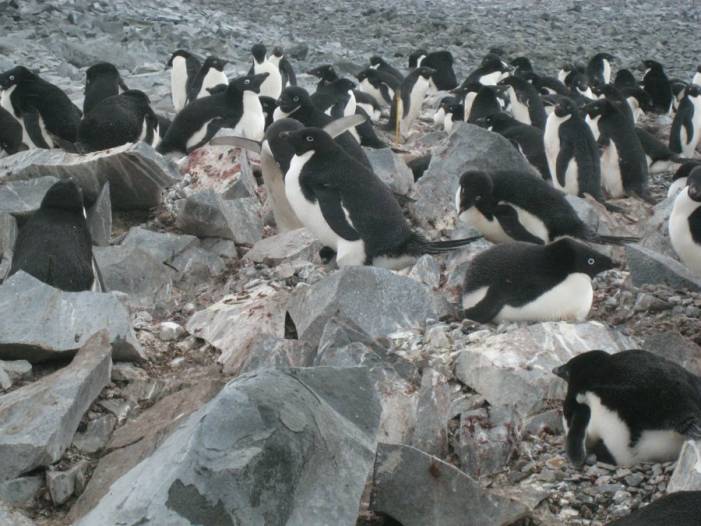
The human inhabitants of the station share it with a colony of Adélie Penguins.
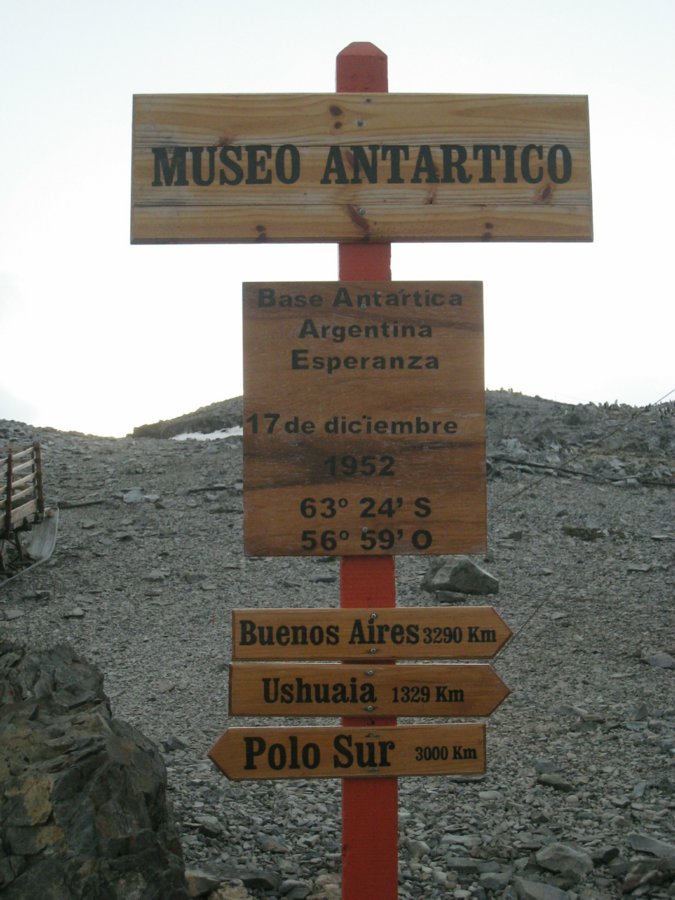
And of course, what’s a remote corner of the world without a signpost to
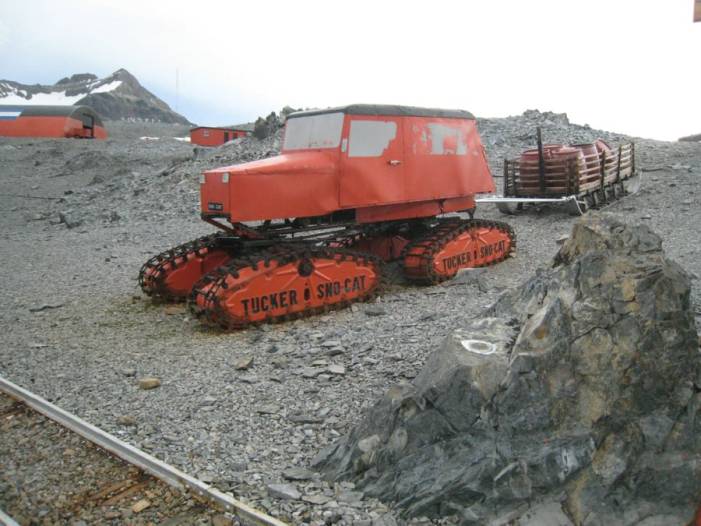
This work horse is used the year round, but is especially vital in winter when
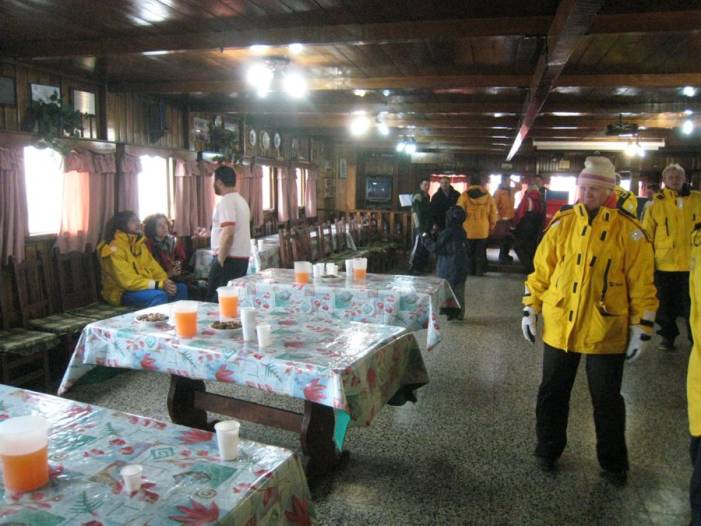
Our tour of the station ended with this visit to the Cantina/Gift shop where we
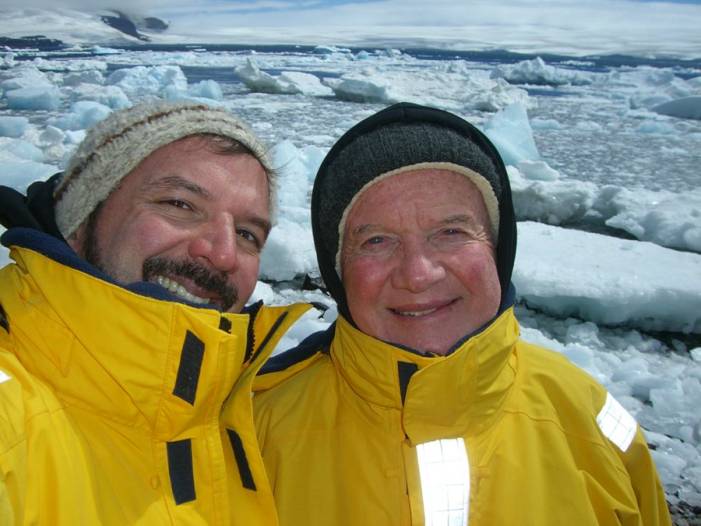
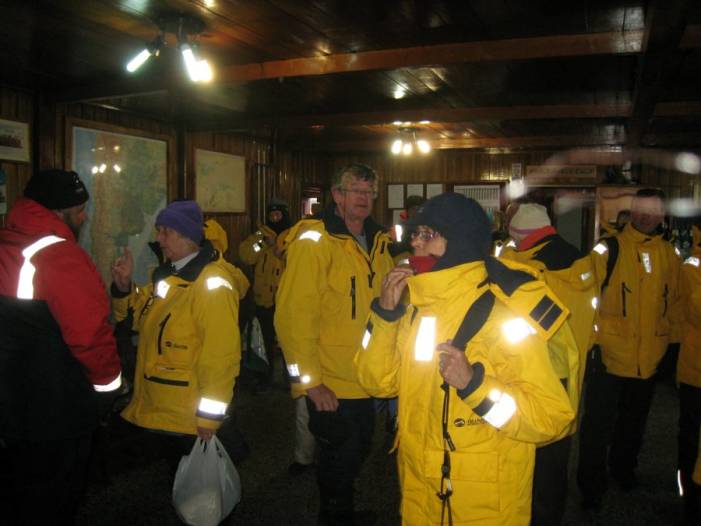
Note how the flash from my camera really lights up the reflective tape on our foul
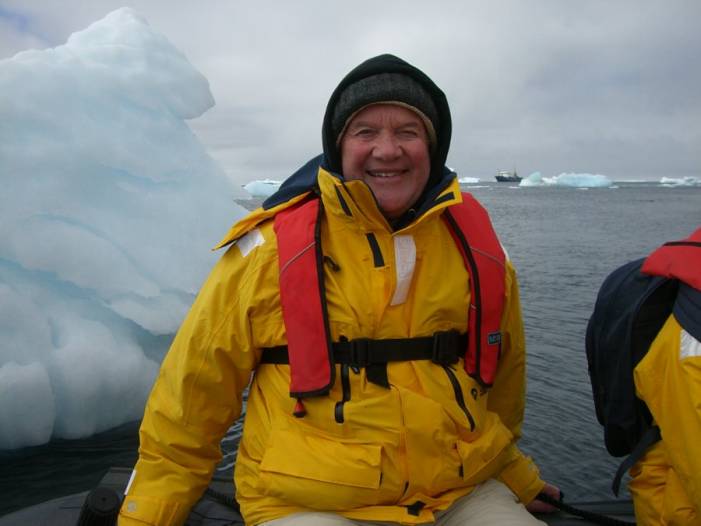
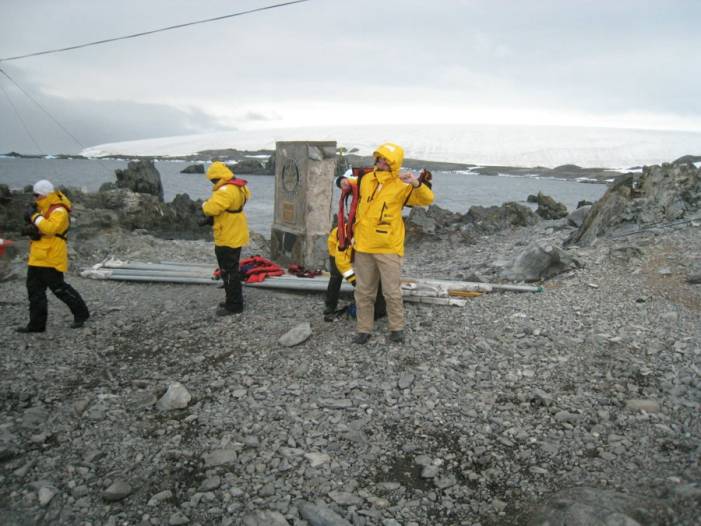
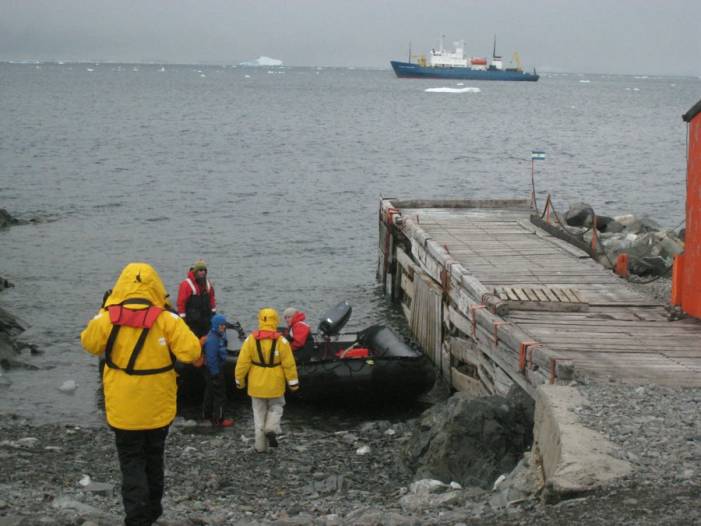
We don our life vests and prepare to depart the Esperanza Station.
The ship awaits our return, and from Hope Bay we will make our way to Half Moon |
|
||||
|